Here are my favorite reads of the past year, in the order I read them. First are the books for adults and then the list of books for children.
Novels for Grown Ups:
History of the Rain by Niall Williams
A bed-ridden Irish teenage girl recounts her family’s past and her town’s present, while the rain falls and the river Shannon rises. The narrator’s voice is brilliant, and the varying importance of water in her stories will keep your thoughts returning to this book.
The Snow Child by Eowyn Ivey
A childless couple living in the Alaskan wilderness build a snow child, and the next day a real little girl shows up. Where has she come from and is she real? Year after year, she comes in the winter and leaves in the spring, until love tries to bind her to a civilized life. A beautiful, fairy-tale-like story.
The Lions of Al-Rassan by Guy Gavriel Kay
An epic story set in a fantasy world very similar to the middle ages in Iberia. Competing tribes and religions try to maintain and/or conquer the land each believes should be theirs. This is the El Cid story, although that character has a different name and isn’t immediately recognizable. An amazing story. I plan to read much more by Kay.
Drive Your Plow Over the Bones of the Dead by Olga Tokarczuk
A murder mystery / fantasy? in rural Poland. The narrator is a middle aged / elderly woman who believes that the murders are being committed by deer and other animals to avenge the hunting deaths of their kin. This is a bizarre story, and perhaps not for everyone. I, however, was mesmerized by the narrator’s voice and her way of seeing the world.
Love Lettering by Kate Clayborn
Need a light, romantic-comedy-type novel? I discovered Kate Clayborn this year (thanks, Rikki!), and this is my favorite of her books that I’ve read so far. Although light and romantic, this book is also quite clever, using art and signs and numbers and letters. The characters are well developed and (as an English teacher married to a math professor) reminded me of my own romance.
The Island of Sea Women by Lisa See
Two best friends are ripped apart by an event that happened many years ago, and you don’t find out what that event is until near the end. When this happens in novels, I am often upset that the event wasn’t really that kind of event, but it is in this story. Young-sook and Mi-ja grow up on the Korean island of Jeju where they learn to dive great depths for food. The story spans WWII with the Japanese occupation, the Korean War, up to current times. A fascinating story with incredible historical detail.
Parable of the Sower and Parable of the Talents by Octavia Butler
I like The Parable of the Talents better, but I think you should read them both and The Parable of the Sower comes first. Butler’s vision of America in the future is terrifying, yet similar to other places in the world when governments collapse. I found the main character’s “discovery” of the Earthseed religion, God-as-change, intriguing.
The Flatshare by Beth O’Leary
Another romantic comedy. When Tiffy must move out of her boyfriend’s flat, she can’t afford any place in London except this strange, flat-share arrangement. She gets the flat (and bed) in the evenings, nights, and weekends, and Leon, a nurse who works nights and spends the weekend away, gets it the rest of the time. The two don’t meet for a long time, but get to know each other through the notes they leave for each other. Alternate chapters are narrated by Tiffy and Leon and O’Leary does a great job with their very different first-person styles. A fun read which also handles the serious topic of gaslighting/emotional abuse.
Novels for Kids:
Barefoot Dreams of Petra Luna by Alda P. Dobbs
I was lucky to get a copy of this to review for the Historical Novels Society.
A story of the Mexican revolution told through the eyes of a 12-year-old, parent-less girl trying to care for her elderly grandmother and two young siblings. Fleeing the Federales, Petra and her family travel through villages, the desert, meet up with some courageous rebels, then continue on, hoping they will be allowed entry into the United States.
The Lion of Mars by Jennifer L. Holm
11-year-old Bell has grown up in the US colony on Mars, where they live underground and have no contact with the other Mars colonies. He’s a normal kid with friends and school and chores and lots of curiosity. When a virus causes all the adults to get sick, what can the kids to do keep the colony alive? This book takes a turn and handles questions that you don’t see coming. A great read.
Amber and Clay by Laura Amy Schlitz
Rhaskos (clay) is a young slave boy in Thessaly who is fascinated by paintings and art. Melisto is a young aristocratic girl (amber) living in Athens whose nurse just happens to be Rhasko’s mother. The story is told in various formats: illustrations of artifacts with guesses to use and identity; verse from the gods about what will happen; prose of the characters’ stories. As usual, Schlitz has created a masterpiece. Will it win the Newbery? It has some stiff competition.
Maybe Maybe Marisol Rainey by Erin Entrada Kelly
Marisol Rainey’s backyard contains the most perfect climbing tree ever. But Marisol Rainey is afraid to climb it. Marisol is eight years old and suffers from anxiety. This is a book for the time—I wouldn’t be surprised if it wins the Newbery. In an entertaining book for young readers, Kelly handles the problem of anxiety in a patient, supportive way.
Gone to the Woods by Gary Paulsen
Paulsen’s autobiography details the brief (but wonderful) time Paulsen spent with relatives in a cabin in northern Minnesota, to his years living in poverty with alcoholic parents, both in the Philippines and in Chicago. This might be Paulsen’s best book of all. The courage of young Gary, the drive that kept him safe and sane, and the importance of books and the wilderness, make for a powerful story. Another possible Newbery winner.
The Year I Flew Away by Marie Arnold
Gabrielle grew up poor in Haiti but gets the opportunity to move to New York City when she is ten to live with her uncle and his family. Her family is counting on her to be successful in America, so she can eventually send home money and possibly help to bring her family to the US. But, living in the United States, where she doesn’t speak the language and is constantly bullied, is difficult. So, Gabrielle turns to a witch to help her fit in—but is she ready to pay the cost of the witch’s spells? Arnold’s story is magical, exciting, and thought-provoking. Another potential Newbery Award winner?
Let me know what your favorite books of the year were in the comments below. Happy 2022!
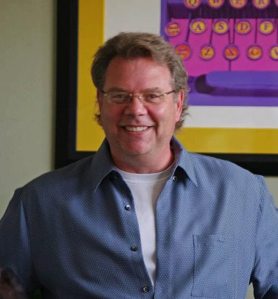 Today I welcome Jeff Lyons to my series of author interviews. Jeff is a consultant on the craft of storytelling and has written two books on that topic: Anatomy of a Premise Line: How to Master Premise and Story Development for Writing Success and Rapid Story Development: How to Use the Enneagram-Story Connection to Become a Master Storyteller. His fiction includes the sci-fi-horror novella, 13 Minutes, and the mystery-thriller series Jack Be Dead, which Jeff is writing with Stephen David Brooks.
 Jeff: Jack Be Dead was co-written with my writing partner Stephen David Brooks. Stephen is a film director and screenwriter, and the idea for Jack Be Dead was originally from a script he wrote years ago. We worked together, over time, to rework his script into a TV pilot but weren’t able to get any traction. Then I came up with the harebrained scheme to write the pilot as a series of novellas, and then maybe we could sell the books to a production company and get a deal that way. This strategy, by the way, is one that is being used by lots of screenwriters trying to get movie and TV deals. Leveraging the self-publishing revolution is a powerful tool now for screenwriters trying to turn their old screenplays into novels (but that’s a whole other interview). Anyway, we wrote the first book last year and published it online under my publishing imprint, Storygeeks Press. It got a pretty good response, good reviews on and off of Amazon, but hasn’t taken off the way we’d hoped. But, we’re going to do the other two novellas in the series and then see what happens. Personally, I don’t really care what happens with any TV deal, the novellas are great to have published and will help me (and us) get a stronger footprint in the publishing world as authors of genre fiction. That’s really where the action is for writers anyway, not film or TV. If you want a career as a writer today you have to be writing in multiple arenas, on multiple genres, on multiple platforms, and for multiple audiences. The days of saying “I only write screenplays” or “I only write novels” are over. You have to diversify and be everywhere to be successful now. Just the reality of being a working writer in the 21st century.
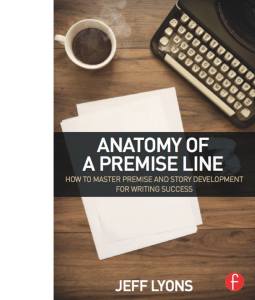 Jeff: Not until next year. Stephen and I are too busy with other projects, and I have another writing book I have to get finished for my publisher: Rapid Story Development: How to Use the Enneagram-Story Connection to Become a Master Storyteller. It’s the only book that’s ever been written that teaches how to use the Enneagram system as a story development tool. It will be quite an event when it comes out in late 2017. The publisher is Focal Press. My other book with Focal Press is Anatomy of a Premise Line: How to Master Premise and Story Development for Writing Success and it is the only book available that teaches how to build a story from the ground up BEFORE you start writing pages, and can help writers cut their development time literally in half and save them a lot of wasted pages as they ramble on writing with no clue where they’re going. The worst advice people learn about creative writing in MFA programs is to “just do it.” Horrible advice for 99.9% of writers. My book can help save you from that bad advice and give you a solid alternative that will be productive and creatively alive.
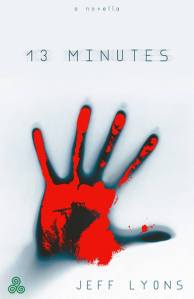 Jeff: I decided to self-publish 13 Minutes this year. I’m getting more and more into self-publishing. This story is smart people’s sci-fi, meaning, it is not just sci-fi high concept, but rather a strongly character-based story that focuses on dramatic human relationships. 13 Minutes takes place over a short period of story-time, is set in one room, and has a great twist ending most people never see coming. It was great fun to write, and I’ll probably get it produced into a short film for film festivals next year. I have a director interested. It’ll be a great short film for the sci-fi community and for the web watchers.

 Elizabeth: Welcome, Helen. Tell us about your story in

 I’ve chosen the books for this semester!
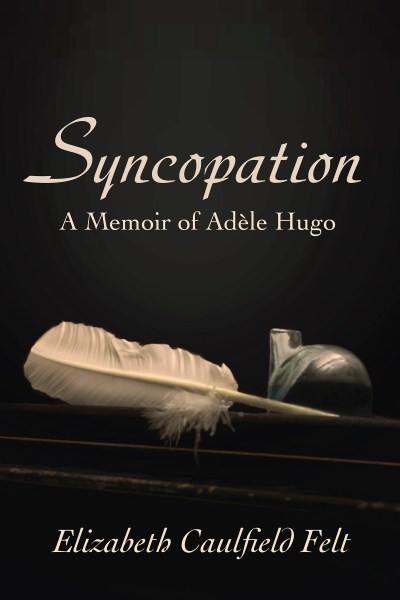
 Elizabeth Caulfield Felt