 Today I’m welcoming Richard Anderton to my series of author interviews. Richard is the author of The Devil’s Band and The Devil’s Lance, which are the first two books of The Devilstone Chronicles. The third installment, The Devil’s Pearl, is due out later this year.
Elizabeth: Welcome, Richard.
Richard: Thank you and thank you for inviting me to take part.
Elizabeth: Can you tell us about your series?
Richard: The Devilstone Chronicles are set in the early 16th Century, during the reign of Henry VIII, and tell the story of Thomas Devilstone, a disgraced alchemist and astrologer who escapes abroad after being sentenced to death for practicing witchcraft. Whilst in exile, he becomes a soldier of fortune, in the hope he can use his wits and his sword to win back both the king’s favour and his family’s lost estates. To help him in this ambition, he forms an unlikely alliance with three other mercenaries namely a Lutheran convert, a Portuguese adventurer and an escaped African galley slave.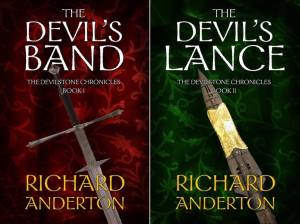
At one level the stories are meant to be fun adventures, not to be taken too seriously, but I hope readers will be intrigued by the subtext which is the conflict between the superstition of the medieval world and the beginnings of modern science during the Renaissance. Thomas’ name is a deliberate reference to the biblical ‘Doubting Thomas’ because, after his constant failure to perform spells successfully, this onetime sorcerer has come to doubt his own, once unshakeable, belief in the supernatural. Thomas now understands that much of what appears to be magic can be produced by purely natural means and this knowledge allows him to dupe his enemies and thwart his rivals as he struggles to revive his fortunes.
Elizabeth: Do you and Thomas Devilstone have any of the same personality traits?
Richard: I think Thomas is the exact opposite of me but he is the sort of person I wish I was; he is much more of a swashbuckling hero than I am and much better looking! Thomas is also far more ready to embrace modernity whereas I struggle to cope with the 21st Century. To take just one example, I have passionate loathing of smart phones, because my huge sausage-shaped fingers are far too big for touch screens.
Elizabeth: How much historical fact is woven into your story?
Richard: A lot! As an avid reader and fan of historical novels, especially Bernard Cornwell and George MacDonald Fraser, I love it when an author constructs their plots around actual events so I’ve tried to include as much historical fact as I can without slowing down the action or turning the stories into textbooks. Thomas is entirely fictional but he is closely modeled on a genuine Renaissance alchemist, named Cornelius Agrippa, who publicly renounced magic and became a doctor. He also meets plenty of genuine historical figures which range from the last Yorkist prince to challenge Henry VIII (The Devil’s Band) to the actual grandson of Vlad the Impaler ‘the real Dracula’ (The Devil’s Lance).
I also believe the whole point of reading historical novels is broaden one’s knowledge of history so Thomas fights in the pivotal battles which took place at this period (Pavia 1525 and Mohacs 1526) and the machines he constructs, which are important plot devices, follow real designs produced by Leonardo de Vinci. Similarly, the ineffectual spells he casts to confound his superstitious enemies are all taken from a popular medieval spellbook called The Munich Handbook of Demonic Magic.
Elizabeth: What drew you to this time period?
Richard: As a writer I’m always looking to tell ‘the untold story’ but most publishers want books about popular periods so there is a large existing audience for the title. As a compromise, I chose to write about the early Tudor Age because Henry VIII and his six wives are perennially popular but at the same time I moved the focus away from England to the rest of Europe in search of stories that will introduce readers to different, and lesser known, aspects of this period.
Apart from the origins of The Reformation, the history of the rest of Europe during the 16th Century is rarely taught in UK schools so few people on this side of The Channel have heard of Charles V (b.1500 d.1558) despite the fact that he was one of the most powerful monarchs ever to have lived. Whilst Henry VIII ruled England, this Hapsburg Emperor simultaneously ruled Spain, Germany, Italy, the Low Countries and most of Central Europe as well as the vast Spanish territories in the New World, but as far as we Brits are concerned Charles was nothing more than Catherine of Aragon’s nephew! Moreover, Charles V’s wars with the French King Francis and the Ottoman Sultan Suleiman the Magnificent created many of the fault lines which still divide Europe today so I thought his reign would be the perfect backdrop for Thomas’ journey from the medieval to the modern world.
Elizabeth: What is your writing process?
Richard: To construct the plots of The Devil’s Band, The Devil’s Lance and the forthcoming The Devil’s Pearl, I chose a genuine historical battle to be the climax of each story and worked backwards. Why would an Englishman be here? What would be his motivation to fight for a foreign king? Would he benefit from the outcome? And so on. I then try and weave my answers to these questions around known historical facts and my golden rule is that any historical figure who appears in the story has to act in accordance with these facts. I do allow myself a some license with fictional characters but Thomas and his companions’ thoughts and actions always have to remain true to the period.
Once I have a rough chapter plan, I write down everything in my head then edit and rewrite it again and again. I reckon each chapter is rewritten at least fifty times before I’m happy, so my method of writing is not very efficient but it does mean I have (mercifully) never suffered from writer’s block!
Elizabeth: What have you read recently that you feel passionate about?
Richard: Whilst researching the use of slaves in Mediterranean galleys for Volume III of The Devilstone Chronicles (incidentally one of my favourite films, Ben Hur, got it completely wrong!) I read the only autobiography of a real galley slave known to exist. It is the story of Jean Marteilhe, a French Protestant who tried to flee religious persecution in his homeland. He crossed into what he thought was the Protestant Netherlands but in fact he’d arrived in a French enclave just a few miles inside Dutch territory. He was arrested and sentenced to life imprisonment. Later, he was transferred to the galleys and spent 6 years chained to an oar before he was rescued by an English fleet. All this did not happen in 16th or even the 17th Century but in the 18th Century, the so called Age of Enlightenment, so whenever I think my life is miserable I think of that poor Frenchman!
Elizabeth: Can you tell us more about yourself?
Richard: I am 52 years old, married with four children and I’ve lived all my life in the north of England. Though I always wanted to be a writer, I didn’t put pen to paper until I was nearly 40. Before that I failed at a wide variety of careers including lawyer, police officer, cartoonist and book illustrator…
We’ve now reached the time in our interview for the let’s-get-to-know-the-author-better, nearly-pointless, sort-of-silly, rapid-fire questions:
Elizabeth: Coffee or tea?
Richard: Coffee first thing in the morning then tea, lots and lots of tea, for the rest of the day.
Elizabeth: Ocean or mountain?
Richard: Tricky, I love both. Fortunately in England you are never more than 70 miles from the sea but as I live in the hills, and my favourite view is of the Cumbrian Mountains from the top of Hartside pass, I guess mountains have the edge.
Elizabeth: Hiking or shopping?
Richard: I’m a complete and unrepentant couch potato but as I simply can’t abide shopping I’d choose hiking – provided there’s a cosy pub at the end of the trail.
Elizabeth: Violin or piano?
Richard: actually neither. For some reason I don’t really like music. I never play records or CDs and my iPod is full of audiobooks! Perhaps it’s because my younger brother is an accomplished (amateur) musician and I was forced to listen to him practice when we were children…
Elizabeth: Mystery or fantasy?
Richard: Having spent ten years as a police officer I find it hard to take murder mysteries or any crime fiction seriously, however well written such books might be, so I’d always choose fantasy.
Elizabeth: Scarlett O’Hara or Jane Eyre?
Richard: Scarlett without a doubt, probably because I am secretly in love with Vivien Leigh and we did too much Jane Austen at school!
Elizabeth: Love scene or death scene?
Richard: I prefer to experience the former and write about the latter…
The Devil’s Band and The Devil’s Lance are available as paperbacks (UK £8.99/£9.99 US $17.99) and eBooks (UK £0.99 US$1.22) via Amazon and Richard’s website.
To learn more about Richard and his books, you can find him at:
Web: www.thedevilstonechronicles.com
Twitter: @andertonTDC
Facebook Page: The Devil’s Band
 Today I’m welcoming historical novelist Genevieve Graham. Her first international best seller
 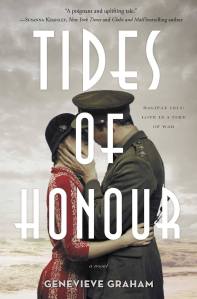 The story is about Danny Baker, an Eastern Shore fisherman here in Nova Scotia. Like so many other boys, Danny heads overseas in 1914 with no idea of the nightmare he’s about to experience. Life in the trenches steals men’s humanity, suffocates hope beneath blood and mud – except just when the horrors of war are becoming too much for Danny, along comes Audrey. The last thing he had ever expected was to meet the love of his life in France. They fall in love via dirt-smudged, water-stained letters, and Danny asks Audrey to marry him, to become his wife in Canada. Even after he is gravely wounded she is determined to be with him, and she begins her own voyage – meeting suffragettes and working as a munitionette – on her way to Halifax, Nova Scotia.
 For the rest of the year, you can buy Syncopation: A Memoir of Adele Hugo as an e-book for just 99 cents.
 Louise: It’s based on real historical events that occurred in the west of Scotland in the late 15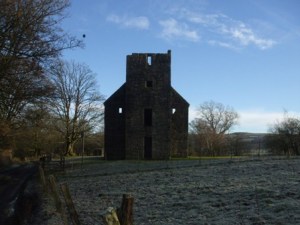



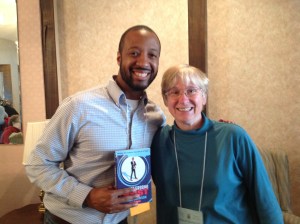

 Today I welcome Jeff Lyons to my series of author interviews. Jeff is a consultant on the craft of storytelling and has written two books on that topic: Anatomy of a Premise Line: How to Master Premise and Story Development for Writing Success and Rapid Story Development: How to Use the Enneagram-Story Connection to Become a Master Storyteller. His fiction includes the sci-fi-horror novella, 13 Minutes, and the mystery-thriller series Jack Be Dead, which Jeff is writing with Stephen David Brooks.
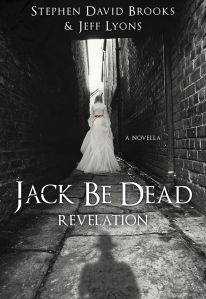 Jeff: Jack Be Dead was co-written with my writing partner Stephen David Brooks. Stephen is a film director and screenwriter, and the idea for Jack Be Dead was originally from a script he wrote years ago. We worked together, over time, to rework his script into a TV pilot but weren’t able to get any traction. Then I came up with the harebrained scheme to write the pilot as a series of novellas, and then maybe we could sell the books to a production company and get a deal that way. This strategy, by the way, is one that is being used by lots of screenwriters trying to get movie and TV deals. Leveraging the self-publishing revolution is a powerful tool now for screenwriters trying to turn their old screenplays into novels (but that’s a whole other interview). Anyway, we wrote the first book last year and published it online under my publishing imprint, Storygeeks Press. It got a pretty good response, good reviews on and off of Amazon, but hasn’t taken off the way we’d hoped. But, we’re going to do the other two novellas in the series and then see what happens. Personally, I don’t really care what happens with any TV deal, the novellas are great to have published and will help me (and us) get a stronger footprint in the publishing world as authors of genre fiction. That’s really where the action is for writers anyway, not film or TV. If you want a career as a writer today you have to be writing in multiple arenas, on multiple genres, on multiple platforms, and for multiple audiences. The days of saying “I only write screenplays” or “I only write novels” are over. You have to diversify and be everywhere to be successful now. Just the reality of being a working writer in the 21st century.
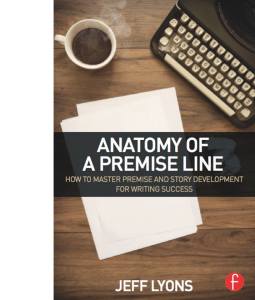 Jeff: Not until next year. Stephen and I are too busy with other projects, and I have another writing book I have to get finished for my publisher: Rapid Story Development: How to Use the Enneagram-Story Connection to Become a Master Storyteller. It’s the only book that’s ever been written that teaches how to use the Enneagram system as a story development tool. It will be quite an event when it comes out in late 2017. The publisher is Focal Press. My other book with Focal Press is Anatomy of a Premise Line: How to Master Premise and Story Development for Writing Success and it is the only book available that teaches how to build a story from the ground up BEFORE you start writing pages, and can help writers cut their development time literally in half and save them a lot of wasted pages as they ramble on writing with no clue where they’re going. The worst advice people learn about creative writing in MFA programs is to “just do it.” Horrible advice for 99.9% of writers. My book can help save you from that bad advice and give you a solid alternative that will be productive and creatively alive.
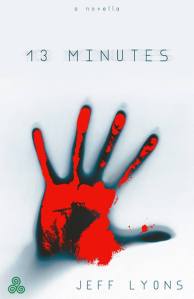 Jeff: I decided to self-publish 13 Minutes this year. I’m getting more and more into self-publishing. This story is smart people’s sci-fi, meaning, it is not just sci-fi high concept, but rather a strongly character-based story that focuses on dramatic human relationships. 13 Minutes takes place over a short period of story-time, is set in one room, and has a great twist ending most people never see coming. It was great fun to write, and I’ll probably get it produced into a short film for film festivals next year. I have a director interested. It’ll be a great short film for the sci-fi community and for the web watchers.




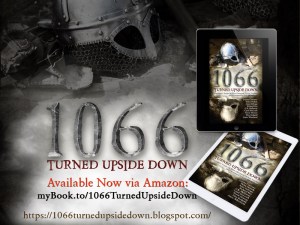 Elizabeth: Welcome, Helen. Tell us about your story in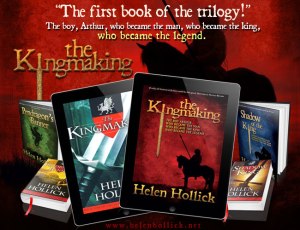
 I’ve chosen the books for this semester!
