Author Interview: A.M. Bostwick

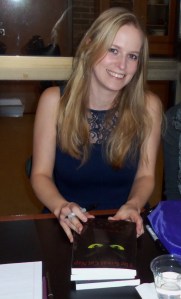
bostwick 2I am pleased to be able to interview Abigail Bostwick for the second time. Abigail’s first middle grade novel, The Great Cat Nap, was published by Cornerstone Press in 2013. It is the story of Ace, a reporter and a cat, who solves the mystery of a missing show cat. Abigail, who publishes as A. M. Bostwick, talked about writing that novel in our first interview. The Clawed Monet is the sequel to The Great Cat Nap and was released in February of this year.

Elizabeth: Welcome Abigail! Tell us what new adventure Ace, the mystery-solving cat, is up to now.
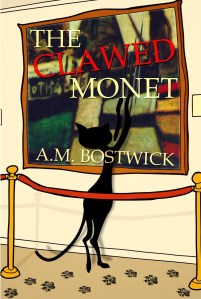
bostwick monetAbigail: Thank you so much for hosting me, Elizabeth! In The Clawed Monet, we find Ace on the trail of a new mystery following the scandalous opening of a new art exhibit at the historic Rhys Art Museum. When opening night is lights out after a peculiar power failure and a priceless Monet reproduction is clawed beyond repair, all paws point to the new curator’s prim and proper feline – Miss Kitty. Hired by Miss Kitty, Ace and his feline and canine friends are out to find the criminal and restore the reputation of Miss Kitty and her companion before they are fired. Tailing the shadow of a “ghost cat” through the historic district and a cemetery, Ace finds himself interrogating museum guests, local residents and even a so-called psychic cat to try and solve the crime. He’ll have to fend off a pack of Dobermans and contend with a gang of raccoons– all under deadline.

Elizabeth: Sounds like fun! Do you have plans for more books about Ace?

Abigail: In my mind, Ace is always having one adventure or another! While I certainly have ideas for a third novel, I don’t have anything concrete in the works right now.

Elizabeth: You’ve also published a young-adult novel called Break the Spell. Can you tell us about it?
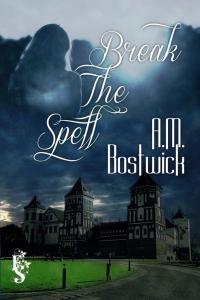
bostwick breakAbigail: When Allison Evans walks out of high school the last day of her senior year, she has no idea that her carefully guarded life is about to unravel. Her classmate, Ethan Knight is on the run. Accused of dealing drugs and armed with nothing but a bad reputation and his motorcycle, he takes refuge for the weekend inside the old high school. Thinking no one will find him and no one does. At least not at first. Allison tracks him down, hoping to get a newspaper story out of him. Panicked and left with no other choice, Ethan takes her captive. It should be a nightmare, but together, both of their lives take an unexpected turn. It’s time for them both to stop running from their problems, and in each other, they find common ground and someone they can trust.

When I wrote this novel, I think I most wanted to explore the secrets we sometimes keep, and how they can become toxic without someone to talk to. I found it especially hard when I was a young adult to confide in other people, especially about the things that scared me, or the things I could not fix or control.

Allison’s particular struggle with coping to accept the possibility of a debilitating, life-changing neurological disease – multiple sclerosis – was rooted in my own experience. While I couldn’t hide my early diagnosis from those around me the way Allison did, I certainly found myself wanting to do everything I possibly could to make it more bearable. Even if readers don’t have MS, I think they’ll be able to relate to Allison’s driven motivation to change her circumstances.

Elizabeth: It’s wonderful that you’ve shared your experiences and written about MS in a way accessible for young people. Do you approach writing for middle-grade readers (ages 8-13) differently than writing for young adult readers (ages 13-18) ?

Abigail: I do. When I’m writing Ace, I’m mostly having fun with the antics of felines and canines while also trying to entertain young readers (though I was reminded this week I have readers of all ages for this cat!) When I’m writing for young adults, I’m a little more candid and raw. Kids, especially teenagers, can see right through a façade or something that isn’t real. A book should be, most of all, fun. Engaging. Something people can see themselves in. If kids can see ordinary teens in literature rising to the occasion and figuring issues in their lives out, I think it’s easier for them to envision themselves doing it as well. And that’s empowering for them.

With both, I do my best to keep readers engaged with suspense and humor.

Elizabeth: What advice would you like to give to my readers who are also writers?

Abigail:I think many of us write because we have something to say, or something we want to be heard. Don’t write for trends, or the market, or what you think will sell. Write because you love it, because it’s your passion, and part of you. Write for you. Make friends who are writers, they’ll understand you better than anyone. Also, feed the cat before you start writing or he’ll lay across your keyboard.

Elizabeth: What have you read recently that you feel passionate about?

Abigail: I recently read All the Ugly and Wonderful Things by Bryn Greenwood, and I absolutely loved it. She writes with this beautiful clarity, and her characters are so well-drawn and heart-wrenching. In middle grade, I read Flora and Ulysses by Kate DiCamillo and I’m still smiling about the story. The poetry in it was lovely. I also have to say, two of my great writing friends had books release last week that are incredible – Running for Water and Sky by Sandra Kring and Devil and the Bluebird by Jennifer Mason-Black. These are don’t miss books, and make me want to go on a road trip.

Elizabeth: What do you do when you are not writing?

Abigail: I read – haha! I also enjoy spending time with my cat (who looks a lot like Ace), my husband, and my niece, who is turning 9 next week. I garden a little bit, love to paint and enjoy walking in the woods.

Elizabeth: Thanks so much for joining me today.

Abigail: Thank you for hosting me. Always a pleasure.

Elizabeth: If you’d like to learn more about Abigail Bostwick and her books, visit http://ambostwick.com

You can also follow her on Twitter: @bostwickAM.

She is on Goodreads under A.M. Bostwick and welcomes questions there from readers.

Anyone can email Abigail via her website.
Writers’ Conferences

Writers’ Conferences are a great way to meet others in the industry, talk books, discuss craft, participate in workshops, buy books, sell books and have a good time.

A few weekends ago, I went to the Lakefly Writers Conference in Oshkosh, Wisconsin. It is a well-organized, inexpensive and fun conference. I was able to pitch to two editors, learn about a “Books & Beer” book club, get details on creating a “30-Day Promotional Plan” and meet and re-meet some wonderful authors.

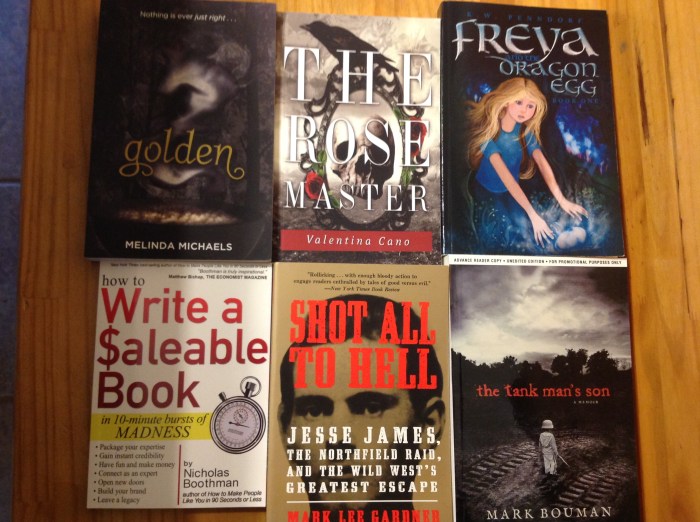
Of course, I can’t go to a writers’ conference and not buy books! Here are the books that came home with me: K.W. Penndorf’s Freya and the Dragon Egg (middle grade time-slip fantasy!), REUTS press novels: Melinda Michaels’s Golden (a loose re-telling of Sleeping Beauty) and Valentina Cano’s The Rose Master (a re-working of Beauty and the Beast and Jane Eyre!) I’m so excited to read these books!

lakefly books

The three other books in the picture came to me via a door prize gift basket that included a bottle of wine, chocolate pretzels, and a deck of cards. Lucky me!

My next conference will be the SCBWI-Wisconsin fall conference in Green Lake, Wisconsin. Next summer, I hope to attend the Historical Novels Society Conference in Portland, Oregon.

Fun times to come!

Author Interview: Camille Di Maio

camilleToday I’m welcoming Camille Di Maio to my series of author interviews. Camille is the author of The Memory of Us, the story of a young and wealthy Protestant woman in pre-­‐war Liverpool who befriends an Irish Catholic seminarian. Torn between her family’s expectations and her growing love for someone she’s not supposed to be with, the story follows Julianne’s journey through war, tragedy, secrets, and redemption.

Elizabeth: Welcome, Camille. Can you tell us more about your novel?

camilles bookCamille: Thank you for having me. I have always wanted to write a novel, ever since I was twelve years old. The idea to write something about a forbidden love appealed to me. When I was a teenager, we participated in something called the Ulster Project. It brought teens from Belfast, Northern Ireland to Denver for a summer. At the time, tensions were still very high between the denominations over there. Catholics and Protestants did not mingle, date, do business together, etc. So, this became the basis for the idea of a forbidden love. Ratcheting it up with Kyle, a poor immigrant on the path to priesthood and Julianne, a wealthy Protestant socialite, put many obstacles in their path – money, religion, etc.

Elizabeth: What drew you to this topic?

Camille: The topic really came together for me one day as I was driving, and the Beatles song, “Eleanor Rigby” came through on my iPod. Although I’ve heard it many times, I think I had this “forbidden love” theme brewing, and the song hit me in a particular way. Who was the old priest in the song? Who was the lonely woman? Then I thought – what if they had a history together? All the pieces started to fall in to place.

Elizabeth: How much historical fact is woven in to your story?

Camille: Quite a lot. While the plot is entirely fictional, everything surrounding it is not. The cultural tensions. The details of nursing school at the time. The terrible bombings during the Blitz. I meticulously researched fashion, food, history, lingo and such to give it as authentic a feel as I could. Nearly every place mentioned is real.

Elizabeth: What is your writing process?

Camille: While writing The Memory of Us, I drank lots of Dr. Pepper (I’m a good Texan) and stayed up until about 3 or 4 every morning writing a first draft. We have four children and run a business, so this was the only quiet time I had. My husband was a champ. Now that I’ve learned so much more about the craft of writing, I am trying to be disciplined by writing about one thousands words per day. Either the early morning or late night works best for me – when everything else in the house is settled.

Elizabeth: What are you working on now?

Camille: My publisher just bought my second book, Before the Rain Falls, which will be out in the spring of 2017. I’m about halfway finished writing it. It is quite different from the first book. It is partially historical, being set in Texas during the 1940s. And, it is told from three points of view.

Elizabeth: What have you read recently that you feel passionate about?

Camille: I am an unabashed Kate Morton fan, and her most recent book, The Lake House, was full of her signature poetic words and captivating story. This one was her first attempt at a mystery, and I found elements to be quite like another of my favorite authors, Agatha Christie.

Elizabeth: Can you tell us more about yourself?

Camille: I love the phrase “suck the marrow out of life”. I really don’t waste a minute. My bucket list is a zillion miles long, and I’m always in pursuit of something adventurous. My biggest passion is travel. I’ve been to about three-­quarters of the states, four continents, and I’m always figuring out a way to plan another trip. But, most importantly, I have been married to my husband, Rob, for nineteen years, we home school our four children, and Rob and I have been real estate investors/counselors for sixteen years. And, my faith is a big component of my life.

We’ve now reached the time in our interview for the let’s-­get-­to-­know-­the-­author-­better, nearly pointless, sort-­of-­silly, rapid-­fire questions:

Elizabeth: Coffee or tea?

Camille: Coffee – but only if it has loads of sugar and flavoring so that it masks the actual taste of the coffee. I like the IDEA of coffee.

Elizabeth: Ocean or mountain?

Camille: Ocean. I grew up in Denver at the foot of the Rockies, but I am SO at home near water.

Elizabeth: Hiking or shopping?

Camille: Shopping. I don’t own one pair of shoes that would be appropriate for a real hike.

Elizabeth: Violin or piano?

Camille: Piano. I studied it for eight years, but I’m quite rusty now.

Elizabeth: Mystery or fantasy?

Camille: Mystery.

Elizabeth: Darcy or Heathcliff?

Camille: Both! But, even better, Mr. Rochester. (I’m a huge fan of British literature.)

Elizabeth: Love scene or death scene?

Camille: Death scene. I love a good cry.

To learn more about Camille and her books, visit the sites below:

Website: http://www.CamilleDiMaio.com
Twitter: @camilledimaio
Instagram: camilledimaio_author
Facebook: http://www.facebook.com/camilledimaio.author
Book trailer: https://www.youtube.com/watch?v=_LhGrvDii9g

Author Interview: Michelle Cox

michelle cox

Today I’m welcoming Michelle Cox to my series of author interviews. Michelle is the author of the Henrietta and Inspector Howard mystery novels. The first in the series, A Girl Like You, has just released.

Elizabeth: Welcome, Michelle.

Michelle: Thanks for having me, Elizabeth!

Elizabeth: Can you tell us about your novel?

michelle cox book coverMichelle: A Girl Like You is the first in a historical mystery series set in 1930’s Chicago. It’s about a young, impoverished woman, Henrietta Von Harmon, who works as a 26 girl at the local bar to support her mother and siblings until she is persuaded by a friend to take up taxi dancing. Soon after she starts working there, the floor matron is murdered, and Inspector Clive Howard appears on the scene to investigate. Drawn to her apparent innocence and beauty, he persuades her to go undercover for him in a burlesque house to search for the killer.

Elizabeth: What drew you to this time and place?

Michelle: I’ve always loved the war years, and originally I wanted to set the story in the 1940’s, but the real woman that the fictional Henrietta is based on had a job at the Chicago World’s Fair in 1933, and I really wanted to use that detail, so I set the story a decade earlier. As for the place, I love Chicago. I’ve been here since 1986 when I came for college and have never looked back. It’s a very cool, unique city.

Elizabeth: How much historical fact is woven into your stories?

Michelle: The character of Henrietta is based on a real woman’s story I heard while working in a nursing home. I’ve written an article in which I outlined what parts of the story are real, and oddly, the more outlandish parts are the truth! Obviously, though, her story didn’t really involve a murder nor an aloof, handsome detective! The streets and the neighborhoods are all real, as are some of the places mentioned, such as the Aragon Ballroom and the Green Mill, but other places are made up.

Elizabeth: What does your research process look like?

Michelle: Honestly, a lot of Googling. Unlike a lot of other historical fiction writers, I don’t really get caught up in researching all the details. I’d much rather write the story. Anything that requires a bit of research gets written as “XXXX’s” in the narrative, and then I go back later and fill it in.

Elizabeth: What is your writing process?

Michelle: I have to write first thing in the morning, so as soon as the kids are off to school and my husband to work, which is 6:50 am, I sit down and start writing. No exceptions. I write even on vacations and sometimes even on holidays! When I first started, I would write just an hour a day, then two, then four. Now I set aside seven hours, but a lot of that these days is taken up with promo work.

Elizabeth: In what sort of situation will we next find Henrietta?

Michelle: Great question! Book 2 and 3 of this series are already written. In fact, I’m due to turn in the manuscript for Book 2 (working title, But Was He Honest?) for edits any day now. I don’t want to give anything away, but Book 2 picks up just where Book 1 ends. We find out what happens next in Henrietta and the Inspector’s relationship and what trouble they find themselves in now. Also, the reader has to figure out who the “he” is in the title who wasn’t exactly honest. Is it the Inspector? Or someone else? Or both?

Elizabeth: You are also the author of “How to Get Your Book Published in 7000 Easy Steps–A Practical Guide” which appears on your blog. Can you tell us about that?

Michelle: Thanks for asking about my blog! It’s the thing that gives me the most dread each week to write, but once it’s done, I find it amusing. I hope others do, too. I started it because I wanted to write about the publishing process in a funny way, from the newbie’s perspective. Everyone thinks that getting a book published is the end-all, the pinnacle! But then you find out that your work is just beginning, that you’re not at the pinnacle, you’re just at the base of yet another mountain. There’s something tragically funny there. But I try to throw in some real tips, too.

Elizabeth: What have you read recently that you feel passionate about?

Michelle: To be honest, I haven’t read a ton of contemporary fiction. I’ve spent most of my teens and adult life reading the classic canon, so questions like this always make me nervous. Since I’ve ventured out of my hole, I find Lauren Willig’s Pink Carnation series and Elizabeth Peter’s Amelia Peabody series extremely well-done. Excellent writing and very funny. I also think Barbara Stark-Nemon’s Even in Darkness was incredibly well-written, in my humble opinion. I absolutely loved it. It goes beyond entertainment into the realm of serious literary art.

Elizabeth: Can you tell us more about yourself?

Michelle: I’m married to a Brit and have three children, all of whom present their own challenges, especially the Brit. We live in the Chicago suburbs with a very needy dog. I used to love baking, gardening and board games before the book took over my life.

We’ve now reached the time in our interview for the let’s-get-to-know-the-author-better, nearly-pointless, sort-of-silly, rapid-fire questions:

Elizabeth: Coffee or tea?

Michelle: Coffee

Elizabeth: Ocean or mountain?

Michelle: Mountain

Elizabeth: Hiking or shopping?

Michelle: Hiking

Elizabeth: Violin or piano?

Michelle: Piano

Elizabeth: Mystery or fantasy?

Michelle: Mystery

Elizabeth: Darcy or Heathcliff?

Michelle: DARCY!

Elizabeth: Love scene or death scene?

Michelle: Love scene!

To learn more about Michelle, her mystery series, and her tips for newbie writers, visit her blog at http://michellecoxauthor.com

You can also friend her on Facebook, https://wwwfacebook.com/michellecoxwrites

Follow her on twitter: @michellecox33

And buy her books on amazon: http://amzn.to/1RELGYi

Thanks to Michelle for joining us today.

Fairy Tale Discussion Group

image

I’ve started a Facebook Discussion group called Fairy Tales: Reading, Re-Writing and Scholarship. If you are on Facebook and would like to join, type “fairy tales: reading” into the search box at the top of Facebook. This group should appear.

This is a venue for people to share information about fairy tales: new scholarship, research, favorite new versions, thoughts on re-writing these stories, etc. Promotion is allowed as long as it is relevant to the group.

I belong to some wonderful book discussion groups on Facebook, and I’m excited to get this one going. If fairy tales interest you, I hope you will join. Let me know if you have any questions.

The above illustration is one of a series of sketches by Hermann Vogel depicting The Little Red Riding Hood story.


Best Books of 2015

I read 112 books in 2015, a lot of them children’s books. The order of this list is chronological: the order that I read them. I’m mixing children’s books (MG), young adult books (YA), and adult (A) books. Don’t limit yourself. They are all worth reading!

The Crossover by Kwame Alexander (MG/YA)

This won the 2014 Newbery Award and deservedly so. My first response to the book is here. The Crossover is a novel-in-verse about two African American teen brothers who play basketball and have to get through some tough times.

The Septimus Heap series by Angie Sage (MG)

I wish Sage got as much attention for Septimus Heap as Rowling does for Harry Potter. This series in a magical world stars a lot of female characters and stays appropriate for elementary-aged readers. Exciting stories, good characters, impressive world-building, fun POV changes. I blogged about it earlier.

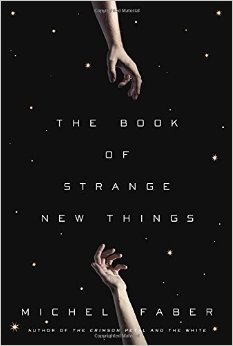
The Book of Strange New Things by Michel Faber (A)

A Christian missionary to a distant planet copes with the strange new world and with the difficulty of maintaining a relationship with his despairing wife back home.

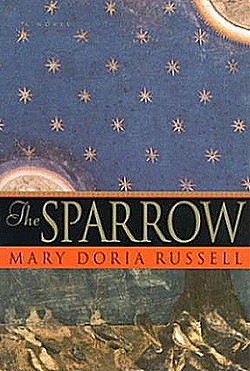
The Sparrow by Mary Doria Russell (A)

A crew leaves earth to make contact with inhabitants on another planet. The story unfolds in two time periods: as the exploration unfolds, and later, as the only surviving member stands trial on earth.

Here is a longer blog entry about both of these science-fiction novels.

The Rosie Project by Graeme Simsion (A)

An Australian geneticist decides to get married and creates a survey to help him winnow out unsuitable partners. In the process, he meets Rosie (completely unsuitable) and agrees to help her find the identity of her father. The way Don sees and interacts with the world is hysterical. Especially funny if you work with or are married to or are a male scientist/mathematician/engineer.

One Thousand Acres by Jane Smiley (A)

This is about a farming family. The patriarch has three daughters and is getting older, so decisions must be made about the family farm. Smiley is an incredible writer. Her characters are layered and real, and their development unfolds in ways totally unexpected. A captivating and painful read. Smiley won a well-deserved Pulitzer for this novel.

Will Grayson, Will Grayson by David Levithan and John Green (YA)

David and John wrote this story in alternating chapters about two teenage boys named Will Grayson. As I understand it, before they started writing, they picked the name the two characters would share (Will Grayson), David picked a time of year (February/March) and John picked a location where they would meet (Frenchy’s in Chicago). Other than that, nothing in the novel was planned. One would write a chapter, send it to the other, who would write the next chapter, send it to the other, and so on. How fun! I’d love to do something like this. Strangely, the starring role in the novel is neither Will Grayson, but a gay teen character named Tiny Cooper. He’s the best friend of the straight Will Grayson and eventually falls in love with the gay Will Grayson (not really a spoiler: Tiny Cooper is always falling in love). This book is funny and insightful and well worth the read.

The Wild Girl by Kate Forsyth (A)

The Brothers Grimm did not travel the German countryside collecting fairy tales. Most of their fairy tales came from Dortchen Wild, a girl who lived next door to them and would eventually marry one of the brothers. As a lover of fairy tales and historical fiction, I wanted to read this novel from the moment I heard of it, but Forsyth is Australian, and the novel wasn’t immediately released in the US. I got it as soon as it was and wasn’t disappointed. Forsyth does a great job of bringing to life her characters, mixing in the themes and details of the fairy tales, while keeping true to history. Loved it!

The Hired Girl by Laura Amy Schlitz (MG/YA)

After the death of her mother, Joan works the farm with her father and brothers, feeling uncared for and unappreciated, with her intelligence wasted, and her dream of becoming a teacher dwindling. When her father burns her books, she runs away and is hired as a servant by a wealthy Jewish family in Baltimore. The story is told by Joan who keeps a journal. She is a delightful character, naïve and caring, adventurous and hard-working, and above all curious and smart. Her mix of intelligence and innocence is beautiful drawn.

The War that Saved My Life by Kimberly Brubaker Bradley (MG)

Ada was born with a clubfoot, and her mother has never allowed her out of their one-room London flat. When she learns from her little brother that children are being evacuated to the countryside, she makes her escape. She and her brother are placed with a depressed woman who does not really want them. A beautiful story about love and death, acceptance and family, set amid World War II. A Newbery contender.

The Thing About Jellyfish by Ali Benjamin (MG)

Suzy can’t believe her former best friend could have drowned because Franny was such a strong swimmer–but she could have been stung by a jellyfish. Suzy copes with Franny’s death by learning about jellyfish and no longer talking. Although never stated, Suzy appears to be mildly autistic. Franny and Suzy had stopped being friends, something Suzy also struggles with. Painful, beautiful, insightful, and I learned so much about jellyfish! My vote for the Newbery Award. (Note: I don’t actually have a vote.)

Winter by Marissa Meyer (YA)

The Lunar Chronicles conclusion! When I first started reading this, I was a little embarrassed by the sappy teen romances, and I thought to myself: Why am I so into this series? Then, the plot kicked in and I remembered why. Fast-paced action, fun characters, (sappy romance) and fairy tale tropes. Not only are Meyer’s characters racially diverse, but this title character, Winter, struggles with mental illness. A fine conclusion to a wonderful series.

Humans of New York by Brandon Stanton (A)

I got this for Christmas. If you don’t follow Brandon on Facebook or read his blog, you should. It doesn’t take much time, and it will connect you to humanity. Brandon is a photographer who began by taking pictures of people in New York City. Sometimes he included a quote or two from his subjects. Then he began interviewing them and including their stories with their photographs. Then he expanded beyond New York City. This book is just NYC. The photographs and stories are beautiful, painful, joyful, surprising, but most of all, they uncover the diversity of the human experience.

So, there it is. A year of good books. I hope you have found some new titles to add to your reading list.

Happy New Year!

Two Great Books for You to Read!

Within the last two weeks, I read two books about Christian missionaries traveling to alien worlds. I recommend them both. Both are works of fantasy, yet both are grounded in reality, providing wonderful character studies and handling deep philosophical questions.

book of strange new thingsIn The Book of Strange New Things by Michel Faber, Peter, an English pastor, is chosen by a powerful multi-national corporation to act as a missionary to the Oasans, people on a planet newly colonized by earth. Peter must leave his beloved wife, Bea, and their cat, Jacob. Bea introduced Peter to Christianity and their marriage has been one of deep love and total companionship. The difficulty of their separation and what it does to their relationship is one of the main focuses of the novel. The “aliens” that Peter ministers to are thirsty for knowledge of Christ, and we wonder why. We also wonder about the powerful muti-national corporation and its motivation for sending Peter. And what about the previous pastor who disappeared? And the linguist who taught the natives English and also disappeared? While the novel is suspenseful, it isn’t action-packed. The stress on Peter and Bea’s relationship also causes stress on their faith, and this is where the book excels. Its examination of love and faith in crisis is fascinating.

The Sparrow bookThe Sparrow by Mary Doria Russell is also an examination of faith. Father Emilio Sandoz had it and lost it: why? Father Emilio Sandoz is one of a crew of Jesuit missionaries sent toward Alpha Centauri after radio signals demonstrate that intelligent life exists on a planet in that area of space. Sandoz is the only survivor of the mission. The book alternates between “past” and “present.” In present day, Sandoz is being interrogated by the Jesuits to discover what went wrong. He is accused of some horrible crimes. In alternate chapters, we learn about the discovery of the radio signals, the recruitment of the crew (all wonderful characters, that we readers fall in love with; Sandoz being the most wonderful), the trip across space, until the past meets up with Sandoz’s confessions. What went wrong? How did everyone die? How did Sandoz “go bad” ? This book has action, great characterization, and incredible world building. The author, Mary Doria Russell, has a PhD in biological anthropology, and uses her knowledge well. The development of the setting on the new planet–the cultures and languages and interactions of the races–is brilliant and probably my favorite part of the book.

I was disappointed by the endings of both books. However….

After thinking about the ending of The Book of Strange New Things for several days, I changed my mind. It ends exactly how it should. I didn’t “get” it at first, but I do now.

The Sparrow puts so much emphasis on what went wrong, what horrible thing happened, that its discovery was anti-climactic for me. I still recommend the book.

I highly recommend both books. So, get reading!

Septimus Heap and International Children’s Book Day

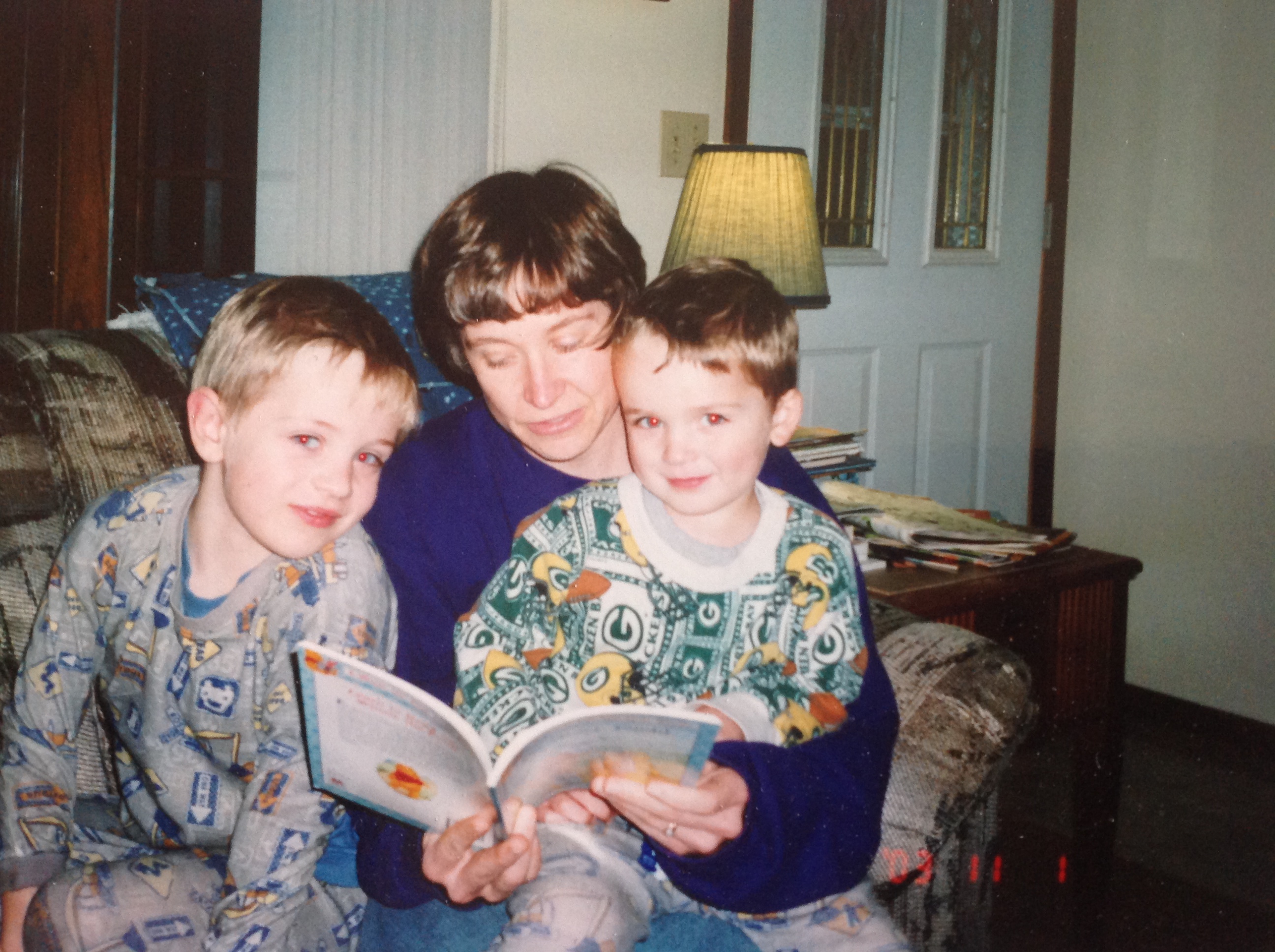
Me reading to my boys (a few years ago)
Me reading to my boys (who no longer fit on my lap)

When my boys were little, we did a lot of reading aloud, including Angie Sage’s Septimus Heap books, a 7-book, middle-grade fantasy series about the seventh son of a seventh son. We read books 1-3, then got book 4 when it came out. By the time book 5 came out, we were reading them on our own, and I had forgotten so much about the earlier books, that I didn’t know what was going on all the time. I decided I’d wait for books 6 and 7 to come out and then start at the beginning again.

And then the years went by and I forgot….

Until I found book 7 in a store two weeks ago and re-started the series. Wow! It is even better than I remembered. Angie Sage’s world building is fabulous. She has many, many characters and they are well developed and interesting. The plot moves like an out-of-control roller coaster. The writing is clever and funny.

But the best thing. The most notable thing about this series: The number of female characters. The number of female characters either matches or is greater than the number of male characters. The female characters have important roles too.

The first in the series

This kingdom is a matriarchy, with power passing from Queen to Princess. Ten-year-old Princess Jenna is a main character, as “main” as the title character of Septimus. There are male and female wizards, but the top wizard, the Extra-Ordinary Wizard, is a woman. There is a coven of witches (all female) and a female boat builder. A series about a boy named Septimus Heap, who is the seventh son of a seventh son, is going to have a lot of boys in it. And it does. But not more boys than girls.

It is so rare to find as many female characters as male characters in a fantasy novel that this book seems female-heavy. Yet, when you sit down and count, the numbers of male and female characters are even. Just like real life.

Is this important? I think so.

Harry Potter has Hermione and Professor McGonagall and Bellatrix, but each of them stands in the shadow of a more important male character: Harry, Dumbledore, Voldemort. All the key characters are male.

I don’t blame JK Rowling. Would her books have gotten the same attention if Harry had been Henrietta, the girl who lived? I doubt it.

Angie Sage's Septimus Heap series (I must have loaned out book 2)
Angie Sage’s Septimus Heap series (I must have loaned out book 2)

So, please, on this International Children’s Book Day, buy (or borrow) the Septimus Heap series (Magyk, Flyte, Physik, Queste, Syren, Darke, and Fyre) and read them to your favorite children.

You will be struck by the number of female characters. But guess what? Your children won’t.

Rain Reign and Crossover

For the past several years, my ladies book club has decide to spend the months of December and January reading children’s novels that have a chance at the Newbery Medal. We do a bit of research, come up with about 15 to 20 titles, then share the books. We meet in January and talk about our favorites. The Newbery Medal is  announced at the end of January.

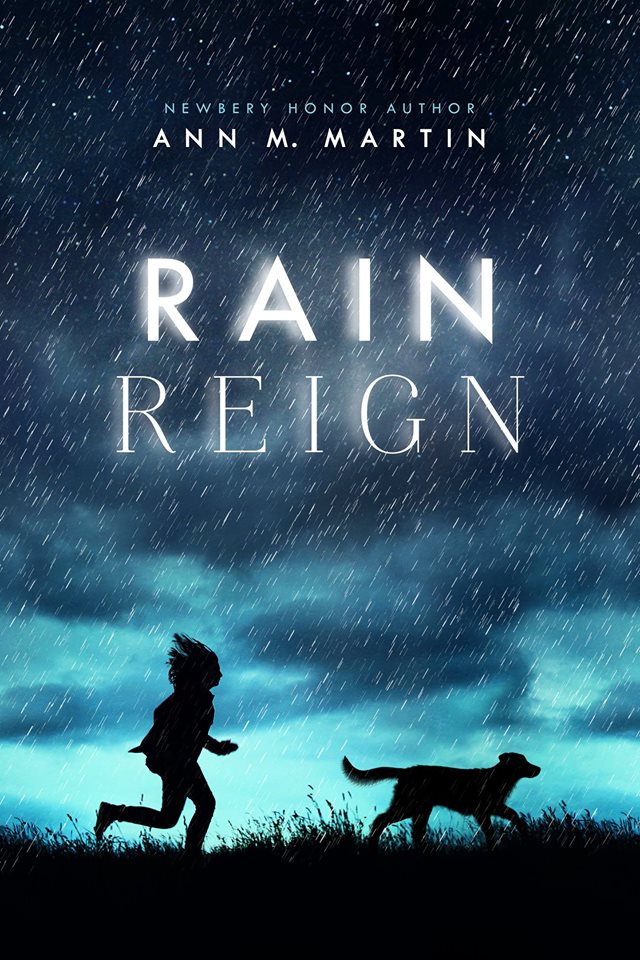
RainReignThis year, the book I liked most was Rain Reign by Ann M. Martin. The story is about an autistic girl and her dog. It is a beautiful, beautiful book.  I was extremely disappointed when the Newbery Medal was awarded to Kwame Alexander’s Crossover, a book I hadn’t even heard of.

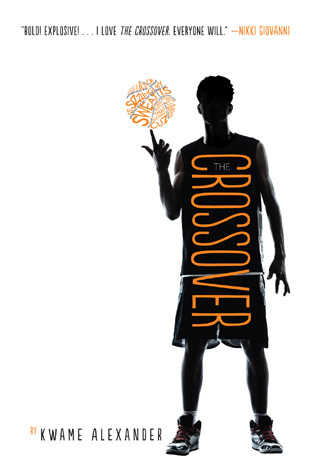
crossoverWell, I just finished reading Crossover, and I am delighted that it won the award. It is a wonderful novel-in-verse about two African American brothers who love basketball.  I’m not male, I’m not African American, and I don’t much like basketball.  It doesn’t matter! The story is brilliant and the writing inspired. Alexander’s poetry jumps off the page and sings in your head.  Some poetry you have to read aloud to hear it as poetry, but I could hear the cadence and the rhymes in my head even in silent reading.

Crossover is not only a book for people who love to read, it is a book that will appeal to those who hardly ever read.  So, hats off to Kwame Alexander and the Newbery Award committee. Great book. Great choice.

Reading Challenge 2015: Update #1

A Facebook friend of mine is doing a reading challenge, and I agreed to do it with her. I’m not sure where she found the list, but I printed it (when I decided to do the challenge) and through a google search (just now) found an online copy on the blog of children’s author Julie Stroebel Barichello.

Two months into the year and I’ve read eighteen books. Here’s how they fit into some of the challenge categories:
A book with more than 500 pages: One Summer by Bill Bryson
A book published this year: The Eterna Files by Leanna Renee Hieber
A book with a number in the title: Ramona Quimby, Age 8 by Beverly Cleary
A book with nonhuman characters: The Mouse with the Question Mark Tail by Richard Peck
A book by a female author: Absolutely Almost by Lisa Graff
A book with a one-word title: Firegirl by Tony Abbott
A book set in a different country: The Dark is Rising by Susan Cooper
A book by an author you love that you have not read yet: The Madman of Piney Woods by Christopher Paul Curtis
A book a friend recommended: Just One Damned Thing After Another by Jodi Taylor
A book more than 100 years old: Treasure Island by Robert Louis Stevenson
A book from your childhood: Island of the Blue Dolphins by Scott O’Dell
A book set in the future: The Ear, the Eye and the Arm by Nancy Farmer
A book that made you cry: Feathers by Jacqueline Woodson
A book with magic: First Frost by Sarah Addison Allen
A book by an author you’ve never read before: As Love Blooms by Lorna Seilstad

As the year progresses, I’ll match more books with more categories and post updates here. It isn’t too late to join the challenge!