Blog Hop!

Jessica Knauss has initiated a blog hop to allow book fans a chance to read excerpts from a number of historical novelists. Welcome if you have come here from her page. Go there next, if you started here. My excerpt from Syncopation: A Memoir of Adèle Hugo is below:

Pulling off her gloves, she placed her palms and right cheek against the stone wall. “I like how the cold moves into my blood. I can feel the music, even when there is no service; the building stores the sound of the music. I can hear hymns sung a hundred years ago.”

Adèle opened her eyes and saw him standing several paces from the building. “Come,” she said, tugging at him. “You’re not feeling the cathedral.” She removed his hat, and, threading her fingers through his hair, gently pressed his head against the cold stone. “Close your eyes and feel Notre Dame.”

Auguste closed his eyes, but he felt only the nearness of Adèle, and her palm against his temple.

Now hop on back to Jessica Knauss’s website and visit some other authors.

Interview with Gale Borger

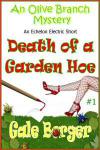
gale borgerToday I’m welcoming Gale Borger to my series of author interviews. Gale writes humorous mysteries, including the Olive Branch series and the Miller Sisters Mystery series. Gale’s six Olive Branch short mysteries, formerly only available as ebooks, have just been released in a print collection that includes an all-new sixth mystery.

Elizabeth: Gale, thanks for visiting today.

Gale: Thank you for having me.

Elizabeth: Tell me a little about the Olive Branch kids and the mysteries they solve.

gale olive branch bookGale: The Olive Branch mysteries were the product of a brainstorm by Karen Syed, owner and President of Echelon Press out of Orlando, Florida. A huge proponent of the literacy movement, Karen came up with the idea of having several authors each publish a series of six short e-stories (one per month over the summer) in YA format, which would read like episodes. At the end of the sixth “Electric Shorts” installment, the readers would have read an entire story, but not face the intimidation of struggling through a long chapter book. The shorts worked great for summer reading programs.

Elizabeth: How did this idea evolve into the Olive Branch Mysteries?

Gale: Because I’m a Master Gardener, Karen suggested I write about gardening, and I tutor and work with many young adults in their late teens and early twenties, so it was decided that I take the teenage readers and develop my series from that.

I thought writing gardening for teens would be like trying to talk a group of Ultimate Fighters into taking ballet lessons. What I came up with was to establish a garden center where teens in trouble with the law could work off court ordered community service while receiving counseling and schooling at the same time.

The mystery comes into play while walking back to the garden center after a day of planting flowers downtown. The five teens, Cash, Pone, Shroom, Spaz, and Bean, stumble across a dead prostitute in an alley. They are compelled to find out who murdered her. Thus was born the first installment, “Death of a Garden Hoe.”

Elizabeth: Now tell me about the Miller sisters.

gale millers sisters bookGale: I was sitting at home after knee surgery when my husband, Bob, dropped a laptop into my lap and said, “It’s time for that story to come out, Gale.”

I started out by sketching characters; taking personality traits, quirks, eccentricities (and just plain weirdness) from my siblings, my friends, my mother and her friends, and from people I’ve known over the years. I came up with four girls raised on a farm (Buzz, the eldest, is Wisconsin’s newest member of the AARP). Buzz is an ex-detective, and in each of the books, one of the sisters “help” solve a murder. The results are pretty funny. Mag is a high school biology teacher, Al is a librarian, and Freddie owns the local pet shop. Buzz’s love interest is a childhood friend and the local Sheriff, and they still make all major decisions by the tried and true Rock, Scissors, Paper method.

Elizabeth: But how can murder be made funny?

Gale: Murder is never funny, but how you get to the truth can be a riot.

Elizabeth: As a mystery writer, do you find you need to outline the plot before you begin writing?

Gale: I don’t outline, I develop characters. They write the stories.

Elizabeth: Is there a mystery writer you especially admire or one that you read to learn the craft from?

Gale: There are many writers I admire and read. The truth of the matter is I’ve spent over twenty years in law enforcement, so I know crime, and the people who commit crimes. Actually, some of my favorite people are bad guys. I grew up with humor, and hung out with creative and funny people. When it came to putting it all down on paper, it seemed natural to combine the two.

Elizabeth: Do you find that you need to work and plan to be humorous in your stories, or does the humor just flow?

Gale: Great question. The humor flows. Humor has to come naturally, or it looks forced–like punch lines stuck where they don’t belong. If you have funny characters, they will do things in a funny manner. Quick, witty dialog is so very important. That is why I stress character development. I never know what is around the corner, but my characters fling me around it like crack-the-whip.

Elizabeth: Anything else you’d like us to know about your books?

Gale: Well, now that you mention it, I’ve been asked if I thought it was rather silly and far-fetched to have grownups have nicknames and Three Stooges humor. The funny thing is, I really do have a sister with the nickname of Maggot, mine was Buzz, and I have a sister Sam, whose real name is not Samantha! The old ladies with police scanners are real (thanks to Mom and her friends), and we really do call my baby sister Jack the Tripper. Mark Twain once said, “Truth is stranger than fiction, but it is because fiction is obliged to stick to possibilities; truth isn’t.” I don’t know about strange, but the truth sure can be funny!

Elizabeth: Enough of your book—tell us about yourself.

Gale: I grew up in northeast Illinois on a horse farm in a household who watched Red Skelton, Jack Benny, Dick Van Dyke, and The Three Stooges. I loved Carol Burnett, Gilda Radner, Lily Tomlin and Lucille Ball–brilliant comediennes who didn’t have to take their clothes off to entertain their audiences. I love screwball comedy and I don’t apologize for pie-in-the-face jokes.

I’ve lived in southeastern Wisconsin for the past 20 years. I have a Bachelor’s degree in Criminal Justice and a Master’s degree in Education. I have been a Correctional Officer with the Walworth County Sheriff’s Office for the past seventeen years, and I already mentioned I was a Master Gardener, and I want to learn to train therapy dogs (in my spare time, of course).

My husband Bob and I have about 1,000 gallons of freshwater tropical fish, and Bob makes the best tropical fish food you can buy (captainbobsfishtales.com). Our daughter, Shannon is a double music major at UW Milwaukee, and plays a mean trombone.

Elizabeth: We’ve now reached the time in our interview for the let’s-get-to-know-the-author-better, nearly-pointless, sort-of-silly, rapid-fire questions:

Elizabeth: Coffee or tea?

Gale: A pot-o-coffee in the morning, tea in the late evenings, and Diet Pepsi any time of day.

Elizabeth: Ocean or mountain?

Gale: Mountains. I love the water, but I’ll take a lake over an ocean any day.

Elizabeth: Hiking or shopping?

Gale: Hiking-definitely. I abhor shopping!

Elizabeth: Violin or piano?

Gale: Piano if it’s Victor Borge

Elizabeth: Historical fiction or fantasy?

Gale: I prefer hysterical over historical fiction

Elizabeth: Darcy or Heathcliff?

Gale: Mr. Darcy, of course. How can one resist a 200 year old unattainable, yet endearingly awkward man, who loves you for who you are, who sees you as an intellectual equal, and he’s a rich, handsome guy to boot?

Elizabeth: Love scene or death scene?

Gale: Love scene (sans the milky white thighs), which turns into the death scene.

To learn more about Gale and order her books, visit her blog: http://galeborgerbooks.com

her Amazon.com Author page: http://tinyurl.com/9wz9ktm

and her Barnes and Nobel Author page: http://tinyurl.com/a8nbkmd

Making the World a Better Place

Today seems like a good day to point out something good happening in the world.

 Heifer International  helps families in developing nations buy animals or other agricultural products that can reproduce, thus feeding themselves and providing off-spring which they can give to their neighbors, thus helping the entire village.  I donate to Heifer every year in April, for my mother’s birthday, and in November through World Builders.

World Builders is run by my fellow Stevens Point writer Patrick Rothfuss, who gets authors to donate books (Syncopation and The Stolen Goldin Violin are two of the lesser-know titles) and other cool things. You can bid on items or donate to Heifer and get your name in a lottery for items.  Last year (if I’m getting my research right) World Builders raised $311,699.00 for Heifer.  So, join the fun and learn what’s going on at World Builders.

Interview with George Rogers

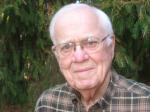
George Rogers

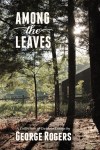
Today I’m welcoming George Rogers to my series of author interviews. George is the co-author of For the Love of Postcards. His most recent book is  Among the Leaves, published by Cornerstone Press in November.

Elizabeth: Among the Leaves has the subtitle: A Collection of Outdoor Essays. How would you explain an “outdoor essay?”

George: Anything that has to do with nature.AmongtheLeaves-Cover

Elizabeth: Could you tell us the topics of some of the essays?

George: I say in the introduction that this isn’t a “me and Joe went fishin'” book. I don’t ignore fishing and hunting but I’m more into other outdoor activities, wildlife and the environment in general. Some of the topics are the Apostle Islands and Isle Royale in Lake Superior, prairie chickens, deer, jackass rabbits (now thankfully called jackrabbits), wolves, camping in Costa Rica and climbing Mount Fuji. But mostly it’s about Wisconsin.

Elizabeth: You’ve been a journalist for more than fifty years. How were you able to choose which essays to include and which to leave out of this collection?

George: I tried to choose topics that appealed to people who liked the outdoors, not just the hook and bullet crowd.

Elizabeth: You grew up in Wisconsin and spent a lot of time in the woods as a child. How do you think that has affected your outlook on life?

George: I was exposed to nature as a kid by fishing with my father and getting to see the ruined old-growth Wisconsin forest, and learning what a grand thing it had once been. That doesn’t mean I’m against logging. I’ve cut many trees in my time (and planted thousands of them), but from an early age I learned logging had to be done judiciously.

Elizabeth: Tell us about one of your favorite vacations or travel destinations.

George: I’ll mention several. Northern Wisconsin is always a good one. I like the Gulf Coast of Texas because it isn’t as overdeveloped (yet) as Florida, it’s on the ocean and it’s low-key. Japan was good, but when I was there I was in the military and not really vacationing. However, it gave me the opportunity to climb Mount Fuji. Also I saw some incredibly polluted waters, which was a real lesson.

Elizabeth: What is your writing process or schedule?

George: I’m not on a schedule. I write an outdoor column and a few other things for a weekly newspaper, the Portage County Gazette, but that’s a relaxed timetable. I write any time the mood strikes me and email my stuff in. That way I don’t get in the hair of the real working people. If I were writing another book, I’d set a target – so much production per week.

Elizabeth: How did the idea for Among the Leaves come to you?

George: I didn’t plan to write Among the Leaves. A co-worker from my daily newspaper days talked me into it. I thought it would be a chore but I found out it wasn’t. I should have known that. All my working career I was on a deadline and learned to live with it. Relatively speaking, this was easy.

Elizabeth: Cornerstone Press is a small press sponsored by the English Department at the University of Wisconsin, Stevens Point. Students enroll in the Editing and Publishing class, and over the course of the semester select a manuscript, design a cover and layout, edit, publish, market and sell the book. What has been your experience working with this group of students?

George: They were good people, really interested in turning out a good product, and quite professional. I predict a bright future for them.

Elizabeth: We’ve now reached the time in our interview for the let’s-get-to-know-the-author-better, nearly-pointless, sort-of-silly, rapid-fire questions:

Elizabeth: Coffee or tea?

George: When I get up in the morning I brew a cup of tea because I don’t like instant coffee and it takes too long to make a pot of regular coffee.

Elizabeth: Ocean or mountain?

George: Both.

Elizabeth: Hiking or shopping?

George: Anything but shopping.

Elizabeth: Violin or piano?

George: Much to my regret, I’m devoid of musical talent.

Elizabeth: Mystery or Fantasy?

George: Mystery. There’s already too much fantasy in life.

Elizabeth: Hester Prynne or Scarlet O’Hara?

George: My attitude on this one was adequately summed up by Rhett Butler in his memorable farewell to Scarlett, “Frankly, my dear, I don’t give a damn.”

To order a copy of Through the Leaves, visit the Cornerstone Press website.

A big thanks to George for being my guest today.

Interview with Waheed Rabbani

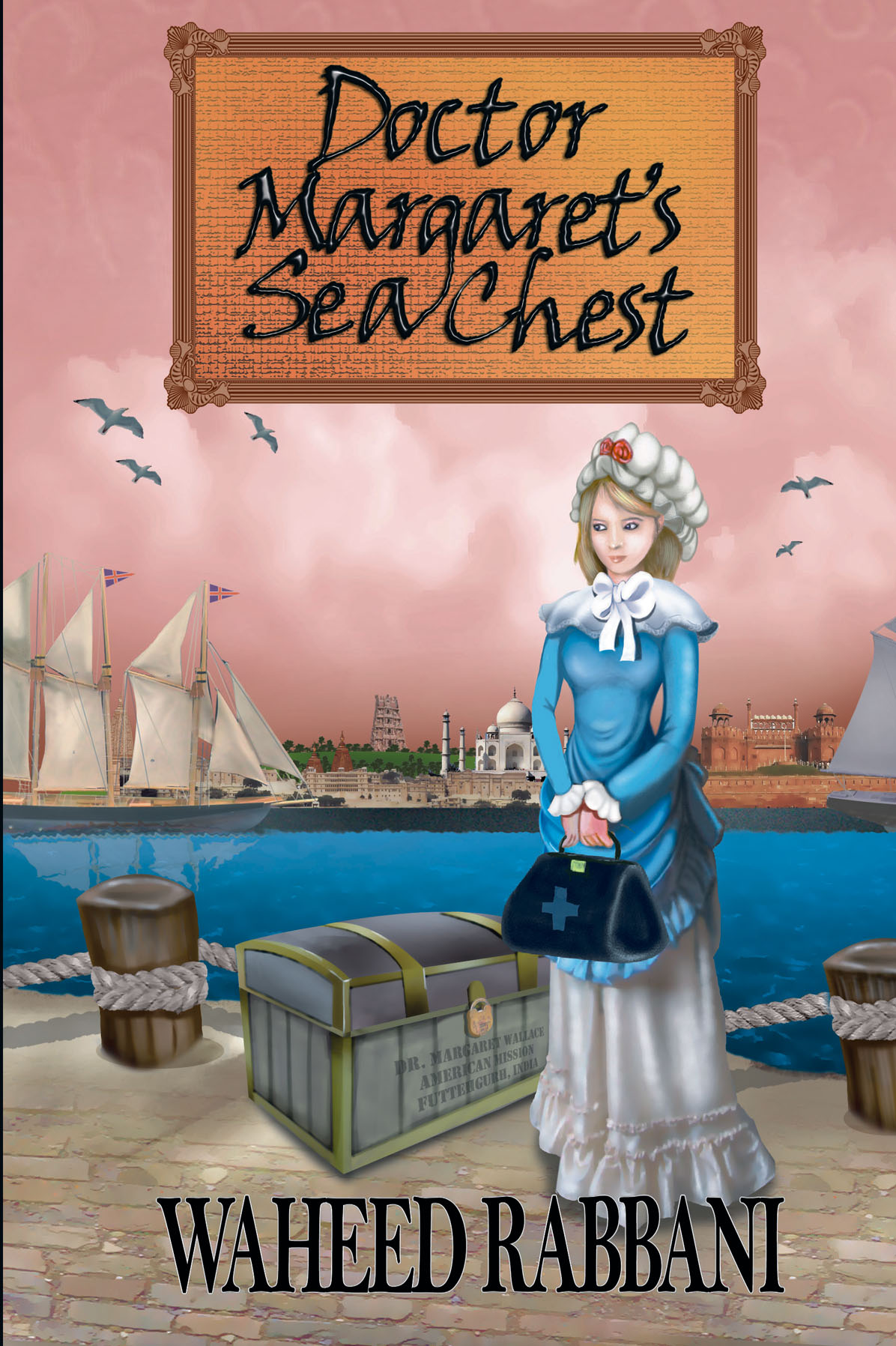
Today I’m welcoming Waheed Rabbani to my series of author interviews. Waheed is the author of Doctor Margaret’s Sea Chest, the first book in a historical fiction trilogy.

Elizabeth: Can you tell us a little about Doctor Margaret’s Sea Chest?

Waheed: Doctor Margaret’s Sea Chest is Book I of The Azadi Trilogy. This series of historical fiction novels is set during India’s struggle for freedom—Azadi—from the British Raj. The Books weave a tale of international intrigue, conflict, and poignant love between interesting characters of that era.

In 1965 an over 100-year-old sea chest, of an American doctor, Margaret, is discovered in the storage room of a hospital in Delhi. Another American doctor, Sharif, who originally hails from Delhi and is on contract at the hospital, is entrusted with the task of locating the mysterious woman’s relatives and returning her trunk.

Margaret, born in New Jersey, achieves her heart’s desire, in 1850, to become one of the first North American women doctors. She marries her Canadian cousin, Robert, and travels with him to serve in the Crimean war of 1854. There, they have to not only face hardships of battles, but also endure other conflicts. The surprise ending of Book I, leaves Margaret in a quandary, whether to seek vengeance or to continue with her journey to India.

The novel explores Christian and Missionary norms, and Victorian values. The Underground Railroad and the wars of 1812 and in the Crimea, are covered in a unique way.

Elizabeth: Have you already started writing books 2 and 3? Where do you see the story going?

Waheed: Yes, Book II: The Rani’s Doctor is nearing completion and would be published early in 2013. It continues with Margaret’s story upon her arrival in India and serving at a military hospital in Delhi and later her appointment as a physician to the Rani of Jhansi. There she is caught up in the 1857 Mutiny/Rebellion. Book III has been plotted. It covers the subsequent period up to 1947 when India finally achieves her independence. It is told through the eyes of Margaret’s descendants.

Elizabeth: How much historical fact is woven into your novels?

Waheed: These being historical fiction novels, the historical events are all accurate. While in the novel there are some real life personalities, the major characters are fictional, and their story is inter woven with the historical, and fictional, happenings. This enables covering the historical period in a non-intrusive manner, such that readers would find the story not only interesting, but furthering their understanding of the history from a pleasurable reading of the novel.

Elizabeth: How do you do your research?

Waheed: Fortunately, most of the primary sources (diaries, letters, accounts, etc) written in the early nineteenth century, being out of copyright, with the advent of internet are now available on-line. Hence, I did not have to travel to the central depositories (such as the British Library in London). Although I did travel to India and visited some of the locations I’ve covered in the novel.

Elizabeth: What is your writing process?

Waheed: I am a bit of both: a plotter and a “pantster.” While I do outline and timeline the events, invariably, I find the characters take over the acting of the scene. I am happy to let them carry on, even if it means tweaking the plot. It seems to me that this process results in a more natural (if you will) unforced narrative, which I’m sure readers would enjoy more.

Prior to retirement from engineering (in 2011), I wrote whenever I found free time. However, during the early period of my retirement I found the process of, ‘write when you feel like it,’ didn’t seem to work well. Hence, now I have forced myself into a 9 to 5 writing routine, as if I was at a full-time job. It seems to be working. But then again there are days, just like at a job, when I do not feel like writing and have to ‘call in sick.’

Elizabeth: Enough about your books, tell us about yourself.

Waheed: I was born in India, near Delhi, and was introduced to Victorian and other English novels, at a young age, in my father’s library. Most of the large number of volumes, were purchased by my father at ‘garage sales’ held, by departing British civil service officers and their families, in the last days of the British Raj.

I graduated from Loughborough University, Leicestershire, England, and received a Master’s degree from Concordia University, Montreal. While an engineer by profession, my other love is reading and writing English literature. I obtained a Certificate in Creative Writing from the McMaster University, Hamilton, Ontario, and with the teachings of all my lecturers there, embarked on this writing journey.

My wife Alexandra and I love to travel and have visited India and many other wonderful countries. We are now settled on the shores of Lake Ontario, in the historic town of Grimsby.

I’ve also contributed to the following Anthologies: Canadian Voices II, Indian Voices, and In the Wings: Stories of Forgotten Women.

More information is available on my website noted below.

Elizabeth: Are you a member of any writing and social media groups?

Waheed: Yes, I’m a member of a historical fiction on-line critique group, and a local readers’ club. I am also on Facebook, Twitter, Linkedin, and others. I am a member of the Historical Novel Society and am as well on their book review team, helping to review (and post in their magazine) the numerous new books received by them every month.

Elizabeth: We’ve now reached the time in our interview for the let’s-get-to-know-the-author-better, nearly-pointless, sort-of-silly, rapid-fire questions:

Elizabeth: Coffee or tea?

Waheed: Coffee as the ‘eyes opener’ in the mornings. But in the afternoons I yield to tea and with dinner, red wine.

Elizabeth: Ocean or mountain?

Waheed: Both really. During winter holidays on the beaches, and vacations in the summer at cottages in the mountains.

Elizabeth: Hiking or shopping?

Waheed: Both, as per above, depending on where I am.

Elizabeth: Violin or piano?

Waheed: I once did sign up, at a local college, for piano lessons, and purchased one too! But, it is more of a novelty piece in our drawing room.

Elizabeth: Mystery or fantasy?

Waheed: Mystery, definitely. I suppose I am more of an engineer (left brained) to hardly ever read a fantasy novel.

Elizabeth: Hester Prynne or Scarlet O’Hara?

Waheed: Scarlet, absolutely, for her gutsy ways. Loved her saying: “Tomorrow is another day,” (or something like that).

Elizabeth: Love scene or death scene?

Waheed: Love scene, being a romantic at heart!

To learn more about Waheed Rabbani and his Doctor Margaret stories, visit his website,  http://tiny.cc/wrabbani

Waheed’ s book is available on Amazon: http://astore.amazon.com/waherabbhistf-20

Elizabeth: Waheed, thanks for agreeing to this interview.

Waheed: And thank you very much for having me on this interview. It was a pleasure to tell you all a bit about myself and my writing. I’ll be happy to respond to any questions from the readers. My email address is: wrabbani at cogeco.ca


The Next Big Thing: The Stepsister

The latest game for authors in the blogosphere is to tag each other for The Next Big Thing. Once tagged, an author answers a few questions, then tags other writers, with their permission.

Historical novelist Kim Rendfeld, author of The Cross and the Dragon , a retelling of two medieval legends, tagged me. Kim and I attended Indiana University at the same time, although we didn’t cross paths until recently.

What is the working title of your book?

The Stepsister

Where did the idea come from for the book?

I teach a children’s literature class to elementary education majors, and so I read a lot of children’s and young adult books. Right now, modern versions of fairy tales are very popular. I especially like the variations to the Cinderella story, and I wondered what I could do to make that tale different. I decided that having one of the stepsisters narrate the story would give the story an interesting twist.

What genre does your book fall under?

Gosh, it falls into a lot! Fantasy, historical fiction, children’s/young adult, and I’m giving this story a bit of a steampunk flavor as well.

Which actors would you choose to play your characters in a movie rendition?

Most of the characters are teenagers, and I don’t know Hollywood well enough to pick out actresses for the parts. I liked Drew Barrymore in Ever After and Hugh Dancy in Ella Enchanted, but they are both too old now. I guess this is a great chance for some new talent to get discovered.

What is the one-sentence synopsis of your book?

Cinderella’s stepsister Dru, an inventor like her father, narrates this steampunk version of the classic fairy tale.
Will your book be self-published or represented by an agency?

I’m looking for an agency—if you’re an agent and find my story interesting, please let me know!
How long did it take you to write the first draft of your manuscript?

Not finished yet! My three adult novels each took about three years a piece. The only other children’s novel I’ve written took one month (I wrote it as part of NaNoWriMo). I’m guessing the first draft of The Stepsister will take about a year to finish—I’m hoping to be done by June 2013, so I can take it to the Historical Novels Society Conference.

What other books would you compare this story to within your genre?

Ella Enchanted is another retelling of the Cinderella story. Girl Genius has the same steampunk elements and a heroine a little like my own.
Who or what inspired you to write this book?

For the past few years, I’ve been writing historical fiction, reading fantasy, and teaching children’s literature. I think it’s no surprise that my latest work combines all of this.

What else about your book might pique the reader’s interest?

Although readers probably think they know Cinderella and her stepsisters, when they read my version, they will discover that they didn’t know them at all. I’m aiming for a depth of character missing from most fairy tales.

Also, in The Stepsister, I use steampunk technology as a pseudo-scientific explanation for the magic that occurs in the Cinderella fairy tale.

I was tagged by:

Kim Rendfeld’s blog is Outtakes from a Historical Novelist . Her novel The Cross and the Dragon was published by Fireship Press this year.

I tag:

Beth Elliott  writes tales of adventure and romance set in the wider Regency period, including The Wild Card, shortlisted for the 2009 Romance Prize and recently released on Kindle. Beth’s blog is Regency Tales.

Tina Boscha is the author of River in the Sea, a haunting story of life on the North Sea coast during German occupation, based in part on the real-life experiences of Tina’s mother.

Tinney Heath is a fellow Wisconsin author who writes about the 13th Century. Her blog is Historical Fiction Research.  Her novel A Thing Done  will be published by Fireship Press this spring.

Author Interview: Nicolas Kublicki


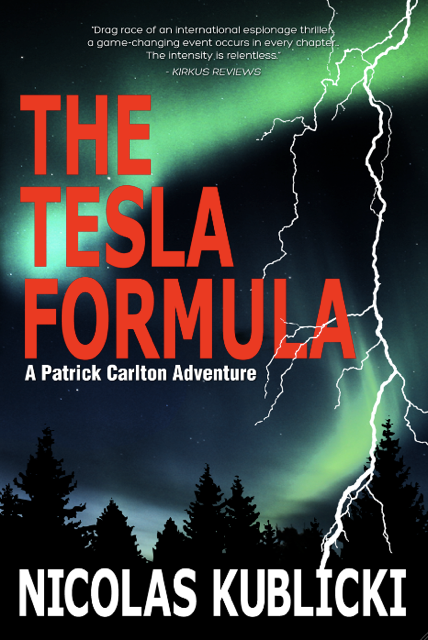
Today I’m welcoming Nicolas Kublicki to my series of author interviews. Nicolas is the author of The Diamond Conspiracy, in which Justice Department prosecutor Patrick Carlton discovers a decades-old conspiracy to control the world’s production of diamonds. His most recent Patrick Carlton novel is The Tesla Formula, published last winter in e-book and releasing in November of this year in print.

Elizabeth: Can you tell us a little about The Tesla Formula?

Nicolas: The Tesla Formula is an international thriller about economic and energy terror.

When genius inventor Nikola Tesla died in the midst of World War II, the FBI combed through his secret research – and discovered an invention so extraordinary that the agent could only reveal it to President Franklin Roosevelt in person. He didn’t make it. The government never found what he discovered – but a Hollywood star murdered by the Nazis left a clue.

When a cabal of rogue Saudi princes conspires with a global energy giant, power-hungry EU officials, and a corrupt Washington law firm to devastate the United States’ economy without shutting off a single oil tap, it is up to Justice Department prosecutor Patrick Carlton to track down Tesla’s lost formula before it is too late. But others want it first.

From the haunts of old Hollywood to the deserts of Saudi Arabia, through the wilds of Alaska to European capitals, Carlton will need the help of a beautiful Hollywood tour guide, a competitive FBI agent, a billionaire reformed mafia don, a scientist from a deep-black government agency, and a Polish secret agent to save the global economy from ruin and bring the plotters to justice.

But first, Carlton must stay alive.

Q: What inspired you to write The Tesla Formula?

A: 9-11. I was on the island of Capri in Italy editing The Diamond Conspiracy during the tragic events of 9-11. My girlfriend at the time, who is now my wife, was a flight attendant and often worked on one of the hijacked flights. It took me some time to discover that she was safe. All Americans have had to work through the powerful, roiling emotions that the terrorist attacks triggered. As a writer, I did it through writing. The Tesla Formula is about many things, including a lost formula of Nikola Tesla, the global economy, alternative energy, and the oil industry, but at its heart lies a terror plot against the United States. Unlike the violence sown during (and since) 9-11, the plot involves a global terror plot that will devastate the United States without violence, which sadly is a very real possibility.

Elizabeth: In what ways is main character Patrick Carlton like you?

Nicolas: An excellent question, since authors so often write about themselves. In my case, I am a blend of Carlton and his best friend, billionaire reformed mafia don Max MacLean (minus the billionaire and mafia parts). Like Patrick Carlton, I am a lawyer, worked at the US Justice Department, lived in Washington, DC, have a law degree from George Washington University, love vintage automobiles, cigars, and Frank Sinatra’s music (he was my neighbor when I was a child), am both a patriot and a romantic, like to confront things head-on, and do things by the book. Unlike Carlton, I neither grew up on a farm nor wear cowboy boots (nor have as much hair left as Carlton).

Perhaps my greatest difference with Carlton is that I am not in the Navy Reserve, although I almost was. I had filled out my Navy Reserve application at the same time I had received my admission to law school. My mother expressed concern that it might be difficult to study law and serve in the Reserve at the same time. I decided that she had a good point and shelved my application, which I ended up never submitting. My mother was trying to be the voice of reason and she might indeed have been, but I regret my decision to this very day. In that sense, Carlton’s Navy Reserve service constitutes an unfulfilled longing.

Elizabeth: What do you see happening to Patrick Carlton next?

Nicolas: Patrick Carlton is facing all sorts of adversity in his third adventure – which I am currently writing – as he uncovers, then fights to stop another global conspiracy.

Elizabeth: What is your writing process?

Nicolas: Tortured. I collect sparks of ideas whenever they hit me, then choose one I like best and begin with a general plot, then perform a great deal of research about its constituent parts before creating an outline. I write until I have a completed a first draft. Following the common adage that writing is mostly rewriting, most of my effort and time are spent editing and rewriting my draft. I wish that I could be more precise and detailed in my outlining so I could avoid the incredibly long and tedious process of editing and rewriting, but I find that once I begin writing, the story reveals itself organically, far better than if I simply wrote a top-down, detailed outline. In a sense, I discover the story as I write it, which is a far more magical experience – and for me produces better writing – than outlining, although it takes so much longer.

Elizabeth: How much historical fact and other research are woven into your novels?

Nicolas: History is very important to me, most likely because my parents are immigrants who lived through World War II and because I attended a French school in LA from kindergarten through 12th grade, where history holds a special place within the academic pantheon. My father was 19 living in Poland when World War II began. He hid a Jewish woman during the Nazi occupation of Poland, for which he received Israel’s Yad Vashem Righteous Gentile award in 1998 (she passed away two years ago and my father turned 93 in September). My mother was a teenager living in Nazi-occupied France during the war. My maternal grandfather was a French soldier who spent the duration of World War I in the trenches and survived the Battle of Verdun. I proudly display his medals (including the Croix de Guerre (war cross) and Medaille Militaire (akin to our Purple Heart, for being wounded in battle three times), dog tags, and WWII French Resistance armband in my office. I also travel to Europe regularly, where it is impossible not to see history everywhere (I visit my maternal uncle who turned 98 in September. He was a French soldier captured by the Nazis and sent to perform labor in Germany. He escaped and walked all the way back to Bordeaux, walking 30 kilometers each night, sleeping during the day). Many of us ignore history and focus on the here and now, which I find not only unfortunate, but a recipe for disaster. For me, history constitutes part of the present because it is how we got to our present. We owe so much to so many who made life in our country today possible. So history always finds its way into my novels, although they are present-day thrillers and not historical fiction.

In addition to history, I include many other researched facts in my books that I think readers will enjoy and that I believe lends more realism to the stories. Many editors and agents assert almost as a mantra that a thriller must deliver entertainment not knowledge. They say that because information delivery tends to slow down the high-speed, white-knuckle character of a thriller. Yet there are methods to deliver information without such a decelerating effect. I believe that if my readers are willing to pay for my books and invest the time reading them when there are so many competing demands on their time and money, I owe them more than simply a good yarn. I want my readers to finish my books having learned something of interest and of value. In The Diamond Conspiracy, that includes the history and processes of the diamond trade, Russia, South Africa, the Vatican, antitrust law, and the military. In The Tesla Formula, that includes Nikola Tesla, Old Hollywood, the international economy, the oil industry, astrophysics, alternative energy, terrorism, Saudi Arabia, Poland, France, and the European Union.

Elizabeth: Enough about your books, tell us about yourself.

Nicolas: I like to say that I am half French (mother), half Polish (father), and all American (born and live in the US). My father escaped Poland to get away from the Soviets at the end of World War II. That and his wartime experiences marked him for life. Many of his and my mother’s wartime experiences left indelible impressions on me. During college at UCLA, I studied political science with an emphasis on Soviet Studies. My goal was to fight the Cold War. I worked on Capitol Hill on national security issues before going to law school. During law school, the Berlin Wall fell and Soviet communism was defeated. The Cold War was over. I focused on real estate and environmental law and worked at the Justice Department before practicing law in my native Los Angeles for ten years, then shifted to the business side of real estate. Between the two, I wrote full time, but soon found that having to write on deadline, publish or perish, was detrimental to my writing and far less enjoyable than having to steal away time to write as I had while practicing law. As a result, I write part time, which clearly poses its share of frustrations, but I like to be involved in many things. In addition to running a real estate company, I teach as an adjunct professor at Pepperdine Law School, serve on the advisory board of an LA municipal park, and am involved in charity work. I am married, with two young daughters. I particularly enjoy driving my restored 1959 MGA roadster on weekends. I hope to have a vintage Cadillac like Carlton one day.

Elizabeth: We’ve now reached the time in our interview for the let’s-get-to-know-the-author-better, nearly-pointless, sort-of-silly, rapid-fire questions:

Elizabeth: Coffee or tea?

Nicolas: Coffee. Lots of it. Mostly in espresso form that I brew myself. The name ‘quadruple espresso’ is not unknown in my office.

Elizabeth: Ocean or mountain?

Nicolas: I love both, but am more partial to the ocean. In a perfect world, my family and I would hop from place to place chasing a never-ending summer by the beach.

Elizabeth: Hiking or shopping?

Nicolas: Hiking. More accurately, walking. I fell in love with walking as a child during summer camp. Now I walk about 45 minutes daily (although the scenery is not as alluring as the French Alps of my youth). In addition to the exercise benefits, walking sets my mind free and allows it to wander. I often get my best ideas and solve many of my plot and character issues while walking.

Elizabeth: Violin or piano?

Nicolas: Neither. My parents forced me to play the piano for years. I was good at it and even gave recitals, but I chafed at being forced to pursue that instrument. It was my first rebellion. The organ is my favorite instrument.

Elizabeth: Mystery or fantasy?

Nicolas: Mystery. Although thrillers would be more precise. Thrillers are often lumped in with mysteries, yet they constitute a distinct, separate genre, which the International Thriller Writers organization of which I am a member is working hard to rectify. To me, the main difference between the two is that in a mystery, someone is killed and the protagonist attempts to find out who killed the victim. In a thriller, the protagonist is being hunted while uncovering a mystery.

Elizabeth: Joan of Arc or Eleanor Roosevelt?

Nicolas: Joan of Arc.

Elizabeth: Love scene or death scene?

Nicolas: Love. Although in thrillers, death scenes are more prevalent.

To learn more about Nicolas Kublicki and his novels, visit his website at www.nicolaskublicki.com and The Tesla Formula page on Facebook at https://www.facebook.com/pages/The-Tesla-Formula/344451525570199.

Thanks for visiting today, Nicolas!
A New Favorite: Rebecca Stead

My favorite new children’s author is Rebecca Stead.

When You Reach Me by Rebecca SteadShe won the 2010 Newbery Medal for her novel, When You Reach Me, which is the story of a sort of geeky sixth-grade girl, Miranda, who lives in New York City in the 1970s.  After losing her house key and her best friend, she starts getting strange notes, such as: “I am coming to save your friend’s life, and my own.  I must ask two favors. First, you must write me a letter.”  The messages are odd yet show that the writer knows a lot about Miranda’s life.    The plot is a marvellous puzzle that keeps readers guessing until the end.  A great story for kids and adults alike.
Stead’s most recent novel is Liar & Spy, a contemporary story about seventh-grader, Georges (the “s” is silent, but causes him no end of grief in school), who must deal with bullying, a change of residence when his father loses his job, and a mother who works so much she’s never home.  In his new apartment, Georges meets Safer, a home-schooled boy who accepts Georges into the Spy Club to investigate the strange doings of Mr. X who lives in the apartment above Georges.

As the parent of a seventh-grade boy, I can tell you that Stead knows kids.  The characters are smart and funny and troubled and, more than anything, real.  I loved Georges, and loved Safer’s little sister Candy, and as my focus was on the characters, I was taken completely by surprise at the turn of events in the book.  Wow!  Again, a great book for kids and adults alike.

Stead has also written the novel First Light, which I haven’t read yet.  You can bet I’ll be getting it soon.

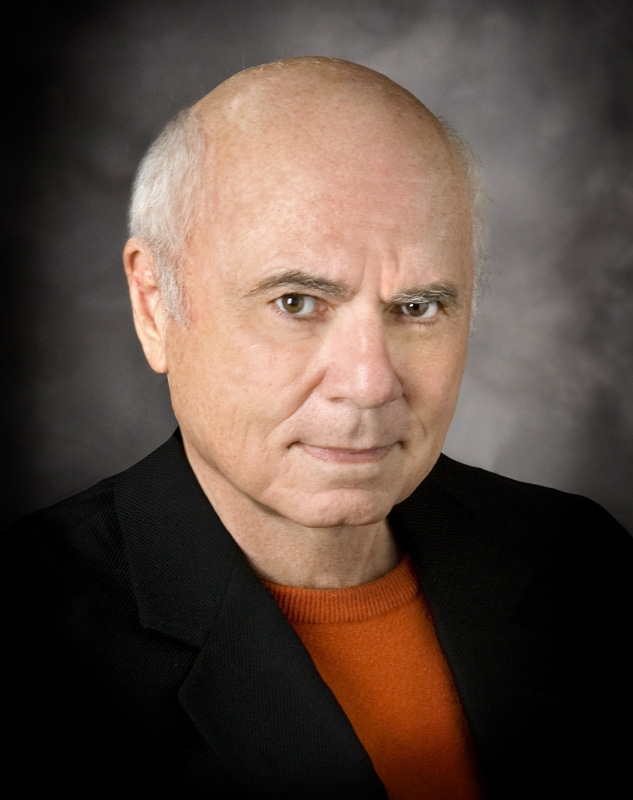
Interview with Donald Michael Platt


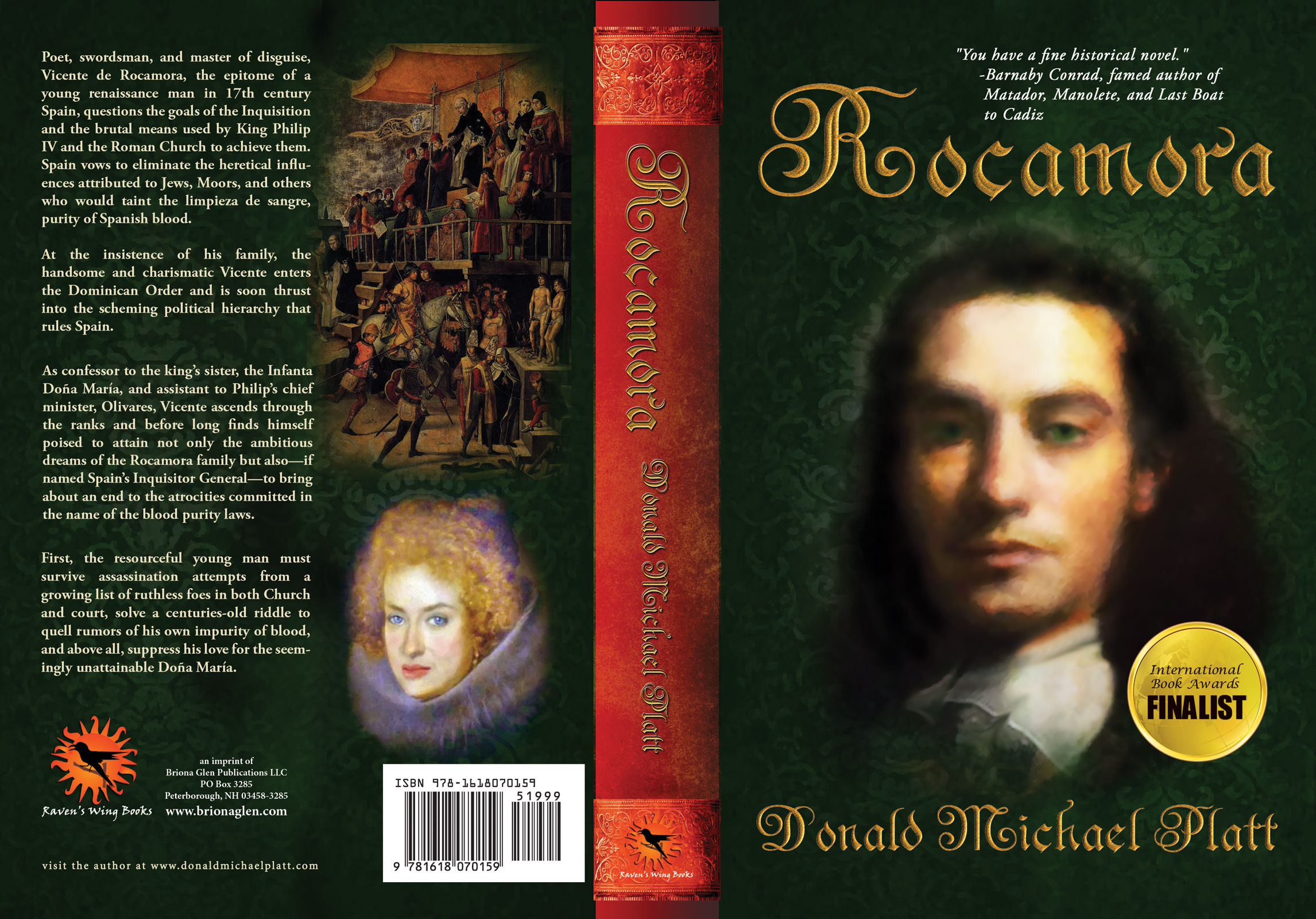
Today I welcome Donald Michael Platt to my series of author interviews. Donald is the author of A Gathering of Vultures, Rocamora, and its sequel, the soon to be released House of Rocamora.

Q: Donald, can you give us some background on your novel Rocamora and some idea of what readers can expect from the House of Rocamora? 

A: Rocamora, a finalist at the 2012 International Book Awards, is set in 17th century Spain during its Golden Age. My historical MC Vicente de Rocamora, 1601-1684, struggles to make his place in an empire dominated by the Dominican controlled Inquisition and obsessed with limpieza de sangre, purity of blood untainted by Jew, Moor, or recent converts.

Historically, Rocamora was the Dominican royal confessor for Philip IV’s teenage sister Infanta María and renowned for his piety and eloquence. For the first forty-two years of his life he lived in Spain, and I filled the novel with Court and Church intrigues, depredations of the Inquisition, a mystery about Rocamora’s origins, his romantic involvement with several interesting women, assassination attempts, and duels.

Q: Was there love between Rocamora and Infanta María?

A: Imagine a fifteen- to sixteen-year-old girl who had no personal contact with any young men except her brothers. Then, her elderly confessor is replaced by a young man only five years older than she. It is documented María confessed several times a week, honored Rocamora, and showered him with gifts. Their relationship is best summed by a Spanish saying: No man is closer to a woman then her confessor, not her father, not her brother, and not her husband. No portrait or written description of Rocamora has been found.

Q: How does the sequel continue the story?

A: House of Rocamora covers the last forty-one years of Rocamora’s life in Amsterdam, during which he must again make his place in a land antipodal to Spain antipodal by climate, landscape, religion, government, and religious tolerance. Does he succeed? I answer all that and more through my fiction and the following facts. Rocamora went to medical school, became a physician at age forty-six and married a twenty-five year old who bore him nine children over eleven years. One may wonder how celibate he may have been in Spain. Rocamora was one of only three Jewish physicians who received citizenship equal to Dutch Christians, a philanthropist, and a respected poet although none of his writings are extant. Through Rocamora’s second son, he established a multi-generational dynasty of physicians. All this takes place during Amsterdam’s Golden Age, which included several plagues, the excommunication of Spinoza, hysteria generated among Jews and Protestants by a false messiah, and wars against Spain and England.

Q: What made you interested in writing about this character?

A: Little-known historical individuals who led interesting lives arouse my interest. The less documentation about them, the freer I am to create character motivation and an entertaining story line unlike the well-plowed Tudors, as an example. That is why I selected Vicente de Rocamora, 1601-1684, to be the protagonist of my novels. Several anomalies, unanswered questions. and many gaps in his life piqued my curiosity. The historical spoiler at the end of Rocamora, a truly unique event, is what most motivated me to write the novel.

My research failed to discover Rocamora’s parents and lineage, why he entered the Dominican Order, how and why he became confessor and spiritual director for the Infanta, and why he left Spain when he did in 1643. I have a letter from the director of the Inquisitorial files in Madrid stating Rocamora was never arrested or even denounced as a secret Jew or later condemned and burned in effigy. In Amsterdam, there are no extant records that explain why he received citizenship equal to Dutch Christians. I did discover a tenuous relationship to the noble de Rocamoras of Valencia, caballero caste of Murcia, and documented evidence of his true attitude toward religion, all of which contributed to the course of my novels.

Q: How much historical fact is woven into your novel?

A: The historical background, personages, and events are treated factually, but the great lacunae in Rocamora’s life that I fill are fictional. One typical example: I inserted Rocamora into the comical wooing of María by Charles, Prince of Wales. Of course, I did my best to show and not tell thus avoiding info-dumping, I hope. I do have author’s notes at the end of both novels to separate fact from fiction and a list of fictional characters as well.

Q: Tell us a little about your novel A Gathering of Vultures.

A: A Gathering of Vultures is a contemporary thriller-horror novel, based on my experiences when I lived where the story takes place.  Professional ballroom dancers Terri and Rick Hamilton aspire to be world champions. Unfortunately, Terri’s recurring health problems place that goal well out of reach. They travel to Terri’s birthplace, Florianópolis, on the scenic island of Santa Catarina off the coast of Brazil to vacation and visit their best friends and mentors.

Along the picturesque beaches, dead penguins and eviscerated bodies wash up, and Antarctic blasts play counterpoint to the tropical storms that rock the island. The scenic wonder is home not only to urubus, a unique sub-species of the black vulture, but also to a clique of mysterious women who offer Terri perfect health and the promise of fame—at a terrible price. Rick fears Terri is being drawn into a cult and that his own life may be in danger. Will it be too late when he discovers something even more terrifying lives beneath the tranquil, tropical veneer of the island?

Q: What was your path to becoming published?

A: I either submitted my writing though agents or personal connections with some success in film and television, but none sold my novels. In 2007, I sent A Gathering of Vultures to a startup independent publisher, and she accepted it. My publisher also loved Rocamora, and she published it in hard cover. Later she merged with Briona Glen, another startup, and they republished both novels in soft cover, Kindle, Nook, ebooks.. They will be publishing House of Rocamora in the same formats.

Q: Enough of your books—tell us about yourself.

A: Born and raised inside San Francisco, I graduated from prestigious Lowell High School and received my B.A. In History from the University of California at Berkeley. After two years in the Army, I went to graduate school at San Jose State where I won several writing awards. One of my short stories was published in the college’s literary magazine, The Reed.

When I moved to southern California, I began my professional writing career. I sold to the television series Mr Novak, ghost wrote Your Hair and Your Diet for health food guru Dan Dale Alexander, and wrote for and and with diverse producers, directors and stuntmen. Options have been taken on my unpublished WWII fighter ace novel.

After living in Florianopolis, Brazil, setting of A Gathering of Vultures, I moved to Jupiter, Florida, where I wrote Vitamin Enriched with Carl DeSantis and The Couple’s Disease with Dr. Lawrence S. Hakim.

Currently I reside in Winter Haven, Florida, where I am polishing a completed novel set in the ninth century Carolingian Empire about another unusual and elusive historical personage, Bodo the Apostate, and I have a WWII fighter ace novel on the tarmac after that.

We’ve now reached the time in our interview for the let’s-get-to-know-the-author-better, nearly-pointless, sort-of-silly, rapid-fire questions:

Q: Coffee or tea?

A: Coffee, strong and black.

Q: Ocean or mountain?

A: Ocean. Mountains give me a feeling of claustrophobia.

Q: Hiking or shopping?

A: Neither, but if forced to choose, shopping, preferably for wines.

Q: Violin or piano?

A: Violin.

Q: Mystery or fantasy?

A: Mystery.

Q: Hester Prynne or Scarlet O’Hara?

A: Yuck, neither, but if forced, Hester, although I might wait for Pearl to reach a marriageable age. I never cared for “Queen Bee” types. I would have been an indifferent Ashley in Scarlet’s world.

Q: Love scene or death scene?

A: Love scene, but no gratuitous sex.

You can learn more about Donald Michael Platt at his website, www.donaldmichaelplatt.com,

see a trailer for Rocamora on Youtube: http://www.youtube.com/watch?v=RXZthhY6OtI&feature=channel_page

meet his publisher Briona Glen http://www.brionaglen.com/

and/or friend Donald on Facebook: https://www.facebook.com/donald.m.platt?ref=tn_tnmn

Rocomora and A Gathering of Vultures are available at amazon.com, Barnes and Noble and Smashwords.

Thanks, Donald, for visiting my blog today.

Interview with Jeanne Treat


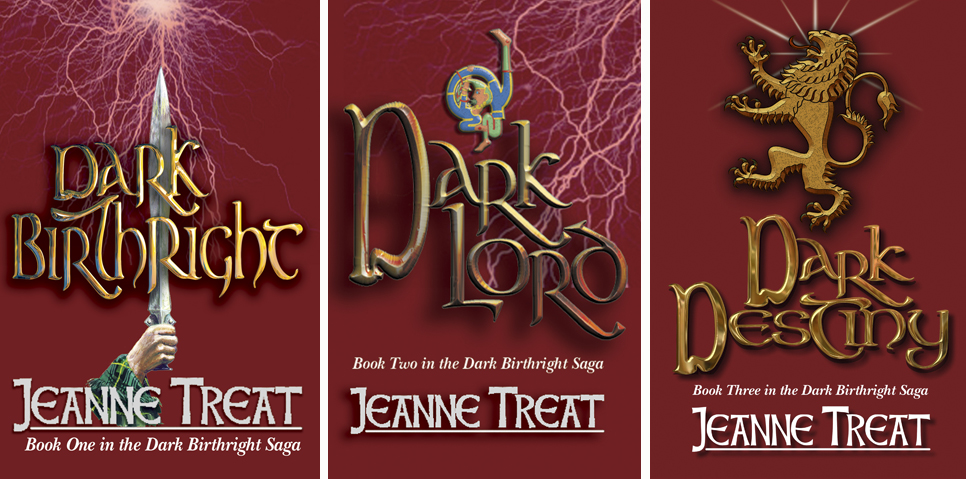
Today I’m welcoming Jeanne Treat, author of the Dark Birthright trilogy as well as a collection of short stories, Dark, Mysterious and Irreverent.


Q: Can you give us a brief description of the Dark Birthright trilogy?

(click to make bigger)

A: The Dark Birthright trilogy takes place in seventeenth century Scotland, England, and the American Colonies. The series has sold more than 8,000 books and eBooks through promotion at Scottish and Celtic festivals, book events, and the internet.

The first book, Dark Birthright, is the story of a child born of mysterious circumstances, given to a fisherman and his wife to raise as their own. Dughall grows up in a family bound by honor and becomes a healer.  His life is torn apart when he is claimed by his real father, a cruel and powerful lord who tries to mold him in his image.  Dughall must define himself, in the midst of a struggle between a Duke, an Earl, and the family who wants him back.  All the while, he’s determined to marry the girl he left behind, a woodland lass with eyes as green as a peacock’s feather.

Book two, Dark Lord, follows the same characters. Set during a time of political and religious strife, it features action, romance, and politics.  Dughall is settling into his new role when the King (Charles I) imposes an Anglican liturgy book on the Scottish church.  Protests and riots plague the realm, forcing lords and commoners to take a stand. Dughall and his half brother Gilbert are placed in precarious positions, torn between loyalty to the crown, their families, and zealous subjects. The National Covenant is signed and war breaks out. Tempers run hot and actions are rash.  To maintain order, one brother must take their late father’s place.  Who shall become the Dark Lord?

Book three, Dark Destiny, continues the story of the Gordon clan. The English civil war is over.  The imprisoned King and his lieutenants are in trouble.  Dughall’s half brother Gilbert is one of them.  What will the Gordon brothers do?  You will meet the next generation of Gordon children – one son’s supernatural abilities threaten his father.  England executes the King and declares itself a Republic, but the Scottish government refuses to follow.  The King’s son (Charles II) tries to gain his thrones, starting with Scotland.  Unfortunately, he was given a directive by his father to execute Lord Dughall Gordon. What will the Gordon brothers do? Will they abandon Scotland for the Colonies?

Q: You describe your writing as historical fantasy. What made you decide to mix these genres?

A: I describe the series as historical fiction with a touch of fantasy. It is historically correct, but there is a sword with a curse on it and two brothers with the second sight. What is the second sight? When they were children, their mother described it as, “They speak to each other without words, they each know where the other is, and feel each other’s pain and pleasure. Sometimes they say what others are thinking. It scares me that people will find out.” This spawns some interesting situations, particularly when they are older.

I have always been interested in the supernatural – so you will see this woven throughout my work.

Q: How historically accurate are your novels?

A: The novels are correctly set in the seventeenth century in respect to geography and political and religious systems. They follow historical events closely and reflect what it was like to live as a lord, a peasant, a fisherman, and a woodland villager. To research the novels, I used books and the internet, but I also traveled to Scotland and England to visit castles, seaports, and stone circles. I worked with a Scottish historian from a village near Old Deer.

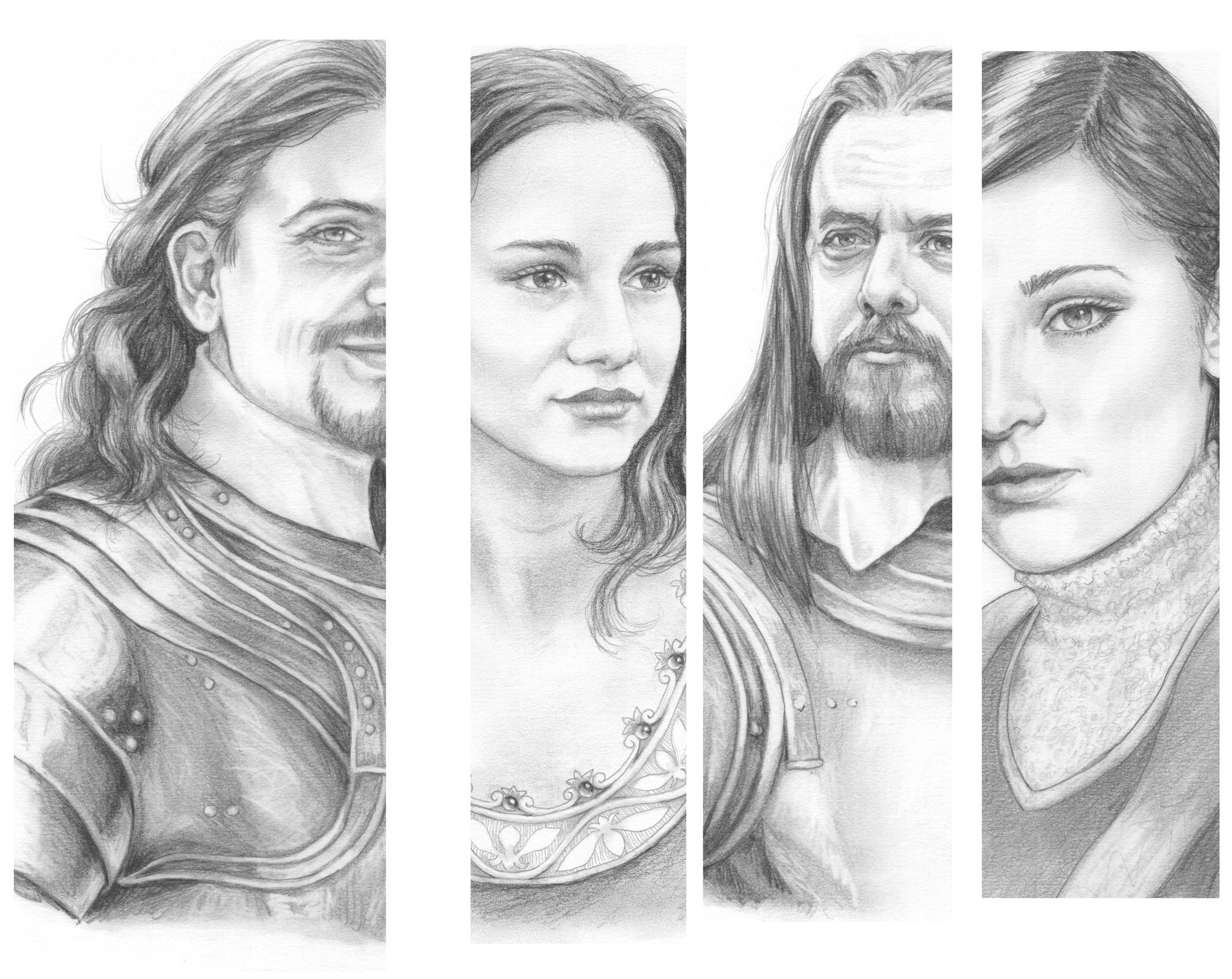
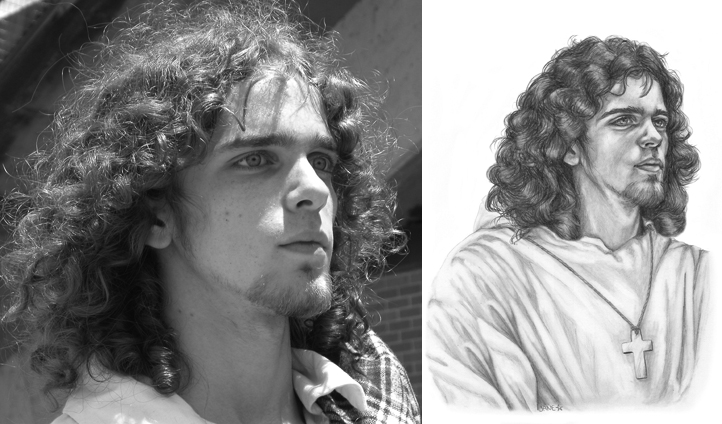
Q: Your books are illustrated by fantasy artist Jane Starr Weils. How did this collaboration occur? 

A: A press in Virginia agreed to publish my first book, Dark Birthright. They had already published The Rebel King Series, which was illustrated. My publisher suggested that my novel would benefit from character portrait sketches. Jane Starr Weils was one of the names mentioned, so I contacted her. She lives in New York near the Vermont border, so we visited her after a trip to Maine.

(click to make bigger)

Here is how we created a portrait sketch. I would identify a person whose visage represented my character and photograph them. We knew some of these people. Others, we photographed at Scottish festivals. I would relay the photograph to Jane, along with a description of any changes – like clothing, hair color, and facial hair. She did an initial pass at the drawing and we collaborated until the sketch was perfect. The sketches are wonderful. I use them to promote my books.

Q: What is your creative process?

A: An author’s creative process is as unique as the writer. A friend of mine meticulously plans a novel ahead of time, using character descriptions, plot and chapter outlines, and theme and sub-theme descriptions. It works for her, but my creative process is different. I approach the task like it is an artist’s canvas. I know where the story begins and how it ends and that’s my road map. I ask the characters to talk to me and they do. In some ways I become them. My husband likes to tell people, “I’ve been sleeping with a dozen Scots in my bed for years. The women are fine, but it’s weird being with the men.”

Q: Enough of your books—tell us about yourself.

A: I grew up in Western New York, in a suburb of Buffalo. I began writing as a child and continued into my teens, when I penned a column in the school newspaper called “Tea Time with Cecily Fripple.” (Did I just date myself?) I graduated from college with an English Liberal Arts degree. I took literature and creating writing courses at school, which helped me to write.  I always wanted to be a writer, although I did not seriously pursue it until 2004. My mother is partially responsible for my success. The dedication in my novels says, “This book is dedicated to my mother, who told everyone I was an author before it was true.”

We’ve now reached the time in our interview for the let’s-get-to-know-the-author-better, nearly-pointless, sort-of-silly, rapid-fire questions:

Q: Coffee or tea?

A: Coffee – hopelessly addicted

Q: Ocean or mountain?

A: Definitely mountain!

Q: Hiking or shopping?

A: Hiking

Q: Violin or piano?

A: Violin!

Q: Mystery or fantasy?

A: Mystery

Q: Darcy or Heathcliff?

A: Hmmm… Neither… But Darcy if a choice must be made.

Q: Love scene or death scene?

A: Love scene

To learn more about Jeanne, visit her blog, http://jeannetreat.wordpress.com/

To learn more about her books and view some book trailers:

http://www.darkbirthrightsaga.com

Jeanne’s short story collection, Dark, Mysterious, and Irreverent is available for FREE download through 08/31/12.  Follow the link below and use coupon code KQ22Q

http://www.smashwords.com/books/view/54082

Jeanne, thanks for joining me today!