
Today I’m welcoming Helen Hollick to my series of author interviews. Helen is the author of numerous historical novels, including a trilogy about King Arthur, the Sea Witch pirate series, novels of Saxon England, and a nonfiction book for aspiring novelists. Helen’s most recent publications are two short stories in 1066 Turned Upside Down, a collection of alternate history stories in celebration of the 950th anniversary of the Battle of Hastings.
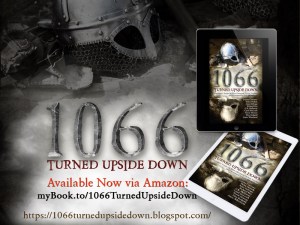 Elizabeth: Welcome, Helen. Tell us about your story in 1066 Turned Upside Down.
Helen: Hello! How lovely to be here, thank you for inviting me onto your blog. I have two stories in 1066 Turned Upside Down and both are adapted from my novel Harold the King (the US title of which is I Am The Chosen King – same book different publisher and title). I was delighted to have this opportunity to alter these two scenes as I obviously could not write them as I wanted to in the ‘serious’ novel because I had to stick to the facts. My first alternate story, To Crown A King, opens 1066 Turned Upside Down in January 1066 when King Edward has just died and a successor is being elected. (Yes a king was chosen in the 11th century by the Council of England, the Witan; what we would now call Parliament!) The candidates are Harold, Earl of Wessex, Edgar, the grandson of Edmund Ironside (who would have been King if he had not died, and in consequence Cnut of Denmark took the throne,) and Duke William of Normandy. The latter was instantly dismissed as a possibility, so the decision was between the older and more experienced Harold, and the young lad, still only a boy, Edgar.
My other story, In The Wake of the Dolphin, is an event of 1066 that I am passionate about: were the Normans initially defeated at sea in the summer of 1066? I believe they were, for England had a powerful and competent navy (the schypfyrd) which King Harold II would have deployed, and William’s fleet was devastatingly depleted. Norman sources claim this was because of a storm, I believe this is propaganda to hide the truth of defeat. I thoroughly enjoyed going back to alter my original scene for this ‘different’ one. Incidentally, both this version of the encounter at sea and the original were dedicated to author Rosemary Sutcliff, whose wonderful books steered me in the direction of historical fiction and still remain my favourites. The Saxon longship in the story, the Dolphin, was named in her honour.
I’ll not say more – spoilers – except these are ‘alternative’ stories which do not follow the facts as we know them.
Elizabeth: Your historical novels have been called “meticulously researched.” How different is writing alternate history to writing history-accurate historical fiction?
Helen: Well I try my best to be accurate, although all authors make inevitable mistakes, especially when new information comes to light. (Who would have expected Richard III to have been buried where he was?) The important thing about writing fiction – any fiction, be it historical, a thriller, romance or even fantasy is to entice the reader into believing it is all true. If the reader keeps thinking ‘oh this is far-fetched,’ or ‘that couldn’t possibly have happened’ then the whole story could fall apart because the reader does not believe in it. So the known facts must be correct. Who would enjoy a story about the most famous battle in English history, the Battle of Hastings, if it was set in 1065 or 1067? Unless of course it was deliberately written as an alternative story! But even then there has to be a sense of reality and belief for the background detail. So the skill of ‘making things up’ comes from getting the rest of it spot-on right.
The fun comes with knowing you can make up the other imagined bits as much as you like!
Elizabeth: How did the collaboration of historical novelists in 1066 Turned Upside Down come to be?
Helen: I was with author Joanna Courtney at the Battle of Hastings re-enactment in October 2015, and in between book signings and author talks we briefly discussed a few ‘what if’ scenarios: what if Hardrada had won at Stamford Bridge? what if William had lost the fight that October day? Then, a few months later Joanna contacted me to say ‘What if we created an e-book of short stories for the year 1066 exploring the what if concept?’ I jumped at the chance!
Elizabeth: Tell us about your King Arthur series.
Helen: My first published novels were a trilogy. (I’d had no idea that I had written enough for three books – I thought I was writing just one, somewhat long novel. Such is the naivety of novice writers! *laugh*) I wanted to write a story about King Arthur as events might have really happened. IF Arthur had existed (and that is a big if!) he would have been a warlord in the 5th/6th centuries between the going of the Romans and the coming of the Anglo-Saxons. There would have been no knights in armour, no holy grail, no Lancelot and no Merlin. I also wanted to re-write Guinevere’s story. I call her Gwenhwyfar, which is an earlier Welsh spelling of her name, and according to these Welsh legends she and Arthur had three sons with no hint of her adultery. I saw Gwen as a feisty, capable woman who loved Arthur dearly, but as they were both strong characters their tempers often clashed. My Arthur is a warts-and-all military commander. He is not the Godly goody-goody king of Medieval tales; in my trilogy he has to fight hard to gain his kingdom, and fight even harder to keep it.
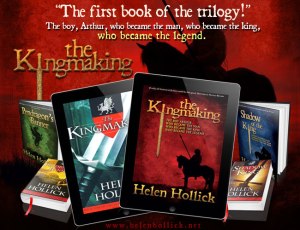
The Pendragon’s Banner Trilogy: The Kingmaking, Pendragon’s Banner, and Shadow of the King
Elizabeth: You’ve written five novels about Captain Acorne. Was he a real historical figure?
Helen: Captain Acorne is entirely made-up. He is a pirate (well, ex-pirate) who gets into all sorts of scrapes – my tag line is ‘Trouble follows Jesamiah Acorne like a ship’s wake.’ I have just published the fifth Voyage in the series, and these are nautical adventures written for adult, or older teenagers as they have adult content. The stories also have an element of fantasy in that Jesamiah’s ‘love interest’ Tiola, his girlfriend (and then wife), is a White Witch, and there are supernatural elements running through each adventure: Tethys, the elemental spirit of the sea, a ghost, a Night-Walker etc. All written for fun and meant to be read for fun. I think of the Sea Witch Voyages as sailor’s yarns – not meant to be taken seriously!
If you enjoyed the first Pirates of the Caribbean movie, you will enjoy the Sea Witch Voyages.
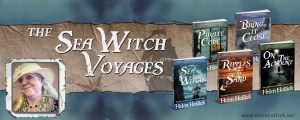
Sea Witch Voyages: Sea Witch (Voyage One), Pirate Code (Voyage Two), Bring It Close (Voyage Three), Ripples In The Sand (Voyage Four), On The Account (Voyage Five)
Elizabeth: What drew you to these time periods and characters?
Helen: For Arthur it was a fascination with post-Roman Britain, and a realisation that if there was an Arthur he would not have been a knight in armour and sitting there almost oblivious to being cuckolded by his wife and best friend. (He would have done something about it. A quite dramatic something!). I was also fed-up with Gwenhwyfar always being the one blamed for everything falling apart, I could not see her as betraying Arthur, at least, not deliberately. And what about these three sons that were mentioned in the early legends? I wanted to explore their existence.
Harold and 1066 drew me because I then lived near Waltham Abbey, which was Harold’s territory when he was Earl of Essex. It was nice to be able to do research on my own doorstep! I also dislike English history as being portrayed as starting at 1066 with the Norman Conquest. I thought it about time that someone wrote the story from the English point of view. (This was back in 1999 when there were very few 11th Century novels about 1066.)
Jesamiah? I had no idea I would become so passionate about the Golden Age of Piracy, or that I would be so consumed by an imagined character, but well, I adore Jesamiah! I think the phrase is, ‘he is the love of my life’!
Elizabeth: What is your writing process?
Helen: Stare out the window at the fabulous Taw River Valley that I can see from my study window here in Devon. Write a line or two. Stare out the window again. Write a bit more. Get up to see what all the noise the geese are making is about. Have lunch. Write another sentence. Pat Eddie the dog who is nudging me… Tea break… *laugh*. Get the picture? Devon life in an 18th century farmhouse can be somewhat distracting!
Elizabeth: What are you working on now?
Helen: I have been commissioned to write a non-fiction book about pirates, which is good fun but very demanding (not quite so much staring out of the window for this one!) I’m writing it to explore the facts about piracy in the early 18th century and our fascination with fiction about pirates, so blending the fact in with the fiction.
Elizabeth: Can you tell us more about yourself?
Helen: I am now officially a pensioner having reached the ‘mature’ age of sixty-three. I lived in the London Suburb of Walthamstow until 2013 when my family and I moved to a thirteen acre farm here in Devon (and we love it). I started writing stories when I was about thirteen, was accepted for publication a week after my 40th birthday, and I wish someone could invent a 36 hour day so I could write all the stories I still want to write!
We’ve now reached the time in our interview for the let’s-get-to-know-the-author-better, nearly-pointless, sort-of-silly, rapid-fire questions:
Elizabeth: Coffee or tea?
Helen: Both actually. Tea first thing in the morning, at lunch, and in the evening; coffee during the day.
Elizabeth: Ocean or mountain?
Helen: Ocean!
Elizabeth: Hiking or shopping?
Helen: Hiking in my younger days, but arthritic knees and fading sight have scuppered the long walks now. I hate shopping!
Elizabeth: Violin or piano?
Helen: Piano. I wish I’d learnt to play it.
Elizabeth: Mystery or fantasy?
Helen: Mystery.
Elizabeth: Hermione or Katniss?
Helen: Hermione
Elizabeth: Darcy or Heathcliff?
Helen: Darcy
Elizabeth: Love scene or death scene?
Helen: um…. (need to think about this one) Death I think.
Learn more about Helen and her novels at Helen Hollick’s World of Books
Website: www.helenhollick.net
Blog: www.ofhistoryandkings.blogspot.com
Facebook: www.facebook.com/HelenHollickAuthor
Twitter: @HelenHollick
Her Author Page on an Amazon near you : http://viewAuthor.at/HelenHollick



 I’ve chosen the books for this semester!
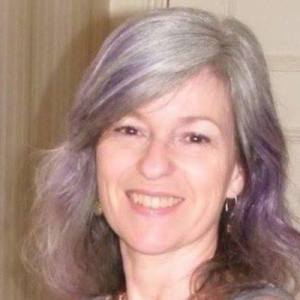
 Today I welcome author Suzanne McLain Rosenwasser to my blog. She is the author of the essay collections Manhasset Stories: A Baby Boomer Looks Back and Manhasset Stories: More Baby Boomer Memories. Suzanne’s most recent publication is the historical novel Don’t Ya Know, which takes place on the fictional Corycian Island, off the coast of Long Island, at the start of the 20th Century.
 Suzanne: Hello, Elizabeth. Thank you for inviting me to talk about my work, in particular, Don’t Ya Know, a labor of love for my Long Island roots. Until the 1890s, Long Island’s shoreline was dotted with malodorous, fish oil factories. Terms like “The Gold Coast” and “The Hamptons” were not part of the vernacular. Change came rapidly, however, once real estate developers saw the value of beachfront luxury. By the 1900s, the ferries of the Long Island Sound transported tourists instead of fertilizer to and from the barrier islands.
 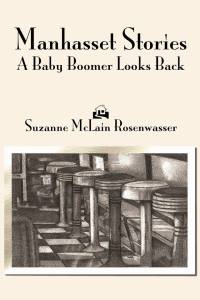 Suzanne: Manhasset and so many towns like it on Long Island in the mid-20th century were new hamlets, largely made up of first and second generation Americans moving from the boroughs of New York. Growing up as Baby Boomers in this era allowed a “new” post-WWII perspective. The suburbs were a new concept. It was a new middle class. The families were young and new. The highways to Long Island were new. The shopping centers and area parks were new. We lived in the epicenter of changing times. We shared a golden era, and I chose to dwell on the times we enjoy remembering. The small book was intended as a gift-sized volume. It proved so popular, I followed it up with Volume II – More Baby Boomer Memories.
 Today I’m welcoming Annie Whitehead to my series of author interviews. Annie is an author of historical fiction, including To Be a Queen, the story of Aethelflaed, the daughter of Alfred the Great and the only female leader of an Anglo-Saxon kingdom. Her most recent novel is Alvar the Kingmaker, a novel about the tenth century nobleman who helped King Edgar ascend to the English throne.
 Annie: To Be A Queen is the true story of Aethelflaed, daughter of Alfred the Great. She spent her formative years in the Kingdom of Mercia (which roughly equates to the modern day Midlands of England) and was married off to the leader of Mercia as part of a political alliance against the Vikings who had overrun all the other kingdoms barring Mercia and Wessex in the south east. Her role became more than just that of a political pawn when her husband became incapacitated and she found herself ruling Mercia as a queen, in all but name. I was thrilled when the book was long-listed for the HNSIndie book of the Year 2016 and even more delighted when it was recently awarded an IndieBRAG Gold Medallion.
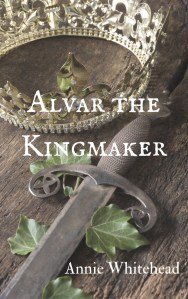 Annie: This book is set in Mercia about fifty years later and features the descendants of some of the characters from the first book, although it is a stand-alone story. Aelfhere (Alvar) was a powerful noble who was instrumental in helping successive kings, but who paid a high personal price. Unusually, this was a period where there was no Viking threat, but this left a gap, and it was filled with in-fighting, treachery and murder… He spent a lifetime trying to prevent uprising, and anarchy, and often found the ‘Establishment’ was his greatest enemy.
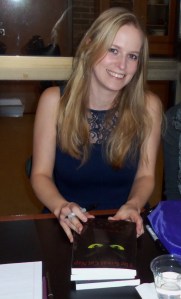 I am pleased to be able to interview Abigail Bostwick for the second time. Abigail’s first middle grade novel, The Great Cat Nap, was published by Cornerstone Press in 2013. It is the story of Ace, a reporter and a cat, who solves the mystery of a missing show cat. Abigail, who publishes as A. M. Bostwick, talked about writing that novel in
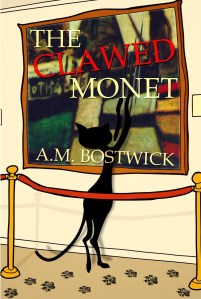 Abigail: Thank you so much for hosting me, Elizabeth! In The Clawed Monet, we find Ace on the trail of a new mystery following the scandalous opening of a new art exhibit at the historic Rhys Art Museum. When opening night is lights out after a peculiar power failure and a priceless Monet reproduction is clawed beyond repair, all paws point to the new curator’s prim and proper feline – Miss Kitty. Hired by Miss Kitty, Ace and his feline and canine friends are out to find the criminal and restore the reputation of Miss Kitty and her companion before they are fired. Tailing the shadow of a “ghost cat” through the historic district and a cemetery, Ace finds himself interrogating museum guests, local residents and even a so-called psychic cat to try and solve the crime. He’ll have to fend off a pack of Dobermans and contend with a gang of raccoons– all under deadline.
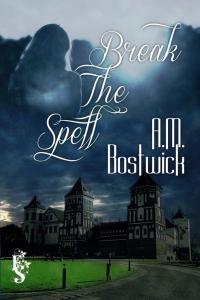 Abigail: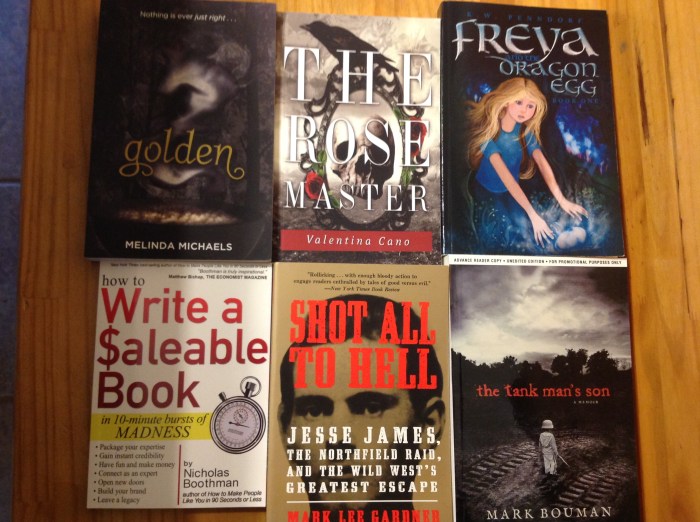
 Elizabeth Caulfield Felt