Getting It Done

But what is “it” ?

Yesterday I had a long list of things I needed to do.  I was quite busy until about 4:00, when I looked at my list to cross things off and discovered I’d actually only finished one of the jobs.  I had partially completed a few more, but I had yet to begin the majority of things on my list.

How do writers get things done?  If you follow my blog, you’ll notice how rarely I post.  How do other bloggers post so regularly?  How do they have the time?   I read the blogs of other writers and am just shocked at how often they post.  Do they do anything else?  Do they work on their novels?  Do they have families?  Do they exercise? clean their homes? eat?

I suppose with better time management, I could improve, but then I wonder if there isn’t some other problem at work.  As Landon Parke-Laine said,

I’m trying to figure out whether the lack of progress is writer’s block, procrastination, idleness or just plain incompetence. –Jasper Fforde, Thursday Next First Among Sequels

It’s comforting to see other writers struggle with this problem too (even if they are fictional).

Losing and Winning

Thanks to all of you who voted for me in the Pitchapalooza contest.  I was not a winner, but I did get a bite from a literary agent who liked my pitch.  She is reading the manuscript now.

So, even losers can be winners.

Not that I’m calling myself a loser . . . .

’cause I’m not, you know . . .


Dyeing hair the old-fashioned way

This afternoon my friend Sally came over and helped me dye my hair with henna. The henna smelled nice– like cooked spinach. It was the same green as cooked spinach as well:

I was happy with the natural scent, but a little alarmed at the strong green color.  On my head, the effect was even more alarming:

I put the plastic bag that came with the henna on my head and spent the next two hours grading homework, reading, and wondering if the green would wash out or if I would be teaching my classes with spinach-hair on Monday.

I then took a shower and washed the green muck down the drain (no picture available).  My hair is darker than normal but softer as well.


Now, if I need one of my nineteenth century characters to dye her hair, I know how to use henna.


Since writing this post in Feb 2011, I’ve learned a lot about dyeing with henna, so I encourage you to read my Dyeing with Henna Update post.

Celebrity

Over the past year, I’ve been visiting the blogs of writers and studying them and trying to figure out what makes a blog interesting. What makes a reader want to return again and again to a blog?

The answer is the human connection. Writing about writing is interesting, but what readers really want is to feel a personal connection to the writer celebrity. If you’ve been with me from the beginning, you’ll remember that in my first post I said I would not be handing out personal information on this blog.

Get ready for an about face!

While I still plan to retain a basic level of privacy, I’m now going to reach out to my readers in a personal way. I’m going to let you know more about me.

For example, did you know that I’ve been having a mid-life crisis through my hair?

For the past fifteen to twenty years, I’ve had the same short hairstyle:


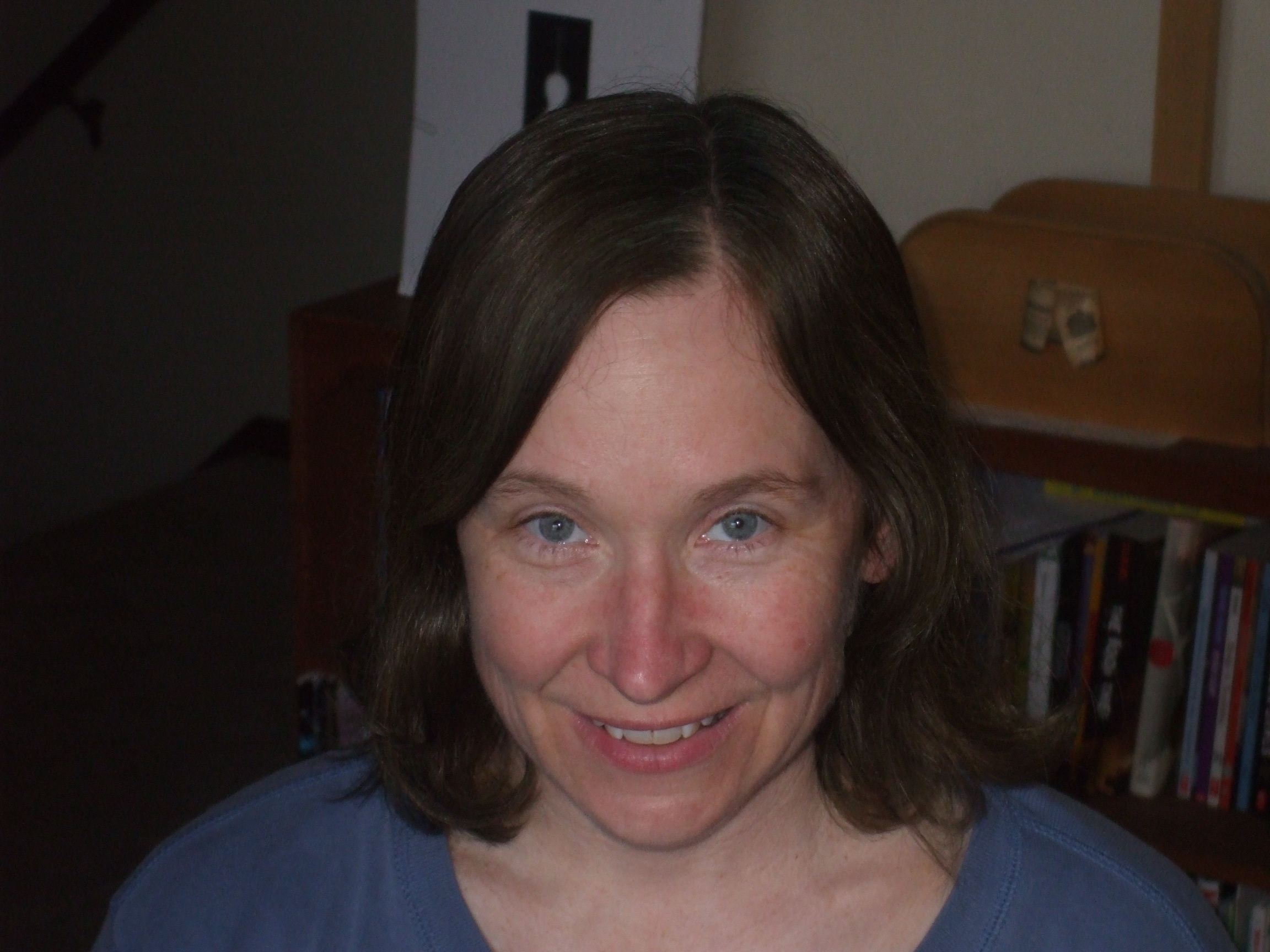
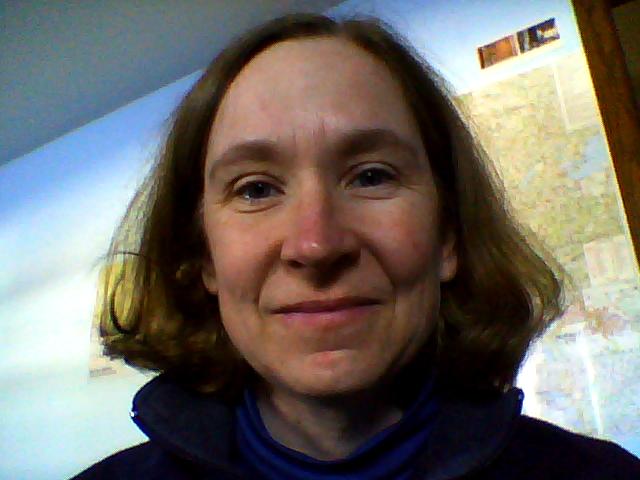
About a year ago, I decided I wanted to grow out my hair. Now, I look like this:


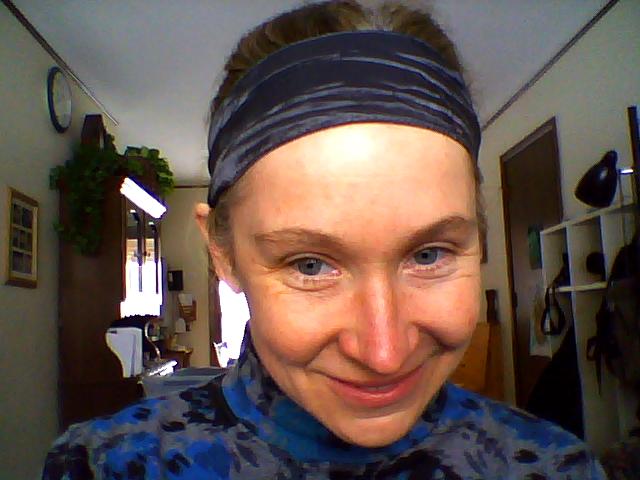
I have a very slight colic and that hair that grows out of that spot is fully gray. I’ve been paying to color my hair with chemicals and as the gray starts to come in, I hide it. I love this hair band, but wearing it every day seems odd, and in the cold Wisconsin wind, I really need to wear a hat.


For the past five years, I’ve been getting my hair colored at a beauty salon. I like the results, but I’ve worried about putting such harsh chemicals on my head every six weeks for the rest of my life. Plus, it’s quite pricy.

So, I’ve decided to color my hair myself, with henna. It’s my project of today. Stay tuned for updates and photos.

Backstory

In my head, I spend a lot of time on backstory. I don’t write it down, mostly, but I try to get a clear sense of what has happened to my characters before they enter my story. For the main characters, this is essential. Otherwise, how could I understand them and their motivations and their desires, and write them with any sense of reality? I think most writers understand this and have a backstory for their main characters.

Strong writers have a backstory for every character. I am amazed by writers who can get their minor characters to grow and develop over the course of a story. This can only happen when the author has given them as much backstory as the main characters. An author who can do this and do it well is like God. God knows everything about everyone, and a writer should do be the same for her characters.

Of course, one does not want minor characters to start thinking they are main characters and take over the novel. Like God, a good writer must stay in control. If a minor character becomes too big, pull him out and give him his own story. Developing characters thoroughly is different than having a lot of main characters.

I create backstory for some of my minor characters, and I want to push myself to do it with all of them. I’ve found that when stuck on a scene or when having trouble moving through a minor conflict, if I start thinking about the minor characters involved, thinking about where they came from and what they want, my writing carries more purpose and complexity.

Backstory. It’s for everyone.

Bookmarks

I love bookmarks. My favorite bookmark has a picture of my older son, age 1, on one side and a picture of my younger son, age 2, on the other. I’ve used bookmarks for as long as I can remember–but I’m never paid any attention to the way I place it in my book.

My husband places his bookmark in his book with the “front” of the bookmark facing the page he is on. Very clever! Since learning this, I have never been able to do it. If I remember to face the bookmark the right way when I close the book, then I don’t remember to look at it when I next open the book and remove the bookmark. I guess I don’t learn new things as easily as I used to!

About six months ago, my younger son stopped using bookmarks. He was so tired of his bookmarks falling out, that he decided to just memorize page numbers. So far, it seems to be working well for him. I can’t imagine that working for me. My memory is far too weak (see paragraph 2).

The Impossible Pitch

My novel Charlotte’s Inheritance is nearly impossible to describe well and makes writing a good pitch difficult. I’ve just read about a contest that I want to enter, but I need a good pitch. I’ve written a new one, but I’m still not completely satisfied. What do YOU think? Would you want to read it? Have you already read it? Offer suggestions! Help me! Here’s my pitch:

Logline:
What happens when a Jane Austen heroine finds herself surrounded by Darwinian men? She takes notes about the mating habits of the common dunnock and attracts a mate of her own.

Synopsis:
Charlotte’s Inheritance is the coming-of-age story of Charlotte Wasseaux, born in nineteenth century England and raised in an Anglican convent. Her father is an ornithologist, a man of nature and logic in this pre-Darwinian era. At seventeen, Charlotte is re-united with her father and brought to live on the family estate, Endersley. Charlotte is quiet and insecure and wants only to please her emotionally-distant father. Because she has a talent for painting, he allows her to help him in his work. Charlotte attempts to break down the barriers her father erects, not suspecting the secret he holds about their past, and how that secret is hidden in her prized pocket watch.

Charlotte must decide what sort of person she wants to be, what sort of road she wants to walk. She has many role models to choose from: her father, the cold, logical naturalist; Theodore Drell, the affable, atheistic scientist; Mrs. Pearson, the wise Quaker; Lucien Bonaparte, the patriarchal Catholic; Lucy Gibson, the hard-working governess; Reverend Farrell, the generous romantic; Angelina Handley, the selfless nurse; Morton Greenwood, the clumsy explorer. From each of these friendships, Charlotte gains knowledge, confidence and direction.

Charlotte’s Inheritance is a story about a young woman, finding herself, in a world re-defining itself.

Writing without Mom

I went to writers’ group last night. I knew it would be a hard night, and although I didn’t feel it during our meeting, it hit me pretty hard afterward. I’m still reeling a little this morning.

The scene that I brought to read and get critiqued at writers’ group, I’d printed out the week before Christmas. I’d emailed the scene to my mom right after finishing it, and we’d talked about it on the phone. She had a few comments, and I said I’d see what my writers’ group thought. I made copies of the scene and was all ready to go to writers’ group on Dec 20, when I got the call about my mom’s stroke.

I didn’t go to that meeting, but I took those same copies last night. It’s the last scene my mom got to read. Anything I write from here on out, she won’t get to read.

After writing a scene, I always emailed it to my mom to get feedback from her. She’d email me with comments within a day or two. Often she’d telephone. She loved the story I’m working on now. She was my first and best reader.

I am hoping to write a new scene today. It is the day I don’t go into work. It is my writing day.

My writing is so entwined with my mother, I’m finding moving on with my story incredibly difficult.

I don’t want to stop writing. I want to produce something new today. I’ve been doing a lot of editing and re-organizing of the story, but I need to write a new scene now. I need to see how that will feel—to move into new territory in the story.

I’ll let you know how it goes.