Author Interview: Francis Hamit

Today I’m welcoming Francis Hamit to my series of author interviews. Francis is the author of The Queen of Washington, a Civil War spy thriller about Confederate spy and Washington hostess Rose Greenhow, and The Shenandoah Spy, another Civil War thriller about Confederate Army spy and scout Belle Boyd. Additionally, Francis has a film forthcoming, based on his 1988 stage play Marlowe: An Elizabethan Tragedy,  about the poet and playwright, Christopher Marlowe, and his career as a spy for the Crown.

Q: Francis, do I detect a theme here?

A: The usual rule is to write about what you know. I do have some background in Intelligence that informs my work.

Q: So you were a spy?

A: I was part of the largest spy agency of the U.S. Government, but my duties were mostly clerical. That is the dirty little secret about intelligence work. Most of it is paper-pushing and not that interesting, day to day. I did learn how such organizations work and that’s important if you write spy thrillers.

Q: Tell us about Belle Boyd and how you came to write about her.
A: In the early 1980s, I was one of about four thousand people hired to help revise the Micropaedia part of the Encylopaedia Britannica. I started researching her story, thought it was deserving of more than a paragraph and decided that I would do more with it, later. Belle’s story is a true one, about a young woman fighting, against the prevailing conventions of her time, for what she thought of as her country, the State of Virginia, against a foreign invader. The documentation is pretty spotty but she did shoot and kill a Union soldier at the beginning of the war who was part of a party of home-invaders, she did spy from the middle of a Union Army headquarters in Front Royal and have an affair with a Union Army Captain named Daniel Keily, and she did use intelligence she gathered to alert Stonewall Jackson and Turner Ashby to Union Army plans in order to trap them. She also ran across the battlefield on May 23rd 1862 at the Battle of Front Royal to give them a report about how lightly defended the town was, which was the start of Jackson’s famous Valley Campaign that pushed the Union lines back. Later historians, all of them male, disputed this, but there are two eye-witness accounts and a historical marker where she delivered that report. This is the reason that they commissioned her as a Captain of Scouts at age 18. She was the first woman in American History to be commissioned an army officer, which has made her something of a feminist icon despite the fact it was the wrong army. It is a terrific story.

Q: Tell us about Rose Greenhow, the protagonist in your most recent book.
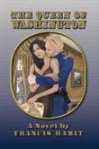
A: Rose and her husband, Robert, were power-players in Washington. There are indicators that she was working for the French and the British as an agent of influence, and probably as a spy, while he was the number three guy in the State Department in the 1840s. James Buchanan, who was later her great friend before the Civil War, was suspicious of her when he was the Secretary of State and Robert got promoted out of his job and sent to Mexico on a fruitless mission having to do with California land claims after the Mexican War. He’d written a book on the history of California and Oregon, and that was part of the dialog about the ultimate boundary between the U.S and Canada. Rose had been a great friend, and possible lover of John C. Calhoun, and was very pro-slavery, so spying for the South was simply part of what she’d been doing all along.

Q: Why did you entitle the book The Queen of Washington?

A: Because she was, during the Buchanan Administration. She’d been mentored by Dolley Madison, who also had that title, and created that entire society in Washington where the men were above politics and the women did the deals. Rose couldn’t vote, but she could get you a government job…or a spouse. It was a very corrupt system and the secessionists infiltrated the government before the Civil War and started to steal information and assets. Weapons were shipped South. Documents and maps disappeared. Money disappeared. And Rose was up to her neck in most of it. She was very dangerous. Rose went to great lengths to get intelligence for the South. One of her lovers was Senator Henry Wilson, Chairman of the Senate Military Committee. Another was a Union Provost Martial responsible for the defenses of Washington city. That last relationship led to her arrest by Allan Pinkerton and eventual imprisonment with her eight-year old daughter in the Old Capitol Prison. There is a famous photo by Matthew Brady of the two of them there. You have to ask, why is that child there? They played rough, but that really is indecent, since Rose had relatives nearby who might have taken that child in.

Q: Why didn’t they?

A: Read my book and you can read my theory of the case, but it’s Alternative History without many facts to back it up.

Q: So it’s not all true?

A: It’s mostly true with a lie or two thrown in to make it more entertaining. I don’t pretend to be a a historian, just a novelist trying to provide an entertaining read. When a reviewer calls it that and says they really enjoyed the book, that’s when I know I’ve accomplished that goal. It’s the highest compliment I can receive.

Q: In the 1980s you wrote and directed for stage the play Marlowe: An Elizabethan Tragedy. Tell us a bit about that story and what inspired you.
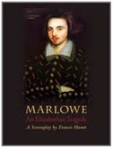
A: The Marlowe story is another one I found when I was working for the Britannica. Another terrific story about a spy who was also one of the most brilliant writers in history. It’s true. He was a spy for the Crown, and it’s probably what got him killed. He was betrayed by his lover, Thomas Kyd, and then assassinated by his friends for reasons of state. I conceived of it as a lights and levels show with costumes. It went through staged readings in Chicago and Los Angeles, and someone suggested I take it to Thad Taylor at the Shakespeare Society of America in West Hollywood. At the time SSA was a producing organization with its own Globe Theater. Thad wanted to produce it and suggested I direct it since there was so much background knowledge that has to be known to make it work. We had a one-month Equity Waiver run, got good reviews, but it didn’t get picked up because it’s hard to do. Last year, my old friend Mike Donahue, who is now directing films, read it. He saw its potential as a film, optioned it and asked me to write the screenplay. We’ve published that in a first draft reading copy and republished the original script as an e-book.

Q: How is writing a play different than writing a novel?

A: A play or a film, unlike a novel, is a collaborative work. It requires a lot of other talents to realize for an audience. You have to be open to sharing the process. A film is different from a stage play because of all the other things you can do with close-ups, jump cuts and editing to drive the story, and the format is different even if the dialog is pretty much the same.

Q: Why did you decide to write this story as a play and not as a novel?

A: For several reasons. I always saw it that way, and with a play you can stand back from the character and be somewhat objective. A novel is more intimate. You have to get into people’s heads. Kit Marlowe’s is not a head I want to spend much time in. He was a very cruel man, a bully and murderer, a social climber and he was also homosexual, which I am not. That’s an entire emotional context I know nothing about, and am not going to try and fake. To know Kit Marlowe is to not love him. A writer has to recognize his or her limitations. I think it will make a great film, and that Mike Donahue will do a terrific job with it because he does understand that character and emotional context. It’s high drama. We’re in pre-production and Mike has other projects and obligations. He’s done four films in the last year. We also have to find financing and distribution and all that, and are still working on casting.

Q: How are you filling the time until this is ready?

A: Several ways. I was very ill last fall, just as The Queen of Washington was published, and the entire promotional scheme got trashed. So we’re playing catch-up on that, mostly through social media such as Facebook. We’ve turned some of my shorter fiction into audiobooks in collaboration with some terrific and talented narrators we found through ACX.com. Those are available on Audible, iTunes and Amazon.com. I have a book of security essays that will soon be out in e-book form. These are columns I originally did for Security Technology & Design magazine in the 1990s, but still relevant in out post 9/11 world,and some of the best writing I’ve done. And I’m still writing new fiction and raiding the files and knocking the dust off some of the stuff that never got published.

Q: Who is your publisher?

A: Technically, I am one of those horrid people who self-publishes. My roommate, Leigh Strother-Vien, and I own Brass Cannon Books. She’s also my editor and has been for the last 23 years. We hope to eventually publish work by other writers, but for the moment I will have to do. We use a team approach and hire others, such as George Mattingly, who designs some of our book covers, to help out. We’re careful about providing a superior product. We expect to make a film or television rights deal for The Shenandoah Spy soon.

We’ve now reached the time in our interview for the crowd-pleasing, rapid-fire questions:

Coffee or tea? Both.

Ocean or mountain? We live in the mountains.

Hiking or shopping? I’m physically disabled, so neither appeals as entertainment. We buy what we need, but don’t make a big deal of it.

Violin or piano? I don’t play an instrument, but if I did, it would be piano.

Mystery or fantasy? Both. I don’t restrict my reading by genre. It is intellectually stultifying.

Hester Prynne or Scarlett O’Hara? Neither. I dislike drama queens.

Love scene or death scene? Love scene.

Thank you, Francis.

Readers, if you want to learn more about Francis and his writing, visit brasscannonbooks.net or the Facebook pages and Youtube videos for The Queen of Washington, The Shenandoah Spy or Brass Cannon Books. Don’t forget to hit the like button.


Bookfinders Fun

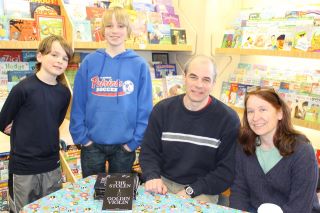
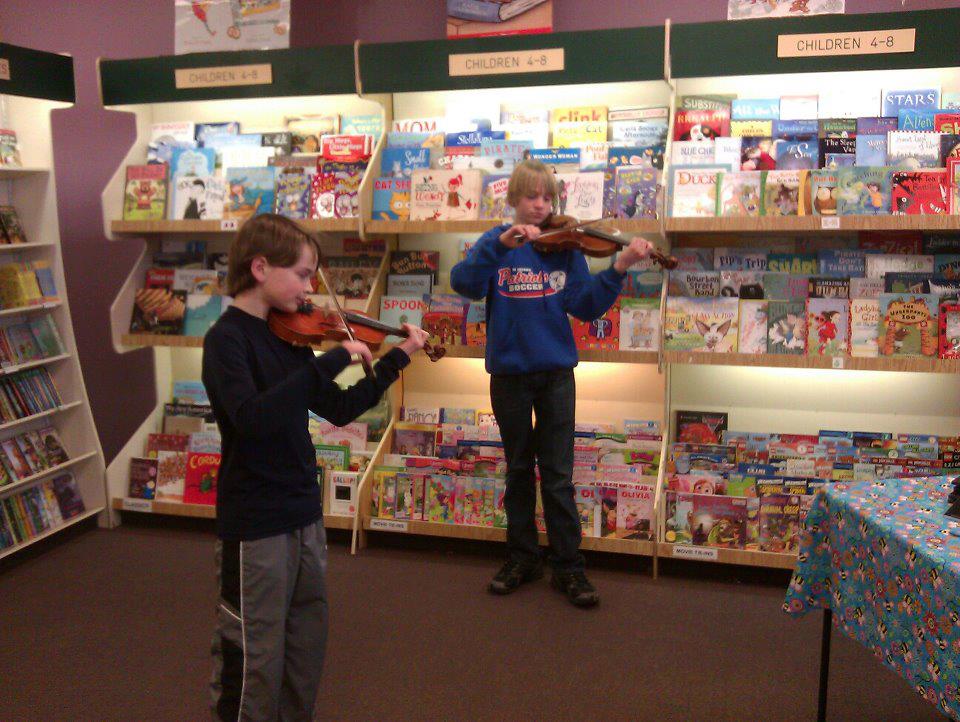
We had a great time at the Bookfinders Grand Opening this past weekend. We met some great people, enjoyed Zest’s coffee and cookies, bought a a cookbook, met some authors, and played some music. Here are some pictures of our signing and the boys playing violin.

Tom, Craig, Andy and me at Bookfinders
Tom and Craig play a duet.

Celebrate at Bookfinders This Weekend

The new owners of Bookfinders in Stevens Point are having a grand opening celebration this weekend that includes coffee, food, face painting, music — something for everyone. I’m excited to see the changes they are making in the bookstore. I believe they will be selling used books, they will be promoting local authors, and they may even have a small coffee shop. I’m not really sure, so come out this weekend and see how much of this I’ve gotten right!

We will be there on Saturday, 3:00 – 5:00pm. Below is the full schedule of events:

Friday, Feb 24

1pm to 8pm Zest Bakery and Coffee House
free samples, coffee & bakery for sale

1:30-3:30pm Darlene Biese Schultz
Decision Or Destiny
~Romantic Fiction

6:30-8pm Pat Rothfuss
The Name of the Wind & The Wise Man’s Fear
~Fantasy

Saturday, Feb 25

9am-8pm Zest Bakery and Coffee House
free samples, coffee & bakery for sale

9:30am-11am Charles Schoenfeld
A Funny Thing Happened on My Way to the Dementia Ward
~Humor/Bio

11am-4pm Face Paintings by Christie

11:30am-1pm Ken Danczyk FamilyGrandpa’s Farm
~Children’s book

3-5pm Felt Family
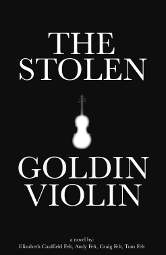
The Stolen Goldin Violin
Violin Performance by Children
~Children’s mystery

3-5pm Remington Crockett
We Interrupt this Marriage to Bring you Deer Season
~Outdoor Humor

5:30-7:30pm Justin Isherwood
Pulse, Book of Plough, Farm Kid & More
~Array of Regional Nonfiction

Bookfinders is at 1001 Brilowski Road, across from Fleet Farm.

Author Interview: Melissa Westemeier

To begin my series of author interviews, I’ve invited Cornerstone Press author Melissa Westemeier.  I was fortunate enough to attend the release party for her novel Whipped, Not Beaten and get an early copy, which I thoroughly enjoyed.

Whipped Not Beaten tells the story of Sadie Davis. Recently dumped and working for a boss she despises, she is determined to shake up her life as a single woman in the city of Madison, Wisconsin. She takes a side job as a home party consultant selling kitchenware, hoping that it will be the spice that turns her life around. Through failed recipes and cold ovens, Sadie works to create something that’s a bit sweeter, a lot richer, and oh, so very delicious.

Melissa, welcome.

Q: Tell us about Whipped, Not Beaten, and how you came to write it

A: The main plotline is about how Sadie starts selling home party products. When I quit my teaching job and became a stay at home mom, my social life became nonexistent. The only time I had a night out was when I got invited to a home party―and naturally I accepted every invitation. After attending several―Partylite Candles, Tupperware, Tastefully Simple, Mary Kay, Creative Memories, Pampered Chef―it struck me how a novel could appeal to women by poking fun at the entire set-up. I’d already written a couple of YA novels, and the idea of a romantic comedy, “chick lit” with home parties as the backdrop really appealed to me. Like I begin all my books, I just started writing and the plot and characters fleshed out as I kept at it. I chose Madison as the setting because all chick lit seems to take place in New York or Los Angeles. The Midwest gets almost no attention, unless someone’s writing about a rural setting. Also, I’m familiar with Madison, which made the book easier to write than if I had to research a different setting, like New York City.

Q: Many readers think that the main characters in novels are like the authors themselves. Is there a lot of Sadie Davis in you?

A: That’s a funny question! One of my best friends read the book with me as Sadie in her head. Needless to say, when Sadie has her first sex scene, Nicole had to set the book down…

I think there’s a little of any woman my age in Sadie. As far as specific traits that we share, I do fantasize about George Clooney, battle the occasional blemish, and find my medicine cabinet terribly disorganized. When I was younger I had to learn to stand up for myself at work and I enjoyed the mentorship of some great older women. Really, the character most like anyone in real life is Sadie’s mom, who I based almost entirely on my Grandmother, Gloria Volkman. If I were to BE like any of my characters, I confess that I wish I were just like Sadie’s older sister, Jane. She lives my fantasy.

Q: Whipped, Not Beaten was your first published novel. Have you written other things?

A: I co-wrote a chapter in Teaching Writing in High School and College (NCTE, 2002) and co-wrote Writing in a Changing World (Bridle Path Press, 2010). I’ve had some poetry and essays published, and like most writers, I have a drawer full of rejected or partially-developed manuscripts.

Q: You’ve worked as both a teacher and as an editor. How have those jobs influenced your writing?

A: After teaching high school English for almost 10 years, I really developed an eye for recognizing what makes a piece of writing strong or weak. I also developed the knowledge base to help writers tend to those issues. My writing group works well together because we all have teaching backgrounds, so instead of just getting together and pointing out what “doesn’t work” in each other’s manuscripts, we advise each other on how to make revisions, play to our individual strengths, and address the problems with suggestions. I think the best thing a writer can do for their own craft is to find other writers to work with―I really enjoy editing manuscripts for other authors and it’s a personal thrill when they get published, too.

The only drawback is when I’m with my book club―I need to learn to turn off my “editor eyes” and approach some books with only my “reader eyes.” Writers read books differently than other people.

Q: What can you tell me about working with the student-run publishing house Cornerstone Press?

A: They were lovely and so professional. From the content editing to the marketing, every step of the way demonstrated the investment they made into my book. I loved getting 100% of their attention, which I know wouldn’t happen in a larger press, and they were so creative, too.

Q: What are you working on now?

A: Currently I’m working on 2 projects―final revisions on a nonfiction book I wrote with Jen Brecht, my co-founder over at Ecowomen.net. It’s a guidebook to making one’s lifestyle environmentally friendly by making one behavioral change a week over a whole year.

Also, I’m bringing a revised version of my latest novel, Across the River to a writing workshop this summer. It’s the story of a small town on a river, loosely based on my bartending days during college when I lived in Fremont, Wisconsin. The main characters are the daughter of a dairy farmer who sees a different future for her family’s farm and a bait shop owner who has dreams of big development moving into the area. It’s funny, but with a more earthy humor than Whipped, Not Beaten, in part because most of the characters are men, and it takes place during the white bass run.

We’ve now reached the time in our interview for the let’s-get-to-know-the-author-better, nearly-pointless, sort-of-silly, rapid-fire questions:

Coffee or tea? Coffee.

Ocean or mountain? Ocean.

Hiking or shopping? Hiking.

Violin or piano? To listen to, right? Violin.

Mystery or fantasy? Mystery.

Darcy or Heathcliff? Always, always Mr. Darcy.

Love scene or death scene? Love scene.

A great big thanks to Melissa for being the laboratory rat in my first interview experiment.

I encourage you to  order her book, Whipped, Not Beaten, and to visit Melissa at Green Girl in Wisconsin

A Whole New World

Syncopation, my novel about Adele Hugo has found a publisher!!!  Cornerstone Press, the student-run publishing house at the University of Wisconsin, Stevens Point chose my manuscript from among the many submitted.  (I don’t know how many were submitted, but I like to think it numbered in the thousands.  And, please, don’t pop my bubble.)

Hooray!  Hooray!  [insert picture of me jumping around]

I had a marketing meeting with some students on Thursday so we could talk about my ideas, their ideas, and get a strategy put together.  It was so exciting to talk about my book with people, people whom I barely know, who have read it!!

Hooray!  Hooray! [insert slightly different picture of me jumping around]

Working with student publishers is so exciting! (Have I used the word exciting too many times?)  They bring such energy and so many new ideas to the process.  I’ve been working alone for so long, trying to sell The Stolen Goldin Violin, that when they were talking about things they were going to do, I just couldn’t believe that I didn’t have to do everything myself.*

Hooray!  Hooray! [insert picture of me, tiring, as I jump around]

In other news, I’ve decided to expand what happens on this blog, and to make that happen, I’ve contacted a number of historical novelists whom I will be interviewing in the near future.  I plan to do two interviews a month–they should be fantastically interesting.  Think Fresh Air with Terry Gross, but in print, and with me.

* Note:  This is an apology to my husband and kids who have often worked harder than me to promote The Stolen Goldin Violin.  When I said I was “working alone” I was thinking of my family as being a part of myself.  We are one, and all that.  Yes?

Stella’s Workshop, a working title

My family went skiing today, and I stayed home to think. I thought all day.

I dyed my hair with henna and thought. I sat in front of a football game and thought. I did the dishes and thought. I vacuumed and thought.

Then I typed up some of those thoughts.

After about eight straight hours of focused thinking, I’ve come up with a basic outline for my next novel: a children’s fantasy. I’m thrilled with this new story idea. It’s a little bit Artemis Fowl, a little bit Harry Potter, a little bit Ella Enchanted, a little bit Despereaux, a little bit Septimus Heap, and all my own.

A few minutes ago, I danced around the living room to Alanis Morissette to celebrate my day of thinking.  Now it’s time to get off the computer and dance a little more.

Yippee!!

Best Books of 2011

2011 sucked. I had to deal with the death of both of my parents, and so I spent a lot of time reading as escapism. I read eighty-one books this past year, but I was in such a low psychological state that I didn’t find many new books that wow’ed me. I started a lot of books that I didn’t finish. (Wolf Hall, The Immortal Life of Henrietta Lacks, London by Rutherford, Water: the epic struggle for wealth, power and civilization, and probably others I can’t now remember. If I didn’t finish a book, it didn’t count toward the eighty-one.)

For comfort, I re-read books that I knew I would enjoy. Every now and then, I read a new book that hit me just right, and I’m completely aware that if I had read it two weeks earlier or later, it might not have affected me the same way.

So, enough of my prose. Here’s the list:

The Curious Incident of the Dog in the Night-Time by Mark Haddon

The main character/narrator is autistic. Because he is telling the story to you, and doesn’t understand the world the way you do, you understand things before he does. Through his voice, you learn how his mind works, so you clearly understand why he responds the way he does to difficult circumstances. Fascinating and emotional.

The Wise Man’s Fear by Patrick Rothfuss

Rothfuss’s long awaited sequel to The Name of the Wind was all I’d hoped for and has me eager for the final installment in the trilogy. This is an enormous book (almost 1000 pages) and I’ve been sitting here for about ten minutes trying to figure out how to summarize it, and I’ve just decided not to try. If you like fantasy and haven’t read these books yet, get The Name of the Wind. If you aren’t a fan of fantasy, I still recommend them. The writing is almost poetry (actually, there is a bit of poetry in there), and the story multi-layered.

The Circle Cast: The Lost Years of Morgan le Fay by Alex Epstein

Epstein skillfully blends the coming-of-age, the fairy, the revenge, and the legend. Revenge is the sustaining force in Morgan’s lost years, and success in battle and magic are what give her power. Epstein holds true to the legendary woman Morgan le Fay in creating this story of the child. Fans of Arthurian legend will love this book, and so will everyone else. Great characters, great writing, great story.

Just Listen by Sarah Dessen

I read this book straight through, staying up until about 2:00 in the morning. Once part of the popular high school crowd, Annabel Greene is now a social outcast. Something traumatic happened, but Annabel won’t talk about it—not to her overpowering mother, not to her troubled older sisters, and not to us, the readers. Fellow outcast Owen befriends Annabel, and their relationship slowly becomes romantic. Dessen is flawless at creating the female teenage world. I’m not sure why anyone would want to return to that horrible time and place, but I love Dessen’s writing and characters, and if she’ll keep writing about it, I’ll keep reading.

Elijah of Buxton by Christopher Paul Curtis

Twelve-year-old Elijah was the first child born free in the Canadian community of Buxton, where escaped slaves live freely. He is a sensitive child who wishes he were less sensitive, or “fragile” as his mother calls him. Through a series of funny, emotional, and gripping events, Elijah proves himself and an able young man. I loved Curtis’s Bud Not Buddy, and I loved this book too. This is a middle-reader story that adults will like as much as their kids. It’s a good read-aloud, as the funny scenes are even funnier when a small child is laughing along with you.

The Tale of Despereaux by Kate DiCamillo

This is a fairy tale story of a mouse who falls in love with a princess. It was made into a movie, which I haven’t seen, but which according to my son is good but quite different. DiCamillo’s writing is poetry.

The Lost Memoirs of Jane Austen by Syrie James

This was the last book my mother read before she died. She told me all about it on the phone, the day before her stroke. I read it way back in January and can’t remember a bit of it—I was in a fog of grief. This book will always have a special place in my heart.

Pride and Prejudice and Zombies by Seth Grahame-Smith and Jane Austen

Really? you ask. Yes, I answer. I picked up this book at the perfectly right time. It is the story I know practically by heart, interspersed with zombie attacks. Fun.

Bringing Yoga to Life by Donna Farhi

I don’t read a lot of non-fiction, but I had to include this self-help book. Again, good timing for me. After my father’s death, stress caused in me some physical ailments that have been helped by a daily yoga routine. However, this book is about more than yoga poses; it explores how to live a healthy, centered life.

and the series . . .

Thursday Next series by Jasper Fford

Clever fantasy/mystery/English-major type story. Very funny. I read these aloud to my younger son, who enjoyed them immensely. There’s a new one out I need to get.

A Series of Unfortunate Events by Lemony Snicket

I read these when my older son was in elementary school, and now I’m reading them out loud with my younger son. Such clever writing.

The Hunger Games series by Suzanne Collins

I keep re-reading this. Fast-moving story, incredible characters, fantastic writing. Is there anyone who reads this blog and hasn’t read this yet? Why haven’t you? You better get going; the movie comes out in March. I’ve watch the trailer four times and cried each time. Powerful story.

Girl with the Dragon Tattoo series by Stieg Larsson

I debated including this. The thriller is not my favorite genre, and I usually avoid books filled with sicko sexual torture. This made the list because of Lisbeth Salander. She is perfectly drawn—a powerful female character, perhaps a bit autistic, a survivor.

World Builders

Pat Rothfuss, a colleague of mine and a New York Times best selling author, is once again running World Builders, a fundraiser for the Heifer Project. 

Pat, who has become hugely famous because of his fantasy novels The Name of the Wind and A Wise Man’s Fears, has gotten novelists, publishers, and generous individuals to donate books, illustrations, maps, trinkets, and all sorts of really cool stuff. 

For every ten dollars a person donates to the Heifer Project, that person gets one chance at having his name drawn from a hat for a cool, donated item.  ($20 earns 2 chances, etc.)  Although Pat is a fantasy writer and much of the cool stuff comes from the world of fantasy, there are exceptions, including a couple signed copies of The Stolen Goldin Violin.

Other donated items are so desirable that they are not a part of the lottery but instead will be auctioned off. 

If you don’t feel like hoping to win the lottery, and don’t want to bankrupt yourself at an auction, you can visit the very cool “Tinker’s Packs” and purchase cool, donated items straight up.

All proceeds benefit the Heifer Project.  You can visit Heifer to learn more about that organization, but to be a part of the lottery/auction/Tinker’s Packs, you need to donate through the World Builders page.   

I encourage you to visit World Builders, check out the cool stuff, and make a donation today !

Holiday Fest Book Signing

Once again, we will be selling The Stolen Goldin Violin at this year’s Holiday Fest.  Holiday Fest is one of Stevens Point’s biggest and best arts and craft shows. 

Saturday, Nov 12 from 9am to 3pm

St. Paul’s United Methodist Church, 600 Wilshire Blvd.

Proceeds from the show benefit community holiday baskets.  So come and check out our booth, have lunch, buy some crafts, and know that you are helping feed the needy in our community !