Videos and Marketing

Cornerstone Press has created a number of videos, which can be viewed on youtube, to market Syncopation.  I’m going to see if I can imbed some of these videos in this blog.  Wish me luck!

Of course, we should start off with the amazing book trailer:

Next, is Chalk Talk:

The next three are readings from the text:


I think I did it!  I hope you enjoyed the clips.

Come back tomorrow for my author interview with Beth Elliot.


Interview with Linda Collison


Today I’m welcoming Linda Collison to my series of author interviews. Linda is the author of the Patricia MacPherson Nautical Adventure Series.

Q: Can you give us a brief description of your books?

A: Stripped to the bone, it’s about a girl pretending to be a man aboard a ship in the 18th century.

The series begins in 1761 during the Seven Years War and is told in first person by Patricia, the illegitimate daughter of a dissolute English sugar planter. When her profligate father dies, sixteen-year-old Patricia finds herself without funds, family or interest. How is she to survive? She chooses to portray herself as a young man and make her living at sea. Living in disguise aboard ship with so many men (and a few women) is fraught with its own risks and rewards and I’ve drawn on numerous historical accounts of 18th century women who really did pass themselves off as men.

Q: How did you come to write this series?

A: My first novel, Star-Crossed (Knopf;2006) was the inspiration for the Patricia MacPherson Series. Knopf originally published it as a stand-alone and they weren’t really interested in doing a series. But Tom Grundner, publisher and senior editor of Fireship Press was! He published Surgeon’s Mate, the sequel, and waited to acquire the rights to Star-Crossed, once I obtained the reversion of rights after it went out of print with Knopf. Tom recognized that Star-Crossed was adult historical fiction, not YA, and he was committed to publishing the series. Tragically, Tom died suddenly last fall, but his publishing company Fireship Press lives on. Star-Crossed will soon be republished as Barbados Bound, the first book of the Patricia MacPherson Nautical Adventure Series, and the third book in the series will hopefully see print early 2013.

Q: In 2007, Star-Crossed was named by the New York Public Library as a “Book for the Teen Age.” Did you write it for adults or teens?

A: Funny you should mention that! I didn’t write Star-Crossed specifically for young adults; I wrote it from the perspective of a young woman, a sort of coming-of-age historical. The character is impetuous and she doesn’t always make good decisions. But she does what she can to survive.

My agent at the time, Laura Rennert, was keen to sell it as YA. She assured me she could attract a big publisher if she marketed it as YA, and she did. I was thrilled to be published by Knopf and to be included on the Books for the Teen Age – but throughout the series Patricia matures, and if the series continues she will grow old –which makes it more of an historical maritime saga than YA. So it’s a “cross-genre, cross-gender” book.

I do write young adult novels. Looking for Redfeather, a contemporary young adult literary novel I’ve recently completed, is represented by literary agent James Schiavone. I’m also working on a YA paranormal thriller set at sea that I’m very excited about.

Q: You studied history in college. How has that influenced you as a writer?

A: I’ve been a life-long student of history but the first time I went to college I majored in nursing to become a registered nurse (there being more jobs for nurses than historians — and I with a family to support!) I worked in acute care for over a decade, specializing in emergency and critical care. At the same time I worked as a freelance writer and had numerous articles, essays and short stories published by various magazines including Ladies Home Journal, Caribbean Travel& Life, Sail, Cruising World, Sailing, Parachutist, Nursing, etc. I wrote two guidebooks with my husband, which were published by Pruett, back in the ‘90s.

Over the years I’ve taken many college level history courses, mostly in history and French. Studying history has helped me examine sources objectively; it has helped me approach my research more efficiently and given me a wider perspective.

Q: How did you come to write historical fiction with a nautical setting?

A: In 1999 my husband and I served as voyage crew members aboard HM Bark Endeavour, an Australian-built replica of Captain James Cook’s 18th century sailing ship. The Endeavour was the closest thing to a time machine I have ever experienced and one of the most accurately reproduced historical ships in existence. We voyage crew members helped to sail her from Vancouver to Hawaii, a crossing that took nearly three weeks. We were expected to stand our watches, climb aloft and go out on the footropes to make and furl sail, take our turn steering the ship and keeping a look-out, as well as other duties necessary to keep the traditional vessel in good working order. We slept in hammocks strung from the deckhead, just as sailors did in the 18th century.

In many ways the experience changed my life. When I got off the ship in Hawaii I had a much better understanding what it was like to have sailed on an 18th century sailing vessel. And I carried inside the seeds for a novel. I had lived the time period, and the setting; I knew the ship intimately. I was getting to know the main character, the cross-dressing surgeon’s mate. But I still had years of research and writing ahead of me before Star-Crossed would be published. What a journey that was! And Star-Crossed was only the beginning. Book three of the series is taking me into the period leading up to the American Revolution where Patricia and her lover will find themselves on opposite sides of the war.

Your whole series sounds fascinating.  I look forward to reading about Patricia.

We’ve now reached the time in our interview for the let’s-get-to-know-the-author-better, nearly-pointless, sort-of-silly, rapid-fire questions:

Q: Coffee or tea?

A: Coffee, black! Except when I’m in England eating scones and clotted cream, then I’ll have tea.

Q: Ocean or mountain?

A: You might think I would choose the ocean because of my nautical books. But that isn’t necessarily the case! I divide my time between ocean and mountain. Today I’m at the ocean but next week I head for the Rocky Mountains. I need them both!

Q; Hiking or shopping?

A: Today I am hiking. Tomorrow I might be shopping. Life is broad!

Q: Violin or piano?

A: How about clarinet or cello? I played them both in high school, but maybe I should have learned piano, it’s so versatile and expressive. I do love piano — Adele, Elton John, Duke Ellington and Frederic Chopin jump to mind.

Q: Mystery or fantasy?

A: What about a mysterious fantasy? Actually, I don’t care for the mystery genre. Literary mysteries, such as Umberto Eco’s The Name of the Rose, now that’s a different story!

Q: Darcy or Heathcliff?

A: Heathcliff, of course!

Q: Love scene or death scene?

A: The best love scenes are usually lovers’ quarrels. It’s all about the conflict! Throughout the series I’m writing, Patricia tries to get together with her lover, and only sometimes are the trysts successful.

Death scenes are the best. “Out, out brief candle!”

Learn more about Linda and her writing at Linda’s website and at the Fireship Press website.

You can also order her books and learn more about her at Linda’s amazon.com page

Thank you, Linda!


Interview with T.C. Isbell


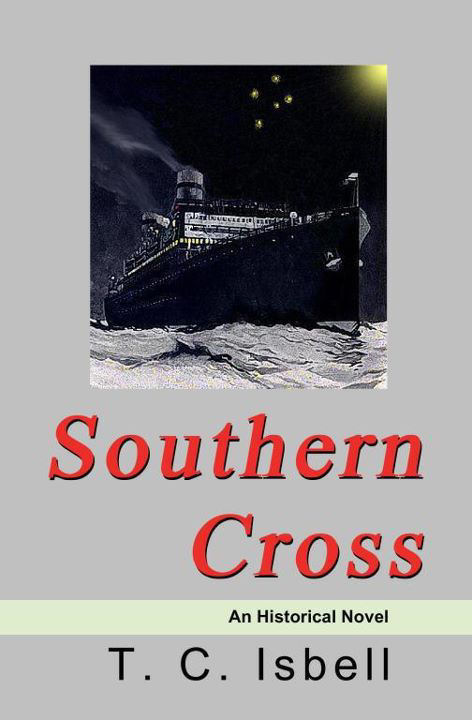
Today I’m welcoming T. C. Isbell to my series of author interviews.  T. C. is the author of Southern Cross, the first in the Prelude to War series.

Q: Can you give us a brief description of your novel?

A: Southern Cross is a World War 2 historical thriller. German agents Elsa Gable and Chris Schulte grew up together in a Germany ravaged by the Great War. They became inseparable as they matured into more than friends, more than family. They had a bond no one could destroy, at least that’s what Chris believed until the night of December 2, 1938 when a telegram arrived that changed Chris’ life forever.

Q: When will the second book in the series, Icarus Plot, be released and how does it continue the story started in Southern Cross?

A: Icarus Plot, the second novel in my Prelude to War series, takes place in Panama in 1940. Clive Smith, an MI6 agent, tracks a German spy, Chris Schulte, through the first book in the series. Clive is certain that the threat has not been resolved in Havana at the end of Southern Cross. He follows a trail to Panama where he discovers foreign and American interests are attempting to disable the Panama Canal and effectively divide the world in half. I hope to finish Icarus Plot before Christmas 2012.

Q: What drew you to this time period?

A: I have been an avid fan of World War Two history ever since high school. When I retired I started an in depth research project into the time period preceding Germanyfs invasion of Poland. Before I knew it, I was writing a novel that weaved the story of Chris Schulte and my other characters into my historical research.

Q: I see that you’ve written short stories in the past, can you tell us about them?

A: Yes, I have written a number of short stories. Presently, two of them, “Mattie’s Shoes” and “Surf’s Up” are available for Amazon’s Kindle. In “Mattie’s Shoes” a sixty-nine year old widow confronts a closet full of old shoes and old memories. “Mattie’s Shoes” placed in the 79th Annual Writer’s Digest Writing Competition in the Mainstream/Literary Short Story category. In the other story Billy Bonzer, an old surfer from Southern California, learns a lesson about working for big business and big government by participating in an inner tube race.

Q: Enough of your books tell us about yourself.

A: Ever since childhood, I have been intrigued by the arts–painting, music, and writing. Starting in high school, I wrote short stories and poetry. In the late sixties I joined the Navy. During the Vietnam era I wrote a number of poems that were published in the Berkeley Barb. I may publish them as a collection sometime, but for now they remain locked away. After my discharge, I returned to college and graduated with a BA in mechanical engineering. I worked for the Navy repairing nuclear power plants until I retired in 2005. My first challenge after retirement was to learn how to not write like an engineer. My second challenge was to learn everything I missed while staring out the window during my high school English classes.

Q: What advice would you give to an aspiring author?

A: First: sit down and write – write everyday. Set aside a specific time each day. Maybe in the beginning it’s just thirty minutes or an hour, but do it religiously. Soon writing will become a habit. Don’t get bogged down with creating the perfect sentence. Nothing is ever perfect to a writer. Write what’s in your head and sort it out later. Second: read books in the genre you write in. The authors you read have spent a lot of time learning their craft and have things to teach you. Third: consider, but don’t be deterred by the opinions of others – follow your dreams.

We have now reached the time in our interview for the let’s-get-to-know-the-author-better, nearly-pointless, sort-of-silly, rapid-fire questions:

Coffee or tea?

Coffee, I drink vast mounts of strong, French Roast coffee while I work. I don’t smoke, so I have to do something that’s bad for me. To paraphrase Mark Twain, when you get really sick, you need a vice to throw overboard to stop your ship from sinking. I guess coffee is mine.

Ocean or mountain?

Mountains – I was in the Navy for six years and have seen enough of the world’s oceans.

Hiking or shopping?

I enjoy hiking and climbing. I have climbed most of the volcanoes in the Cascade Mountain Range, including Mt Rainier.

Violin or piano?

Piano, but really harpsichord. In the early seventies when I lived outside of San Francisco I owned a Baldwin electric harpsichord along with an assortment of guitars and other musical instruments.

Mystery or fantasy?

Mystery, but actually both. I like writing mysteries, but I am working on a science fiction novel.

Hester Prynne or Scarlett O’Hara?

Hawthorne’s Hester Prynne for all of the contradictions in her life. Her story becomes even more poignant, considering today’s political climate.

Love scene or death scene?

Death scene – I think a richer palette of emotions from love to hate can be drawn into a death scene.

Thank you, T.C.

To learn more about T.C. And his writing, visit his website, like him on Facebook
and even better, buy his books:

Amazon , Barnes & NobleGoogle Play

Thanks, T.C. !


Interview with Tina Boscha

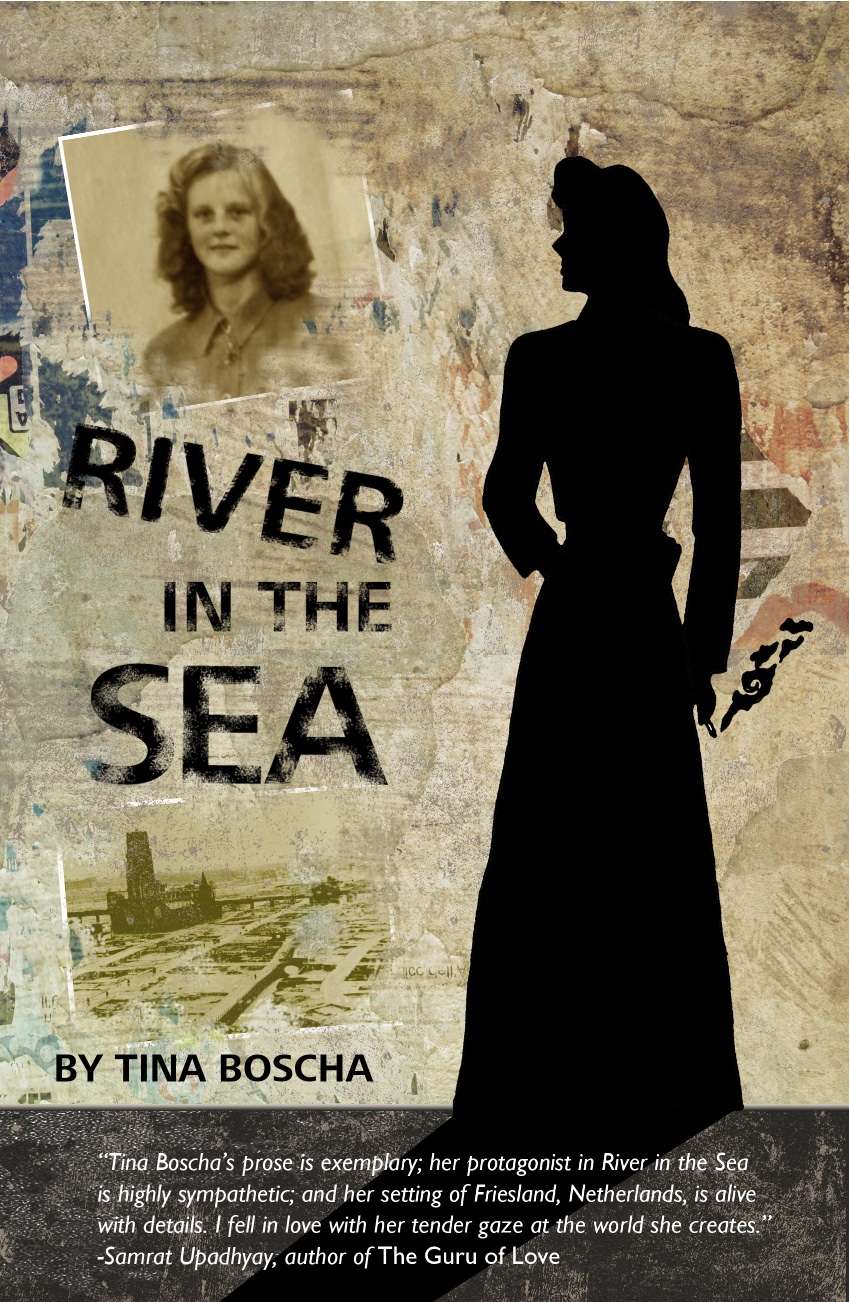
Today I’m welcoming Tina Boscha to my series of author interviews. Tina is the author of River in the Sea.

Q: Can you give us a brief description of your novel?

A: This story takes during the German occupation of the Netherlands during World War II. The main character, Leen, is based on my mother.
When a German soldier’s dog bolts in front of Leen’s truck, in a fraction of a second, she must make a choice: brake hard, or hit the gas.

She floors it.

What happens next sets off a chain of events that pitches Leen, just 15, and her family against the German forces when they are most desperate – and fierce. Leen tries to hold her family together, but despite her efforts, bit by bit everything falls apart. And just when Leen experiences a horrific loss, she must make a decision that could forever brand her a traitor, yet finally allow her to live as her heart desires.

River in the Sea is my account of one girl reaching adulthood when everything she believes about family, friendship, and loyalty is questioned by war.

Q: Was it difficult to write a novel based on your own mother?

A: Initially the challenge of writing a novel based on my own mother felt insurmountable. There were a number of issues I wrestled with; first, it’s based on her as a teenager, but obviously I never knew her then (and really, I have always known her as middle-aged or older, as she had me when she was 41). Second, I was convinced I had to stay as true as possible to the way events unfolded. This ended up being quite paralyzing. I wanted to do right by her and my family, but I wanted this to be my book, which felt selfish. Only when I gave my permission to take more control over the story and the character of Leen as I imagined her to be did the writing really flow, and in the end my mom has told me that she feels I got both her and the feeling of what it was like to be a teen at that time exactly right. Of course, she might be biased!

I think sometimes the real person who should be interviewed is my mother – what is it like to have a book written about YOU?!

Q: How much historical fact is woven into your novel?

A: It feels like quite a bit, yet I honestly don’t know. I’ve never felt that this book is historical first, fiction second, nor do I feel like it’s a “war” book. I feel like it’s a coming of age story set against the backdrop of war. Clearly there is a historical element here, as well as the unique setting of Friesland. But when I cut over 100 pages over the course of many revisions, it feels like I cut much of the exposition that gave a lot of precise historical information.

What is on the page, though, was largely gleaned from conversations with my father. He remembered so many amazing details that never would be found in a text. He was able to tell me that electricity was cut nearly right away after the occupation began, even though in my research I thought it was 1943. He waved that off and said, “Oh shit, they cut that right away.” From that point on I trusted him more than anyone else.

He also told me about a girl he remembered who came back from an outing with a Canadian soldier with her entire back covered in yellow daffodil pollen. I found that so evocative and telling that I included that in the novel.

In the end, the historical fact was really about making it feel authentic and less about “here’s the history because it’s important”, if that makes sense.

Q: Your novel has garnered several awards. Tell us about them.

A: I mostly received awards during the writing – I have yet to win an award after it’s been published! (I’m trying, though!) I feel very fortunate to have received a Literary Fellowship from Oregon Literary Arts. That, combined with a research/living expenses grant from the University of Oregon’s Center for the Study of Women in Society, gave me a summer where all I did was write and revise. It was magical. Until that point I really struggled with time and self-esteem and motivation and those awards gave me the resources and more importantly, the confidence, to work on the book. Without them I’m not sure where the book would be.

Q: Enough of your book—tell us about yourself.

A: I have always felt the best description of me is “not quite”. I’m not quite Dutch, but Frisian, really; I’m a mom but a step mom, not a biological one; I’m a college instructor, not a professor; I’m a published author, but not through a traditional publisher. I’m also not quite 6 feet but darn close! I am crazy busy with work, writing my next novel, marketing, and my favorite things to do in the whole wide world are to read, take baths, and walk my dogs in the sunshine. I live for summer!

Q: So when you say you didn’t go the traditional publishing route, does that mean you self-published? How did you come to that decision?

A: I decided to self-publish after I had my last rejection in the Winter of 2010. I almost sold the book to a small press in Canada, and I was so, so hopeful. They turned me down not on the basis of the manuscript, but because I am American and they didn’t want to be the lead publisher. Strangely, that gave me the confidence to go out on my own. It was like a light switch flipped – it wasn’t the book or me, it was the publishers. And of course, we all know that self-publishing is far more viable and respectable now (at least for me). I also just couldn’t stomach shelving the book – something told me, no, it shouldn’t be shelved. And my mom is now 80, and I wanted her to have the book in her hands. So last fall I released it on my own after revising, polishing, editing, proofing, all the things you have to do as an independent author, and I haven’t looked back.

We’ve now reached the time in our interview for the let’s-get-to-know-the-author-better, nearly-pointless, sort-of-silly, rapid-fire questions:

Coffee or tea? Tea, every morning and every afternoon. Tetley and decaf English breakfast!

Ocean or mountain? Mountain. (But I live in Oregon, so in an hour’s drive I can be at either!)

Hiking or shopping? Hiking.

Violin or piano? Piano.

Mystery or fantasy? Fantasy.

Darcy or Heathcliff? Neither! They’re both stuffy jerks.

Love scene or death scene? Love scene!

To learn more about Tina, visit her blog www.tinaboscha.com

You can order River in the Sea as an e-book or  order River in the Sea in paperback 

Thanks, Tina!