 Today I welcome author Suzanne McLain Rosenwasser to my blog. She is the author of the essay collections Manhasset Stories: A Baby Boomer Looks Back and Manhasset Stories: More Baby Boomer Memories. Suzanne’s most recent publication is the historical novel Don’t Ya Know, which takes place on the fictional Corycian Island, off the coast of Long Island, at the start of the 20th Century.
Elizabeth: Welcome, Suzanne. Tell us more about Don’t Ya Know.
 Suzanne: Hello, Elizabeth. Thank you for inviting me to talk about my work, in particular, Don’t Ya Know, a labor of love for my Long Island roots. Until the 1890s, Long Island’s shoreline was dotted with malodorous, fish oil factories. Terms like “The Gold Coast” and “The Hamptons” were not part of the vernacular. Change came rapidly, however, once real estate developers saw the value of beachfront luxury. By the 1900s, the ferries of the Long Island Sound transported tourists instead of fertilizer to and from the barrier islands.
Corycian (Core’seen) Island represents a microcosm of Long Island’s physical and cultural transformation through the stories of her indigenous people, the locals who meet the challenges of change head-on, though often haphazardly. The worst among them sow silent seeds of hate; while the best cling to the ancient concept of living “all-a-wanna”- or all together – and sow seeds of spirit and hope.
Elizabeth: What drew you to this time and place?
Suzanne: I grew up on Long Island in the 50s and 60s, lived on Manhattan island in the 70s, and moved to a small barrier island off Long Island’s east end, Shelter Island, in the 1980s. The similarities of those, vastly different, island environments intrigued me, and continued to do so as I visited more islands along the eastern shoreline in later years. I also wrote for a 100-year-old local newspaper in the 80s, The Shelter Island Reporter. The feature stories I researched opened up a whole world for me. I was introduced to splintered Algonquin tribes, Dutch sugar merchants, Barbadian slaves, runaway New England Quakers, and legacy baymen. This unlikely group formed an agricultural society that led to a thriving economy driven by fertilizer factories and canning plants along hundreds of miles of shoreline. This was the world of Long Island until its beaches became a mecca for real estate developers and millionaires in the1890s. I wondered how the locals dealt with that enormous transformation, along with the turbulence of the times.
Elizabeth: How much historical fact is woven into your story?
Suzanne: The story takes place from 1900-1928 when great change occurred worldwide. Corycian Islanders endured the effects of women’s suffrage, spiritualism, WWI, the flu epidemic, and Prohibition. Fortunately, there are many books specific to Long Island on these topics, including guides for Algonquin words and stories of Barbadian slaves on Long Island, as well as photographs of the factories, the Victorian cottages, the baymen, the ferries and the hotels of the era. I visited many island cemeteries from Shelter Island, New York to St. Simon’s, Georgia. Sadly, one of those had been desecrated, and the impact of that senselessness worked its way onto Corycian Island.
Elizabeth: Tell me about your protagonist, Nuna Shellfoot.
Suzanne: Nuna is of Native American and Barbadian ancestry. Nuna expresses the theme of the novel in her rhythmic dialect: “Great spirit be a mother. She feed us, we feeds dem. Round and round. That’s de way. You helps dem, so you helps alla us; all-a-wanna or all together, don’t ya know.” Nuna’s words are few, but her wisdom is great.
Elizabeth: Tell us about your essay collections, Manhasset Stories.
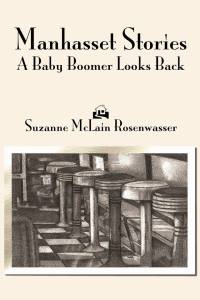 Suzanne: Manhasset and so many towns like it on Long Island in the mid-20th century were new hamlets, largely made up of first and second generation Americans moving from the boroughs of New York. Growing up as Baby Boomers in this era allowed a “new” post-WWII perspective. The suburbs were a new concept. It was a new middle class. The families were young and new. The highways to Long Island were new. The shopping centers and area parks were new. We lived in the epicenter of changing times. We shared a golden era, and I chose to dwell on the times we enjoy remembering. The small book was intended as a gift-sized volume. It proved so popular, I followed it up with Volume II – More Baby Boomer Memories.
Elizabeth: What led you to write these essays?
Suzanne: The New York Times had published two essays I submitted about my hometown and beach life as a Long Island Baby Boomer. The great feedback I received led me to the idea of a gift book
Elizabeth: What are the biggest differences between writing nonfiction and fiction?
Suzanne: When I write non-fiction, mostly memoir, I know how it’s going to turn out ahead of time. In fiction, the story unfolds before me as it takes on life.
Elizabeth: What does your writing day look like?
Suzanne: Having newspaper deadlines in the 1980s for everything from zoning board meetings to historical features introduced discipline to my writing days. I had two small children, so I started writing at 4 a.m. before they woke up for school. I continued to do that for the next 35+ years, either writing myself or reviewing my students’ writing.
Elizabeth: What have you read recently that you feel passionate about?
Suzanne: I listened to the audio book of The Nightingale by Kristin Hannah and found the story to be so well woven with history, character, and place – all further enhanced by the French accents of the reader while I listened. Also, I reread a favorite, The Power of One by Bryce Courtenay, and was once again struck by the lessons we learn about the world in fiction. This is a brilliant book. While reading it I realized a character in Don’t Ya Know, Ezra Goldsmith, may well have derived his wisdom from the influence of “Doc” in Courtenay’s book.
Elizabeth: Can you tell us more about yourself?
Suzanne: I am a retired educator who loved teaching English literature, writing, and drama to high school students. Reaching a teen’s heart is challenging and rewarding. I found the written word to be a great vehicle for that target. Also, I am a life-long writer who began entering short story contests at the age of ten. I received nothing but rejections until the age of 35 when a major publisher offered me an astonishing contract. The book ended up in publishing hell (see Harry Chapin and Me). My job at the newspaper and a website called scribd.com, renewed my writing voice.
Elizabeth: We’ve now reached the time in our interview for the let’s-get-to-know-the-author-better, nearly-pointless, sort-of-silly, rapid-fire questions:
Elizabeth: Coffee or tea?
Suzanne: Coffee – though I’m being told to cut back. Horrors!
Elizabeth: Ocean or mountain?
Suzanne: Ocean. Ocean. Ocean.
Elizabeth: Hiking or shopping?
Suzanne: Hiking
Elizabeth: Violin or piano?
Suzanne: Violin
Elizabeth: Mystery or fantasy?
Suzanne: Mystery
Elizabeth: Darcy or Heathcliff?
Suzanne: Darcy
Elizabeth: Love scene or death scene?
Suzanne: Death scene
To learn more about Suzanne and her writing, visit:
follow her on Twitter:@zanne1 @storiesdontyaknow
and friend her on Facebook: Suzanne McLain Rosenwasser, author
 Today I’m welcoming Annie Whitehead to my series of author interviews. Annie is an author of historical fiction, including To Be a Queen, the story of Aethelflaed, the daughter of Alfred the Great and the only female leader of an Anglo-Saxon kingdom. Her most recent novel is Alvar the Kingmaker, a novel about the tenth century nobleman who helped King Edgar ascend to the English throne.
 Annie: To Be A Queen is the true story of Aethelflaed, daughter of Alfred the Great. She spent her formative years in the Kingdom of Mercia (which roughly equates to the modern day Midlands of England) and was married off to the leader of Mercia as part of a political alliance against the Vikings who had overrun all the other kingdoms barring Mercia and Wessex in the south east. Her role became more than just that of a political pawn when her husband became incapacitated and she found herself ruling Mercia as a queen, in all but name. I was thrilled when the book was long-listed for the HNSIndie book of the Year 2016 and even more delighted when it was recently awarded an IndieBRAG Gold Medallion.
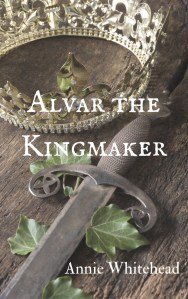 Annie: This book is set in Mercia about fifty years later and features the descendants of some of the characters from the first book, although it is a stand-alone story. Aelfhere (Alvar) was a powerful noble who was instrumental in helping successive kings, but who paid a high personal price. Unusually, this was a period where there was no Viking threat, but this left a gap, and it was filled with in-fighting, treachery and murder… He spent a lifetime trying to prevent uprising, and anarchy, and often found the ‘Establishment’ was his greatest enemy.
 I am pleased to be able to interview Abigail Bostwick for the second time. Abigail’s first middle grade novel, The Great Cat Nap, was published by Cornerstone Press in 2013. It is the story of Ace, a reporter and a cat, who solves the mystery of a missing show cat. Abigail, who publishes as A. M. Bostwick, talked about writing that novel in
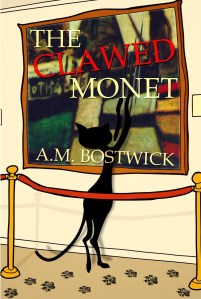 Abigail: Thank you so much for hosting me, Elizabeth! In The Clawed Monet, we find Ace on the trail of a new mystery following the scandalous opening of a new art exhibit at the historic Rhys Art Museum. When opening night is lights out after a peculiar power failure and a priceless Monet reproduction is clawed beyond repair, all paws point to the new curator’s prim and proper feline – Miss Kitty. Hired by Miss Kitty, Ace and his feline and canine friends are out to find the criminal and restore the reputation of Miss Kitty and her companion before they are fired. Tailing the shadow of a “ghost cat” through the historic district and a cemetery, Ace finds himself interrogating museum guests, local residents and even a so-called psychic cat to try and solve the crime. He’ll have to fend off a pack of Dobermans and contend with a gang of raccoons– all under deadline.
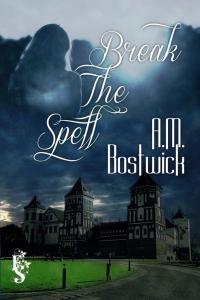 Abigail: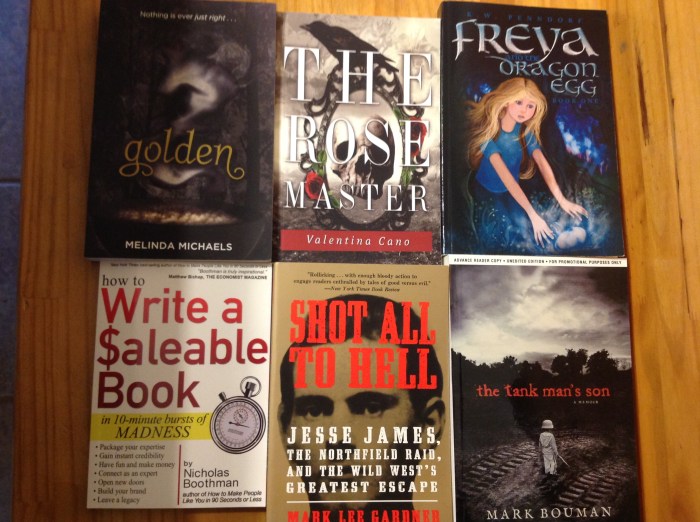
 Today I’m welcoming Camille Di Maio to my series of author interviews. Camille is the author of The Memory of Us, the story of a young and wealthy Protestant woman in pre-‐war Liverpool who befriends an Irish Catholic seminarian. Torn between her family’s expectations and her growing love for someone she’s not supposed to be with, the story follows Julianne’s journey through war, tragedy, secrets, and redemption.
 Camille: Thank you for having me. I have always wanted to write a novel, ever since I was twelve years old. The idea to write something about a forbidden love appealed to me. When I was a teenager, we participated in something called the Ulster Project. It brought teens from Belfast, Northern Ireland to Denver for a summer. At the time, tensions were still very high between the denominations over there. Catholics and Protestants did not mingle, date, do business together, etc. So, this became the basis for the idea of a forbidden love. Ratcheting it up with Kyle, a poor immigrant on the path to priesthood and Julianne, a wealthy Protestant socialite, put many obstacles in their path – money, religion, etc.
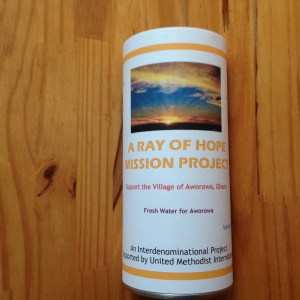 I am donating all the money I make from sales of Syncopation in the month of April to A Ray of Hope Mission Project. This is an interdenominational project that supports the village of Aworowa in Ghana. Money will be used for social projects including expanding the availability of clean water, support to the Aworowa Clinic, teacher training, school computers, uniforms and playground equipment, supplies for four schools, support for the Wenchi Hospital, medical equipment, small business support, job training and more.
 Michelle: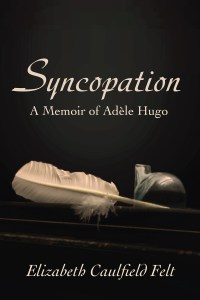
 Elizabeth Caulfield Felt