Birthday Books

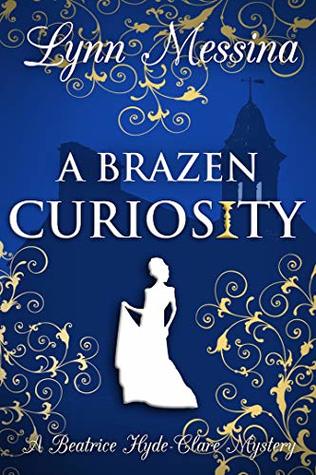
Before moving to Poland, I began downloading free books in case I had a hard time finding English language books here in Gdansk. I follow Bookbub which sends a daily email alerting me to a list of free or inexpensive books. Early this month (March is my birthday month), I was in need of a new read and started one of these books, A Brazen Curiosity by Lynn Messina.

In Regency England, Beatrice Hyde Clare is a shy, drab, bookish spinster of twenty-six. On a visit to friends in the Lake District, she cannot sleep and goes to the library to find a book. Instead, she finds a dead body, with the handsome, pedantic Duke of Kesgrave standing over it. Fearing for her life, she becomes brazen, arguing with the Duke and then trying to solve the murder case. Beatrice is clever and witty, and the Duke is a marvel of a love interest. The books are so funny! The romance builds and is maintained in a way of which I verily approve! I was hooked–and lucky too, because there are eleven (Yes! Eleven! Hooray!) books in this series. And they are all amazing!!
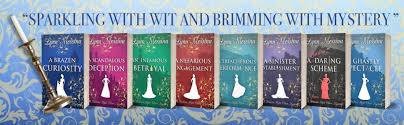
If you counted, you’ll notice the picture has only eight books. I assure you, there are currently eleven, and I’m hoping the author writes more.

Spendthrift that I am, I rarely purchase books, but it was my birthday month, so I read and bought, read and bought, all through my birthday month, treating myself to all eleven delightful books for my birthday.

If you liked Wilde Wagers, you will love this series. It is silly, for sure, and engaging and so smart, and lovely. Positively lovely!

I’ve discovered that there are two books related to the series as well, A Lark’s Tale, and A Lark’s Flight (pre-order) which look like a new series, related to the Beatrice Hyde-Clare series. As I googled A Lark’s Tale to find a link for above, I discovered that it is on sale. I’ve now bought and downloaded it. (It is still March!) More for me to read! Hooray!

If you pick up A Brazen Curiosity, I hope you’ll let me know what you think.

Happy Reading!

A Trip to Wejherowo

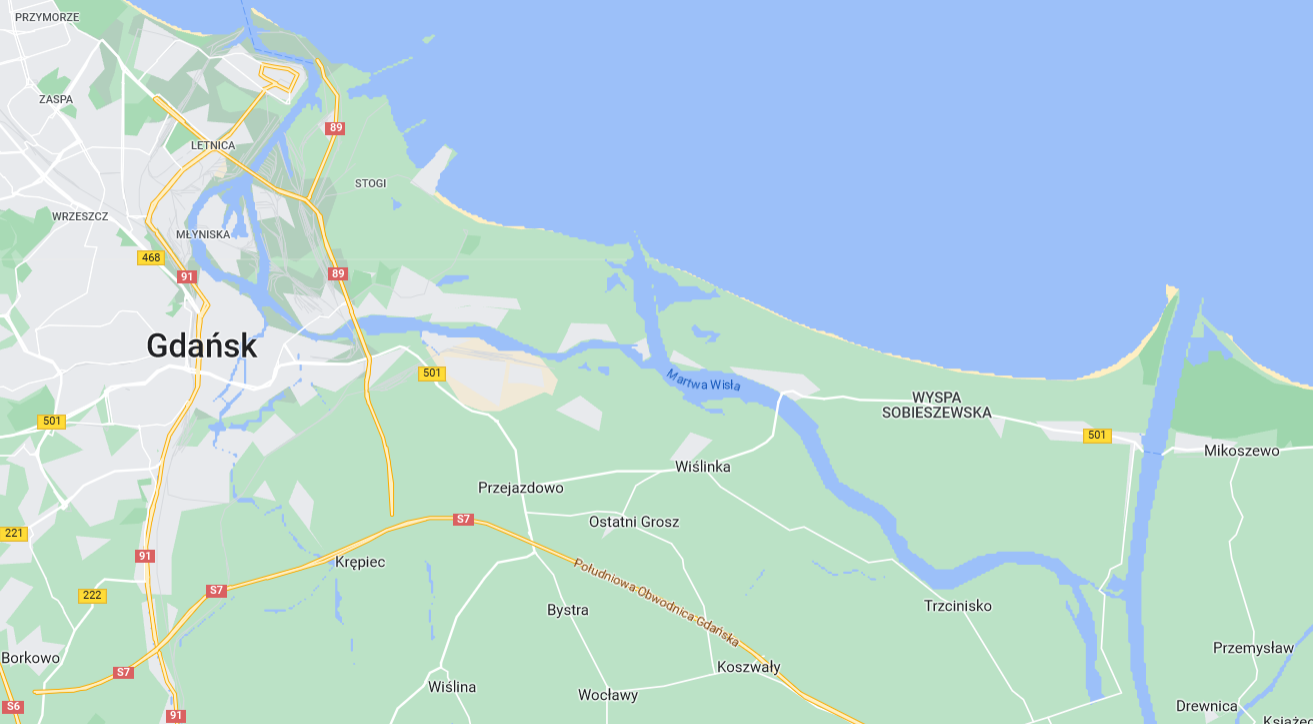
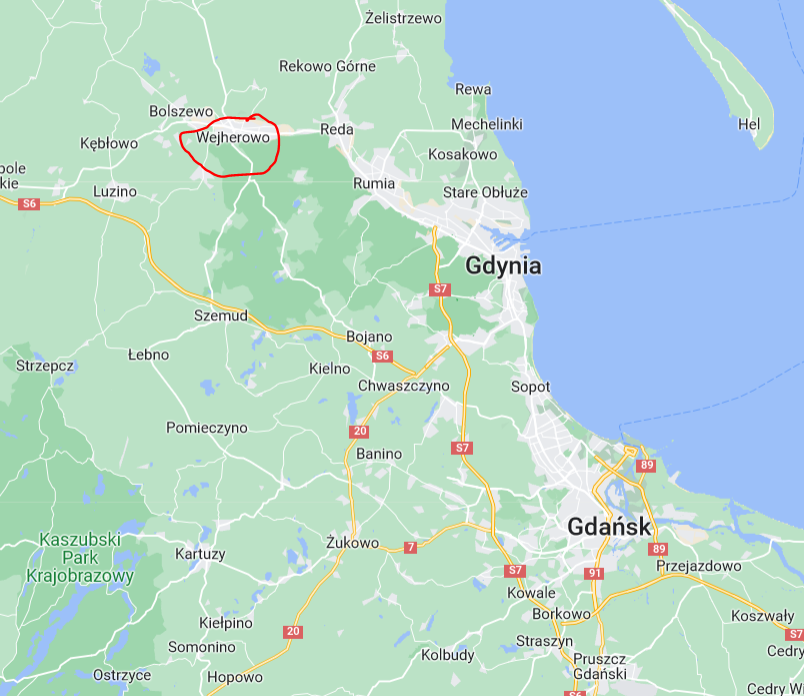
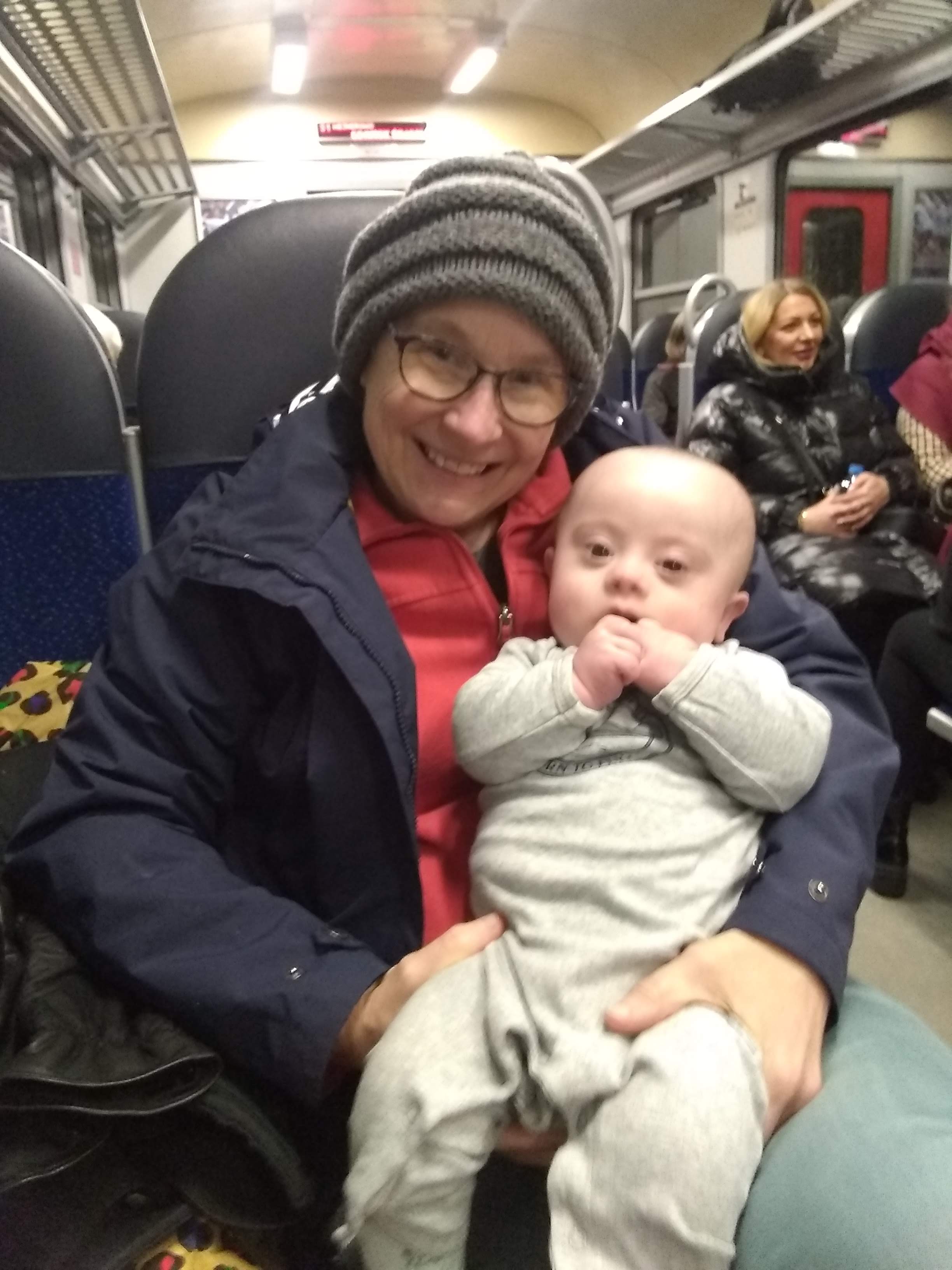
Sarah, a friend of mine who lives in Gdansk, suggested that she, her infant son Karol, and I go to Wejherowo for the day. We went on Friday, and I thought I’d share our trip with you. I’d heard of this town, because its name is the last stop on the regional train I’ve taken several times. So, we got on the train and took it to the end! The map below can give you an idea of where the town is in relation to Gdansk. The train trip was a little more than an hour.

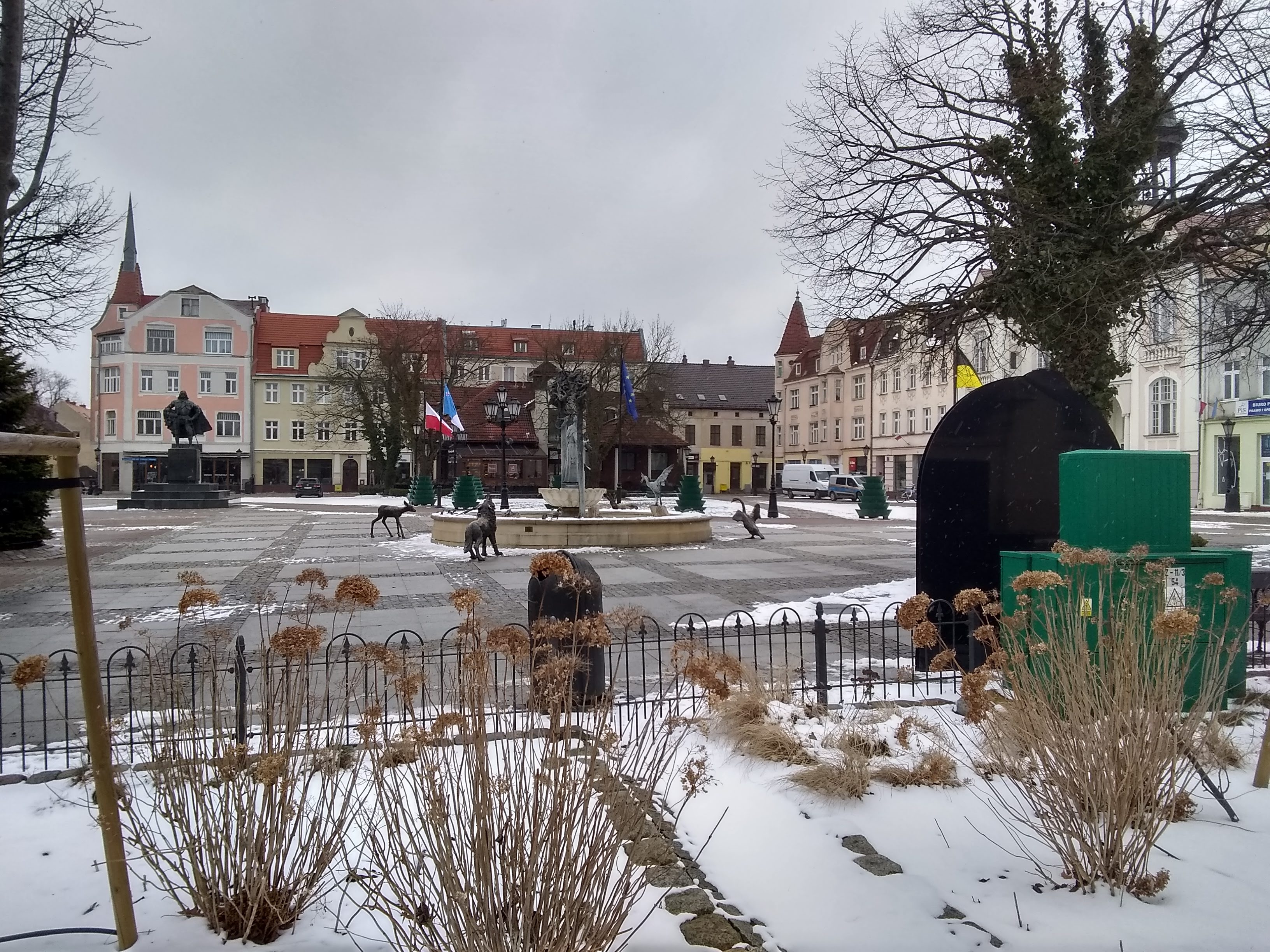
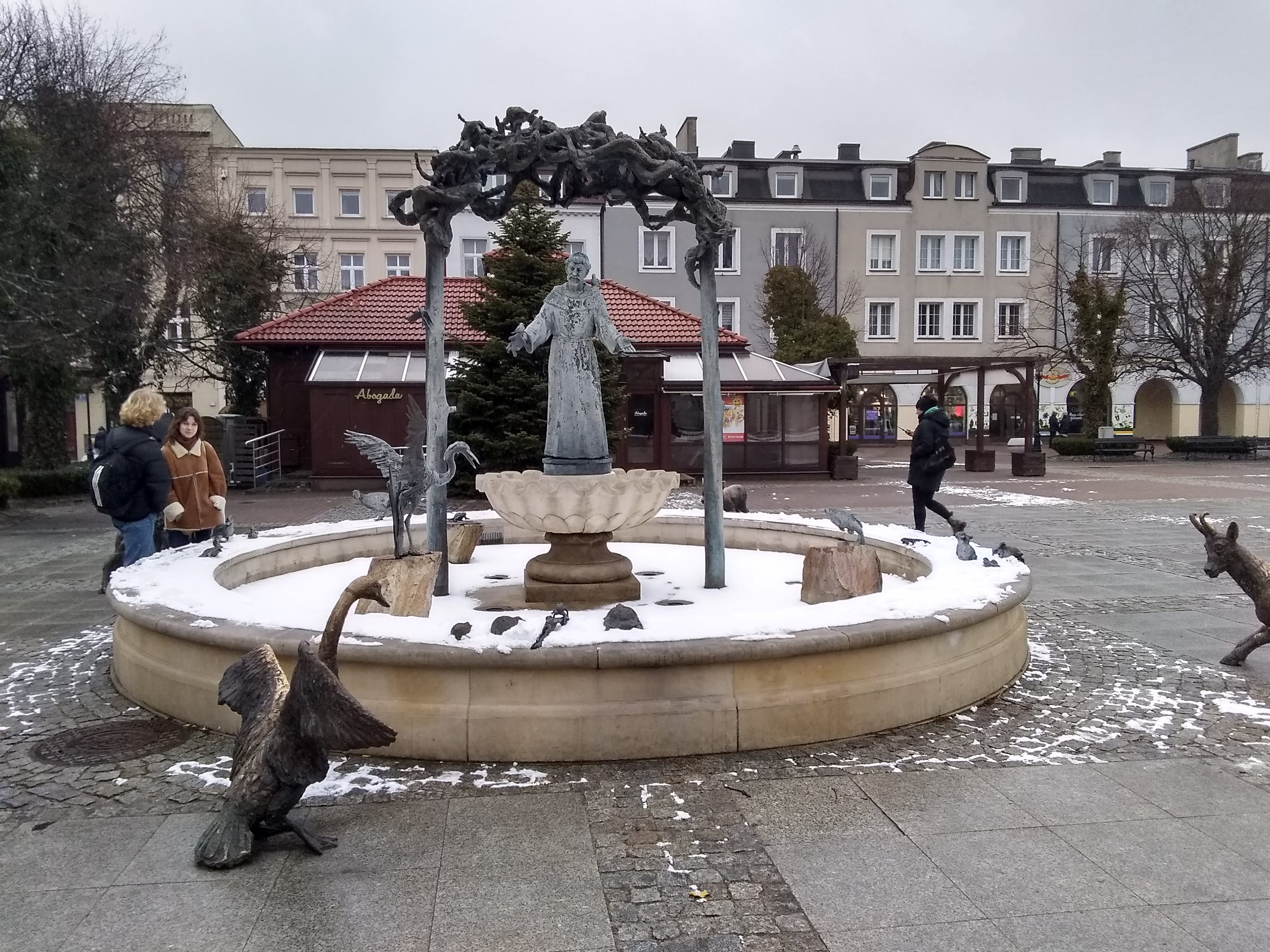
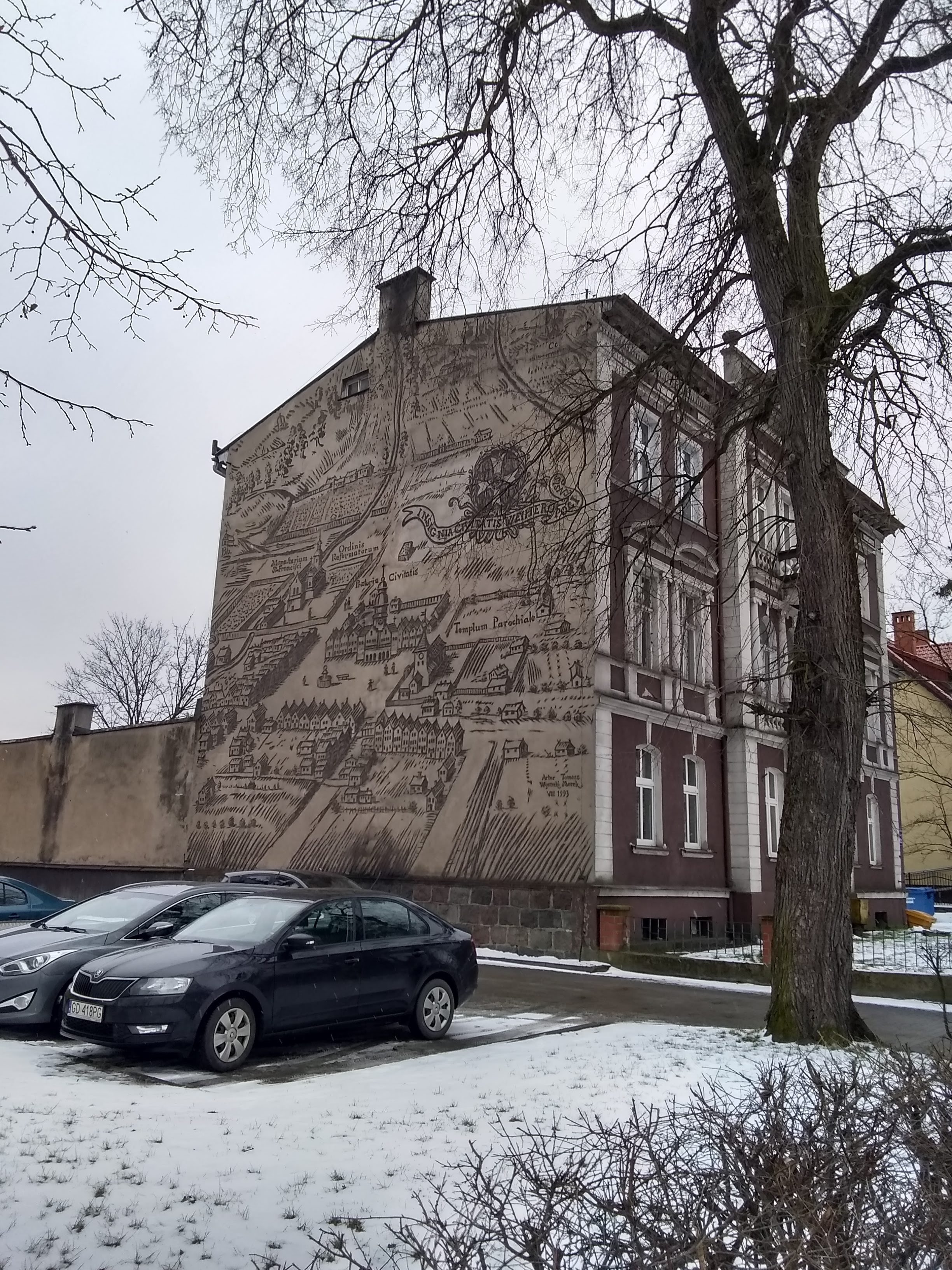
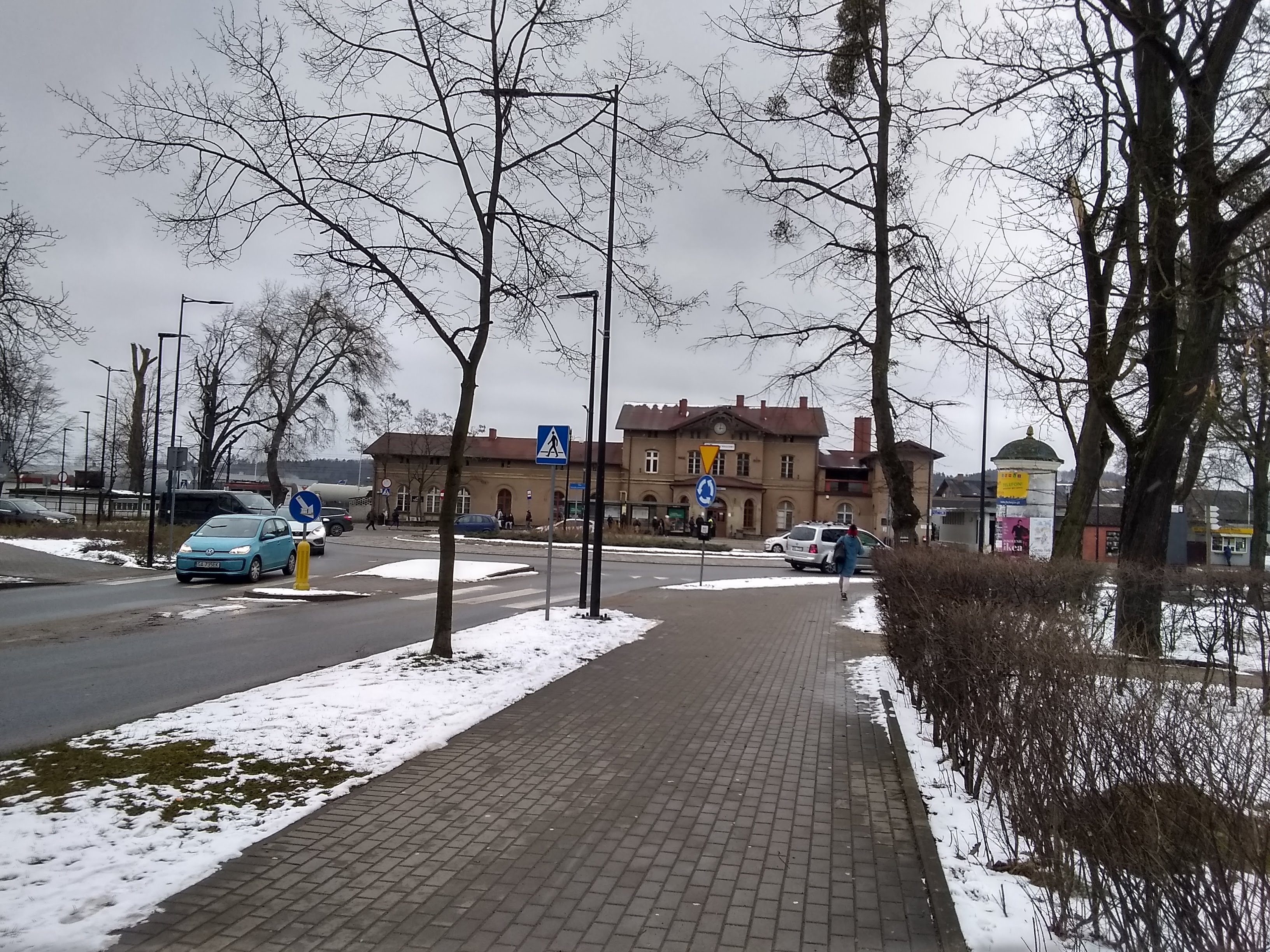
Wejherowo is a cute town. Being “the end of the line” I somehow expected something very small and rural, but Wejherowo is charming. Take a look:

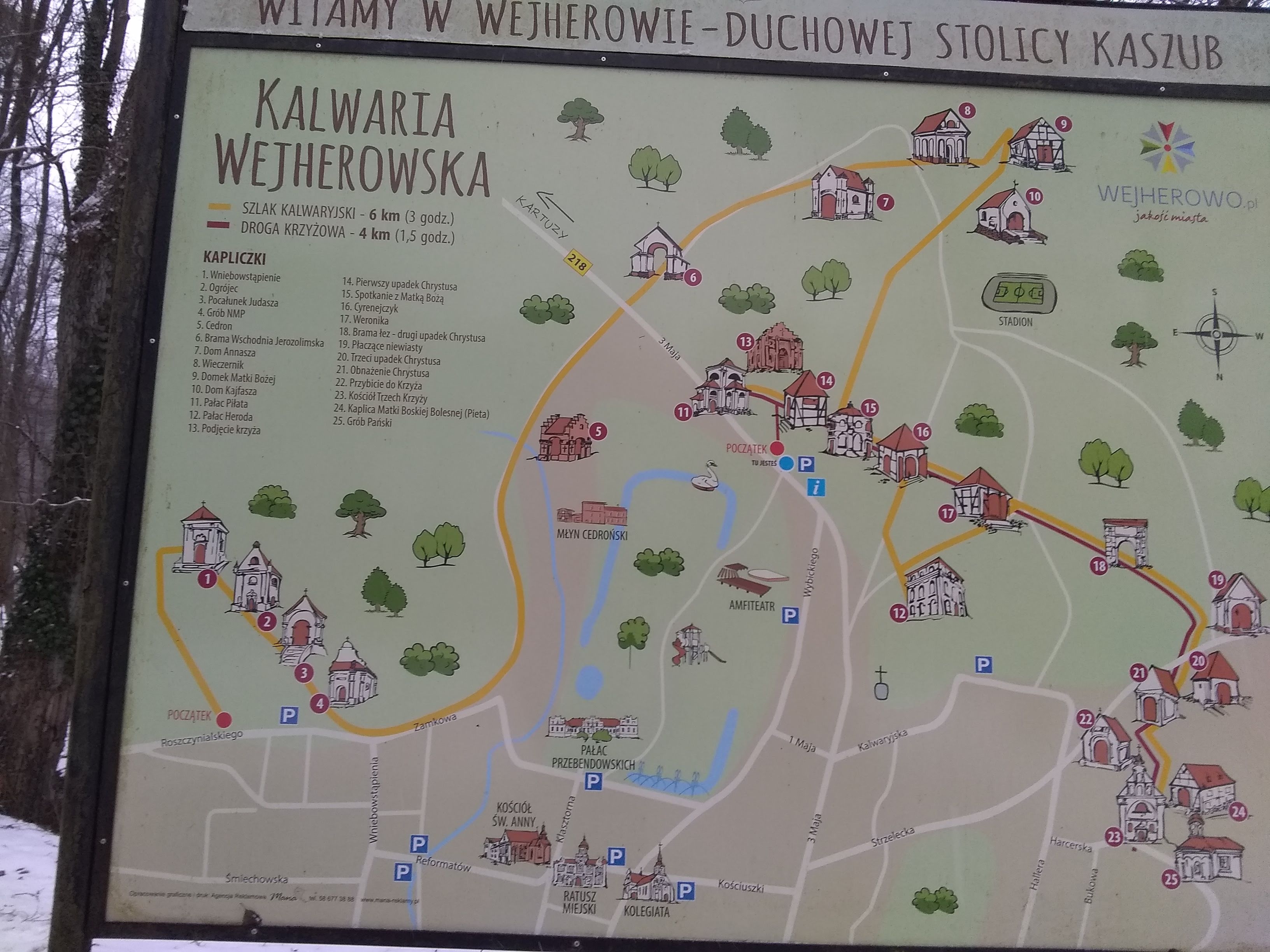
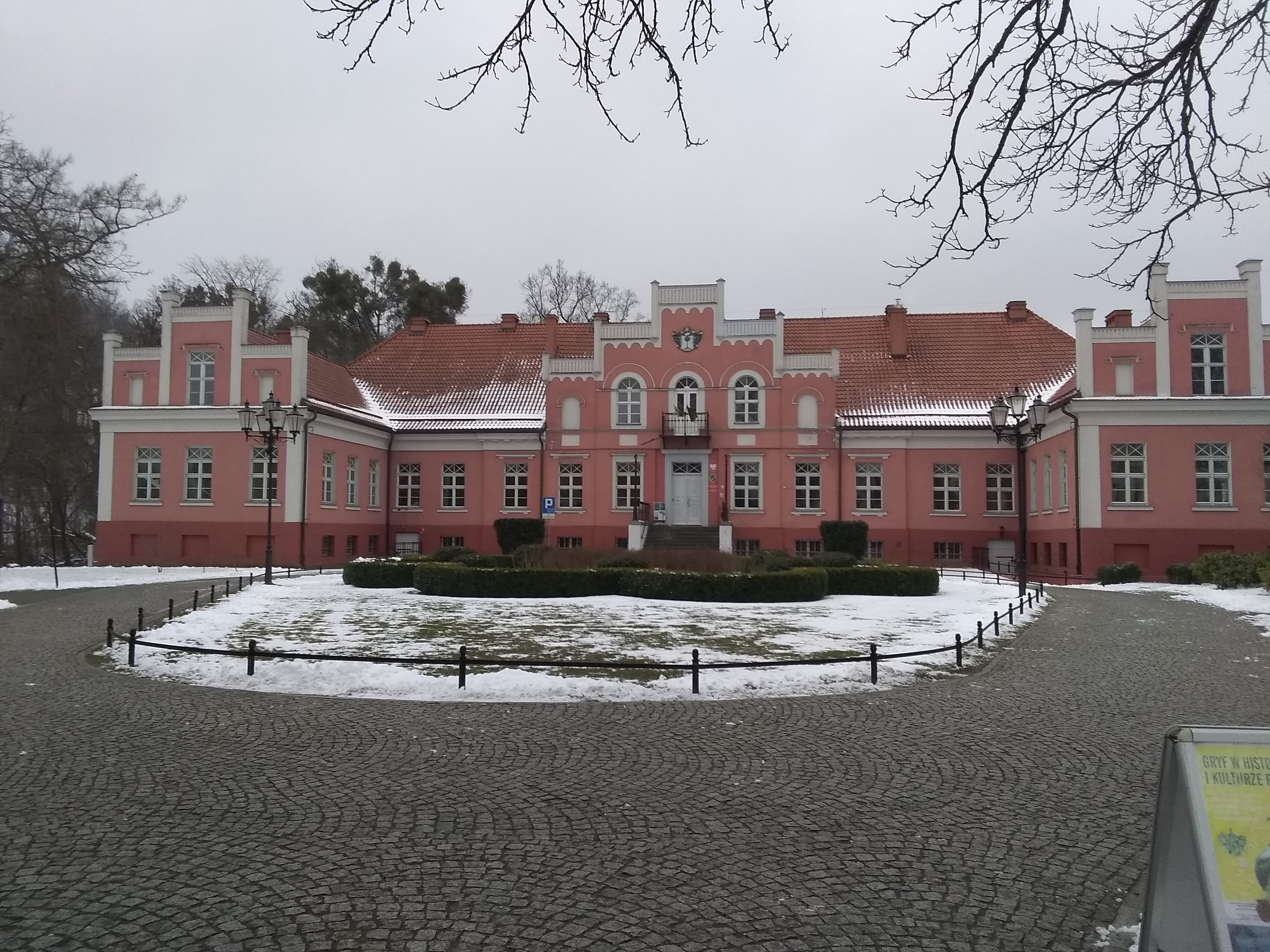
So, why Wejherowo? This small town is home to a 400-year-old, outdoor, Stations of the Cross park. If you aren’t Catholic (as I am not) and want to learn more, in general, about Stations of the Cross, visit this general-info page. The Stations of the Cross in Wejherowo, or Kalwaria Wejherowska, is impressive. Below is a map of the whole complex. As you can see, there are more than the traditional 14 stations. We entered the park near the palace (picture below and below). As it was an icy, snowy day and we had an infant with us, we decided to go right and only visit a few of the stations.

Palace Przebendowski

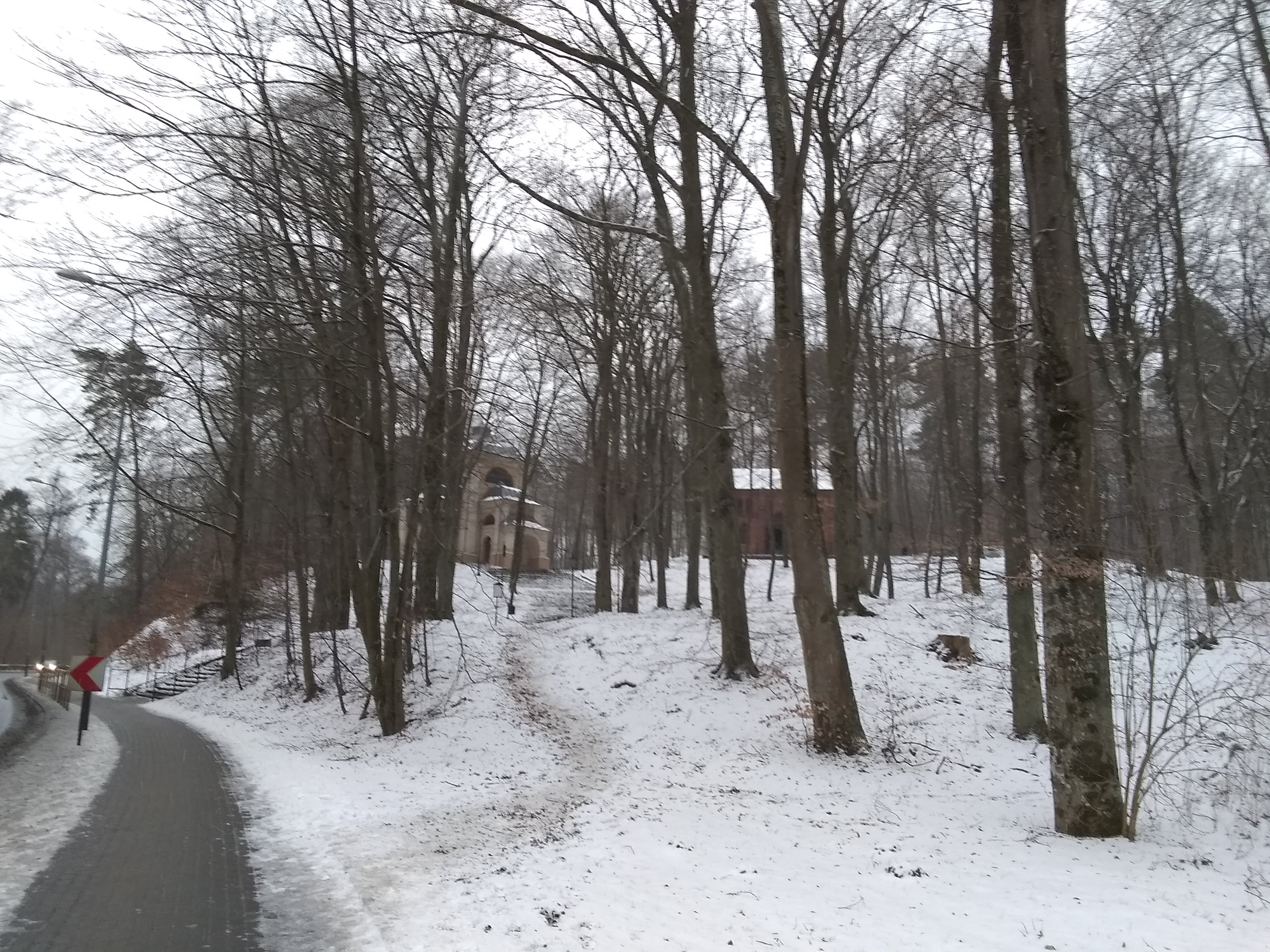
Here is my first glimpse of two of the stations. You can see the path leading to the chapels. I’m not sure which stations they are; we didn’t follow this path.

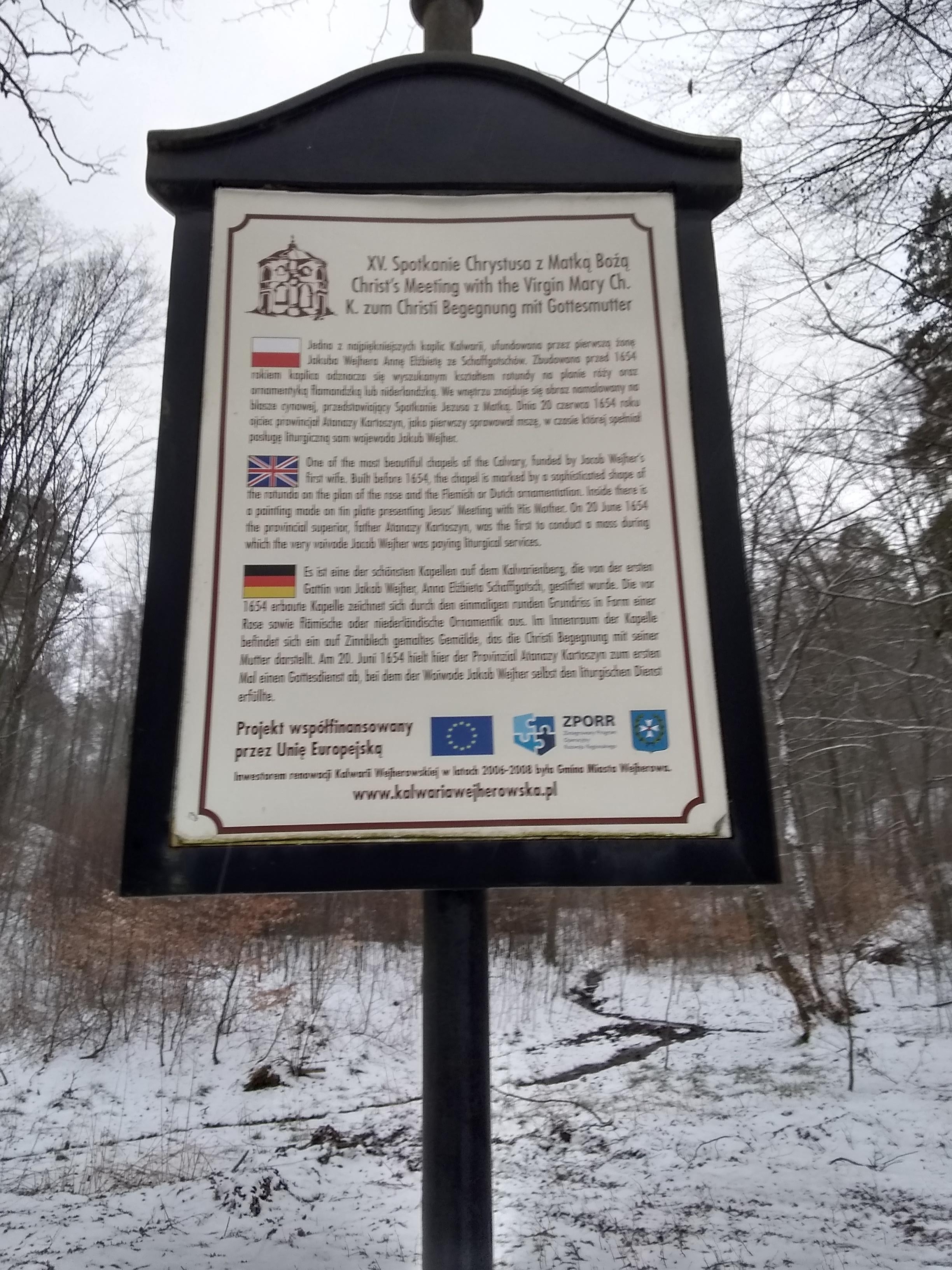
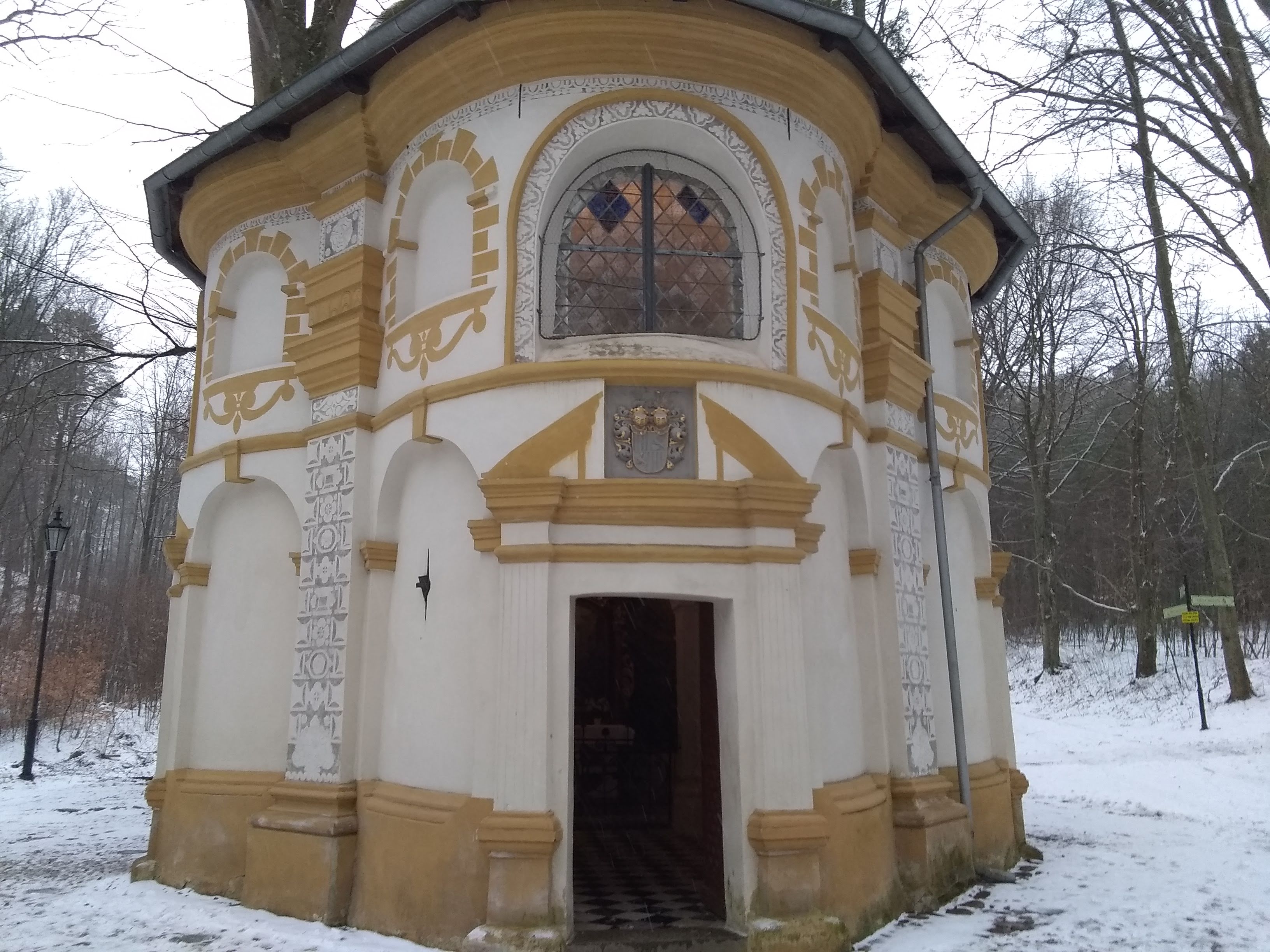
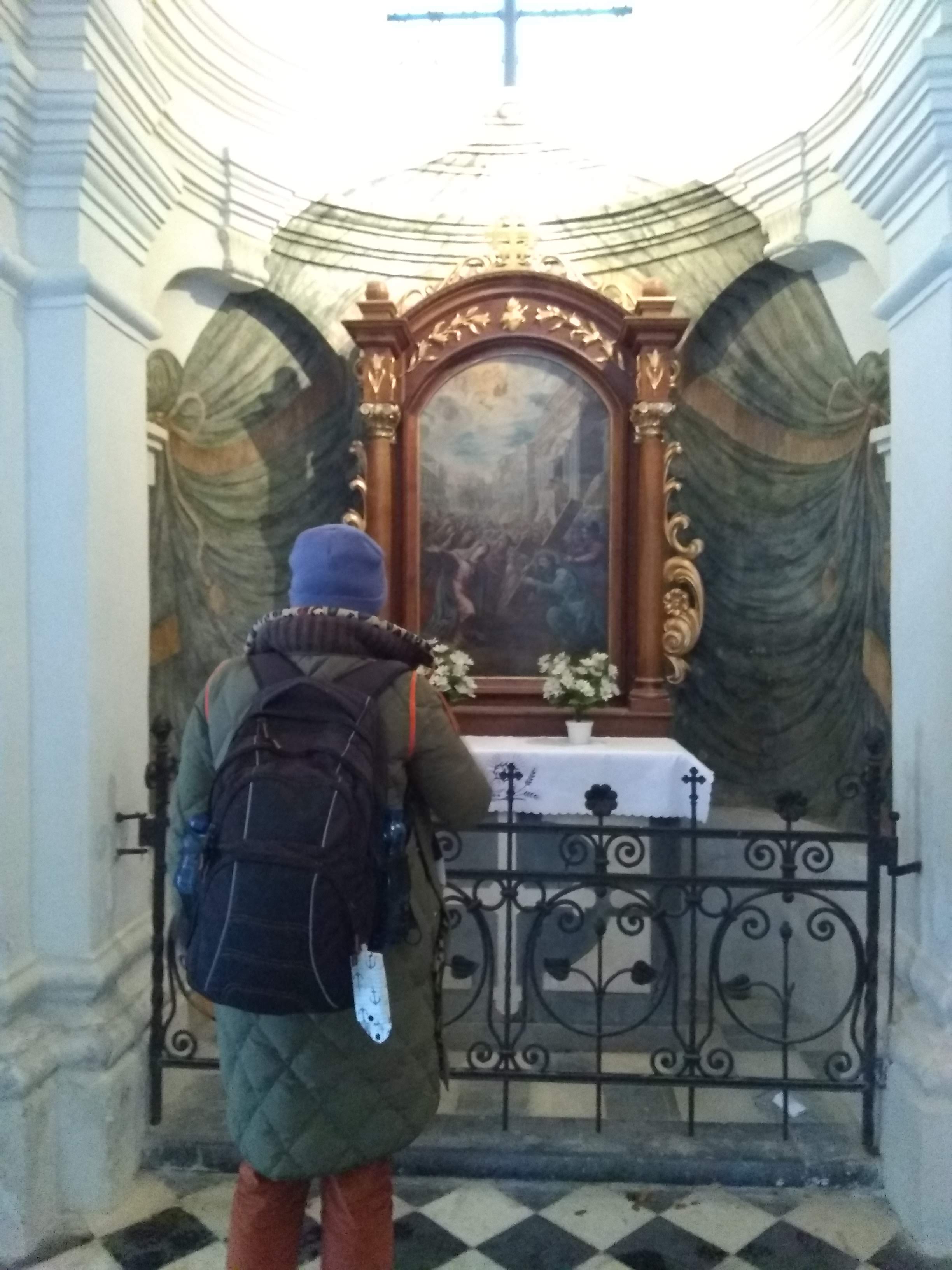
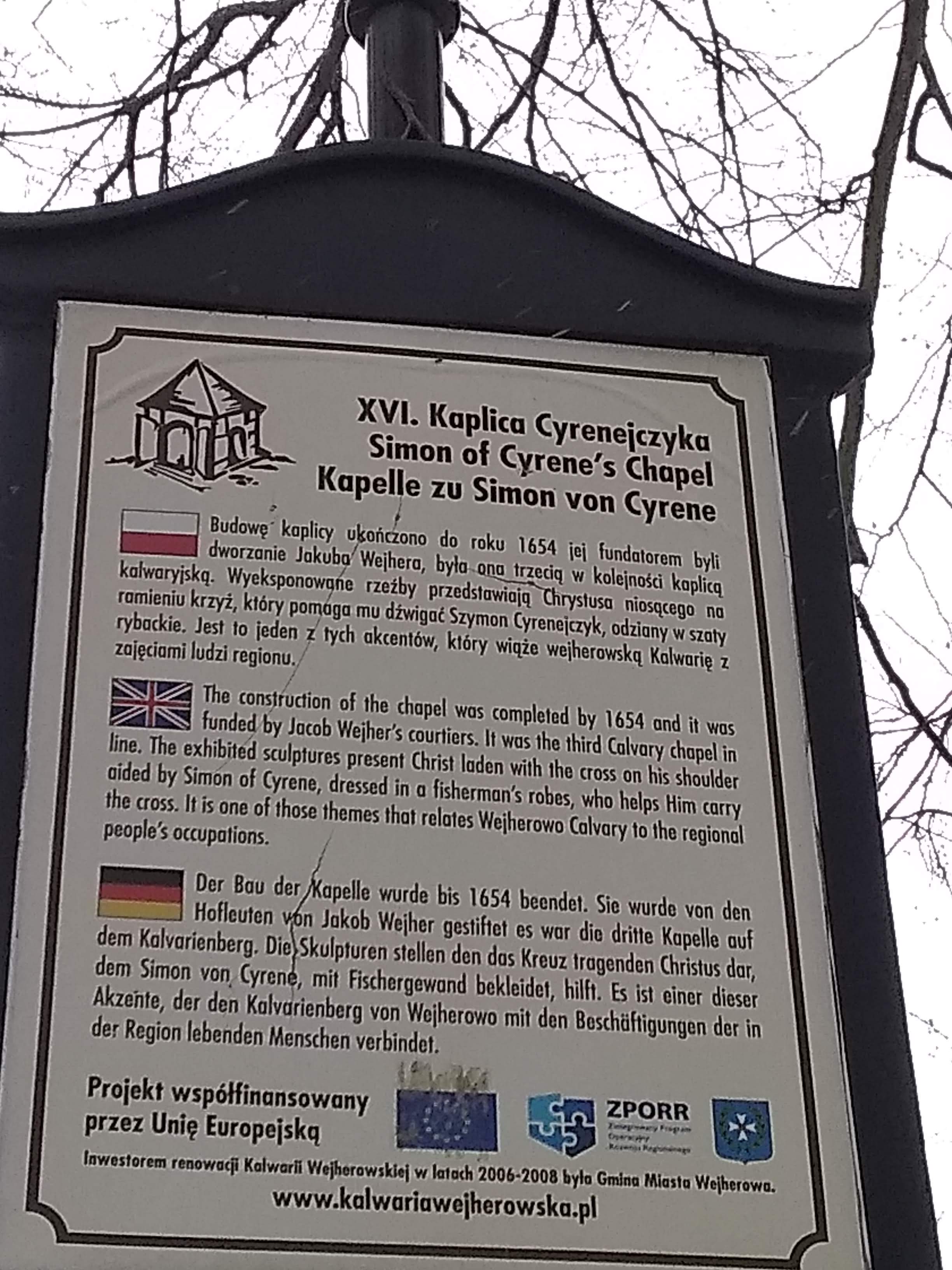
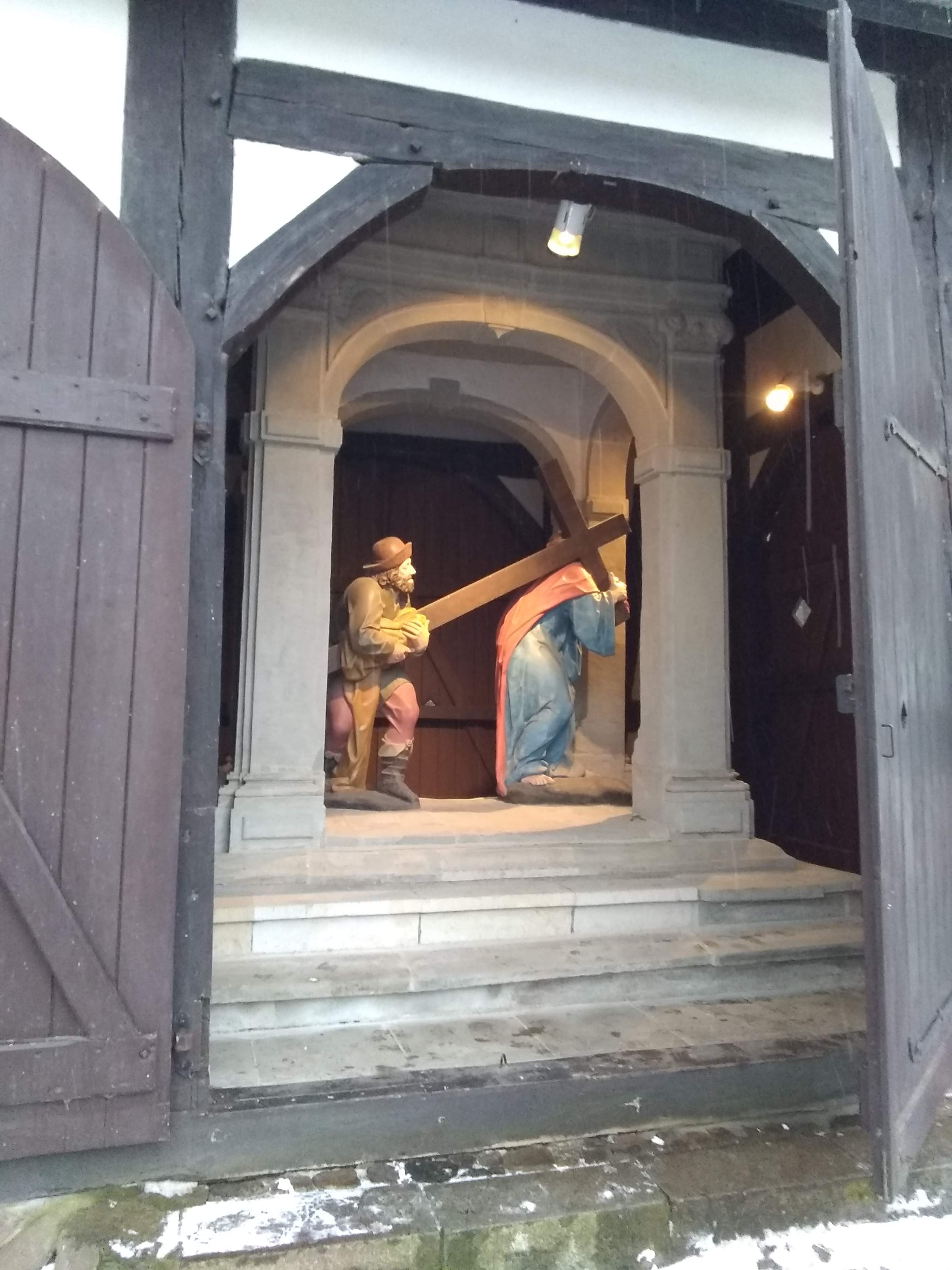
Instead, we took a path that led us to a station depicting Mother Mary visiting Jesus, and then, the station in which Simon helps to carry Jesus’ cross:

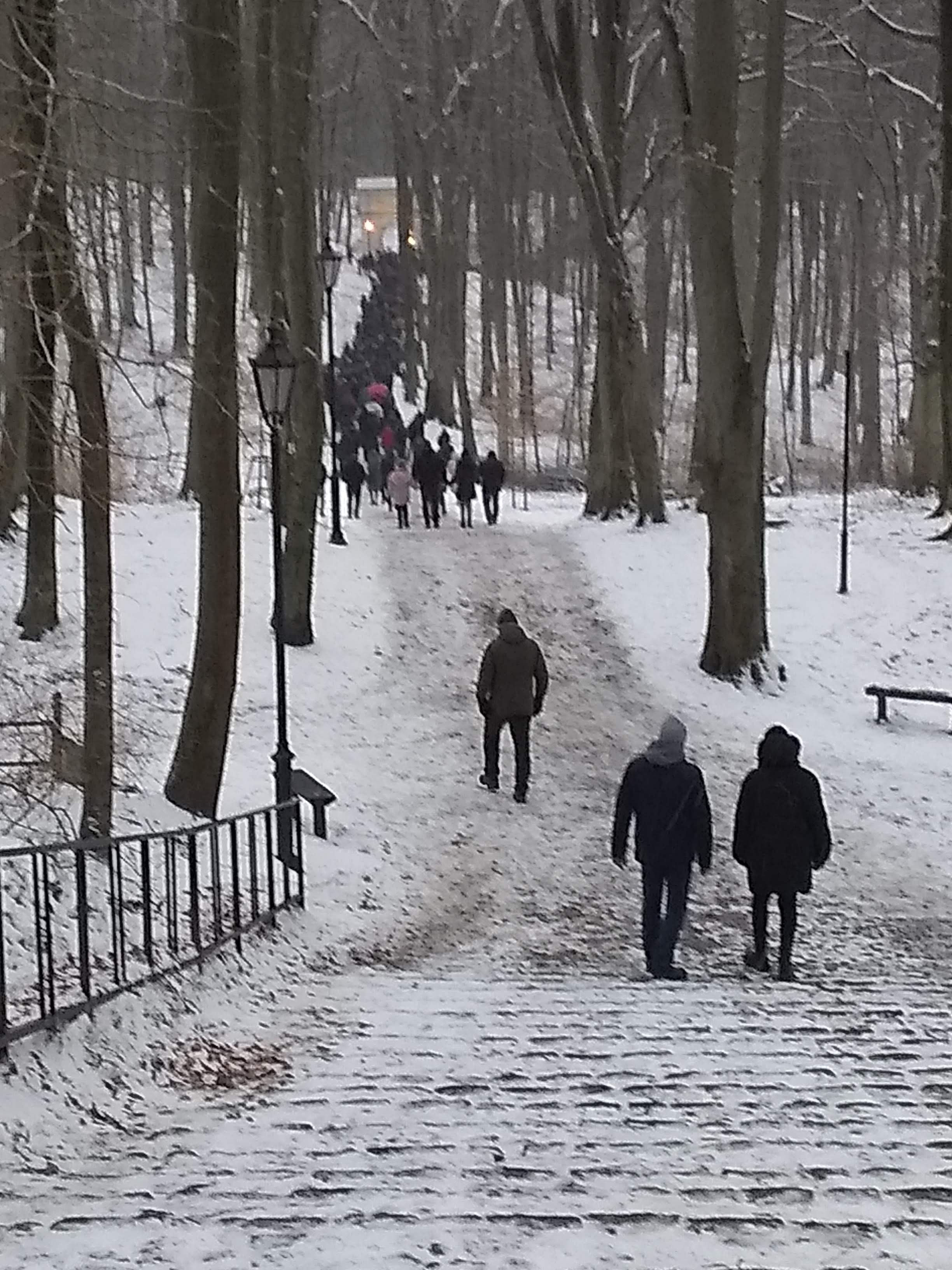
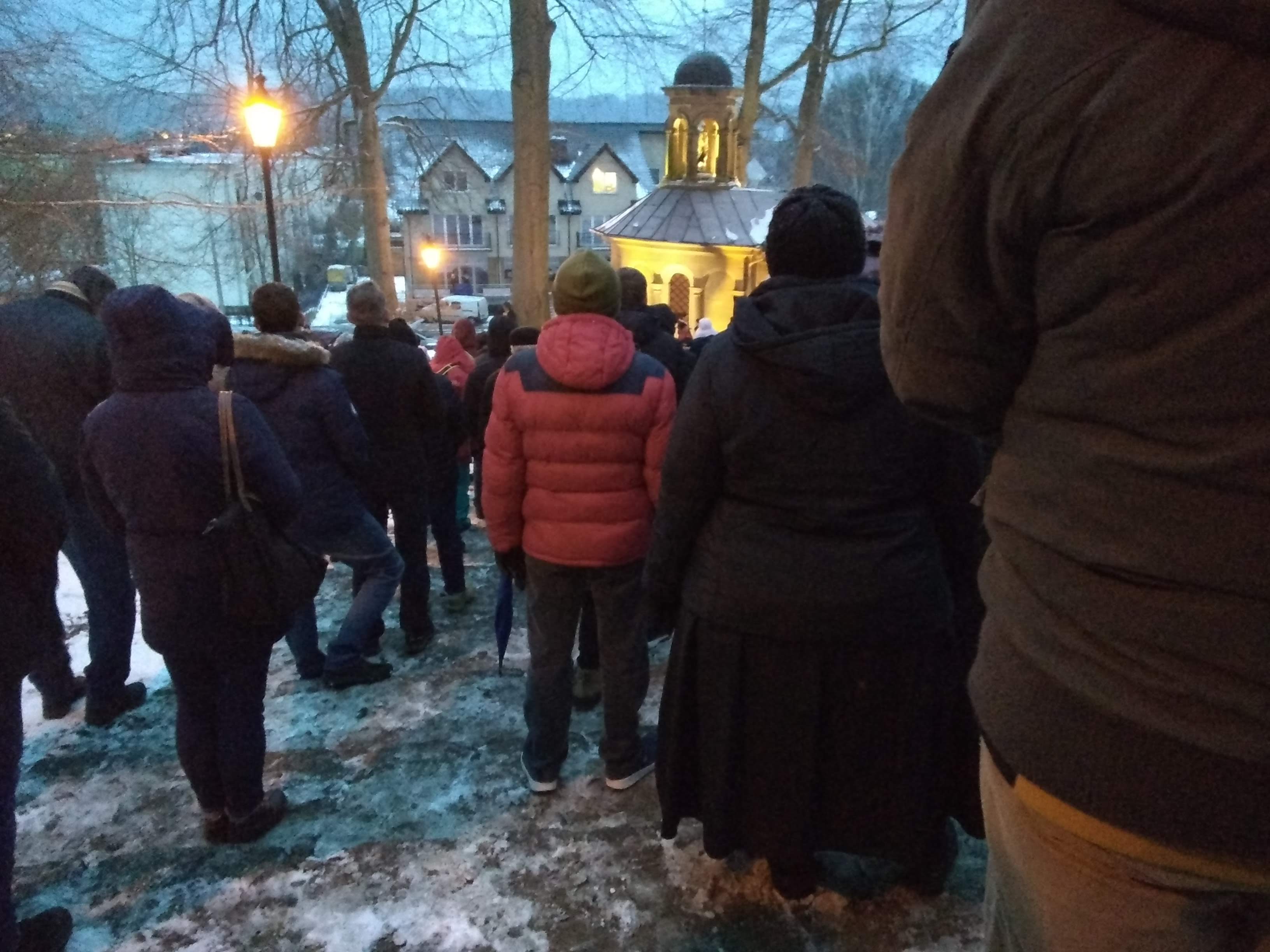
As we continued, we discovered that a large group was ahead of us, with a priest and loudspeakers. The priest spoke in Polish, saying prayers or giving instructions. People chanted in a sort of Gregorian chant way (again, I’m not Catholic, and maybe this is no big deal, but it was really cool for me.). At different times, people genuflected, on the ice and snow. I bowed my head and scrunched a little. Sarah helped translate some of what the priest was saying. It was quite an amazing experience.

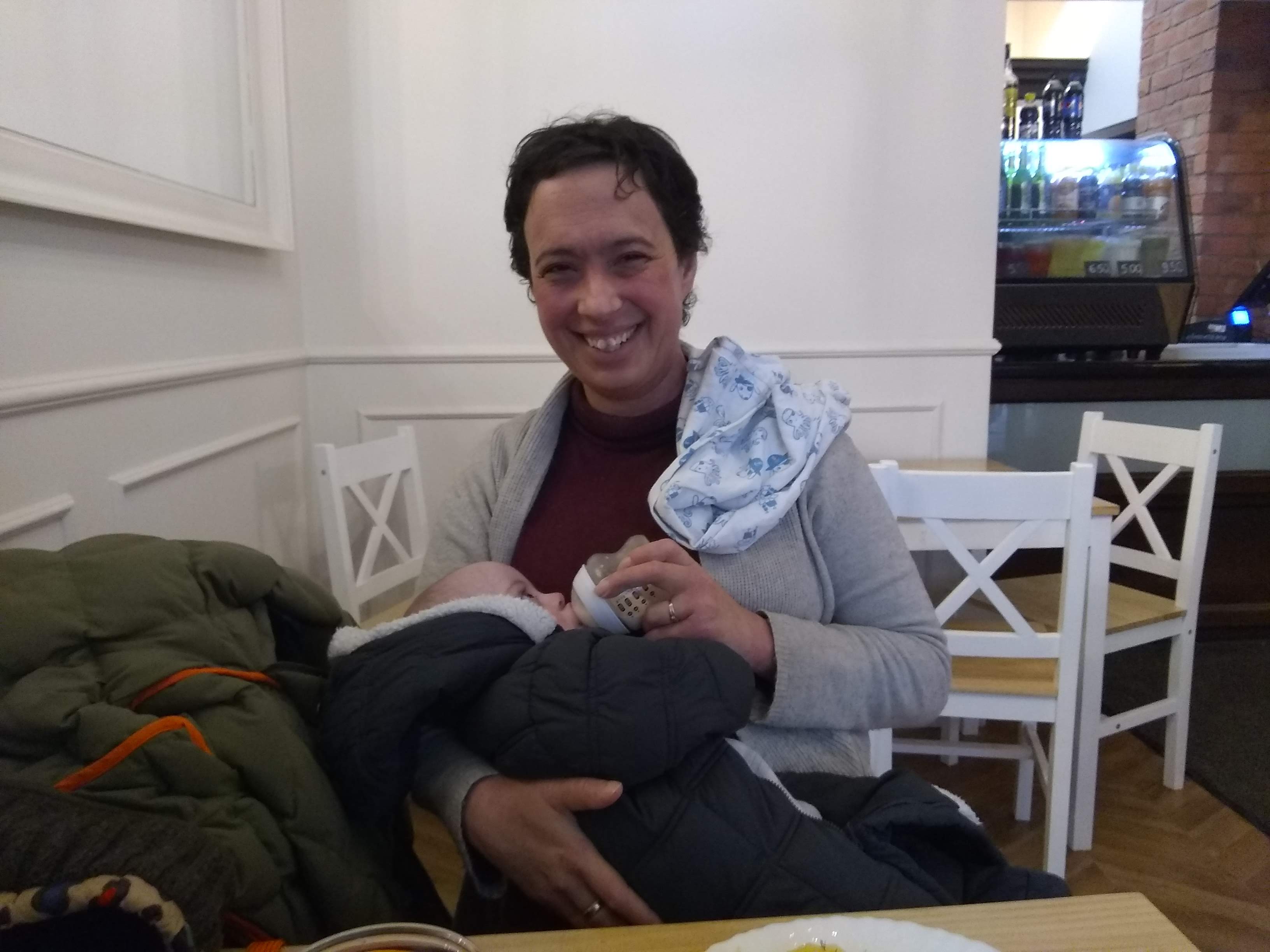
We’d eaten lunch before our walking about (Karol got to eat too!), and then we got on the train to head home. It was a wonderful experience. Thank you Sarah and Karol!

I look forward to more adventures with this crew!

Smashwords’ Buy an E-Book Week

Sunday, 5 March – Saturday, 11 March 2023 is Smashword’s Buy an E-Book Week. Many of the books published on Smashword‘s platform will be discounted or free. Including…

My books at Smashwords:

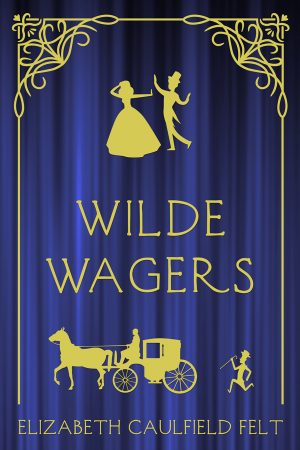
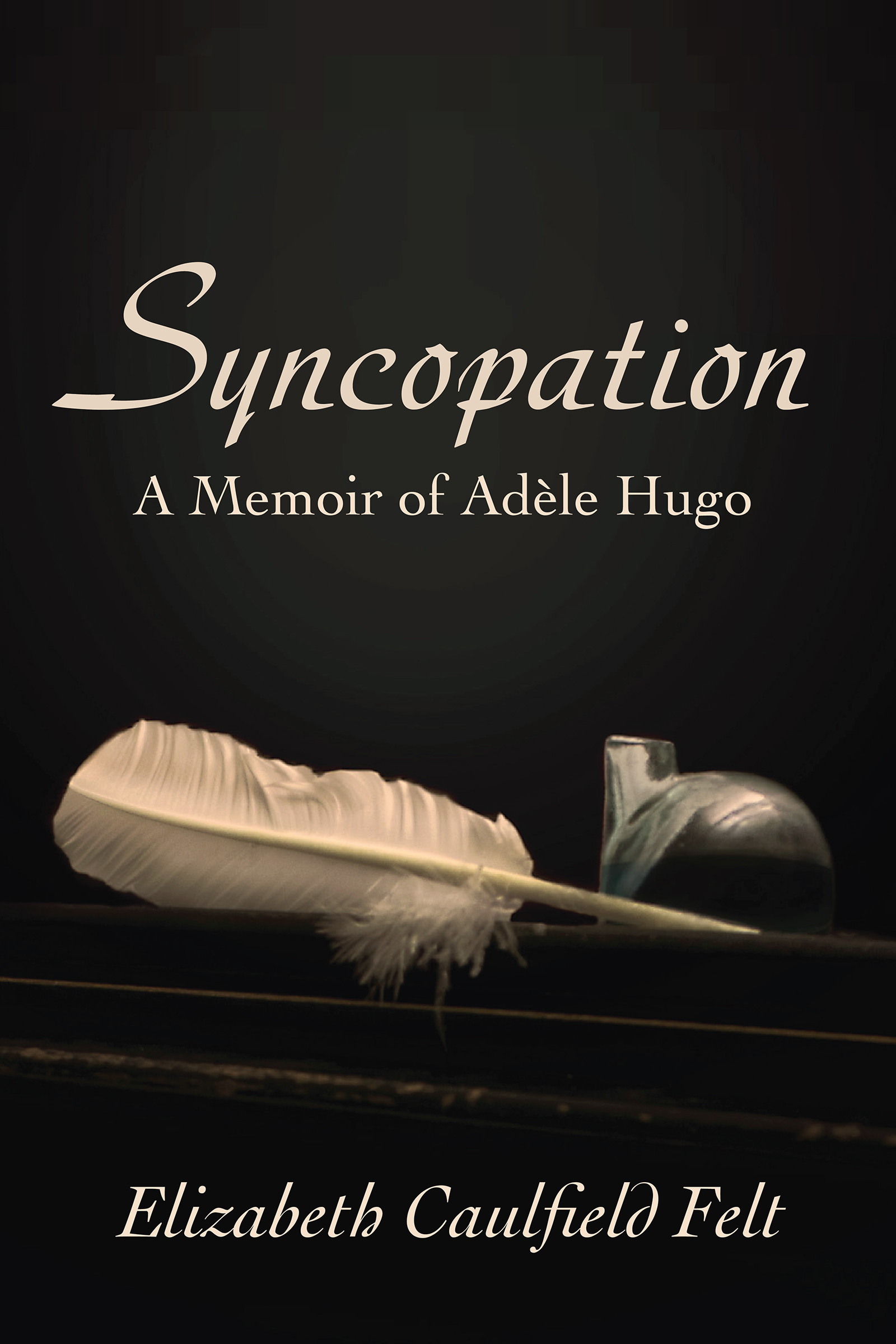
Wilde Wagers and Syncopation: A Memoir of Adele Hugo which are available this week for $1.49 each. Smashwords is a great platform as it lets authors publish e-books for free and gives them a majority of the profits of their sales.

My books at amazon:

Per my contract with amazon, I’m not allowed to sell my books anywhere for less that one can buy them at amazon, so the books are also on sale at that store, if it is where you prefer to buy books: Wilde Wagers and Syncopation: A Memoir of Adele Hugo.

Happy Reading!

Fat Thursday

You didn’t mis-read that title, and I didn’t mis-type it. While people all over the world are celebrating Fat Tuesday (Mardi Gras), we here in Poland have already celebrated Fat Thursday (Tłusty Czwartek), which is the Thursday before Ash Wednesday.

Poland is a very Catholic country and has many saints days and other religious holidays about which I’m not very familiar. As I am not Catholic, I haven’t joined a Catholic church here and haven’t learned all that much about the Polish-Catholic culture. What I have learned is that you eat pączki on Fat Thursday.

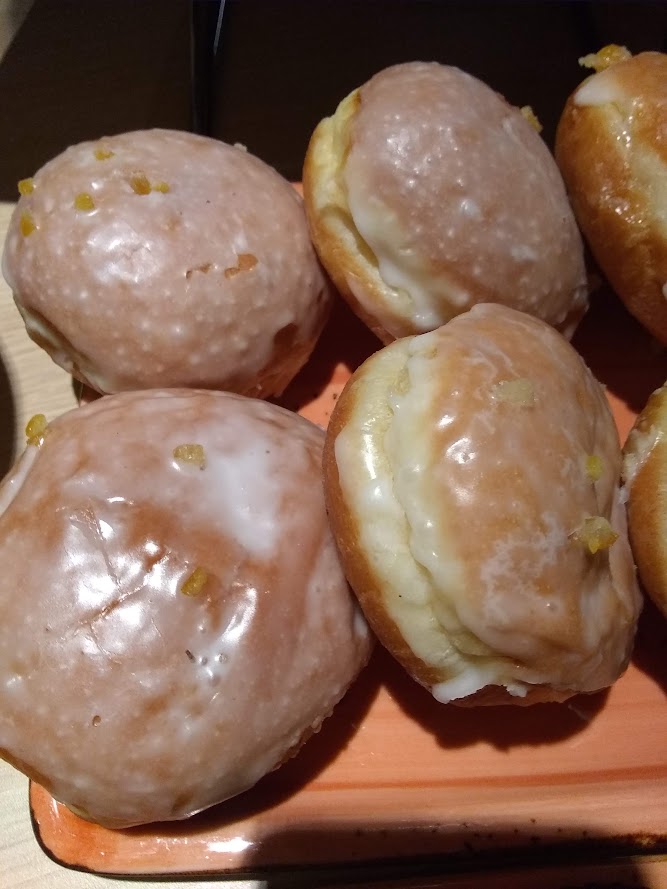
Pączki are filled, glazed doughnuts. I knew this before moving to Poland because, living in the Polish-American hub of central Wisconsin, pączki are available this time of year there. And they are called pączki, not doughnuts, which are available all the time. In central Wisconsin, the pączki I’ve eaten were pretty dense with a prune or raspberry filling that wasn’t all that great. (It’s possible good pączki are available in Wisconsin and I just haven’t had them.)

The pączki here in Poland are better. The dough is lighter and each of the fillings I tried (vanilla custard, raspberry, coconut) were delicious. Some were topped with chopped nuts, candied fruit pieces, a chocolate glaze. Yum.

We were told that we HAD to go out and get pączki on Thursday morning, so Andy left early (while I was still in bed) to visit our favorite neighborhood bakery. He had to wait in a line as many people were already there to buy their Fat Thursday pączki.

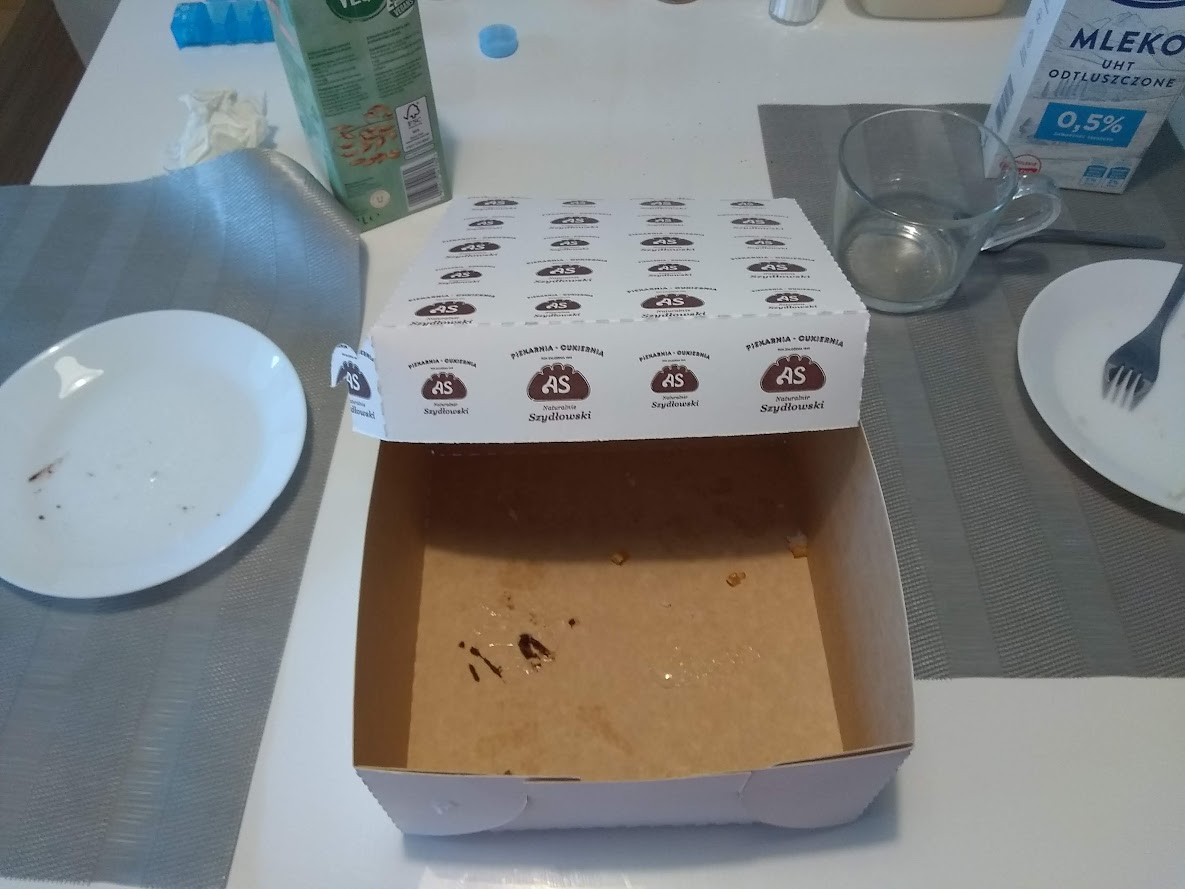
I neglected to take a picture before we’d eaten our pączki:

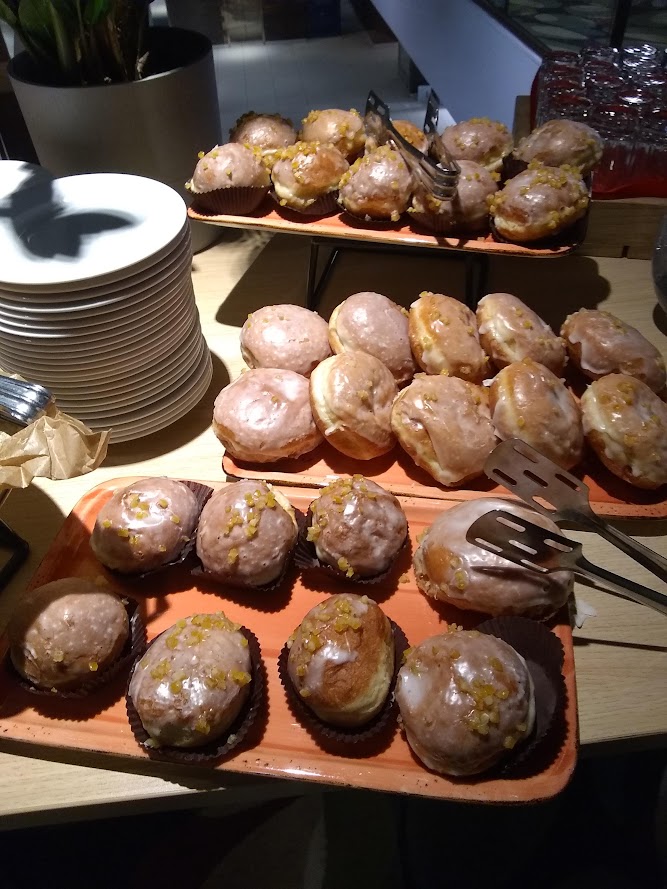
Later that day, we took a tram to a downtown workshop, and I noticed long lines at all the bakeries we passed. The Poles getting their pączki! At the hotel where our workshop was being held, there was a “break table” for participants, featuring water, tea, coffee…and pączki!

So, go ahead and enjoy Fat Tuesday.

But next year, think about starting early. Get some pączki (or regular doughnuts, if that’s all that’s available in your area), and celebrate Fat Thursday.

A Visit to Toruń

Andy and I had heard good things about Toruń and decided to visit. We left Gdańsk on an early morning train Friday morning, with a ticket to return on a late train Saturday night. The train ride took about 2-1/2 hours.

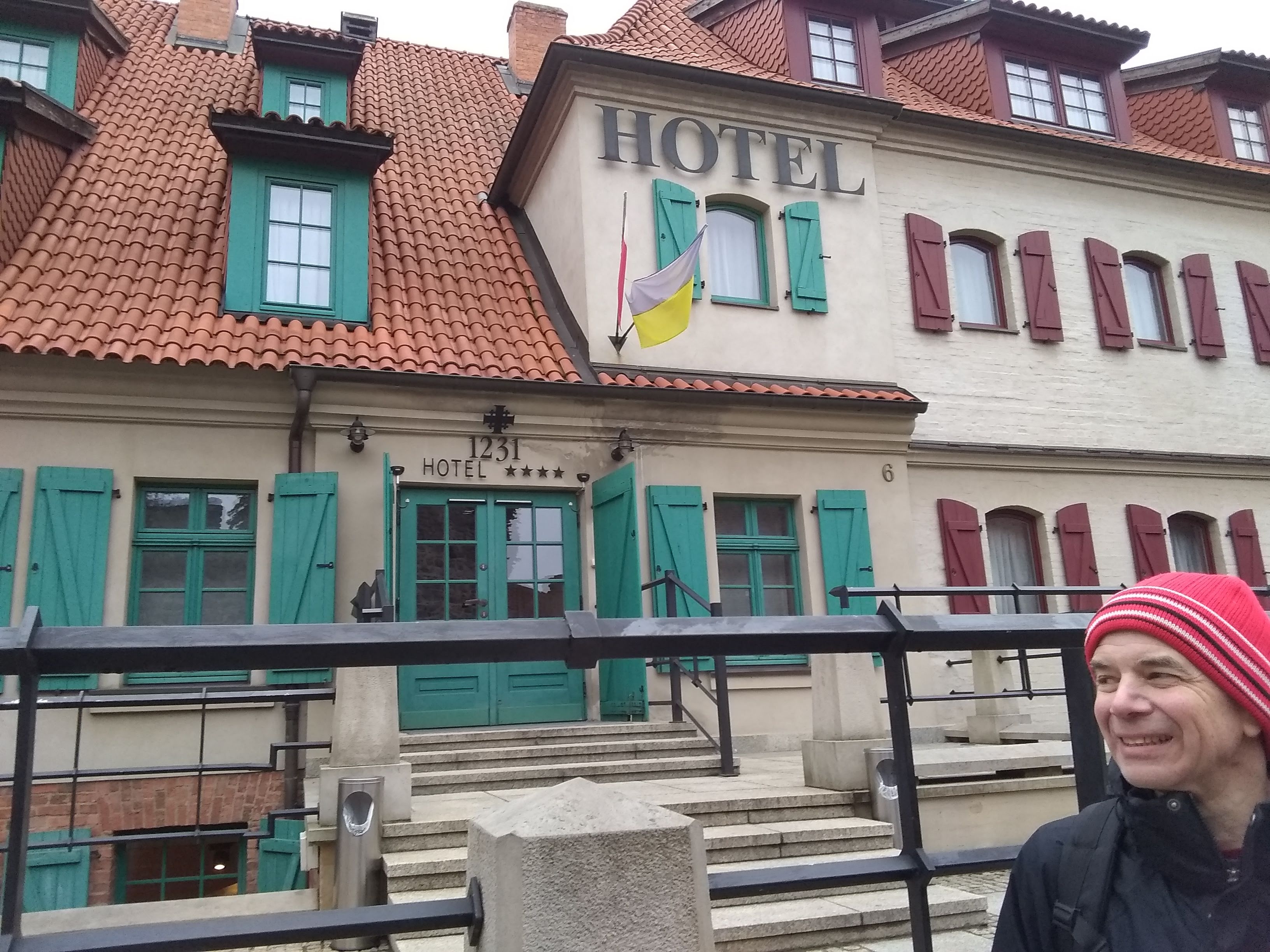
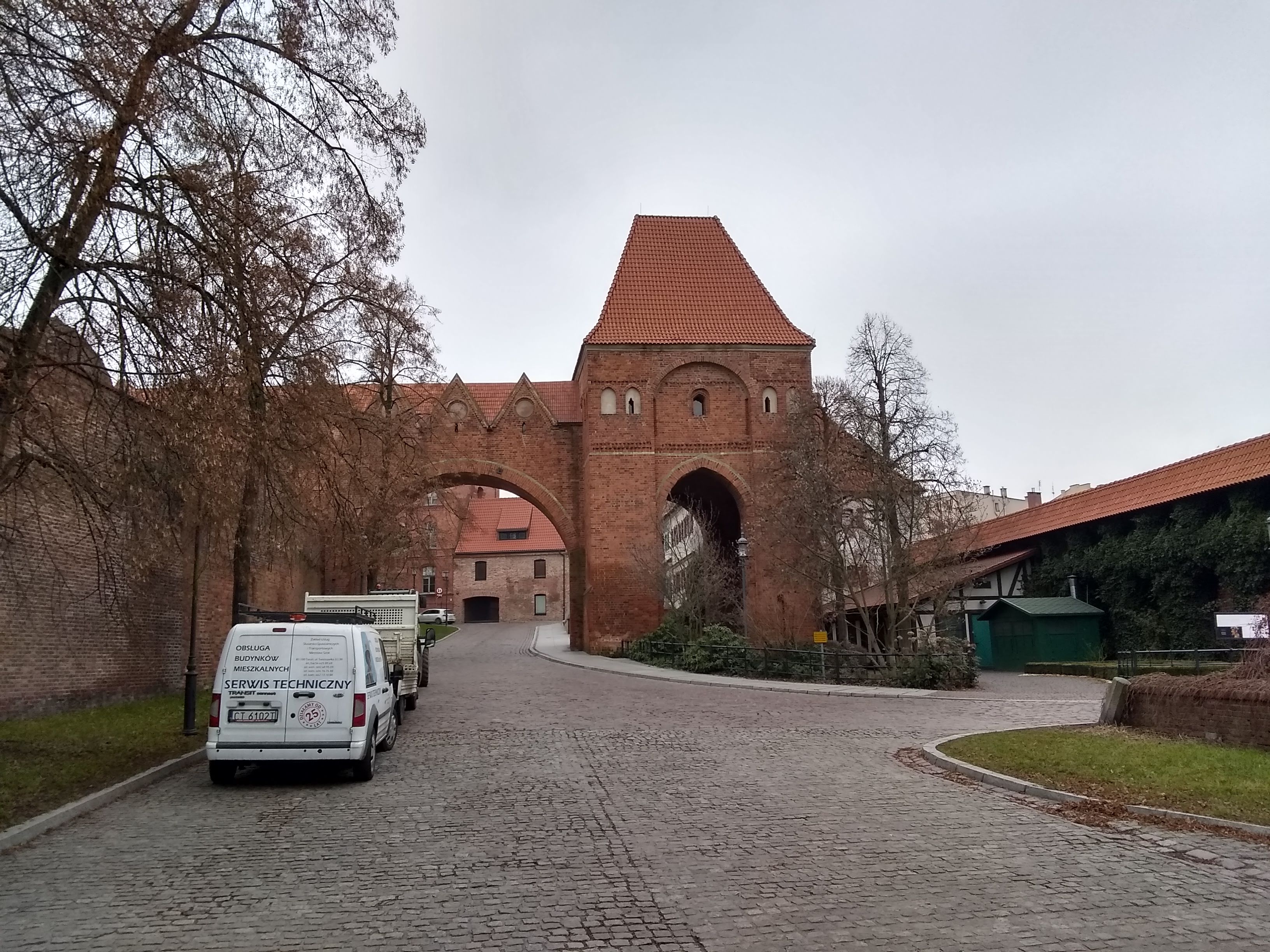
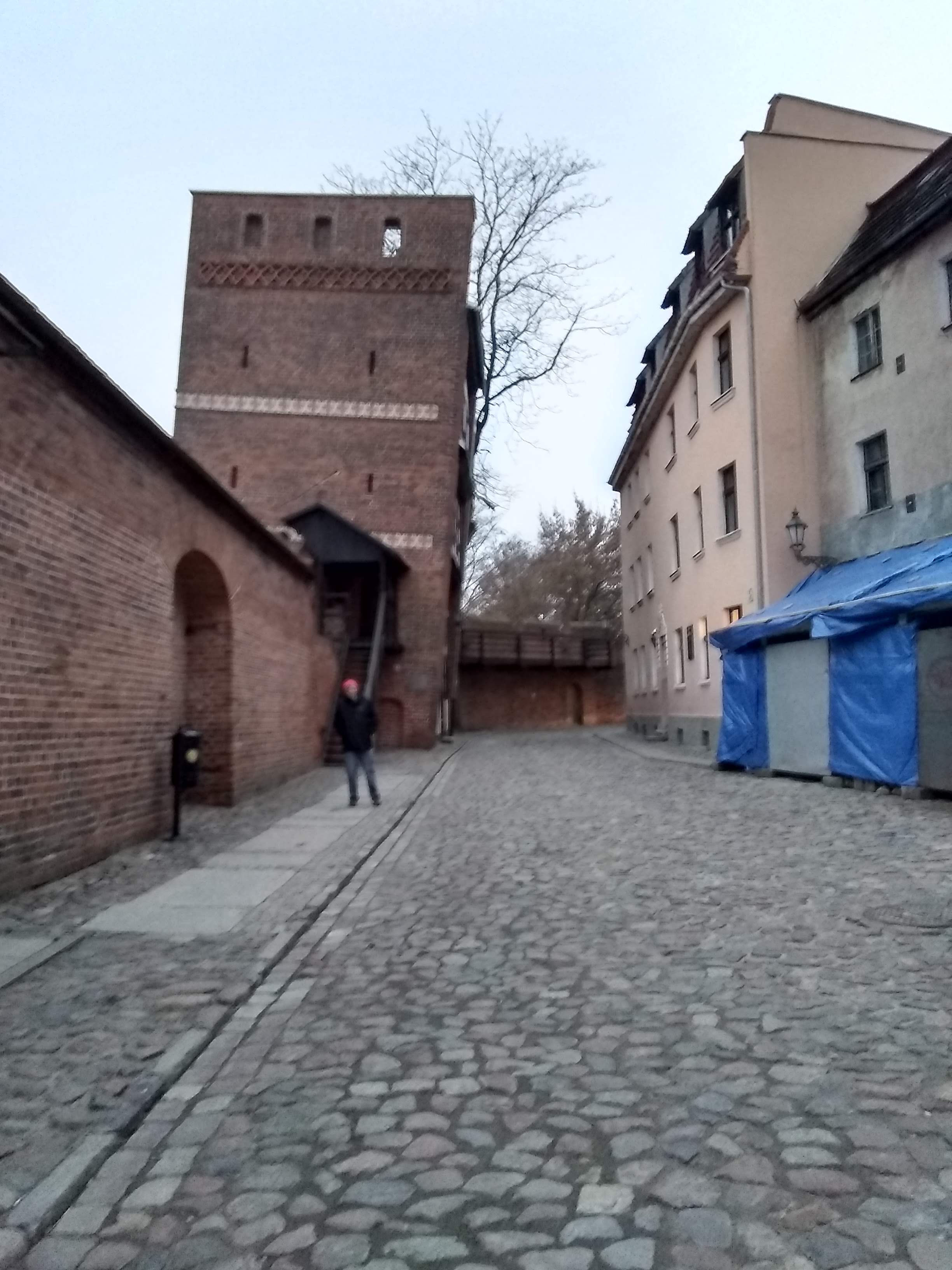
Toruń is a charming town, famous for gingerbread and as the birthplace of Nicolas Copernicus. Our hotel was the 1231 Hotel, named after the year that Toruń was founded! We spent most of our time in the Stare Miasto (Old Town). Here are some pictures of our hotel and that area including the “Leaning Tower of Toruń” –which my picture doesn’t capture too well.

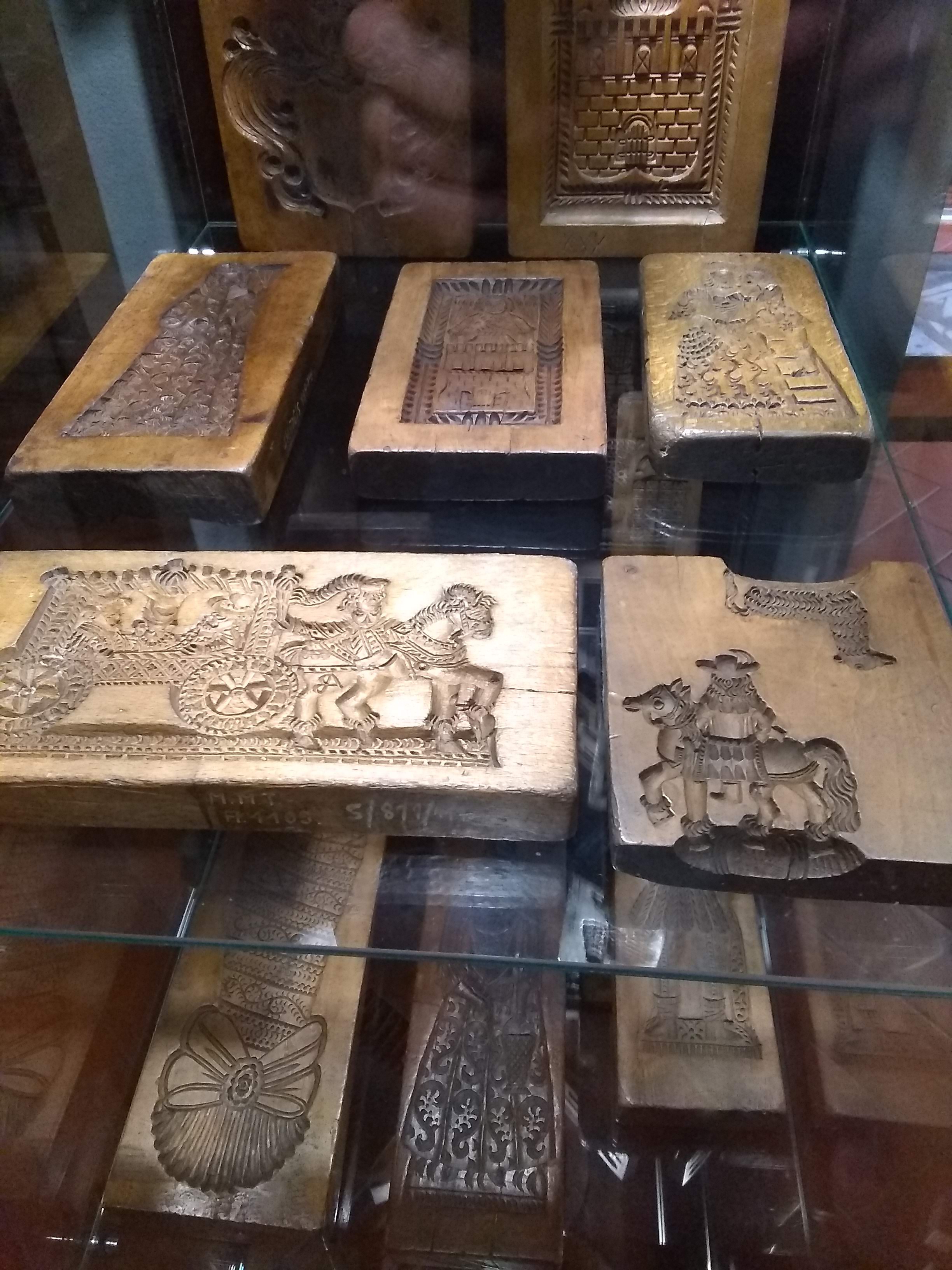
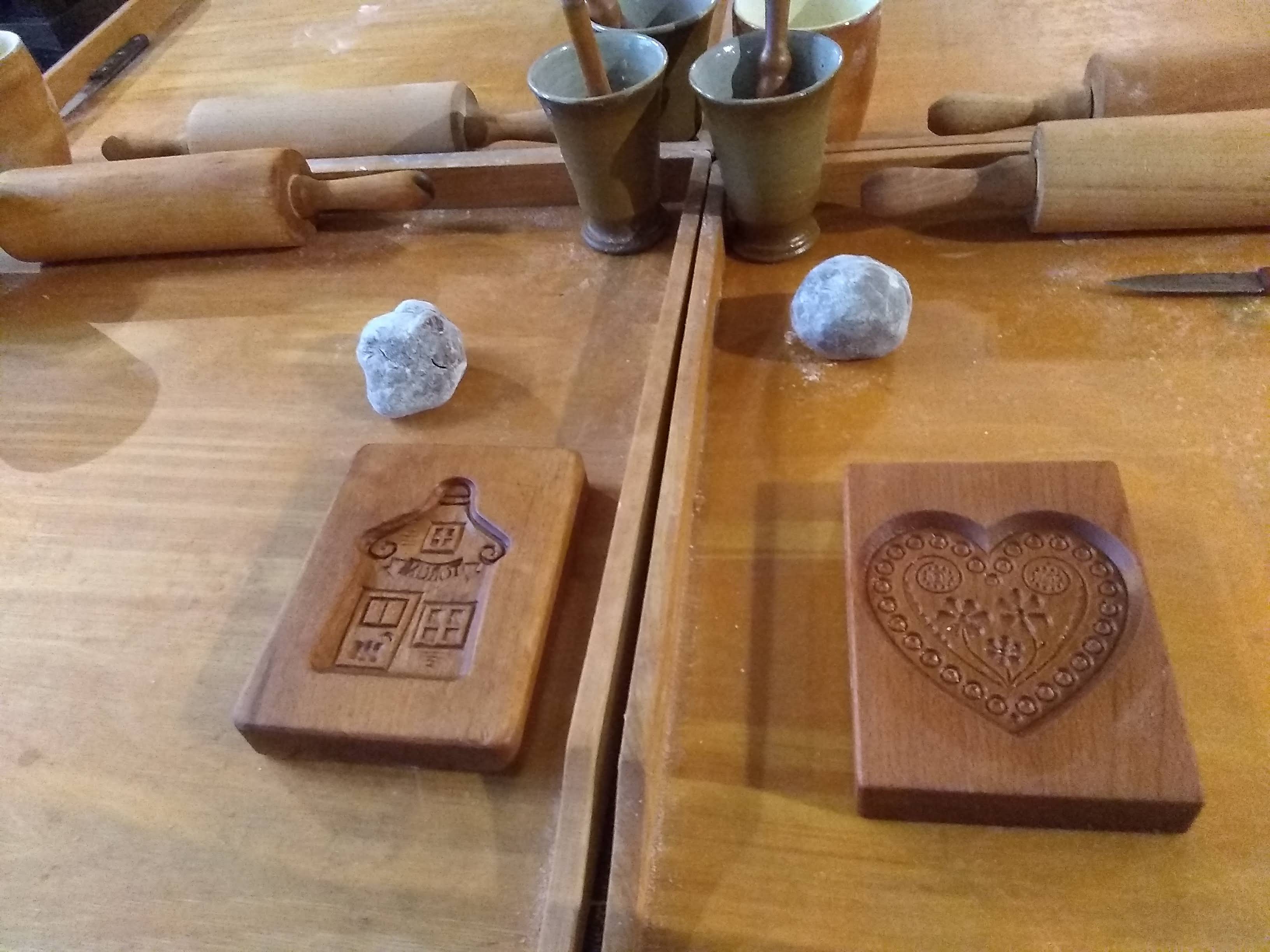
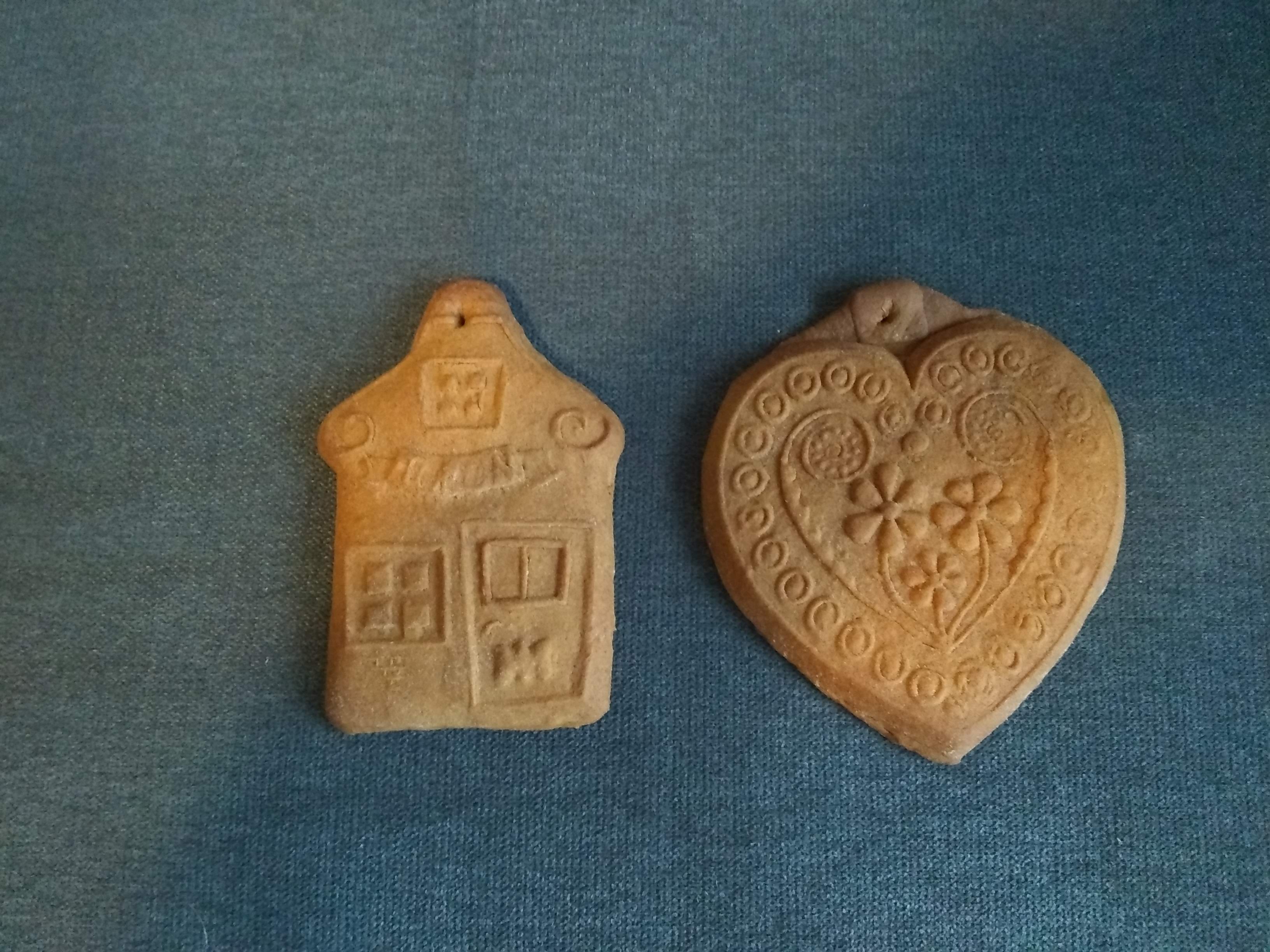
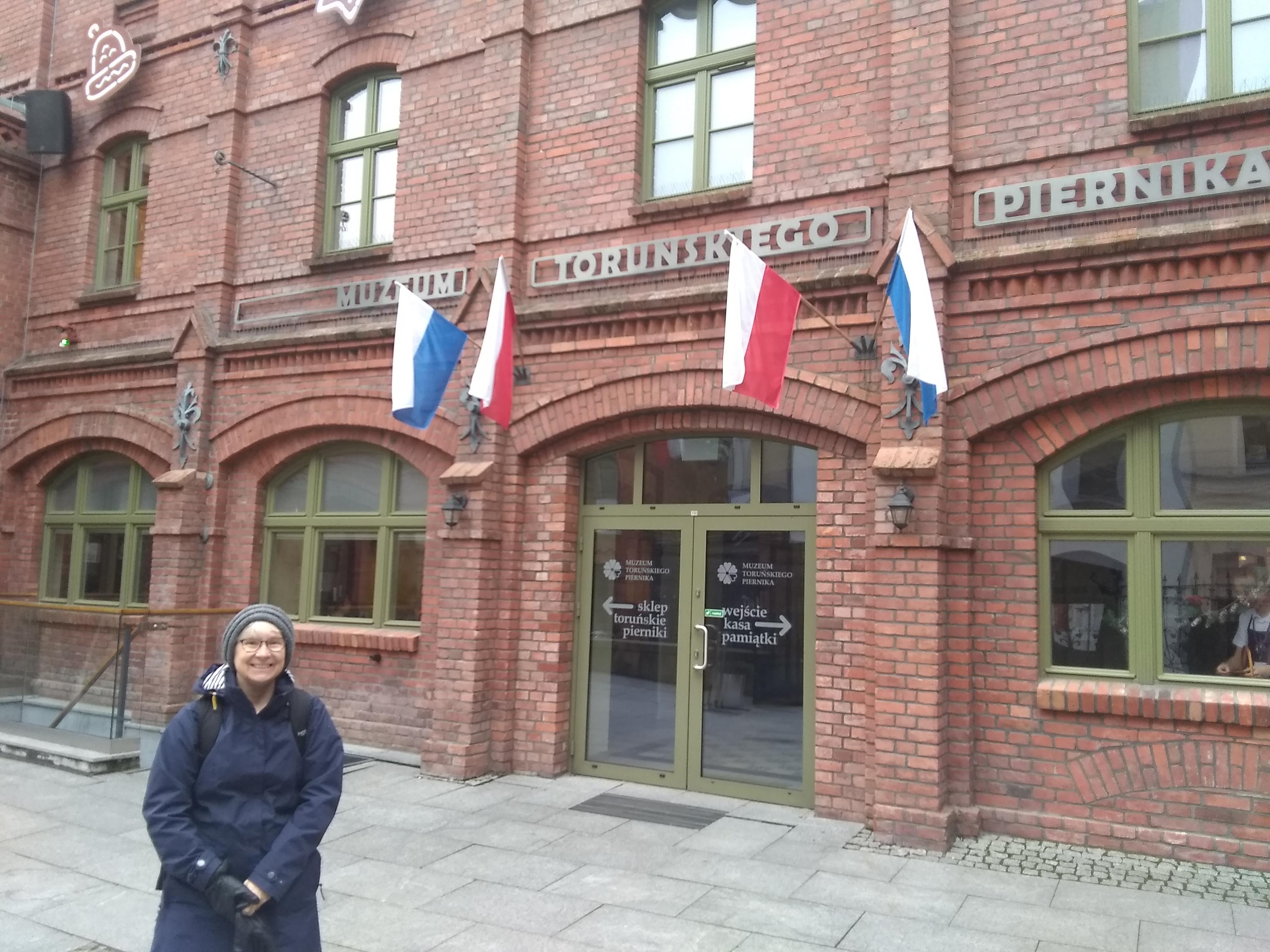
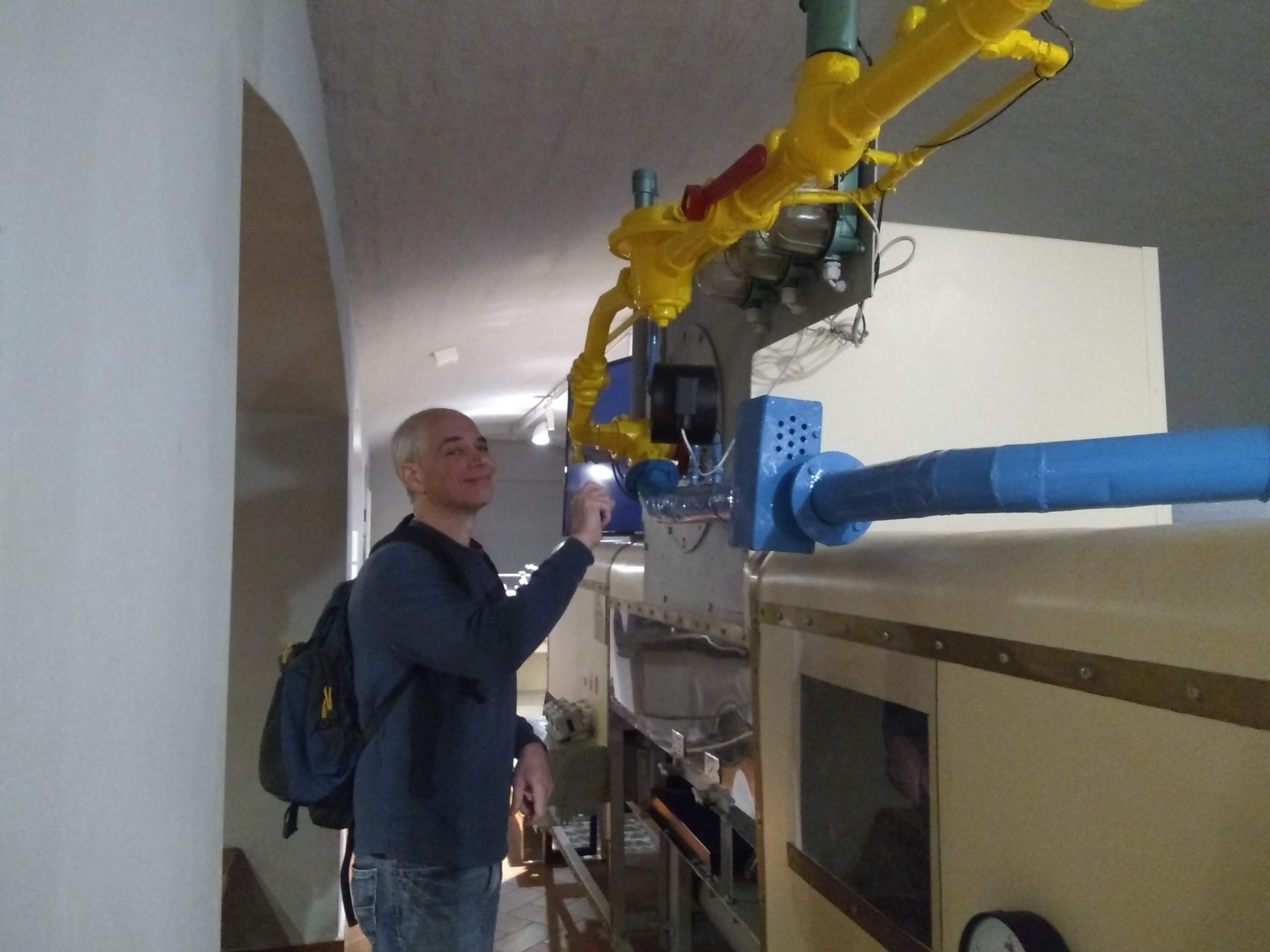
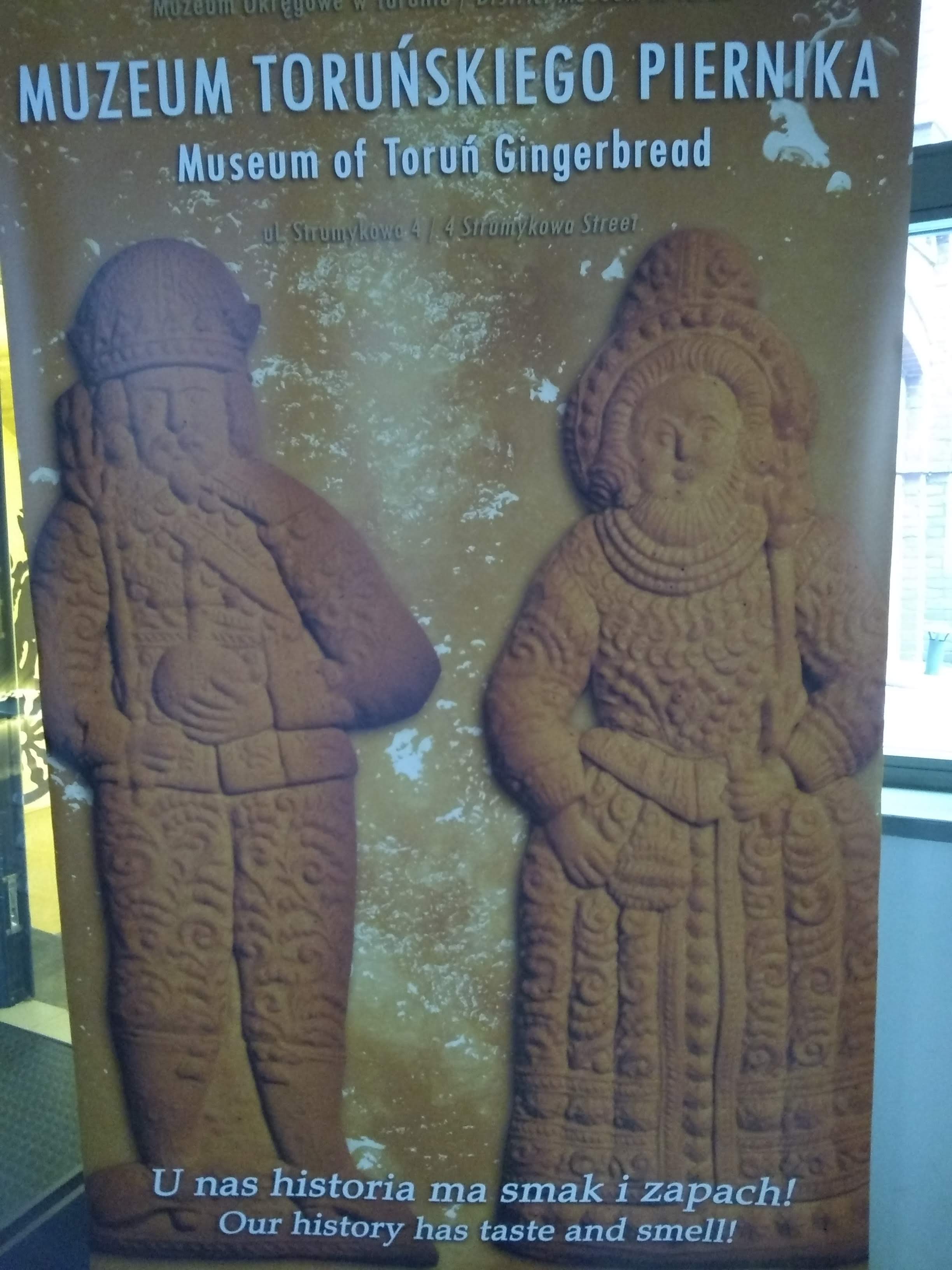
Toruń is known in Poland, and maybe throughout Europe, for its gingerbread. I highly recommend visiting the gingerbread museum (Muzeum Piernika) to learn the history of this tasty snack and its manufacturing in Toruń. Andy was especially interested in the complicated oven machinery which had an excellent audio-visual display. The museum includes a workshop where you can make your own non-edible gingerbread decoration. You also get a free little edible “Little Kate” gingerbread at the final exhibit in the museum.

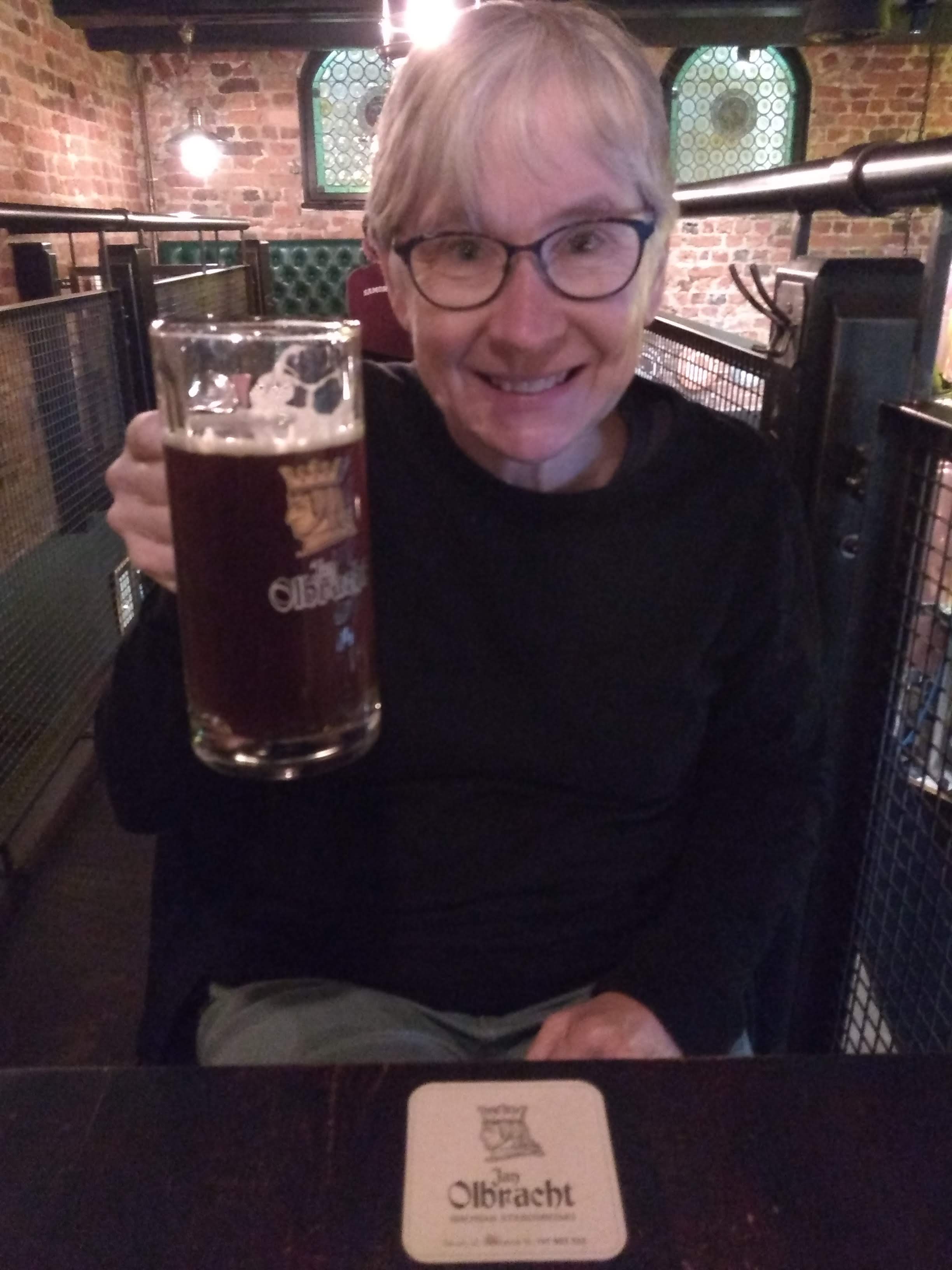
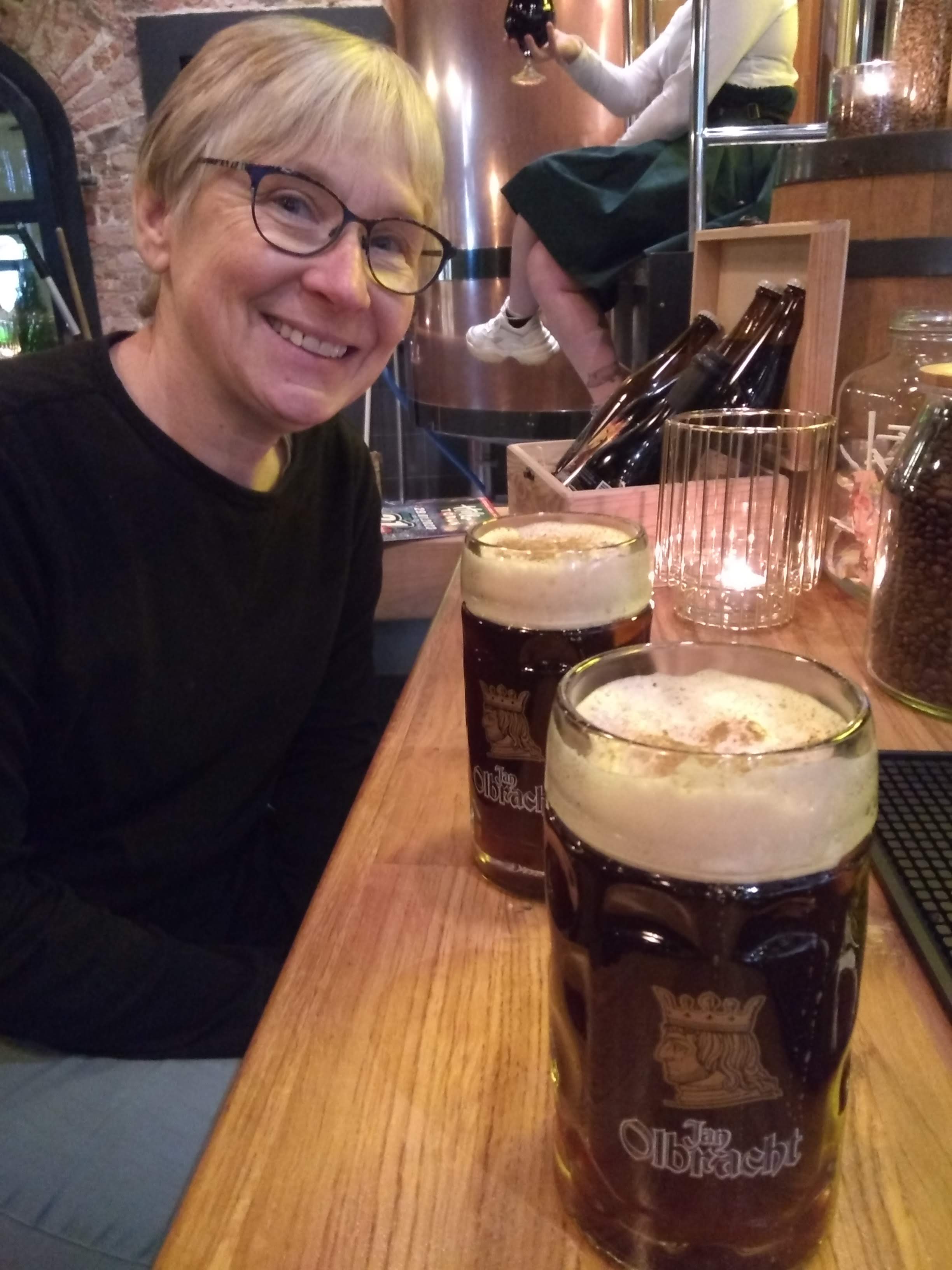
Would it surprise you to know that a town known for gingerbread has a brewery that makes gingerbread beer? We stopped at the Jan Obracht Browar (brewery) and restaurant twice. Once, for dinner and a gingerbread beer and the second time to warm up with a mulled gingerbread beer. Both were delicious!

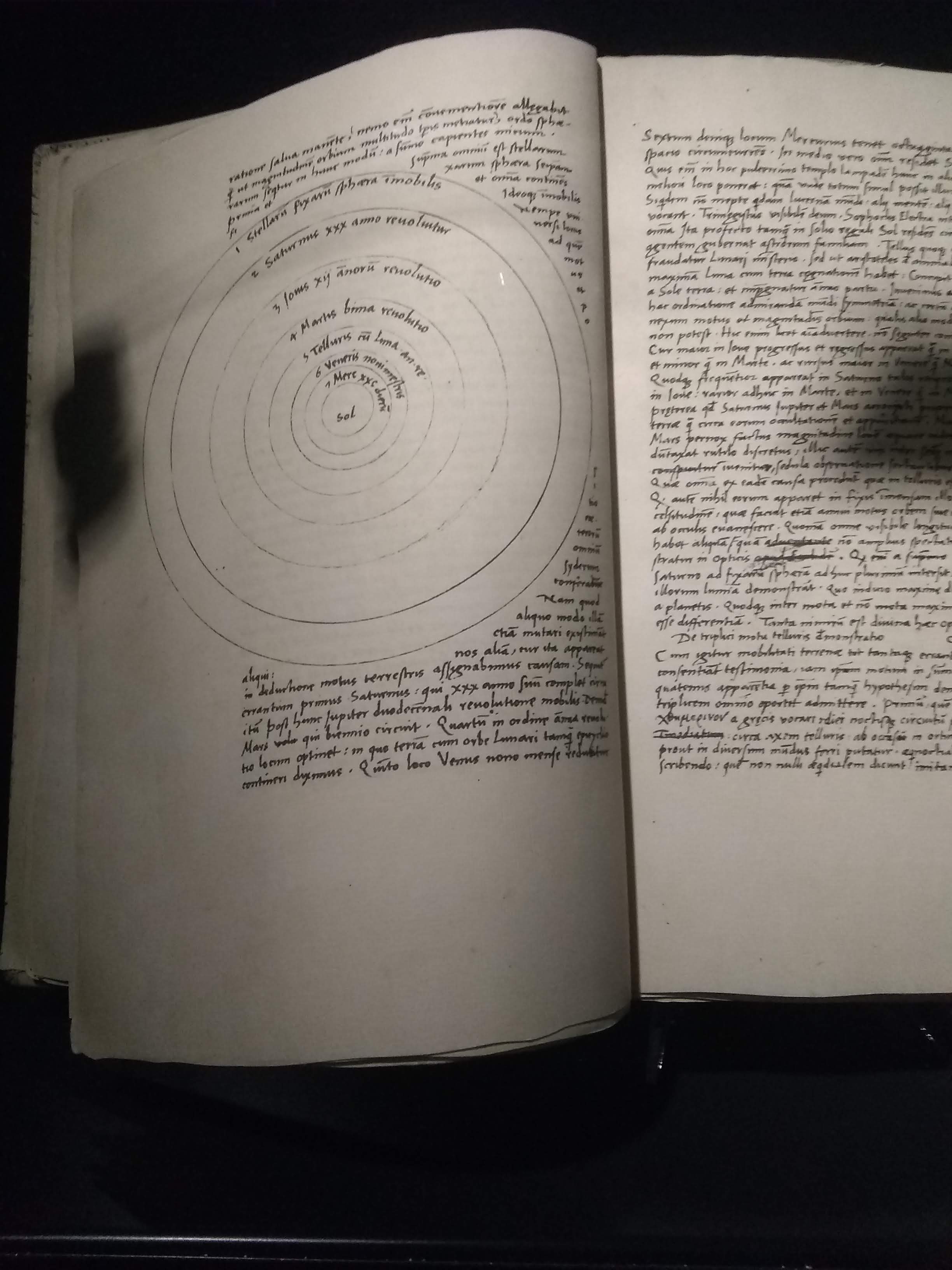
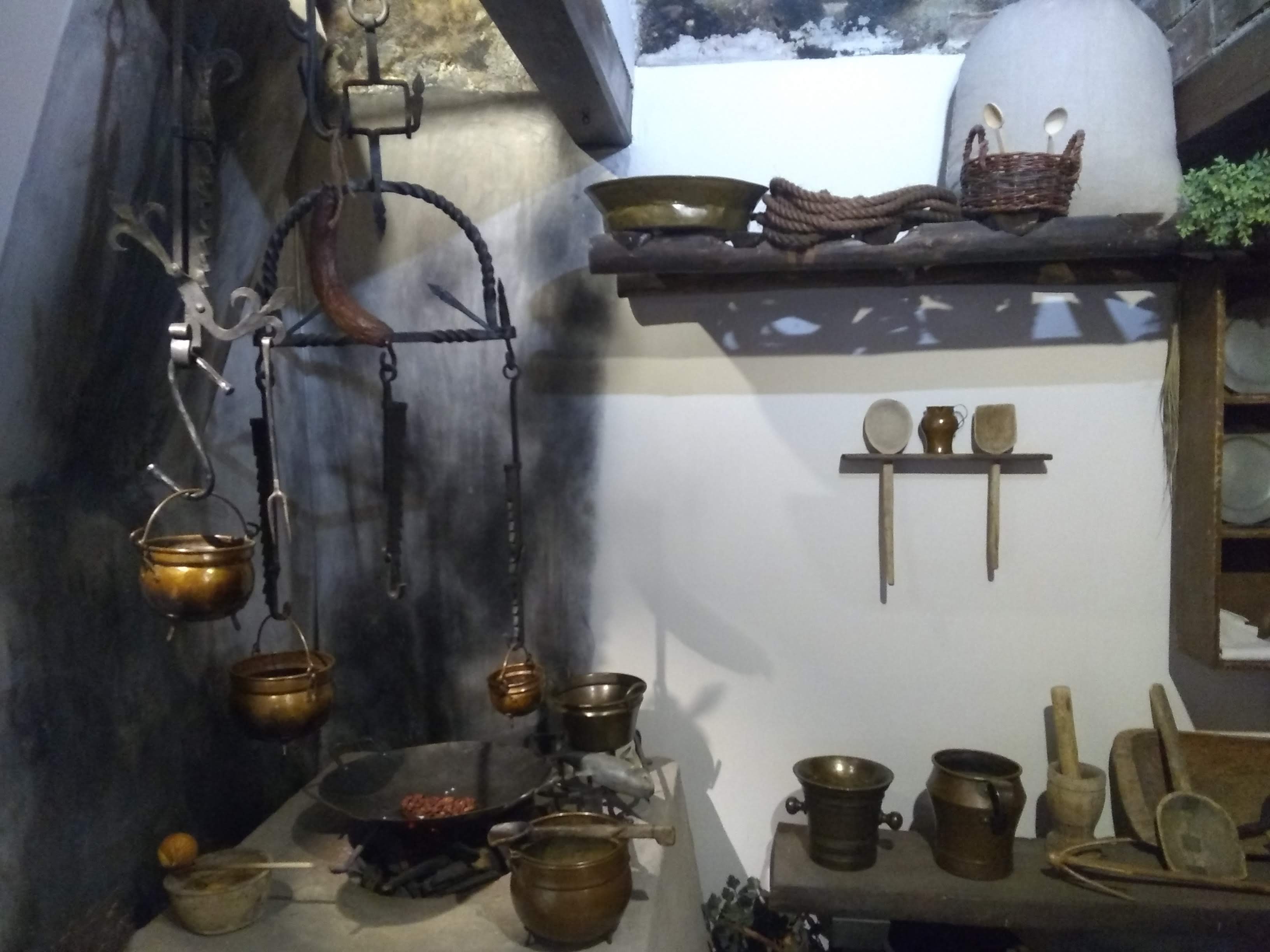
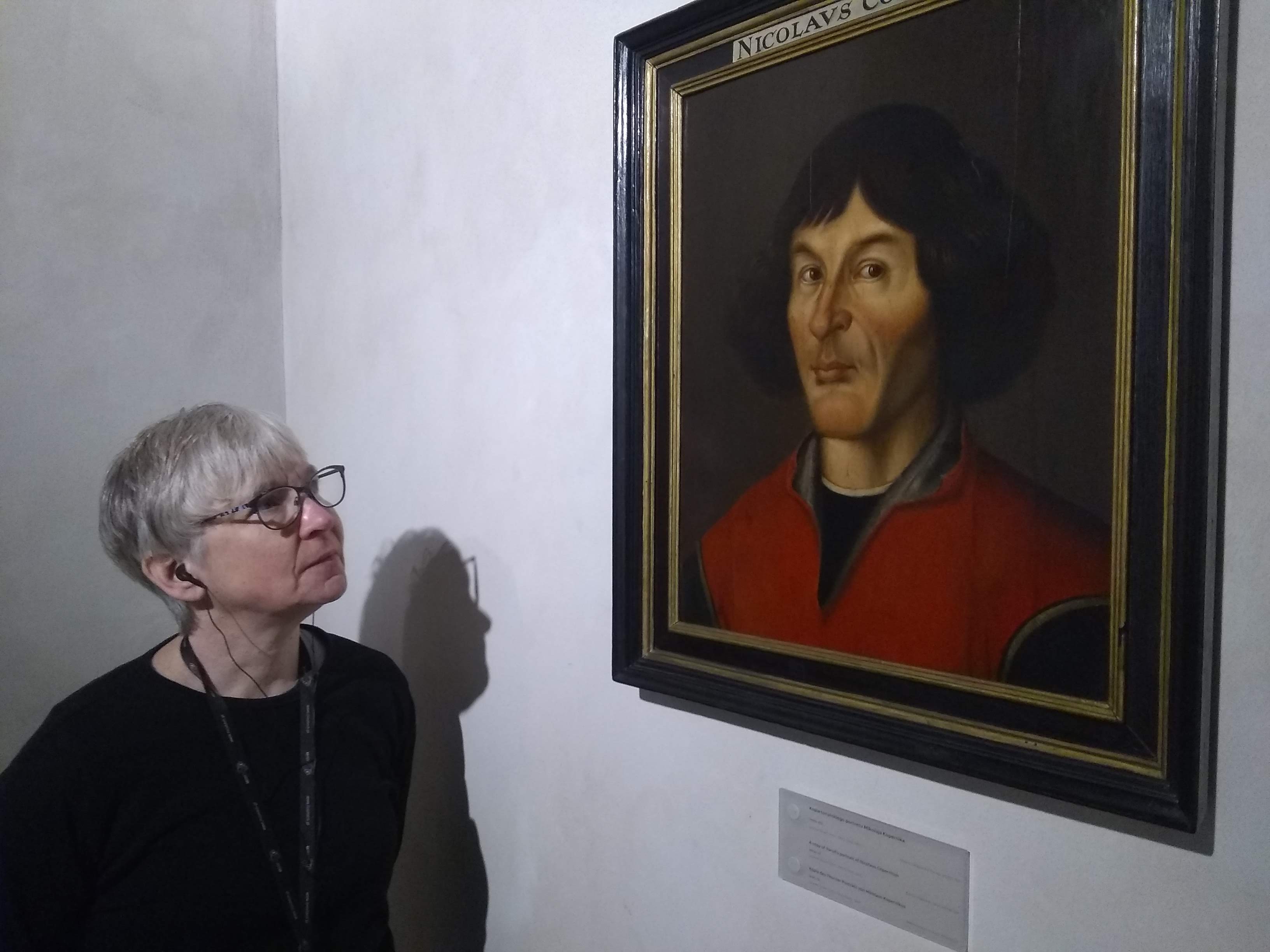
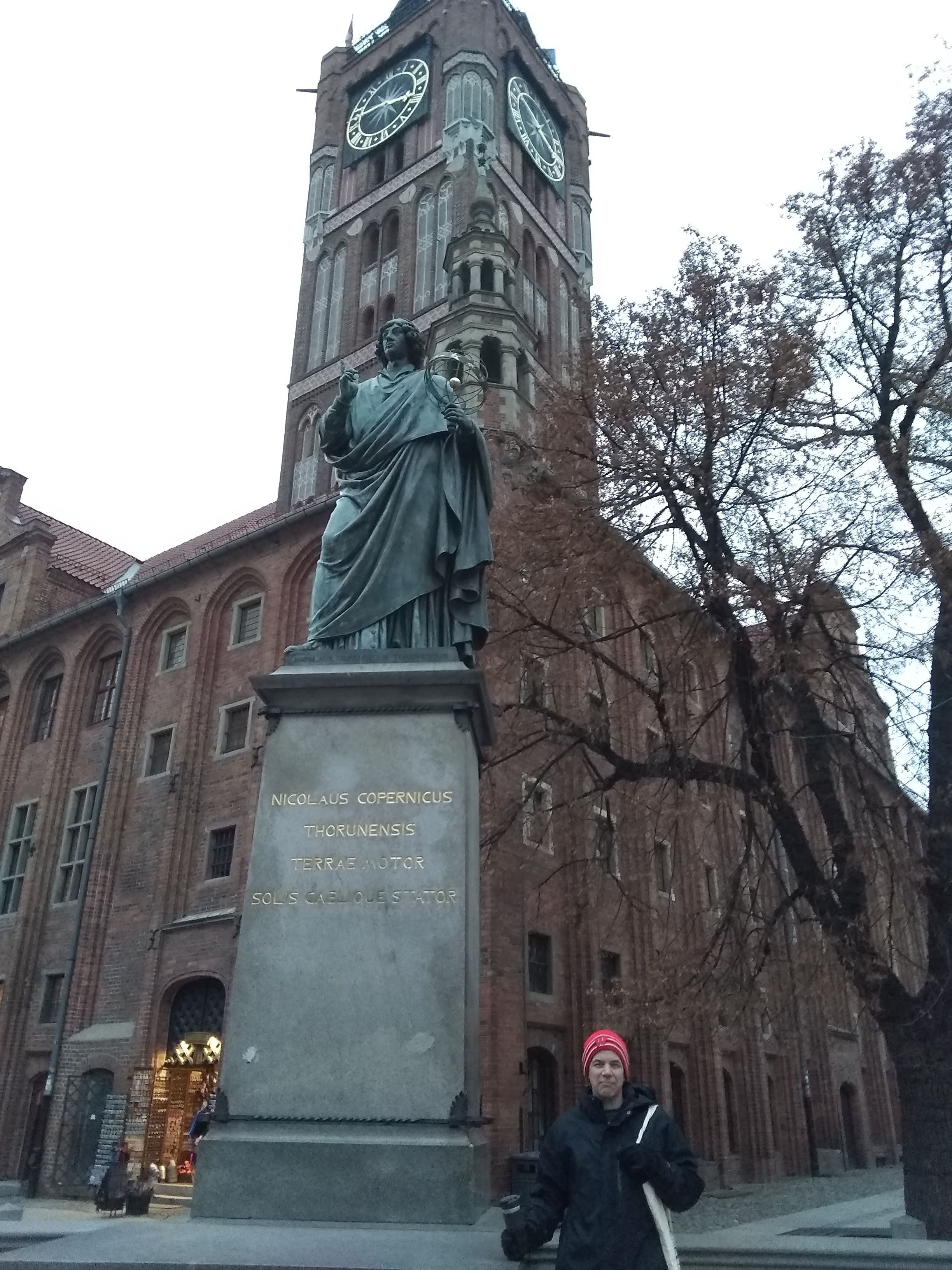
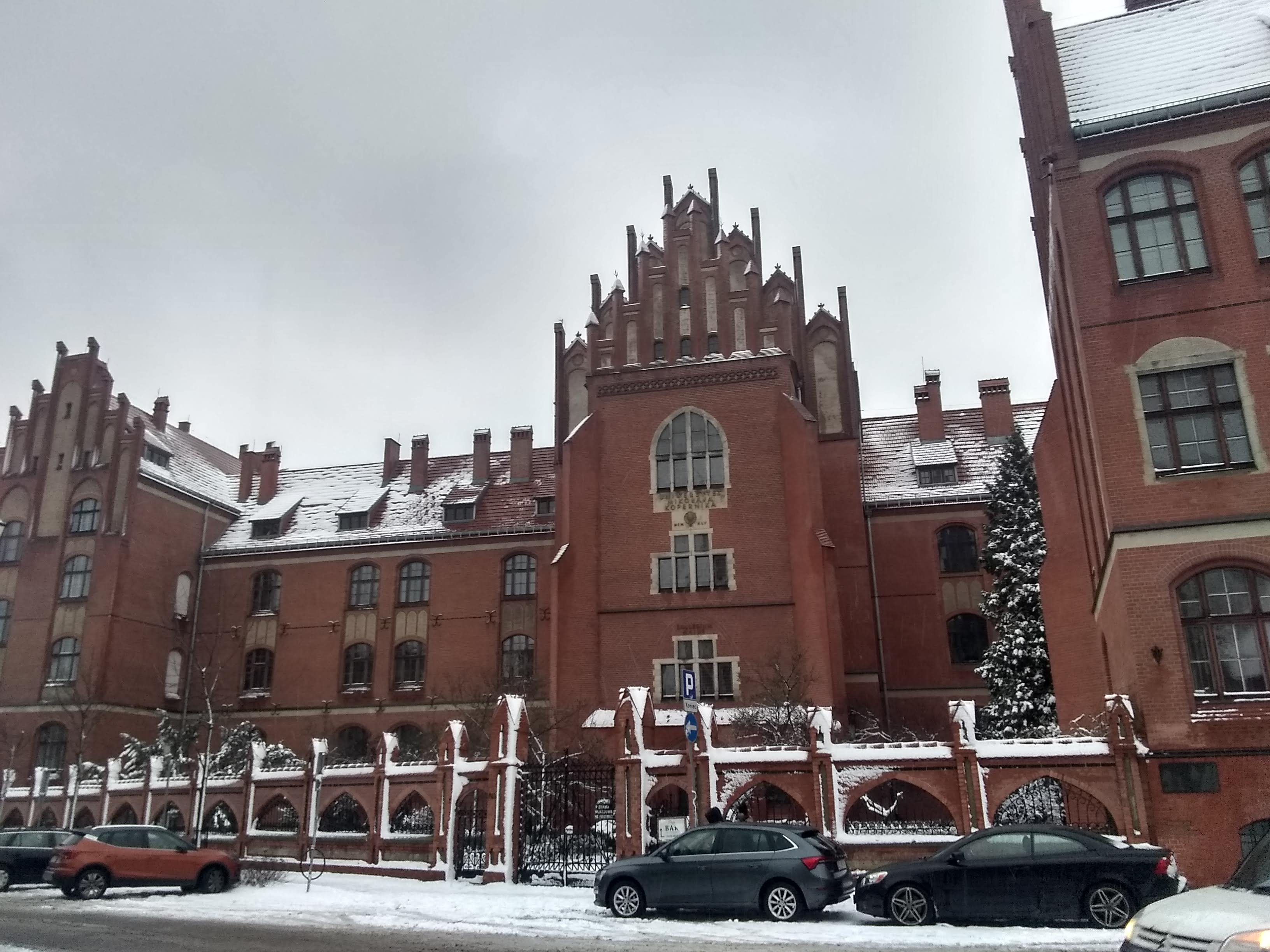
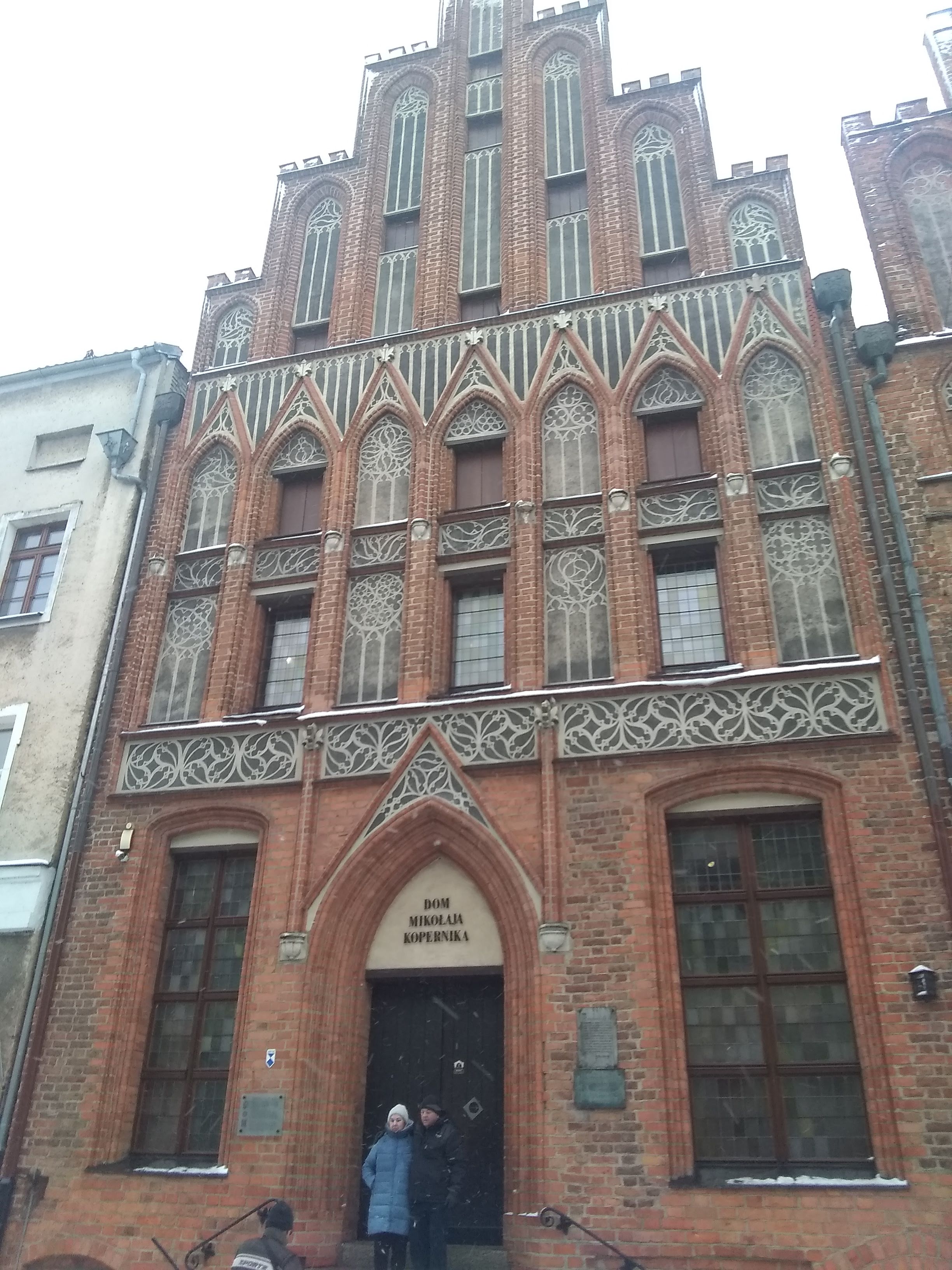
You can’t visit Toruń without noticing that Nicolaus Copernicus (Mikołaj Kopernika) is a big deal here. If you can’t remember who he is, here is a biography. We visited the home where he was born which is now a museum. His family was of the wealthy merchant class, trading in a variety of things including copper (see copper pots in picture). His father died when he was young, and an uncle who was a bishop helped raise and educate him. The museum doesn’t take too long to go through and is interesting, including lots of information about his time period and the science, religion and daily life of the middle ages.

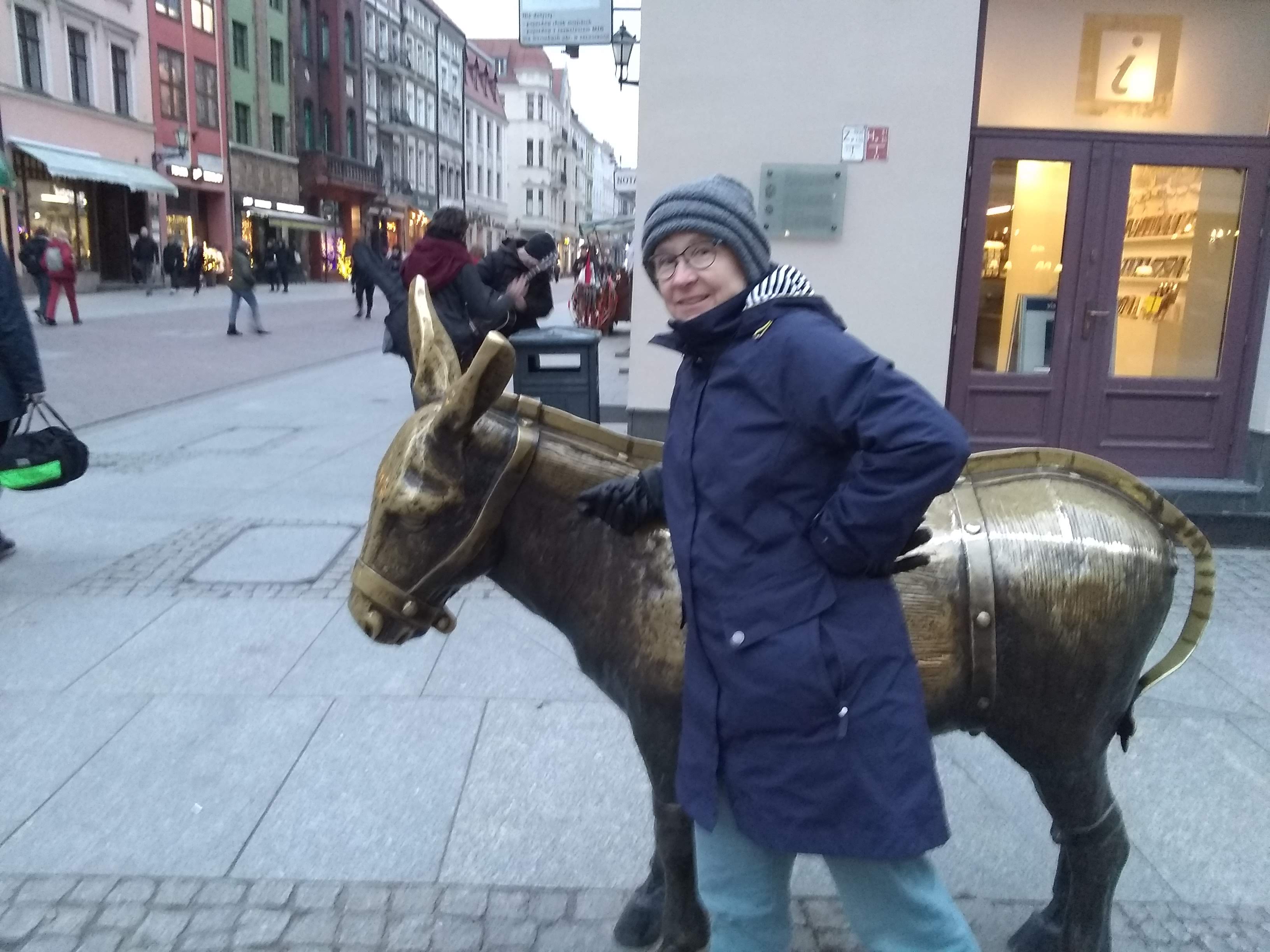
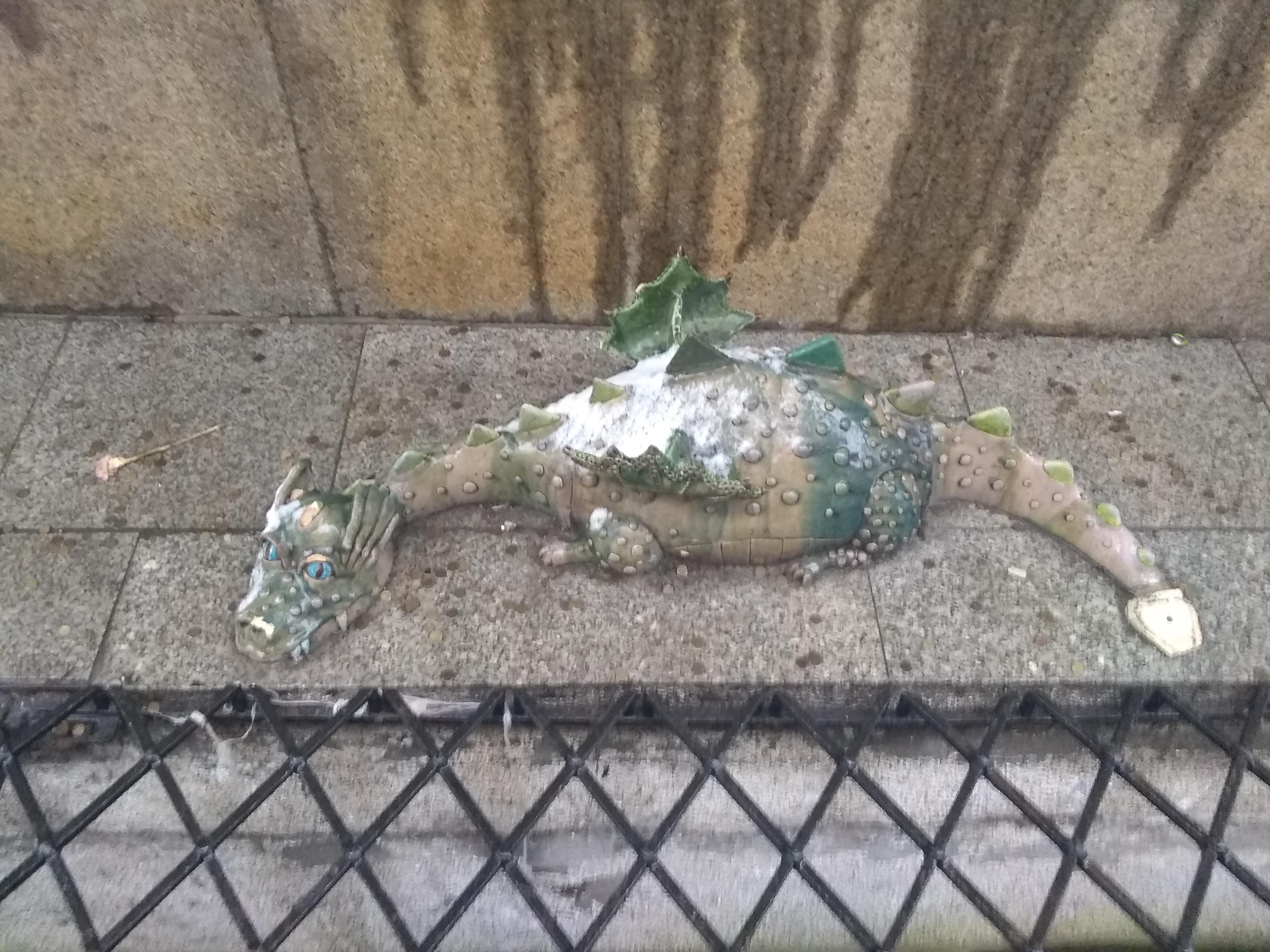
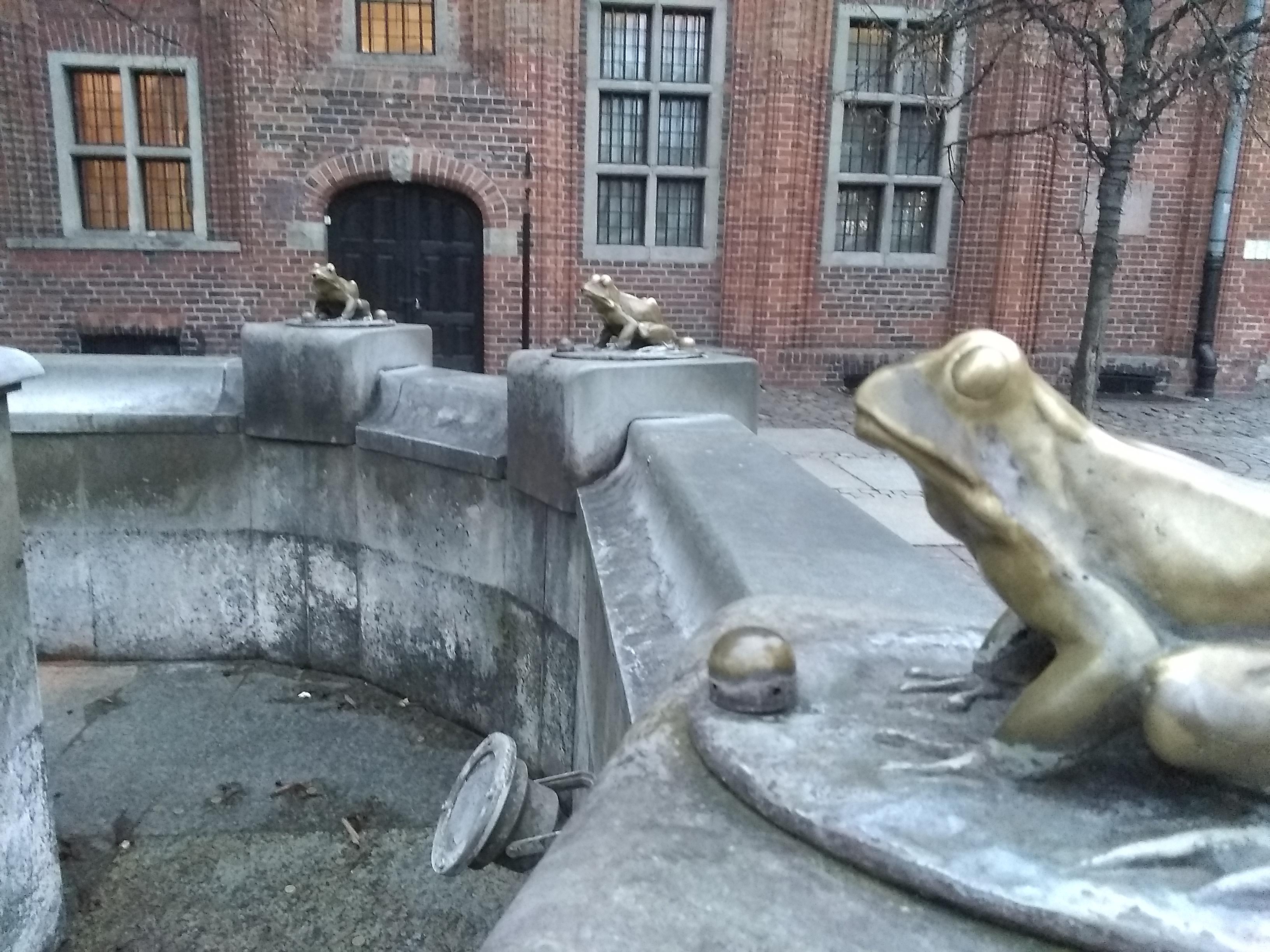
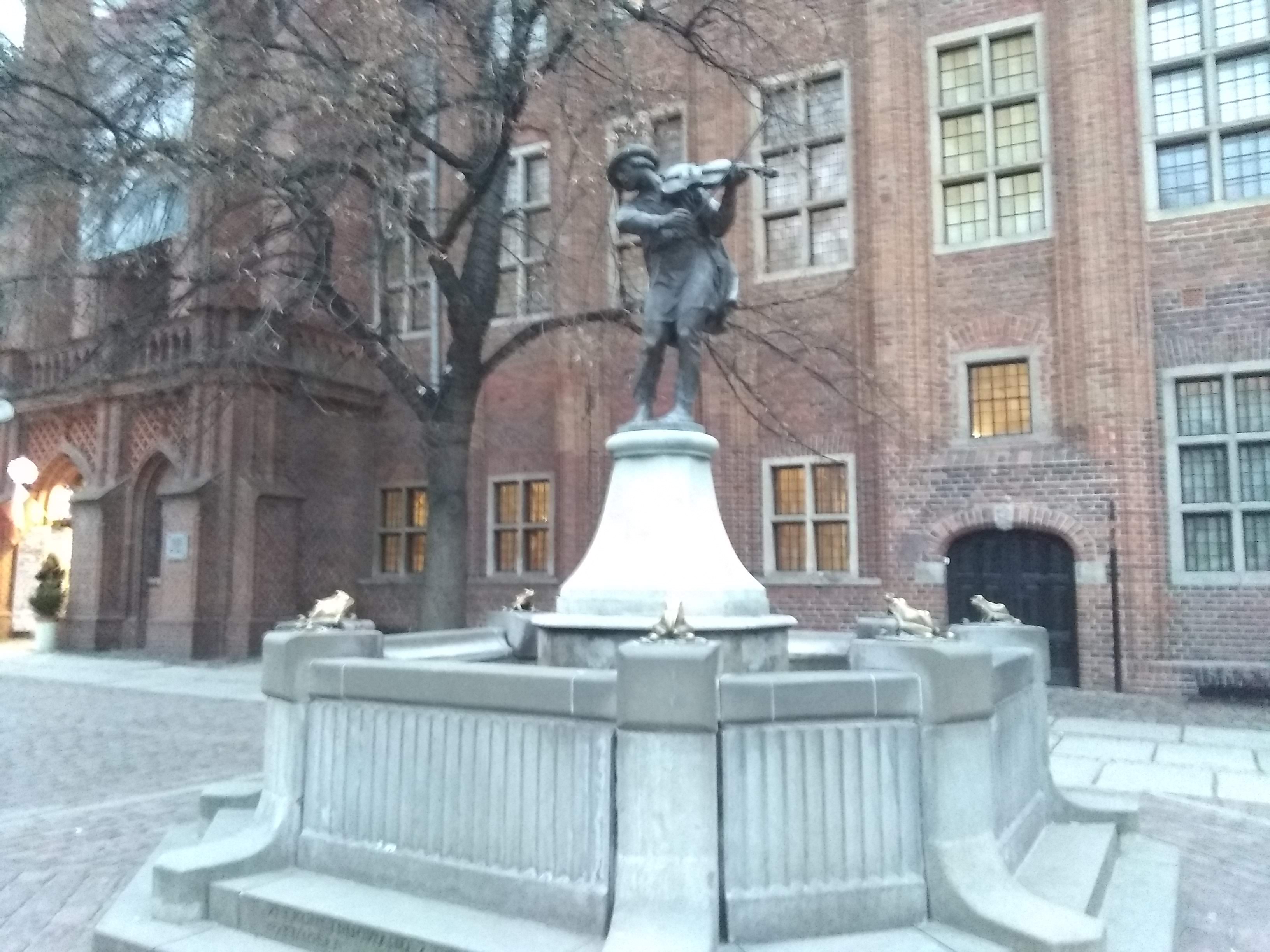
Another fun thing to do in Toruń is a statue scavenger hunt. There is the “torture donkey” which represents a former wooden donkey that was used as a means of torture (read about that here). Filius is a puppy with a hat from a from a popular Polish comic strip: picture missing! I know I took one, but it isn’t on my phone <sad face>. Here is a photo of the puppy, mis-tagged as being from a Charlie Chaplin film. There is a statue of a violist playing to a circle of frogs. In warmer months, I believe this is a fountain. There is a cute little dragon hidden along the side of an alley. And, finally, you’ll need to find at least one statue of Nicolaus Copernicus.

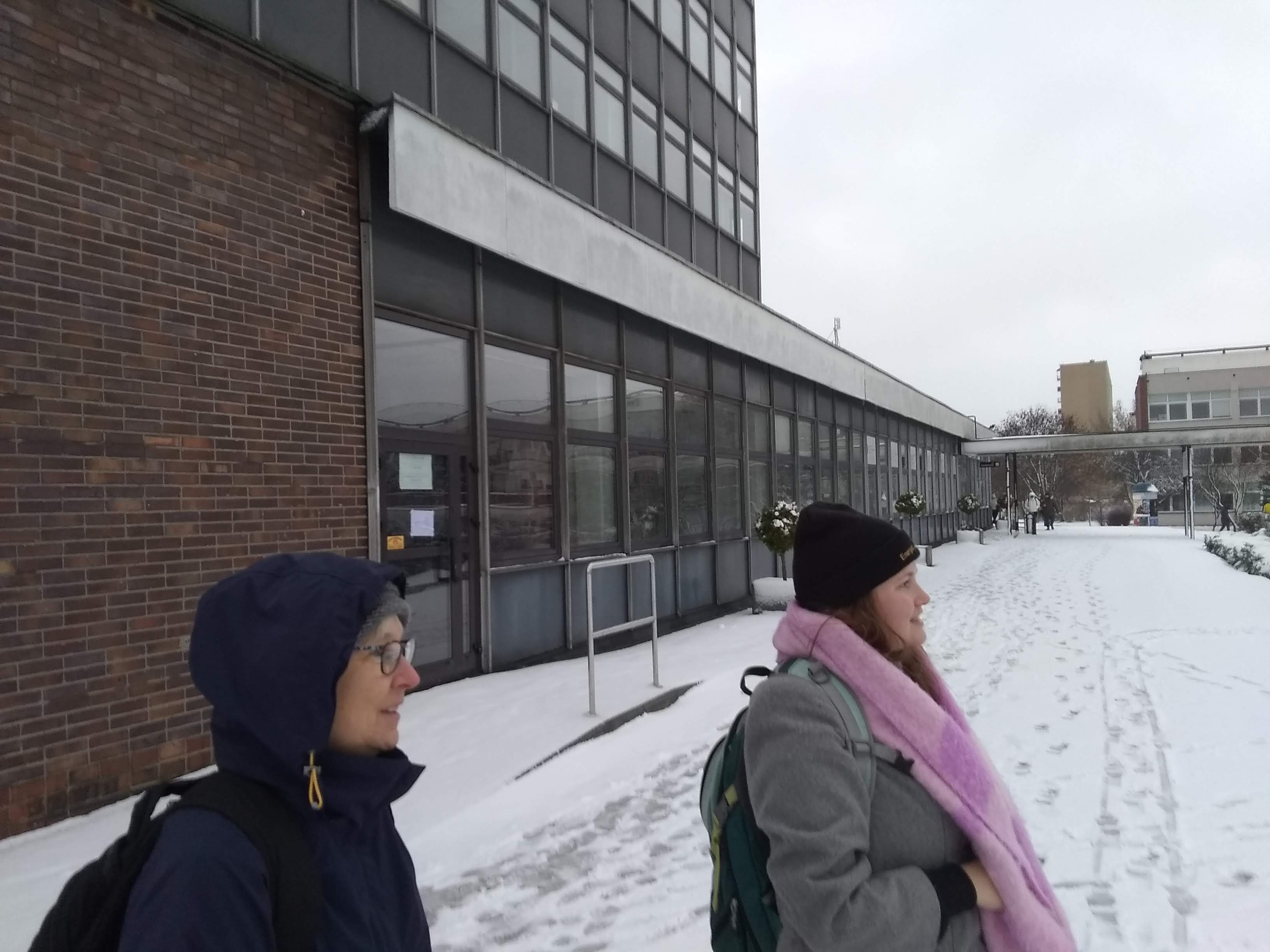
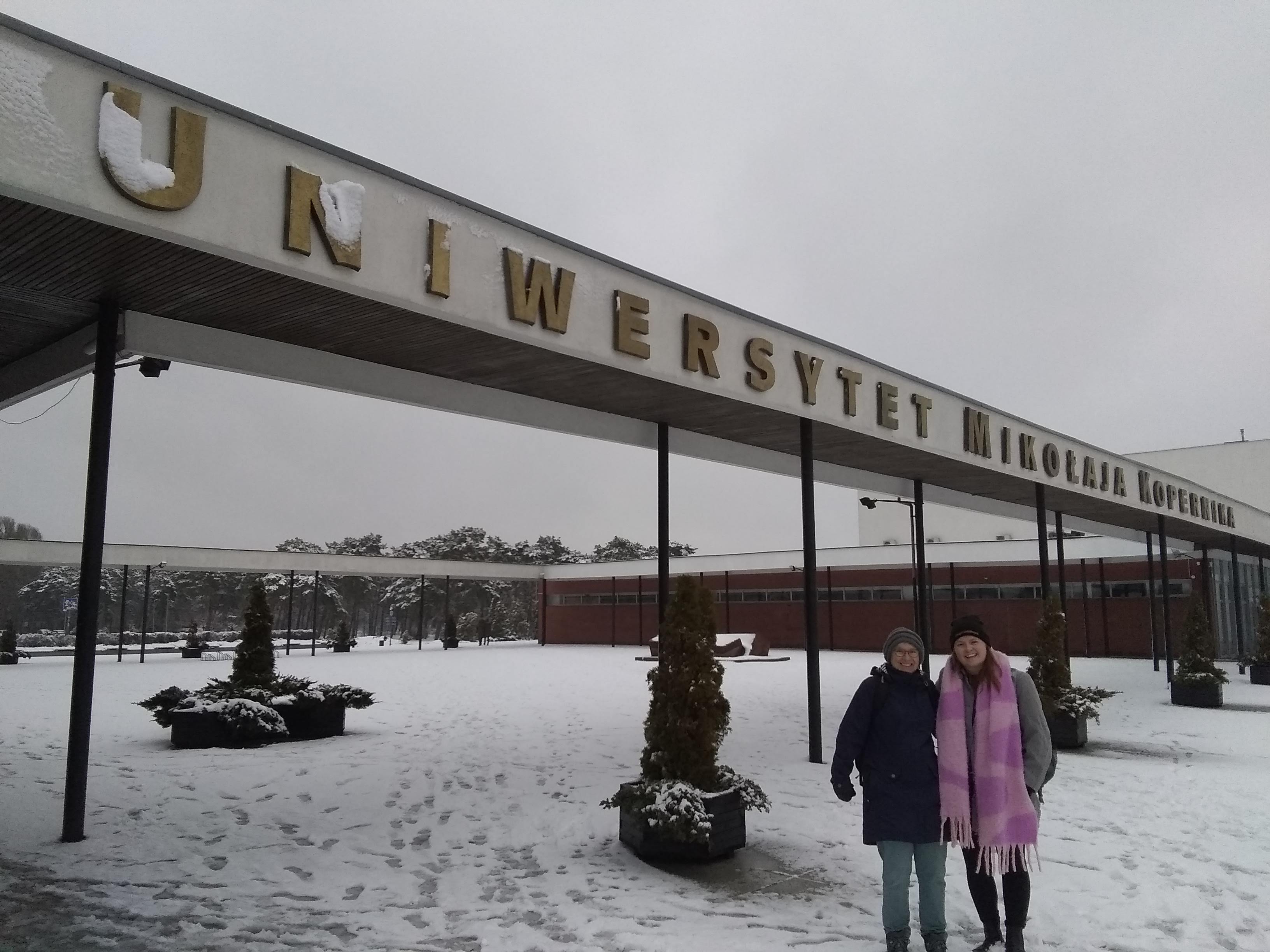
We were lucky to meet up with Fulbrighter Molly, who is teaching English at the MKU (Mikołaj Kopernika Uniwersytet) in Toruń. We had a delicious meal at a Manekin restaurant, our first although they are a chain. Manekin specializes in every kind of pancake you can imagine. Yum! Molly then showed us around her university. The weather was cold, snowy/slushy with a biting wind. It was nice of her to brave the elements for us.

Our evening train left Toruń a little after 8pm and by the time we reached home it was nearly midnight. In a sleepy daze, I walked down the sidewalk to our apartment when Andy grabbed my elbow. The wild boars we had heard about were scavenging nuts and grass along our street. I’d almost walked right into one! Andy’s picture isn’t the best, but it was dark and we were both caught off guard.

Luckily, we made it to our apartment safely. It was nice to be “home” and warm and able to sleep in. I start teaching again on Monday.

I hope you are all warm and safe, too, my friends.

Best Books of 2022

I read 71 books in 2022. That doesn’t count the books I started and didn’t like and gave up on. In my younger years I was much less likely to give up on a book. I wonder what that says about me. Anyway, here are my favorites, in the order I read them:

The Pull of the Stars by Emma Donoghue

You probably think you don’t want to read a book about a pandemic, having just experienced one yourself. However, you really should try this book about the Great Flu of 1918-19. It’s told from the perspective of Julia Power, a nurse working in an under-staffed Dublin hospital. Women who have the flu and go into labor are kept away from the laboring women who don’t have the flu. These ill women are cared for by Julia, who spends her time away from work caring for her shell-shocked, mute brother. The story only spans a few days and is simply incredible.

Comeuppance Served Cold by Marion Deeds

This mystery-fantasy-alternate history of depression-era Seattle is a lot of fun. I wrote a review of it earlier for the Historical Novels Society.

Pony by R.J. Palacio

In the 1860s, 12-year-old Silas lives with his photographer father and a ghost named Mittenwool. When three dangerous-looking men force his father to leave with them one night, and then one of the ponies returns, without any of the men, Silas decides his father needs rescuing. This is a heart-stopping, fast-paced adventure with emotional depth. Written for the child-reader, but I recommend it to you all.

The Grammarians by Cathleen Schine

Identical twin sisters, Laurel and Daphne Wolfe, have been fascinated with words their entire lives; they even invented their own twin-language as children. As twins and sisters, they are each other’s best friends, pretty much excluding the world from their own perfect life as two halves of the same person. As adults, they hate each other. The story flashes back and forth to their years growing up, and their love of language, until you discover what happened to split them. Although fascinated by them, I didn’t particularly like either sister; however they are surrounded by likeable characters. This story is utterly engaging, and anyone who loves words should give it a go.

The Invisible Life of Addie LaRue by V.E. Schwab

In the 1600s, in France, in a desperate attempt to thwart a marriage she doesn’t want, Addie LaRue makes a deal with the devil that causes her to live forever–and also causes her to be forgotten by everyone, the moment she is out of eyesight. In modern-day New York City, Addie finally encounters someone who doesn’t forget her. How is it possible? This story is so cleverly written, so magnificently engaging. It’s a best-seller for a reason.

Isla to Island by Alexis Castellanos

This is one of the most remarkable books I’ve ever encountered. You don’t so much read the book as experience it. Here is the review I wrote of it for the Historical Novels Society. A children’s graphic novel about being a refugee.

The Rat Catcher: A Love Story by Kim Kelly

A crazy title and a funny, beautiful story about the plague in Australia. Here’s my review of it for the Historical Novels Society.

The Last Boat Out of Shanghai: The Epic Story of the Chinese who Fled Mao’s Revolution by Helen Zia

I don’t read a lot of nonfiction, and I’m glad my book club made me read this one. It reads like fiction, following the lives of four people who were children living in Shanghai in 1949 when the Communists took control of the city and country. Incredibly engaging and informative.

Gold Diggers by Sanjena Sathian

On the surface, this is a fantasy story. Neil Narayan and Anita Dayal are two, suburban-Atlanta, Indian-American children whose parents are obsessed with their success. When slacker Neil discovers from Anita that if one steals and eats the gold in jewelry owned by others, they will also steal the abilities of the victims. It’s a crazy but interesting story taken as such, but when you realize that the gold-eating is actually a metaphor, the story becomes so much more. It is about ambition, the meaning of success, being a “model minority” and so much more. One of the most cleverly written stories of the year.

Red, White, and Whole by Rajani LaRocca

This book got a well-deserved Newbery Honor and a whole lot of other awards. Written in verse, this is the story of Reha, who struggles with her parents, American immigrants from India. They want her to maintain her Indian-ness, but they don’t understand what it is like, growing up in America. Straddling two worlds, she is fully frustrated with her parents. When her mother gets leukemia, the complicated becomes more complex.

The Queen of the Night by Alexander Chee

Lillet Berne isn’t her real name, but it is the name she is most famous for, as a falcon soprano and the most revered opera singer in 19th century Europe. She started out as a Minnesota farm girl, then a circus singing equestrian. Her engrossing story is slowly unfurled as she meets with someone who she might have to kill–or who wants to kill her? I can’t remember, but I do remember that this book is incredible.

The Sweetness of Water by Nathan Harris

The North may have won the Civil War, but you’d hardly know it from the way the southern town of Old Ox is run. On a homestead outside of town, George Walker decides to start farming his land, as a way of mourning his son Caleb who died in the war. Having never held with slavery, George hires two brothers, former slaves, and pays them a living wage, infuriating the townsfolk and the brothers’ former owner. This is the time and place and some of the characters, but a whole lot goes on in this heart-breaking story of family, of love and hate, of justice and injustice. An impressive debut novel.

Jaguars and Other Game by Brynn Barineau

This is a sort of female three musketeers story that takes place in Rio de Janeiro in 1808. Whip-wielding Maria, her dagger-throwing sister Isabel, and their sword-savvy friend Victoria must solve a murder mystery to free the wrongly accused Mateo. Did you know that the royal family of Portugal fled to Rio to avoid the threat of Napoleon? Mad Queen Maria, the Prince Regent and the horrible Princess Carlotta are some of the colorful characters here, as is this historical version of Rio. A great romp of a story that taught me all sorts of stuff.

What were your favorite reads of the past year? I’d love to hear!

Searching for Amber

Gdansk is famous for its amber, which washes up on its beaches from the Baltic Sea. The history of amber is fascinating, as I’ll let that website explain.

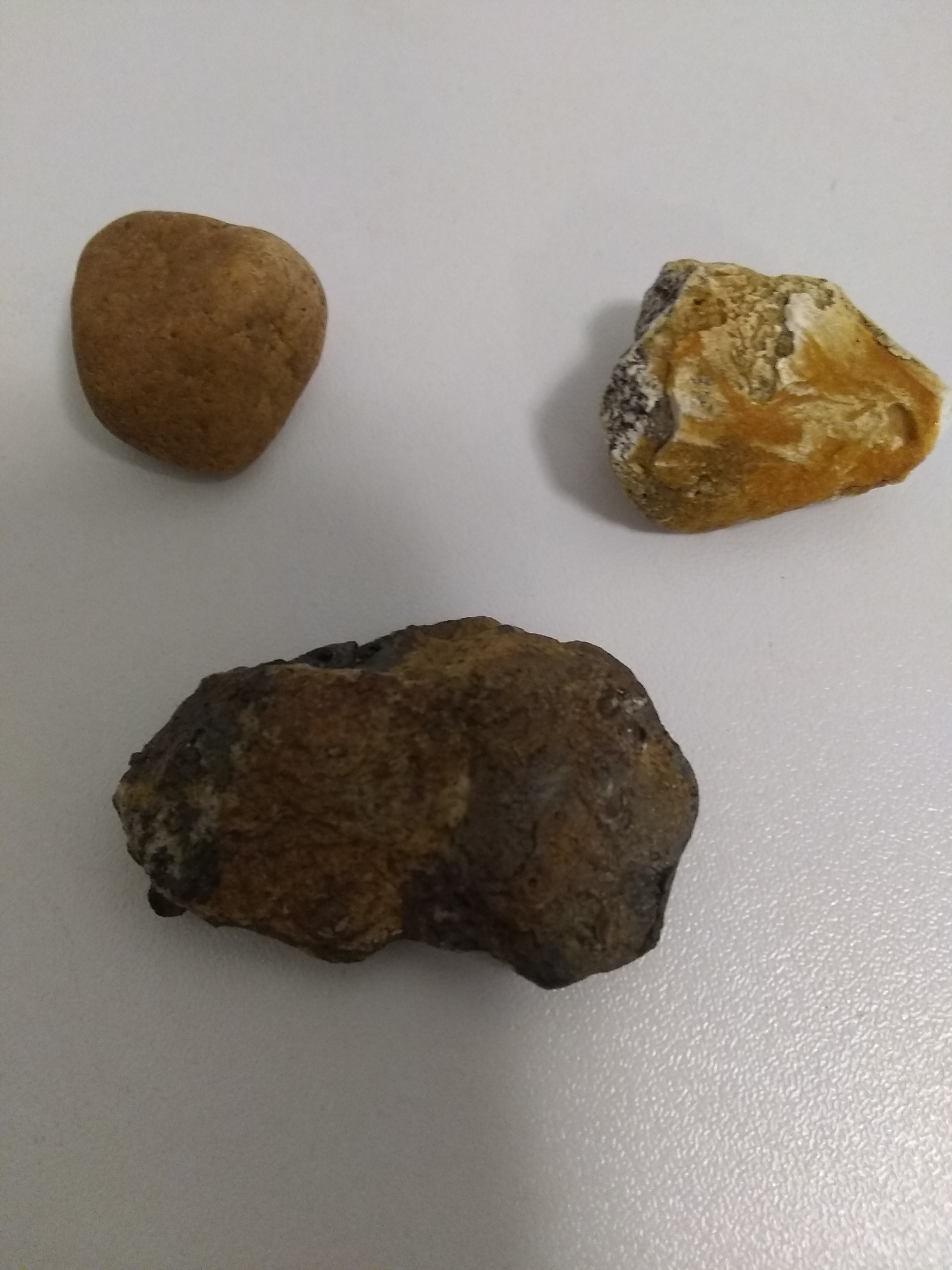
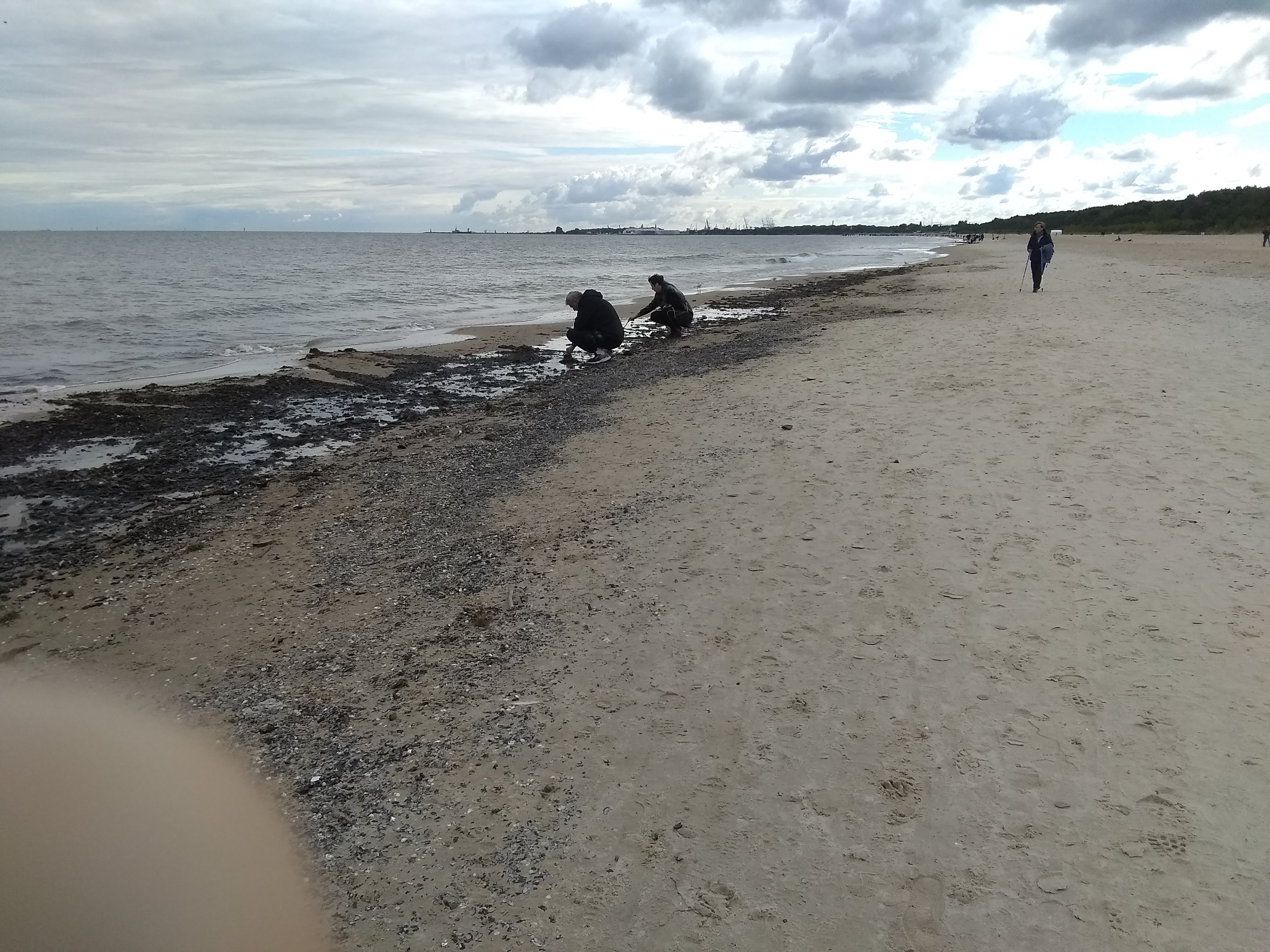
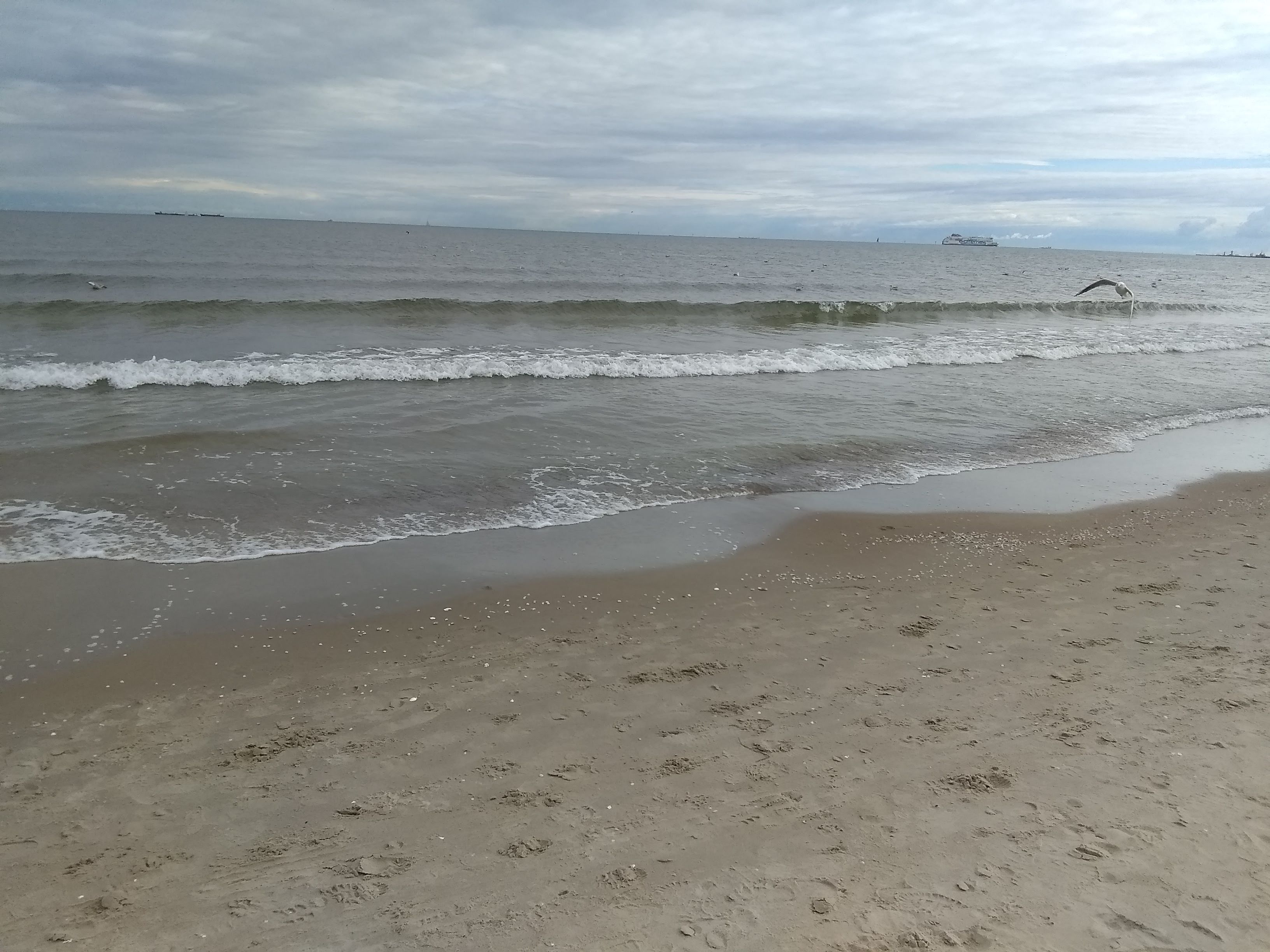
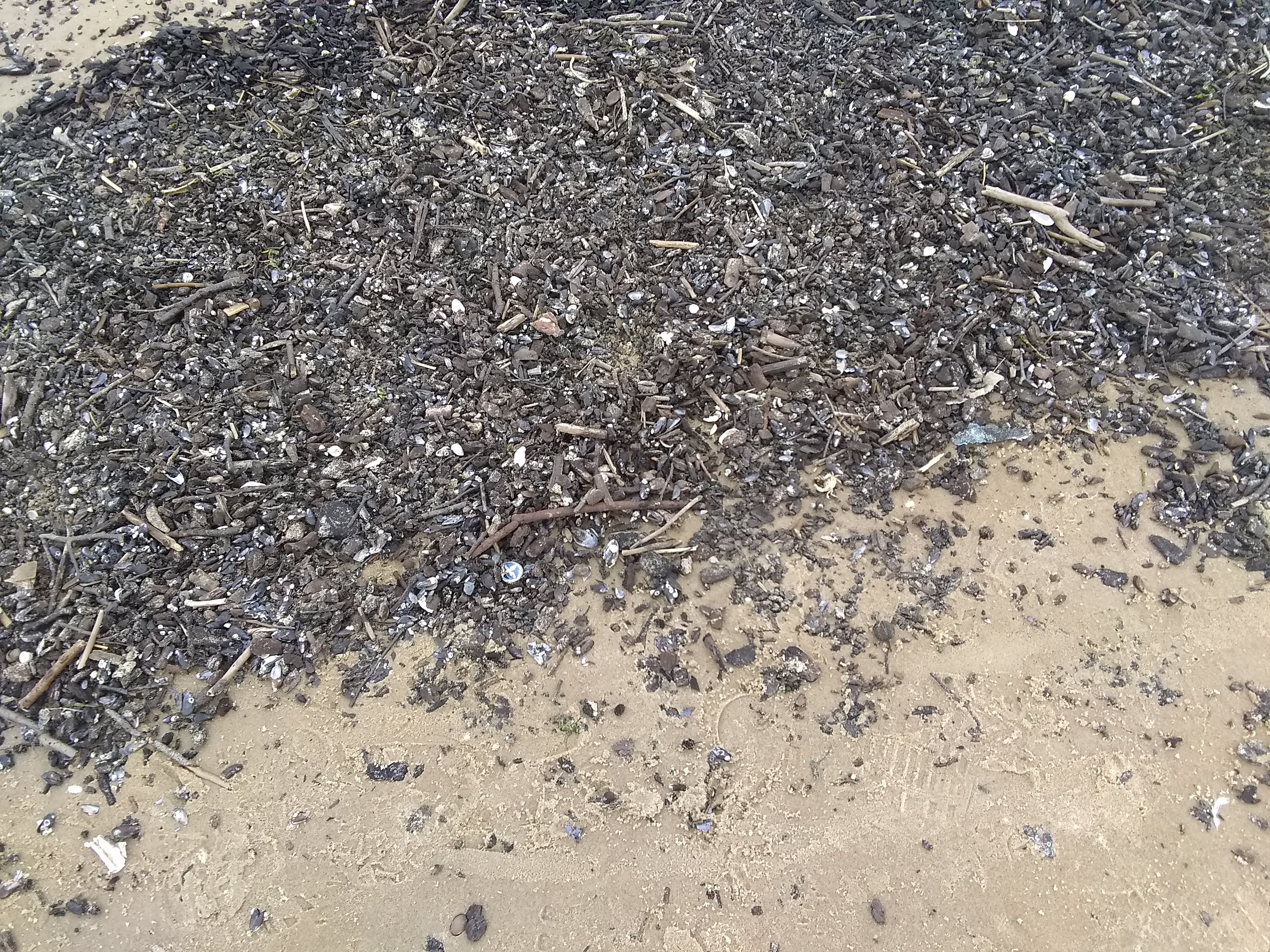
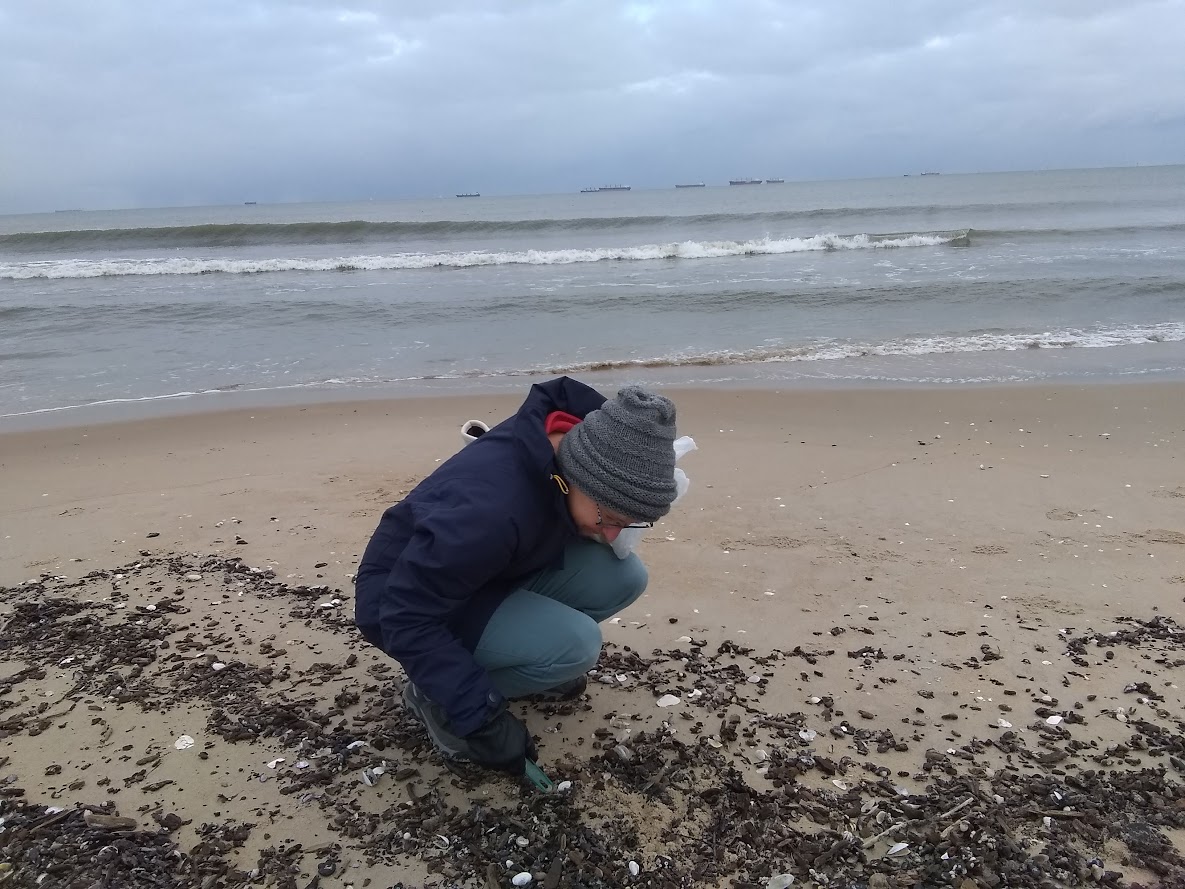
One of my goals in living in Gdansk is to find some amber myself. My first trip to the seaside, in September, let me know I had no idea what I was doing. I saw others picking through debris, and I looked through debris too, not finding anything that fit my idea of amber, translucent and orange. I did find a few rocks/shells/whatever that could be amber? maybe? The pictures of that first amber-hunting expedition are below.

Since that adventure, I’ve visited Gdansk’s very cool Amber Museum, and learned much more about amber. In fact, amber isn’t always translucent orange. I also learned (from the museum and locals) that the best time to find amber successfully is after a storm. Last weekend, a storm was predicted but didn’t materialize. The prediction was moved to Monday. That day, there was a bit of snow and a lot of wind; as a resident of Wisconsin, I wouldn’t call it a storm, but it was the first close-to-a-storm that we’d had, and I wasn’t busy on Tuesday morning, so Andy and I headed to the beach.

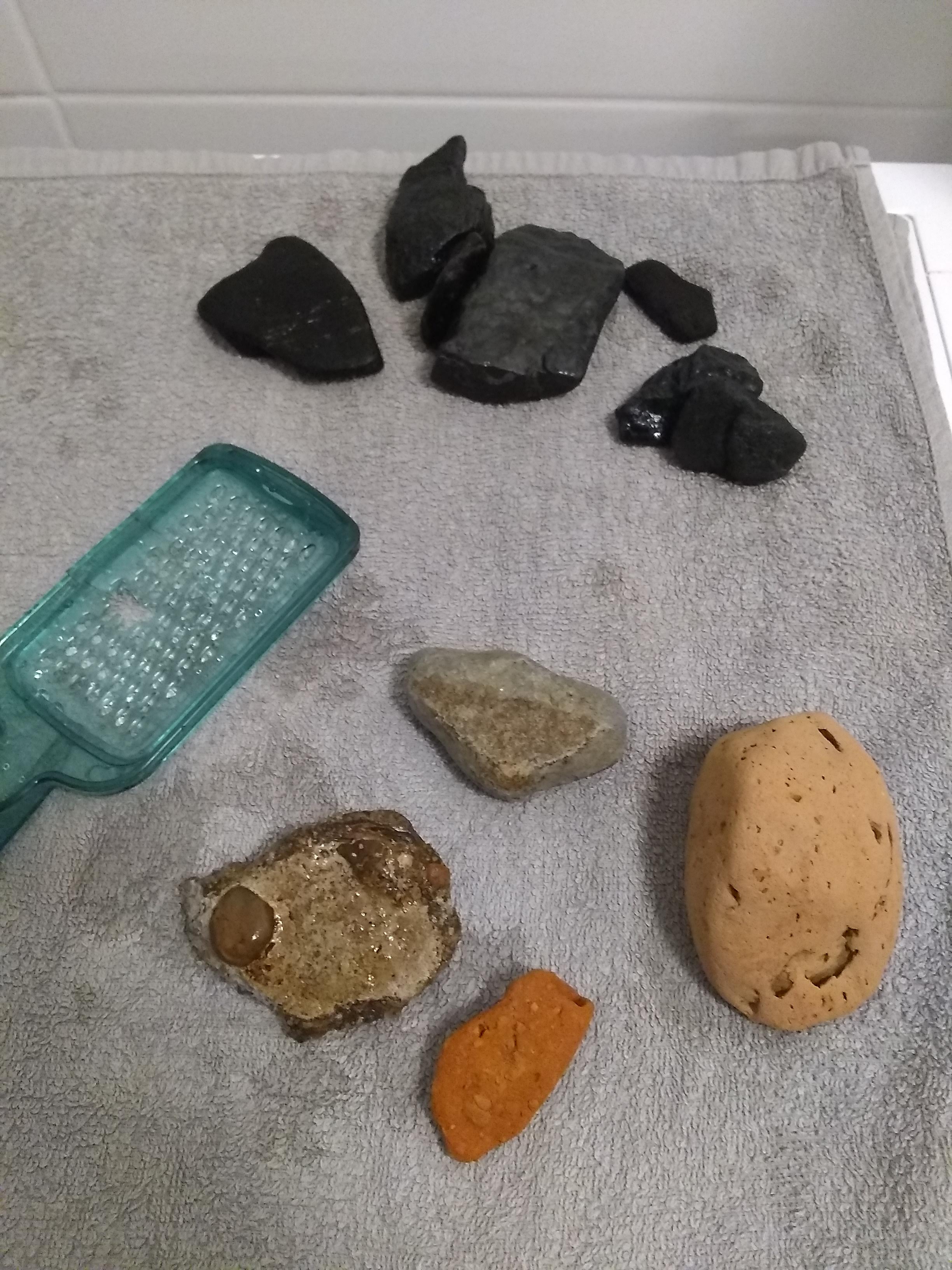
(Yes, I used a broken plastic cheese grater to poke through debris and frozen sand.)

Again, I didn’t find anything that jumped out at me as “Amber!” but I picked up some rocks that made me look twice. We also gathered what we thought at the time might be coal, because… coal? There is an energy problem in Europe and maybe somebody would want a few extra pieces? Once everything had warmed up and dried out, what seemed like coal now seems like it might not be coal. I need a geologist friend to look at all this. Kevin and Sherri, want to visit?

One thing I’ve learned in my long walks along the Baltic Sea is that I’m a winter sea kind of gal. The feel of the cold sea air on my face, the frozen sand, and the frigid temperatures are invigorating. Cold air tastes so clean!

Until next time, stay cool, friends!

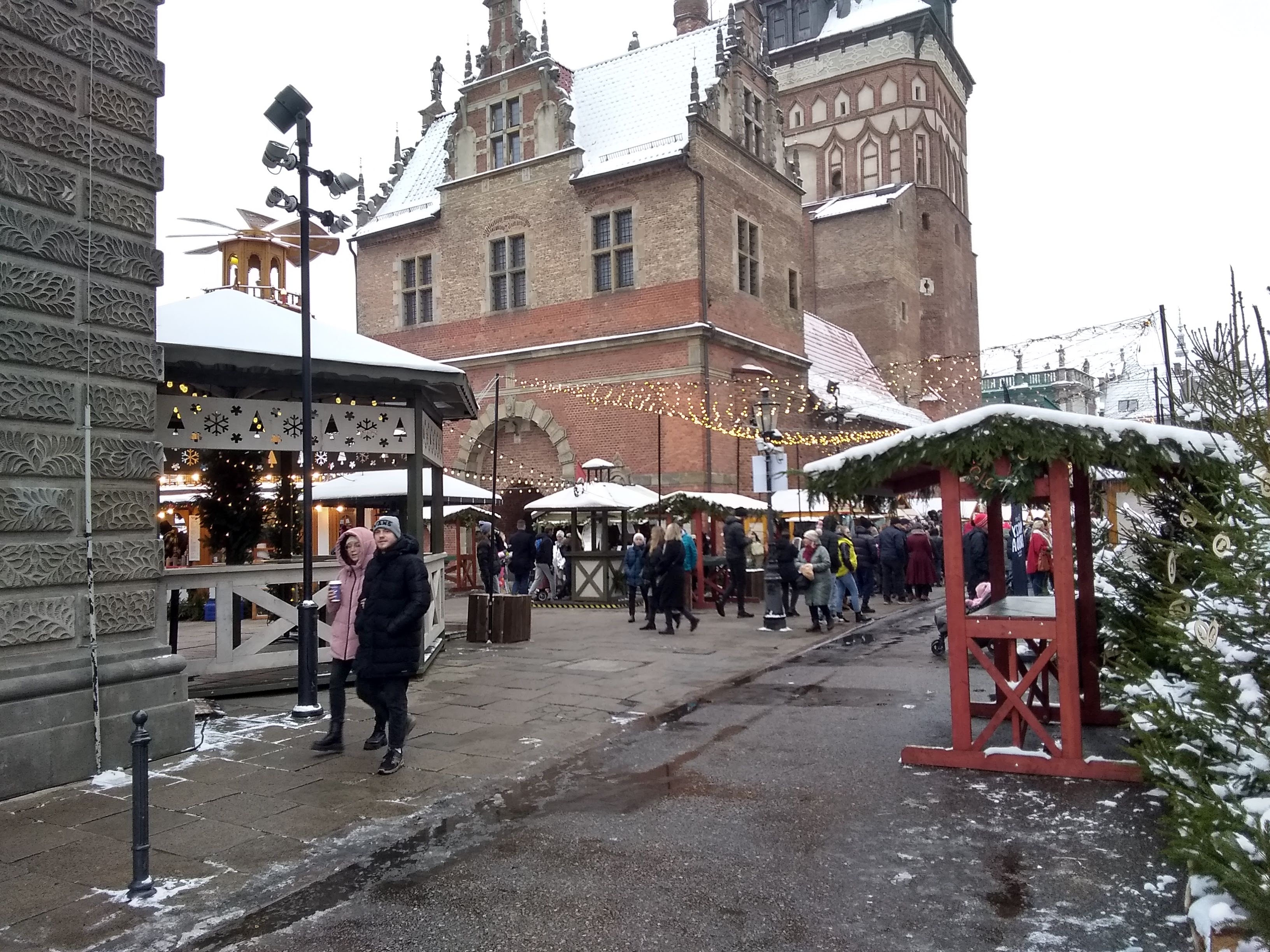
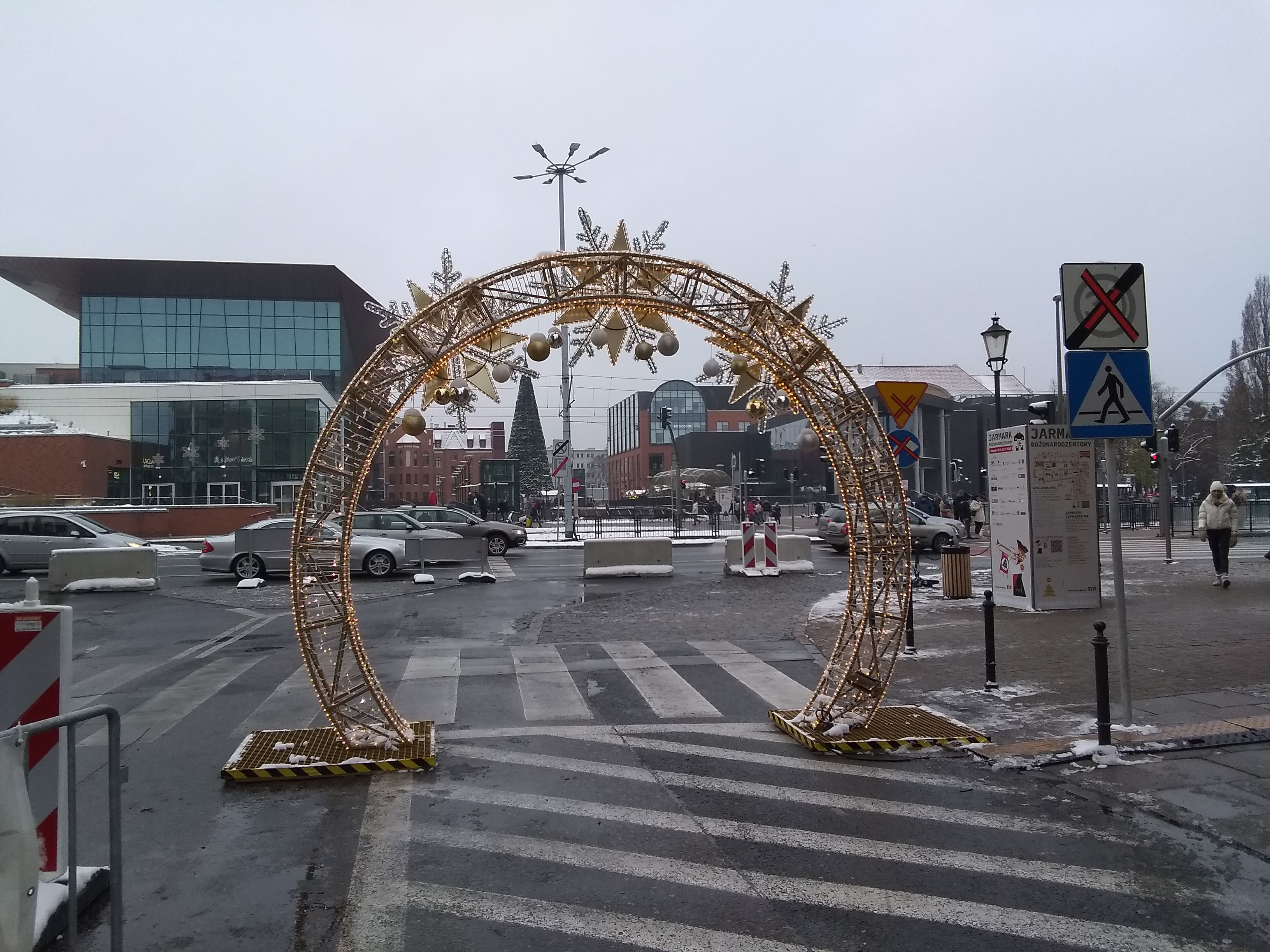
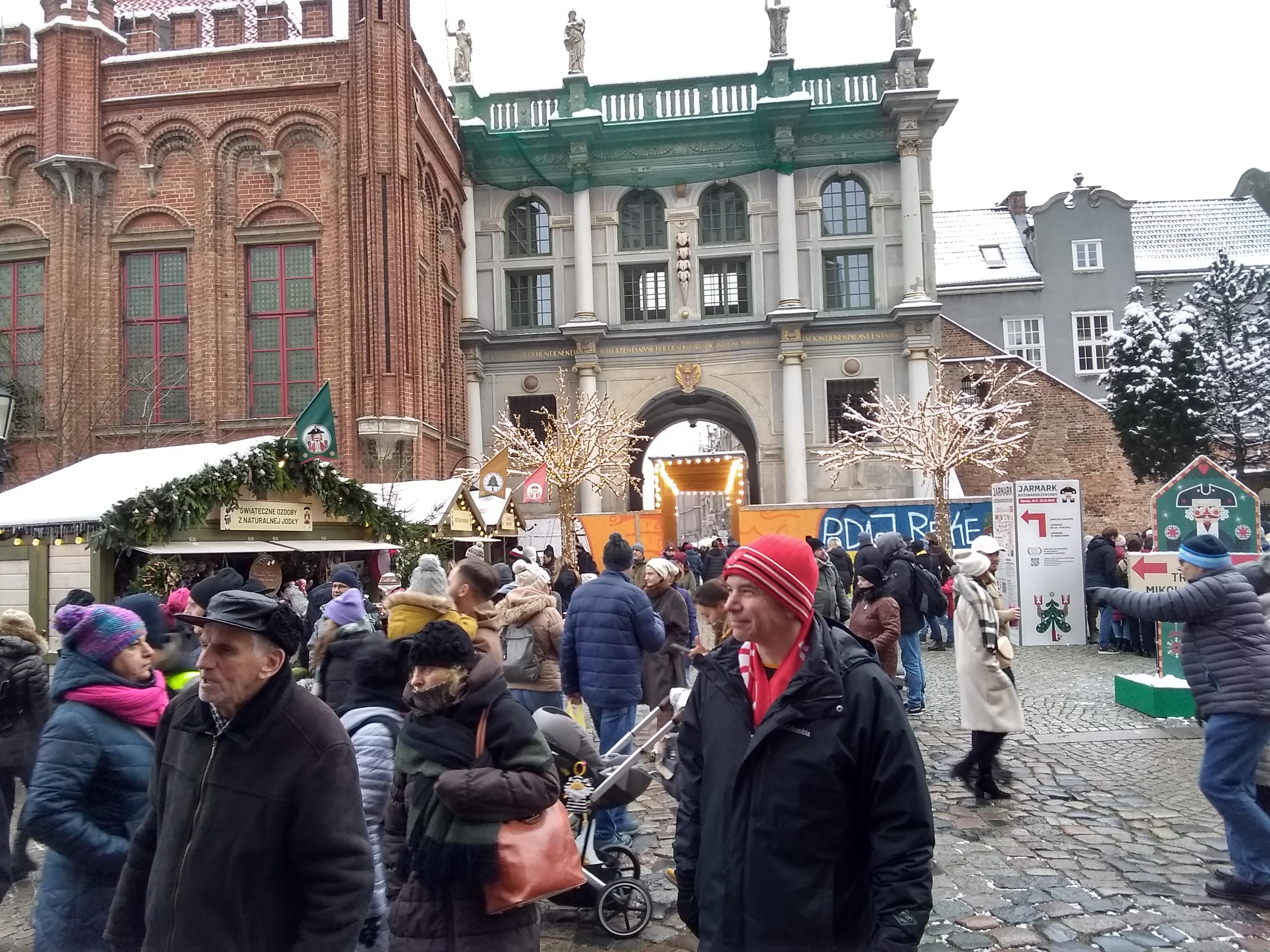
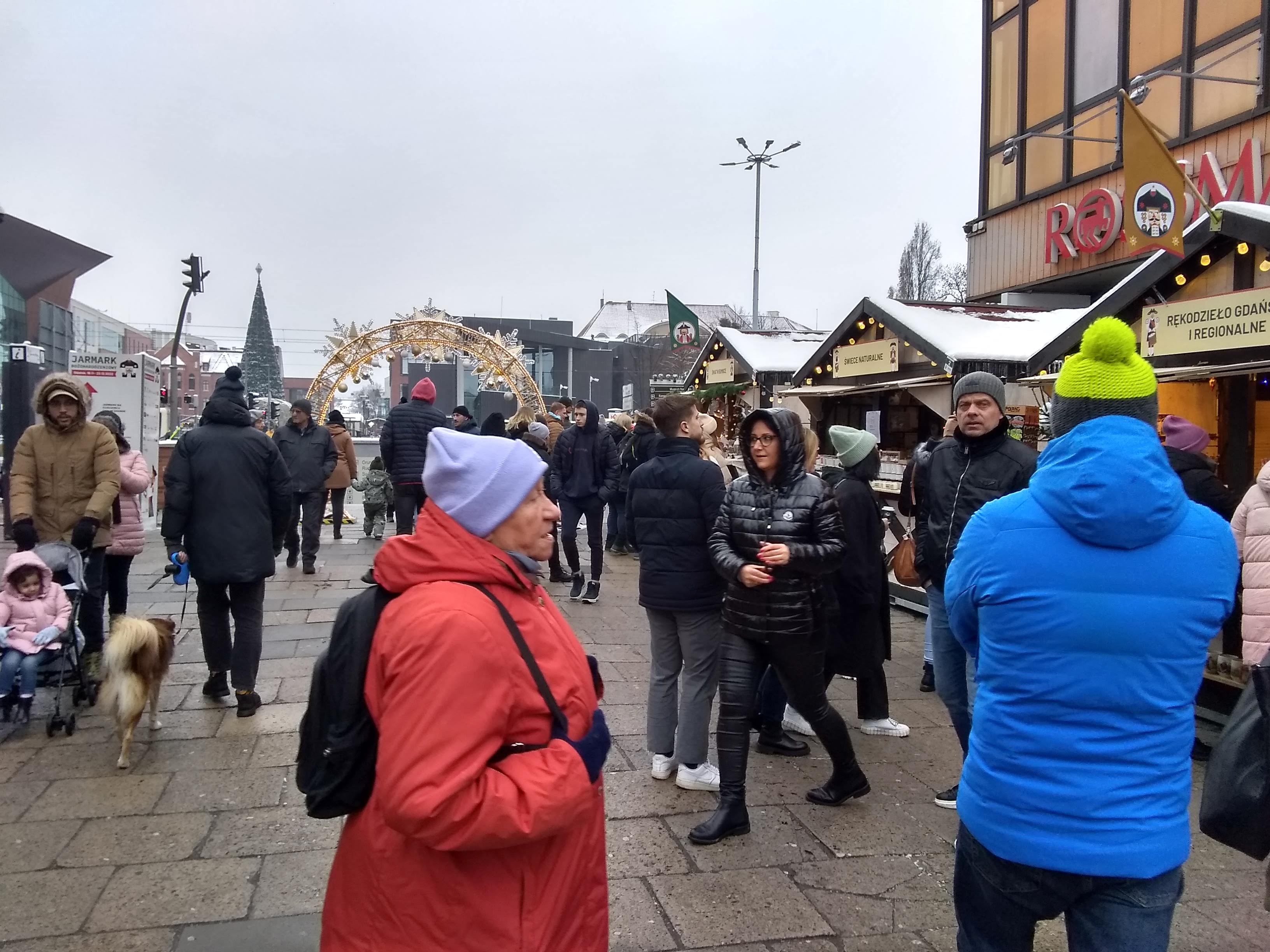
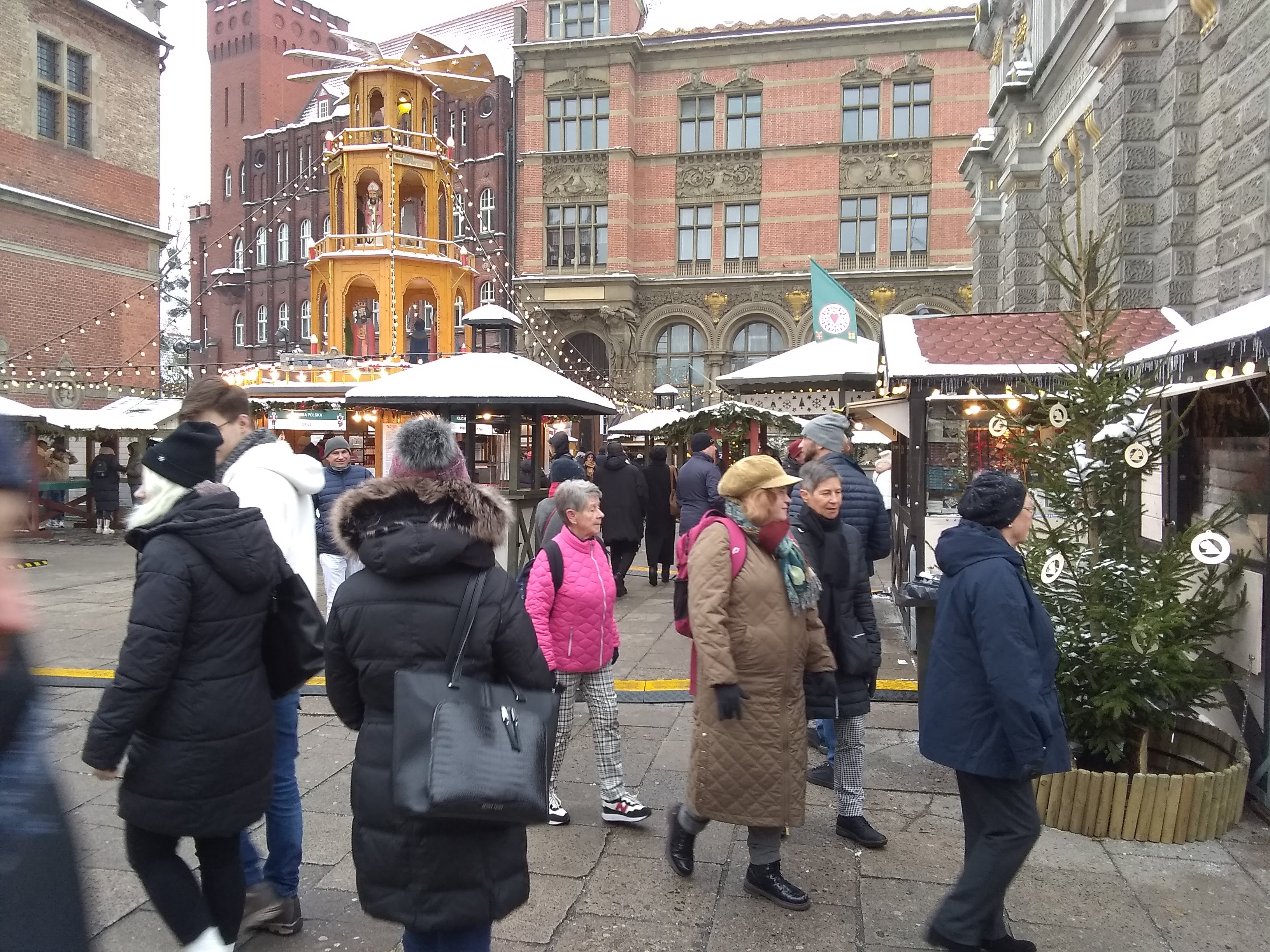
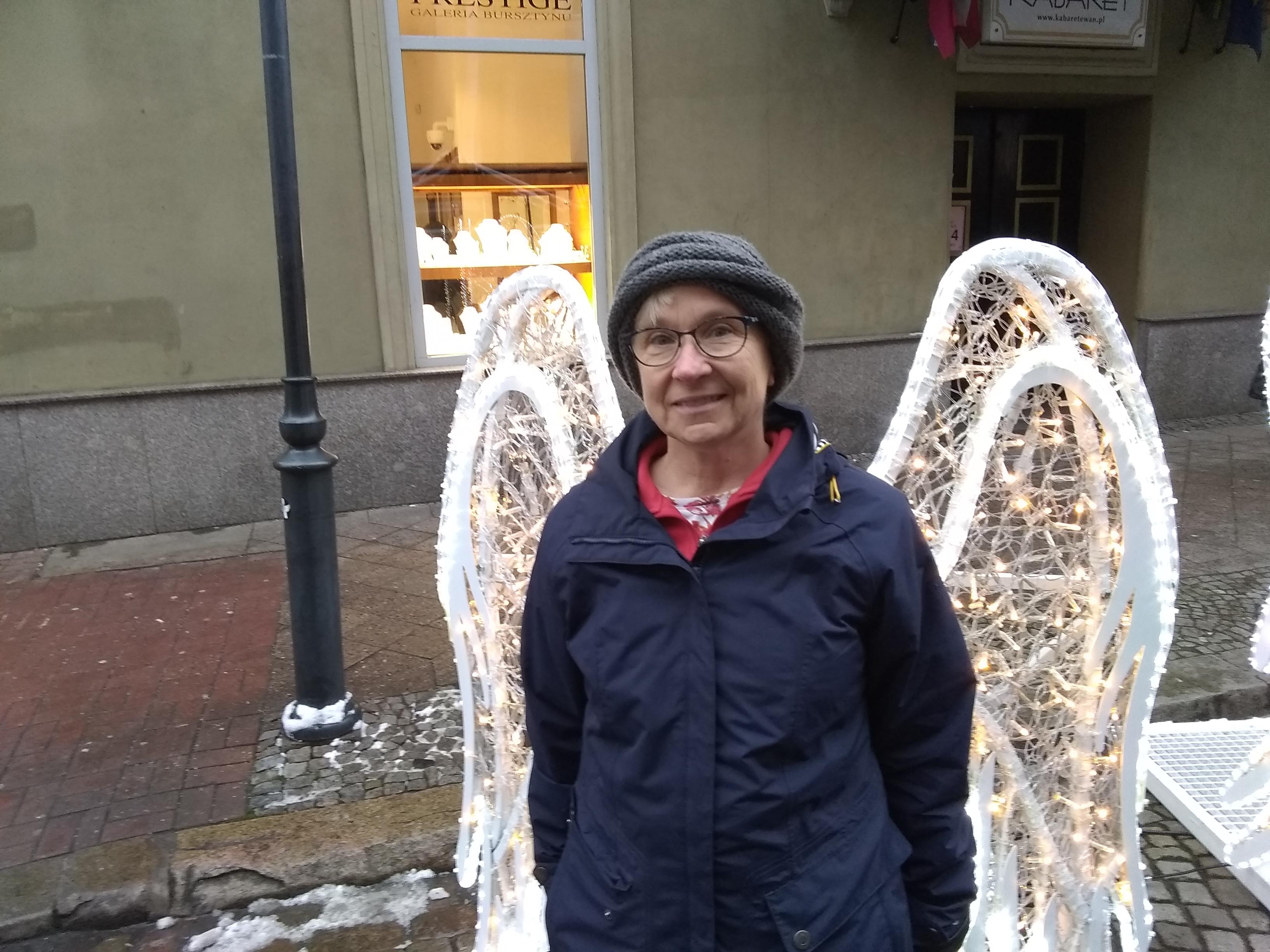
Gdansk Christmas Market

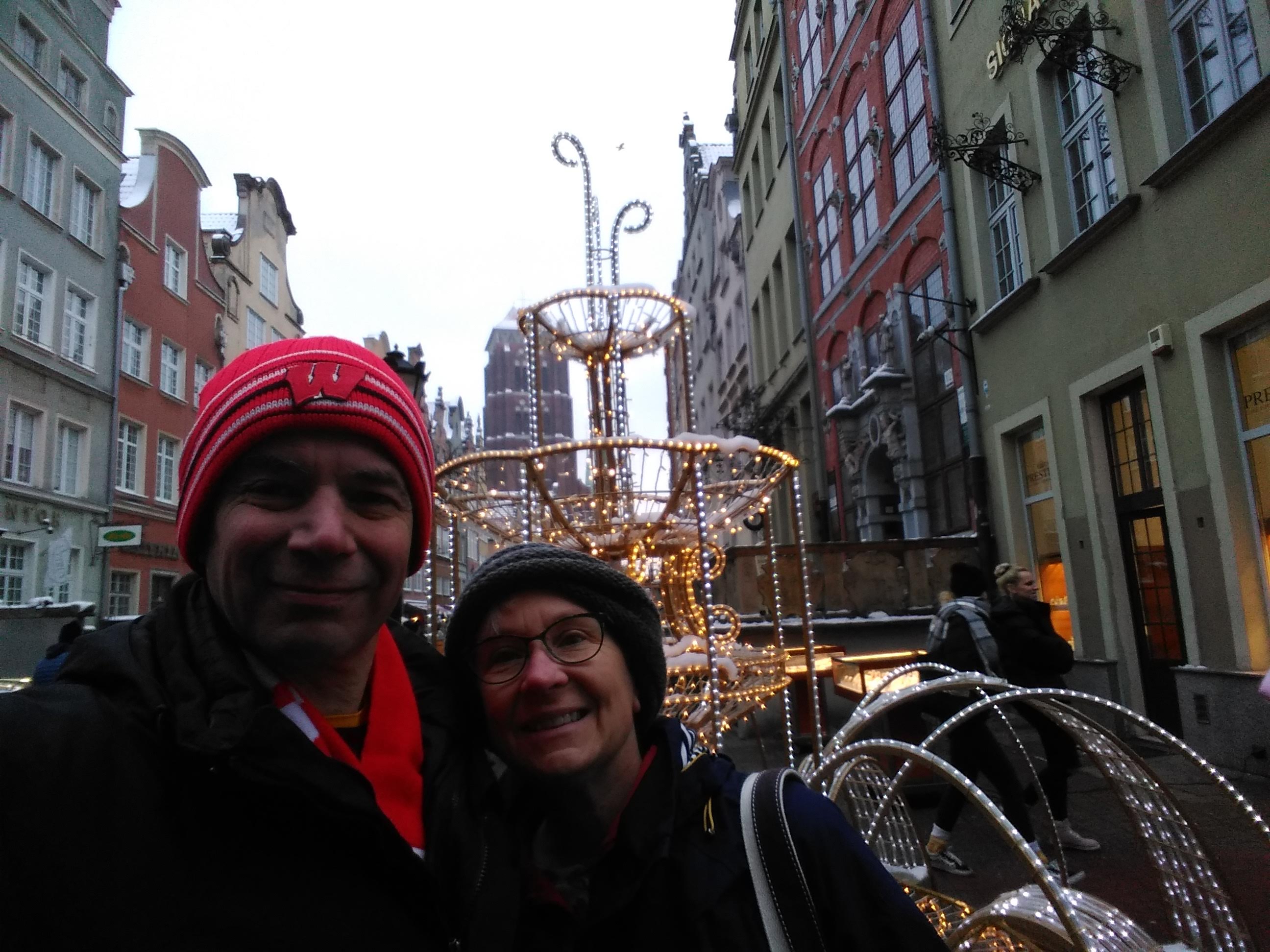
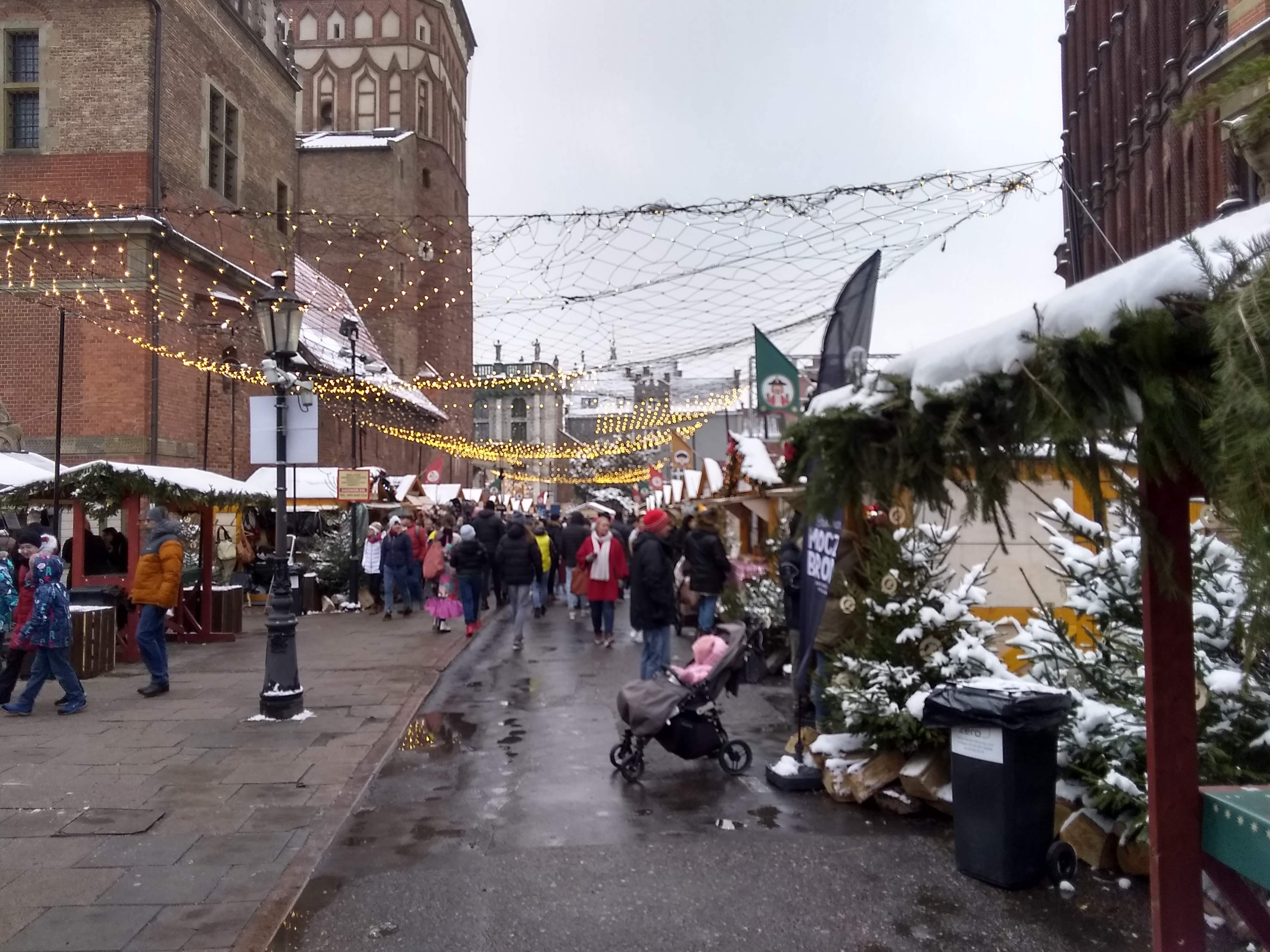
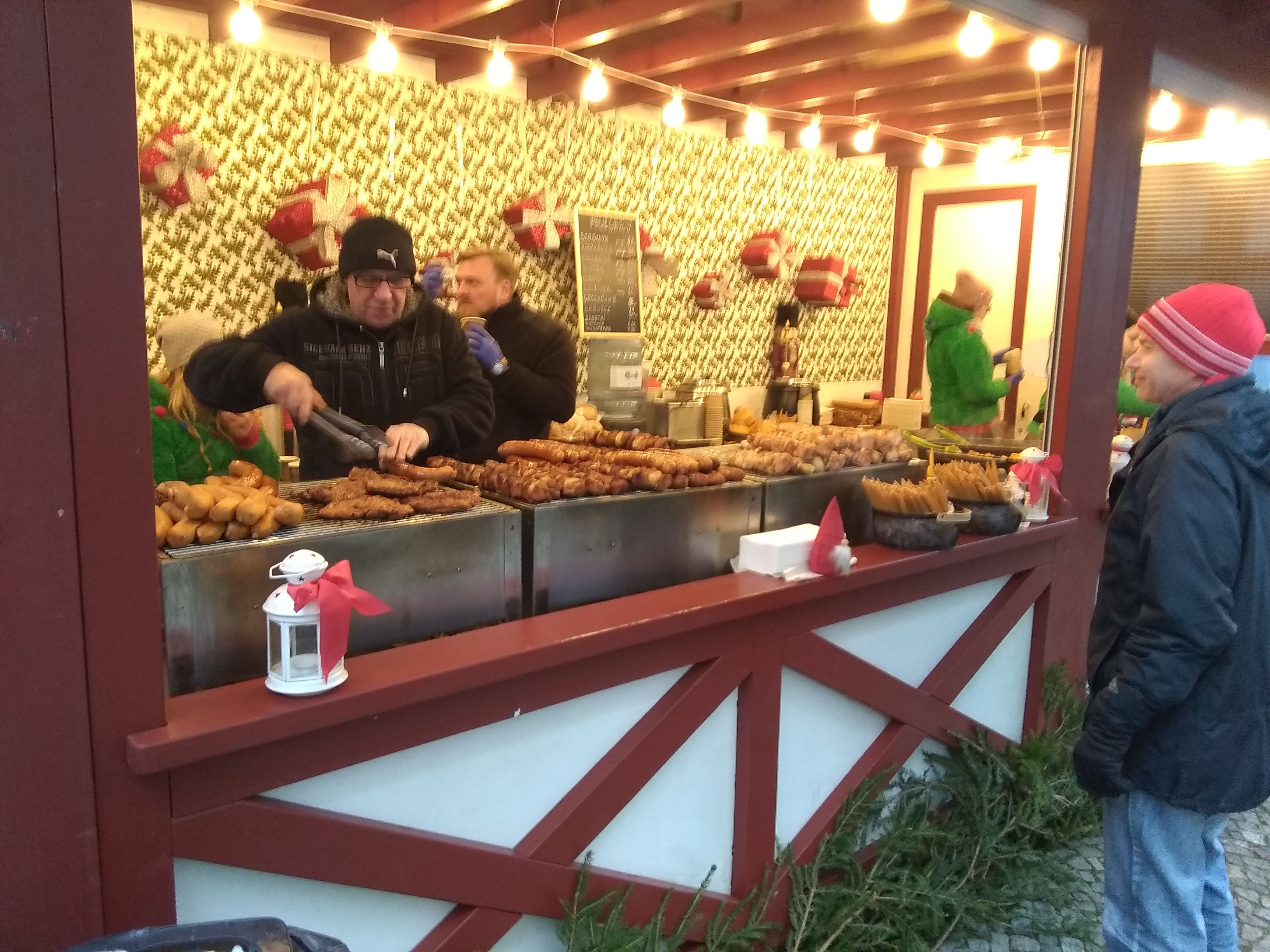
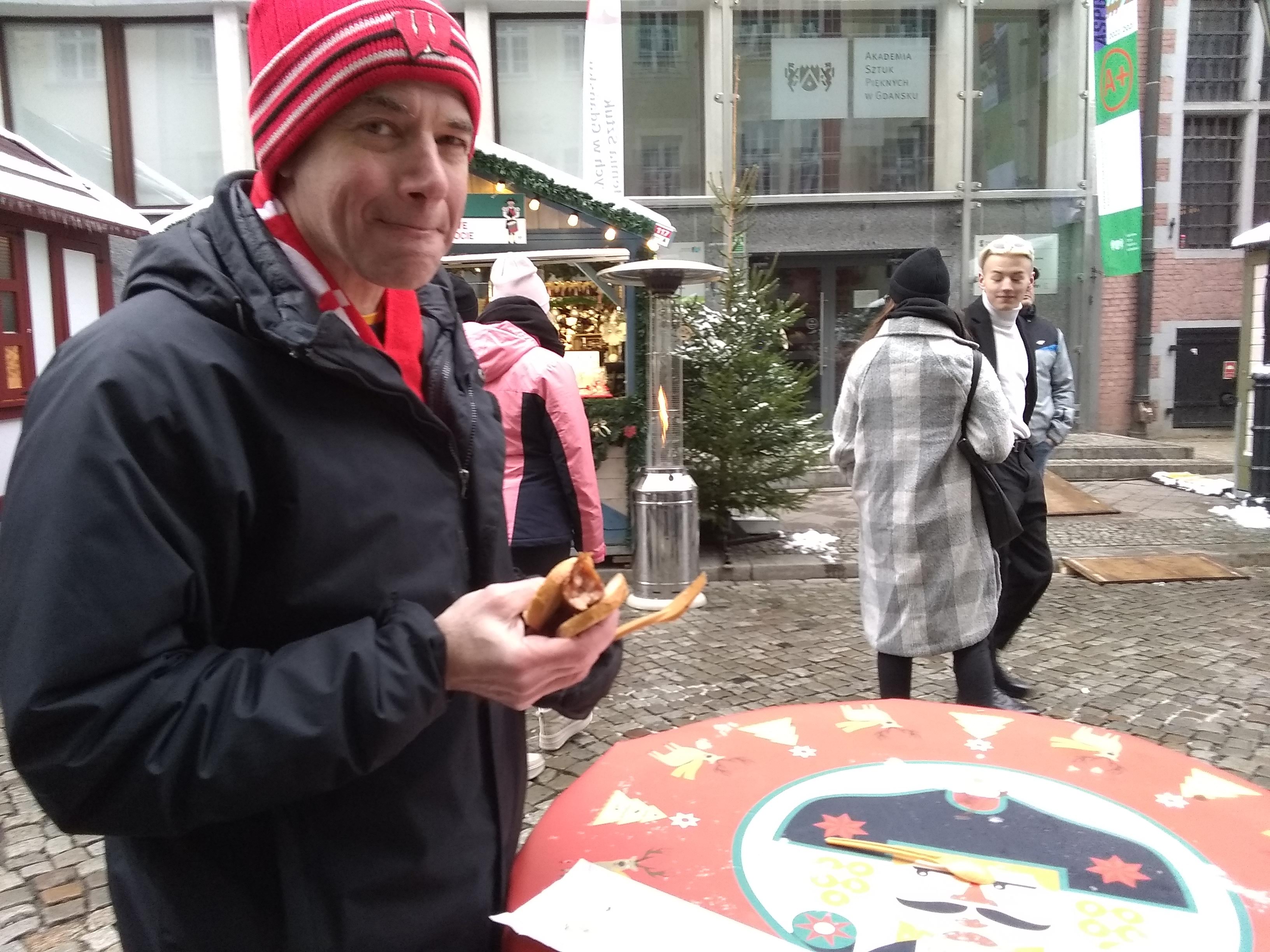
The Gdansk Christmas Market opened last week and so Andy and I spent Sunday afternoon at the Old Town event. We ate an early lunch first which was a mistake, as the market featured many wonderful smelling foods. We shared a warm raspberry mead which is now my favorite hot drink.

I encouraged Andy to get a kielbasa (we don’t cook a lot of meat at home) which was served with the best mustard I’ve ever tasted!

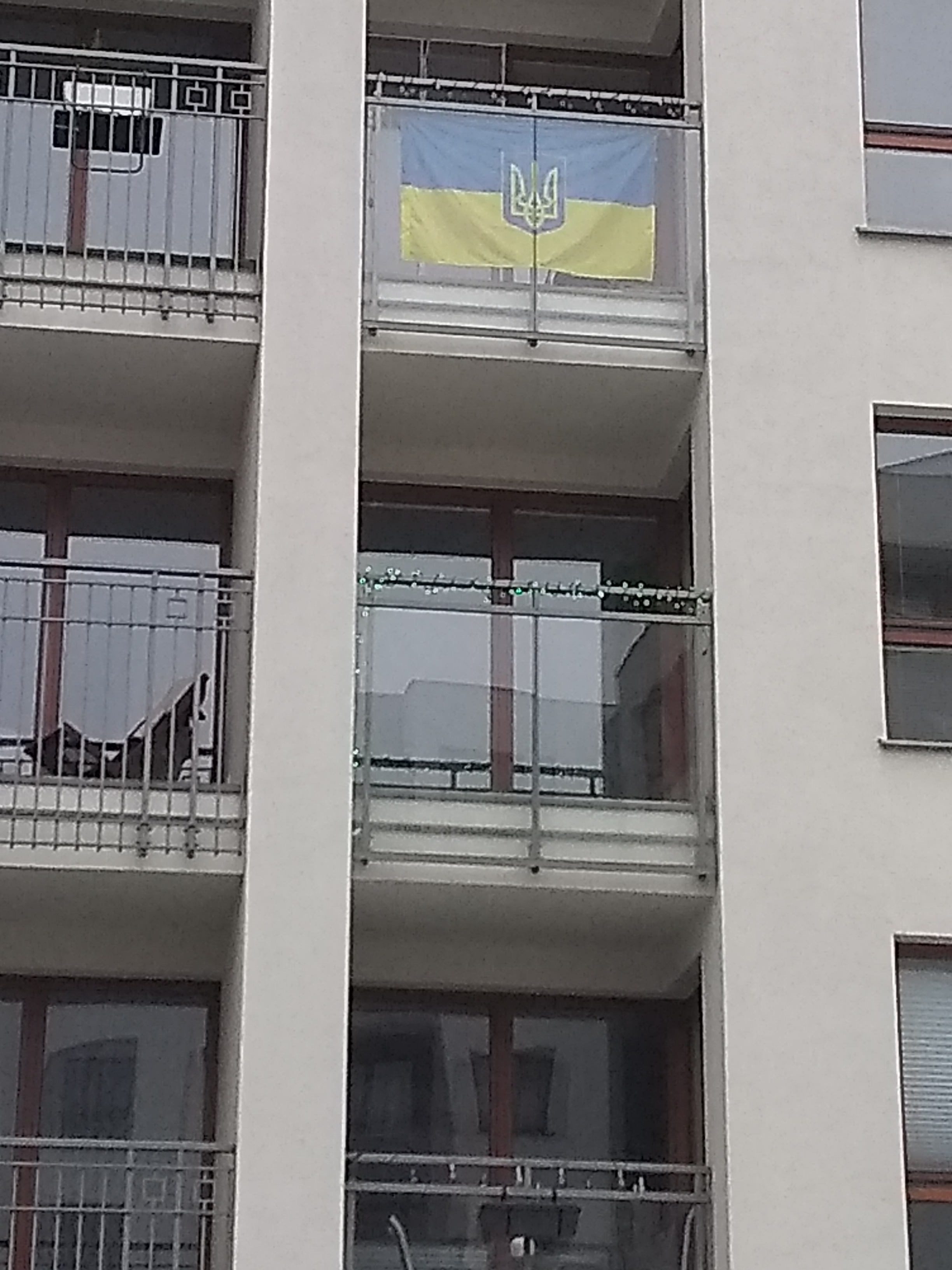
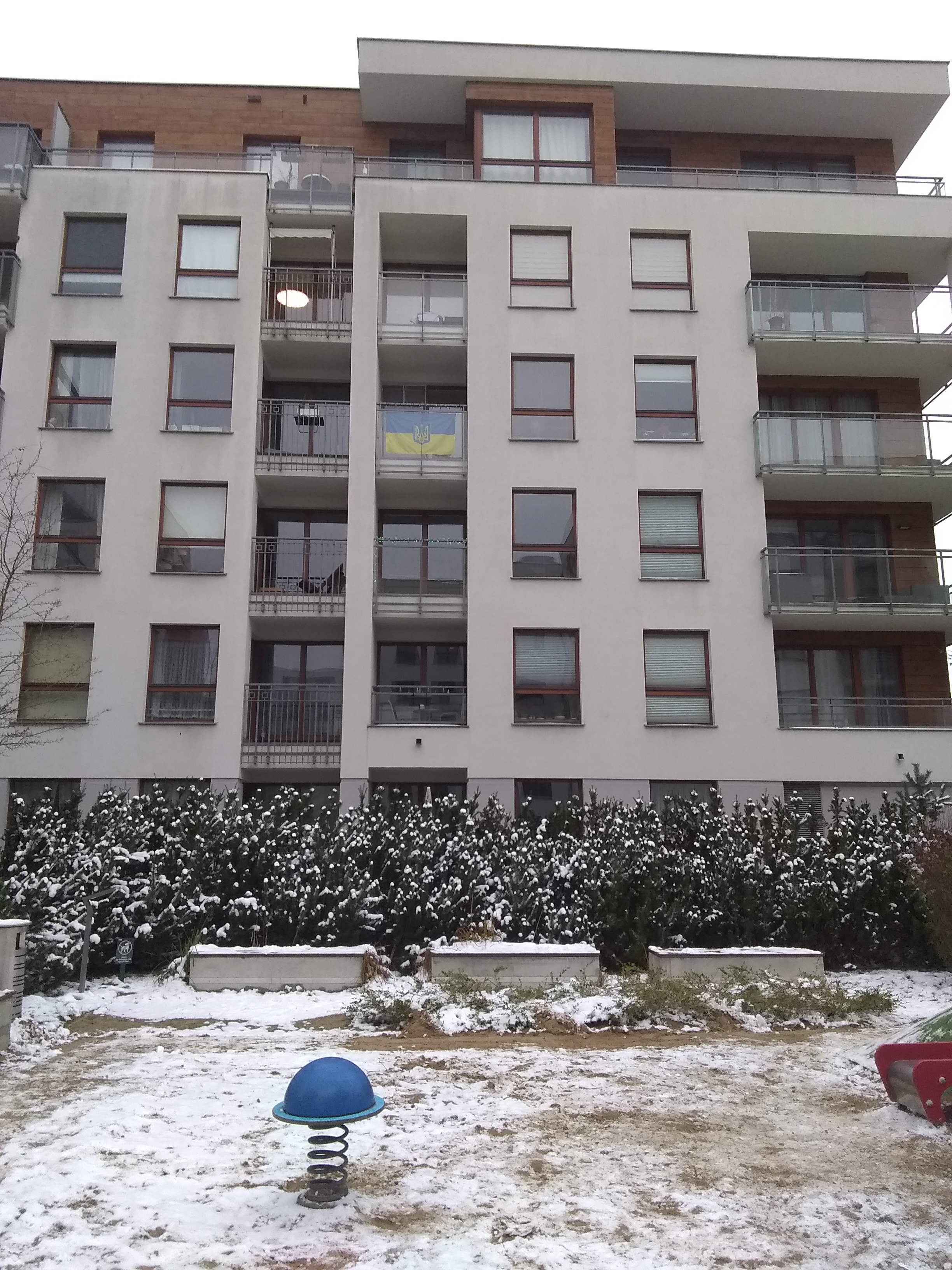
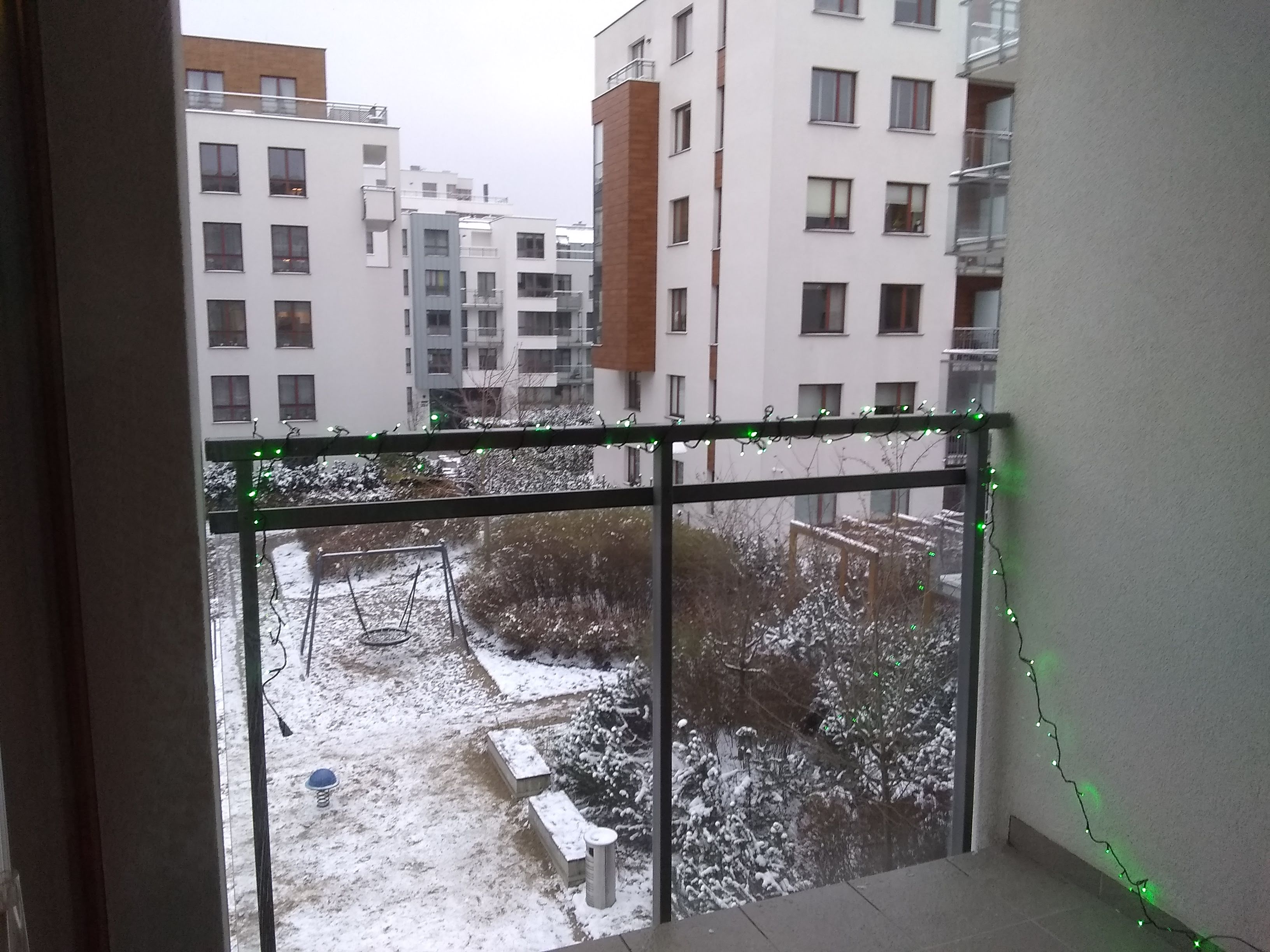
I bought some cheerful green Christmas lights to put on our little apartment balcony. Cheerful lights are good because the sun now sets at 3:30pm. The green lights are hard to see in the photos. Our balcony is the one below the Ukrainian flag balcony.

We plan to enjoy more food, drinks, and fun at this and other Christmas markets!

Gobsmacked!

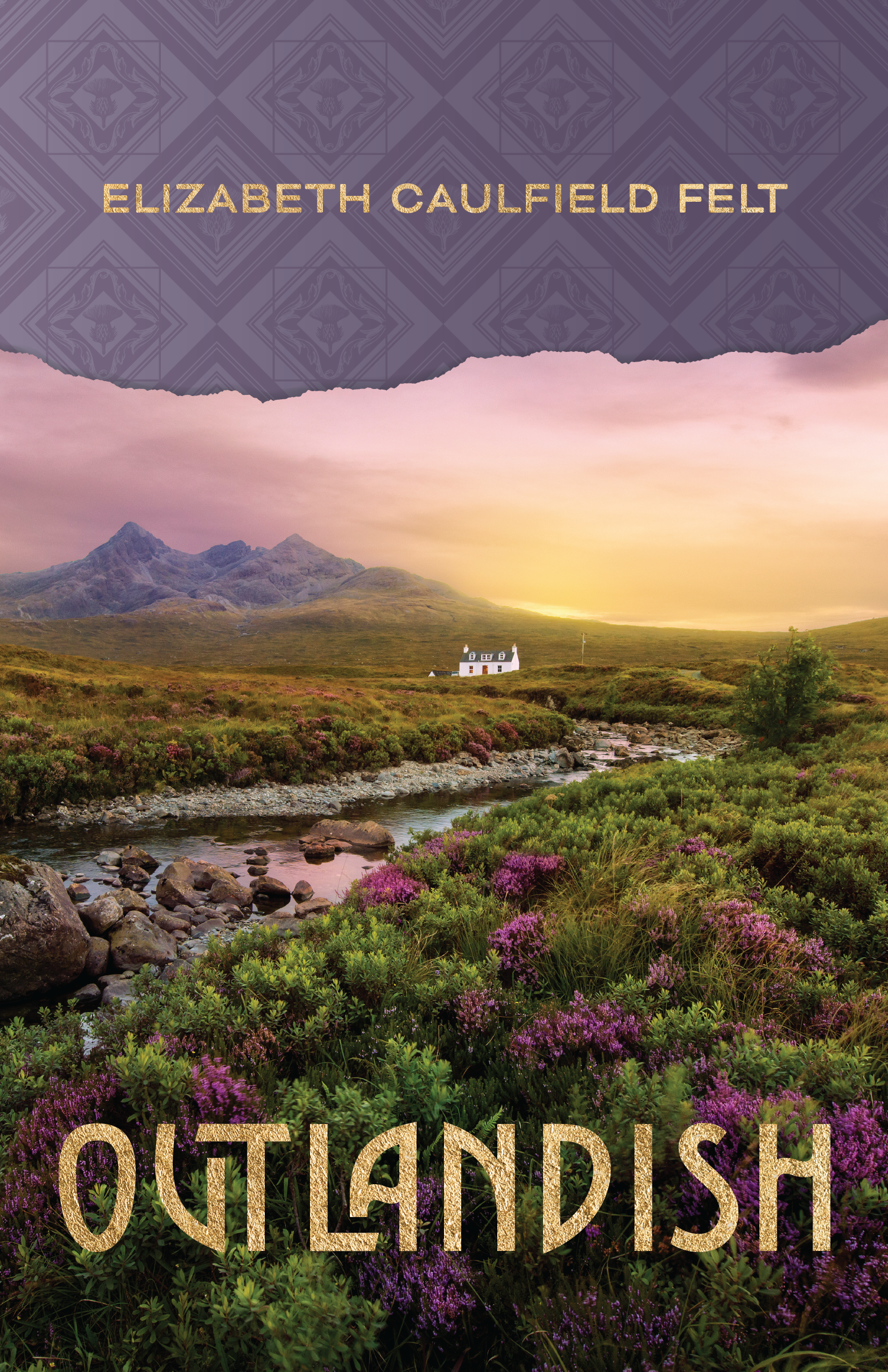
Over the years, I’ve done the National Novel Writing Month (NaNoWriMo) in November to push myself to write more. I’m doing it this November to try to crank out the second half of the first draft of my work-in-progress Outlandish. As part of signing up for NaNo, I submitted my name and project for consideration in the 30 Covers in 30 Days, an “event” in which artists create covers for projects. And I was chosen! Thus, the title of this post.

Gorgeous, isn’t it? And perfect for the story. Thanks go to graphic designer Kelley Kempel at Hidden Path Creative.

Let me know what you think below.

Check out the Nano blog where they are posting all the covers and read more about my story and Kelley Kempel’s background.

A Day Trip to Malbork Castle

The town of Malbork and Malbork Castle (the largest castle in the world) are an easy, 30-minute train ride from Gdansk.

The castle was established by the Grand Master of the Teutonic Order in the early 1300s. There are three parts to the castle. The High Castle, surrounded by moats and high walls is where the Grand Master lived and also housed the church of the Blessed Virgin Mary. The Middle Castle housed monks, knights, guests, a hospital, and the Grand Refectory, for large feasts and ceremonies. The Low Castle housed the granary, an armory, a brewery, stables, a chapel, blacksmiths, and other outbuildings and service-type work places, all surrounded by moats, walls, towers, and defensive constructions. In all its history, the castle was never over-taken in battle. However, several sieges did cause the castle to be surrendered or sold. For more history, visit the Malbork Castle Museum website.

We started our day by stopping by a post office and mailing our absentee ballots for the U.S. November election. (Vote!) We’d heard bad things about the Polish postal system, that we might have to wait in line for a long time, so we set out early. The rumors were wrong. It didn’t take more than five minutes to buy stamps and send our ballots on their way. That gave us extra time before our train left. We spent it in an Ukrainian Cafe. The “smoking train” was the train before our train.

Admission to the castle included an audio tour that lasted about 3 hours. It was informative and enjoyable and offered times to take breaks. We ate apples in one of the courtyards about half-way through. Although I have fatigue issues, I had good energy this day. It was so much fun walking through all the small passageways, over drawbridges, under portcullises, through inner gardens.

The Great Refectory was impressively large. The holes on the floor allowed hot air from fires below to heat upper rooms.

Parts of the castle were destroyed during WWII and then reconstructed with great care. An exhibit explained in great detail with many photographs and plans of how the reconstruction took place. Other areas in the castle included museum-type exhibitions on amber, weapons and armory, tapestry and sashes, famous guests of the castle, and more.

After all that walking, we were exhausted. Malbork has an easy self-guided tour of its Old Town, which we we too tired to explore. As we still had a couple of hours before our return train, we found a nice restaurant in town, Panorama, at the top of a sort of vertical mall. It had a view of the castle and town, and because it was about 2:30, we had the place to ourselves. A great way to end our visit.