A Day Trip to Malbork Castle

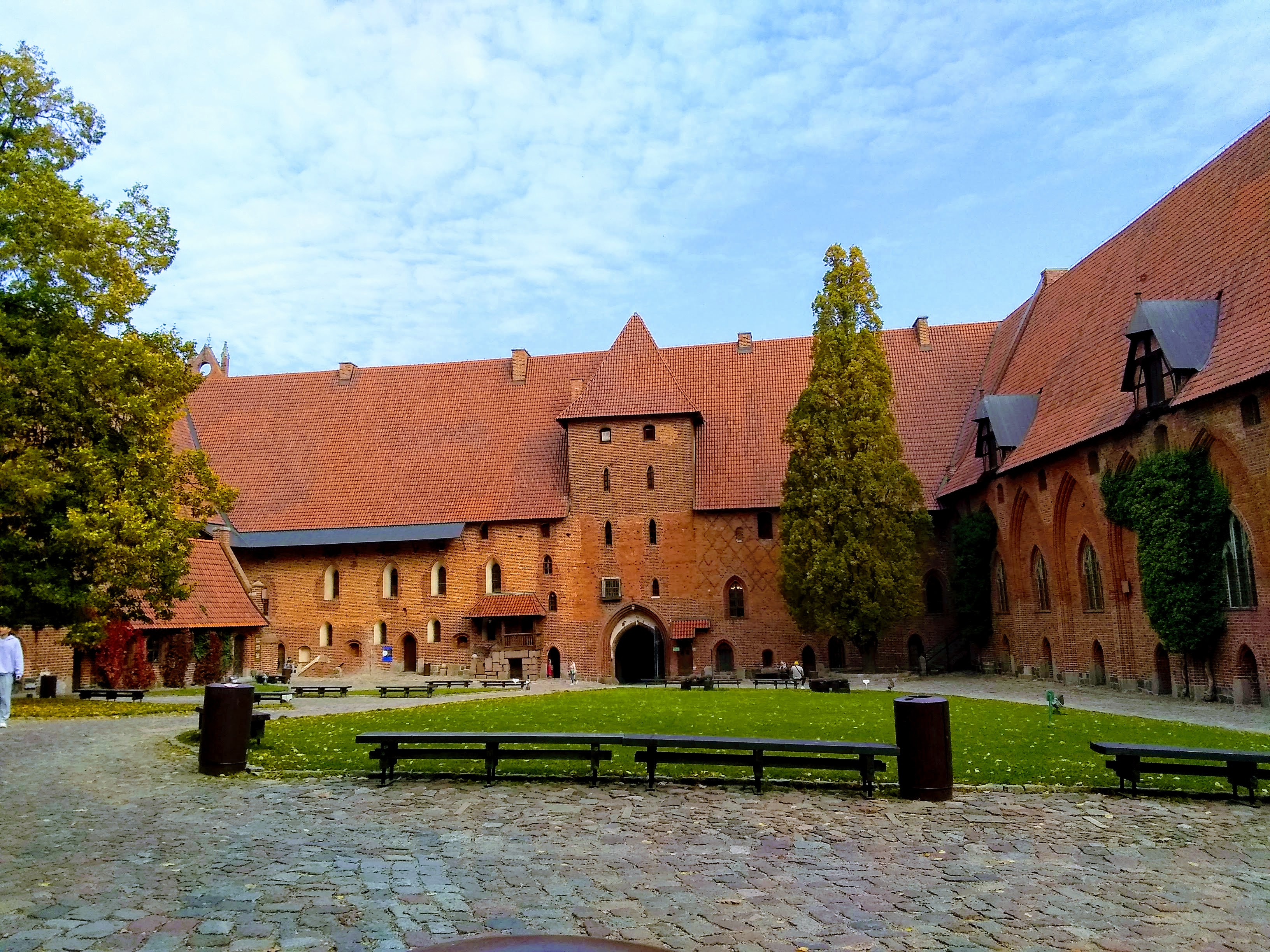
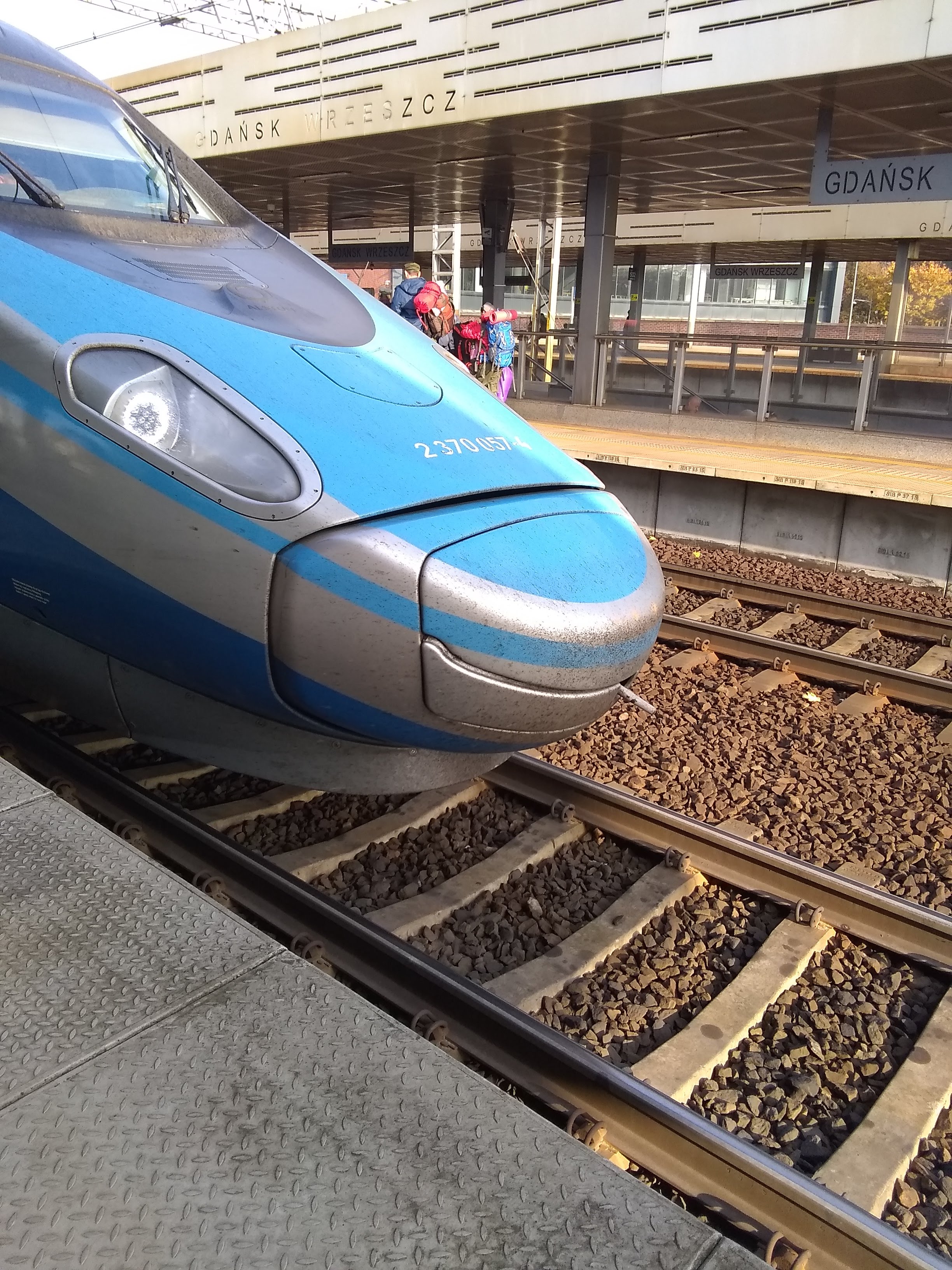
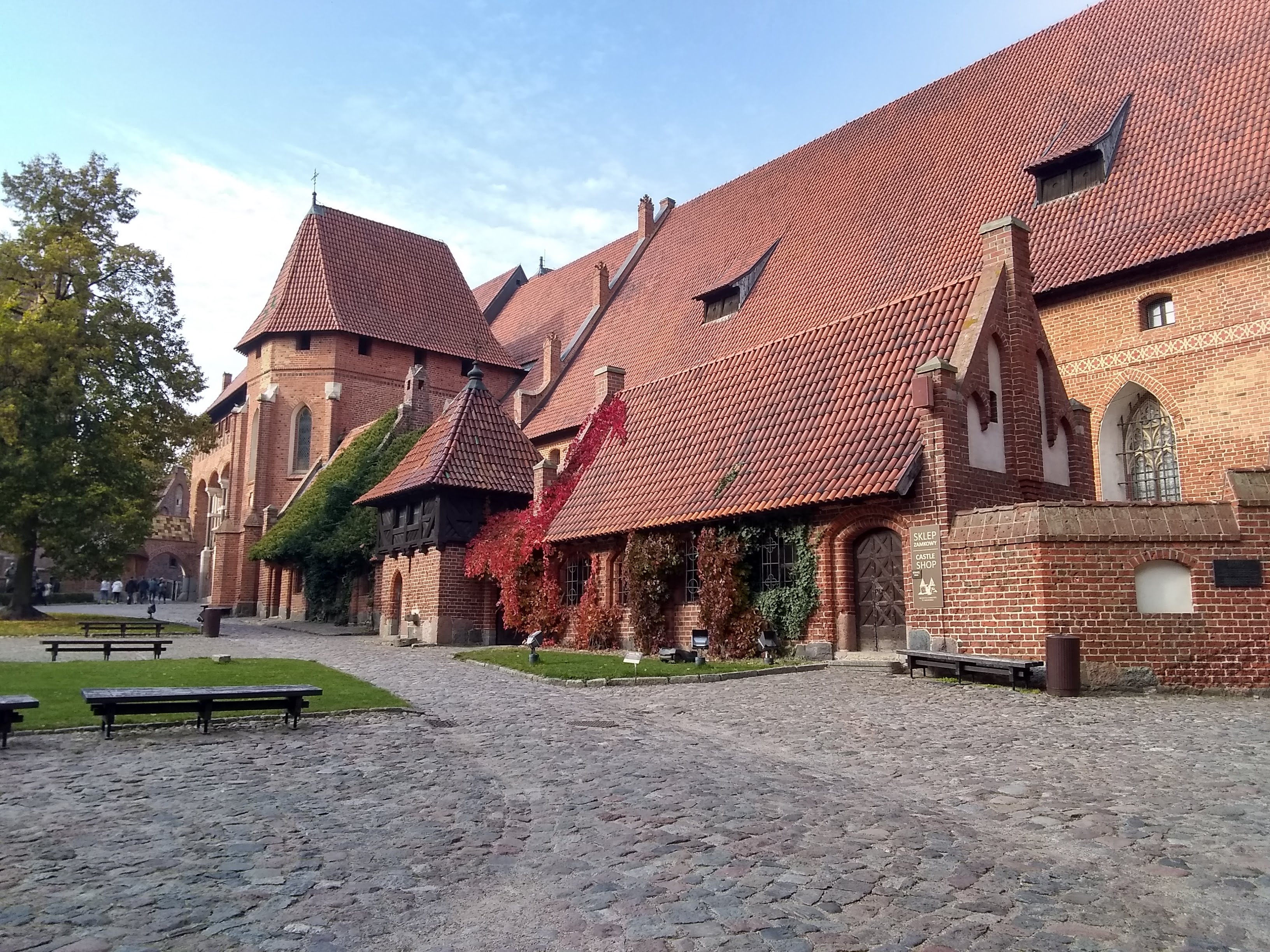
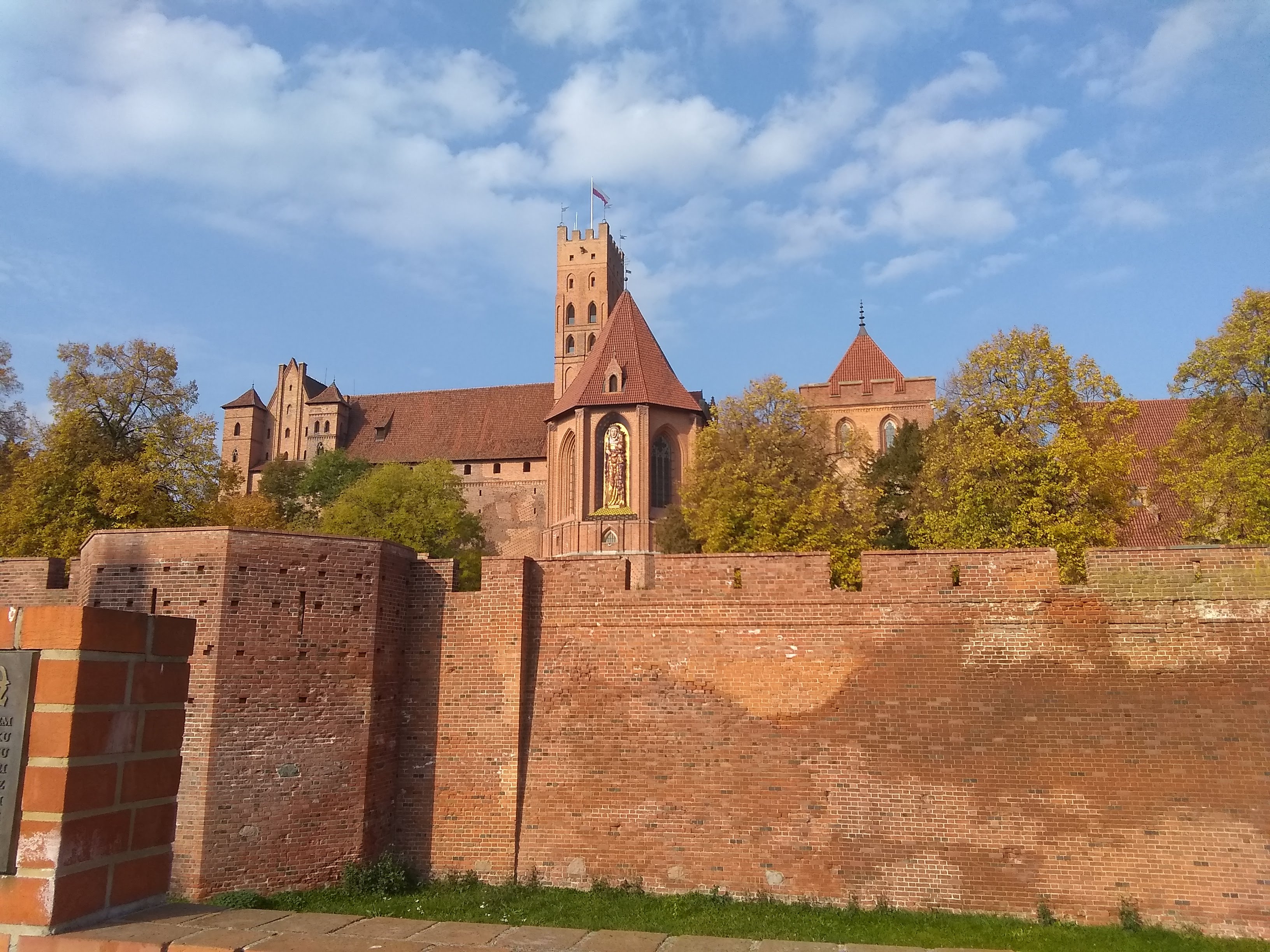
The town of Malbork and Malbork Castle (the largest castle in the world) are an easy, 30-minute train ride from Gdansk.

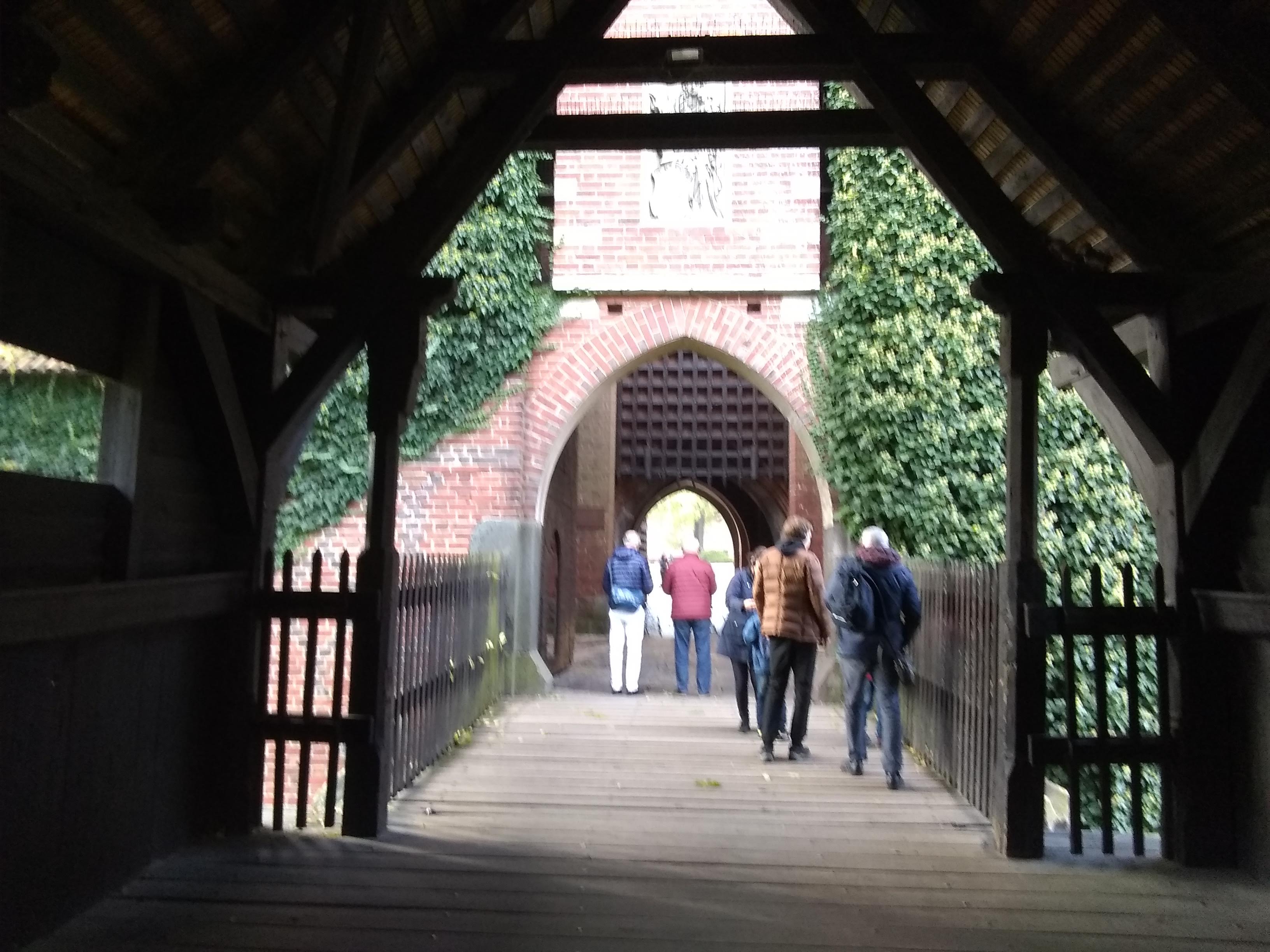
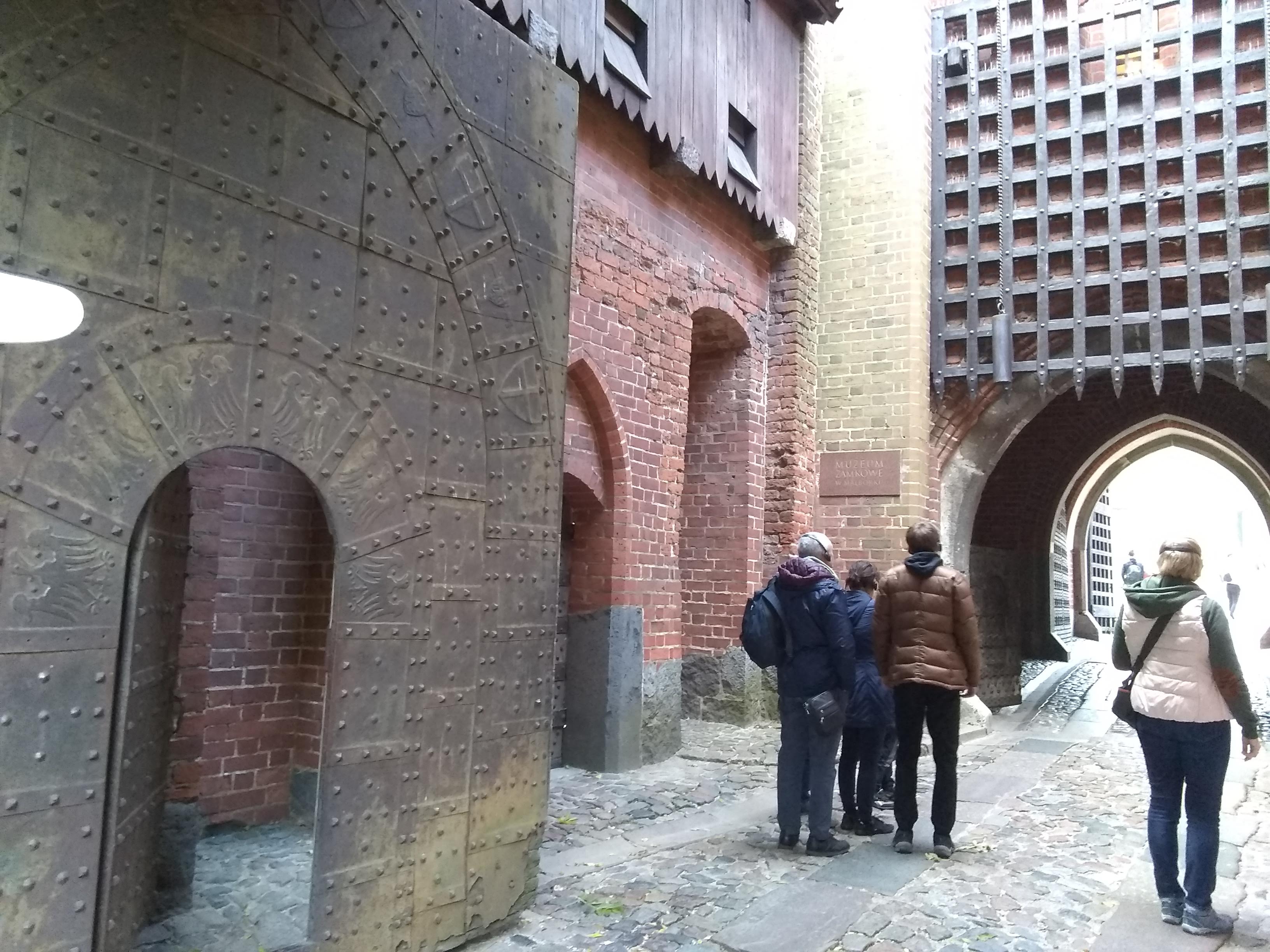
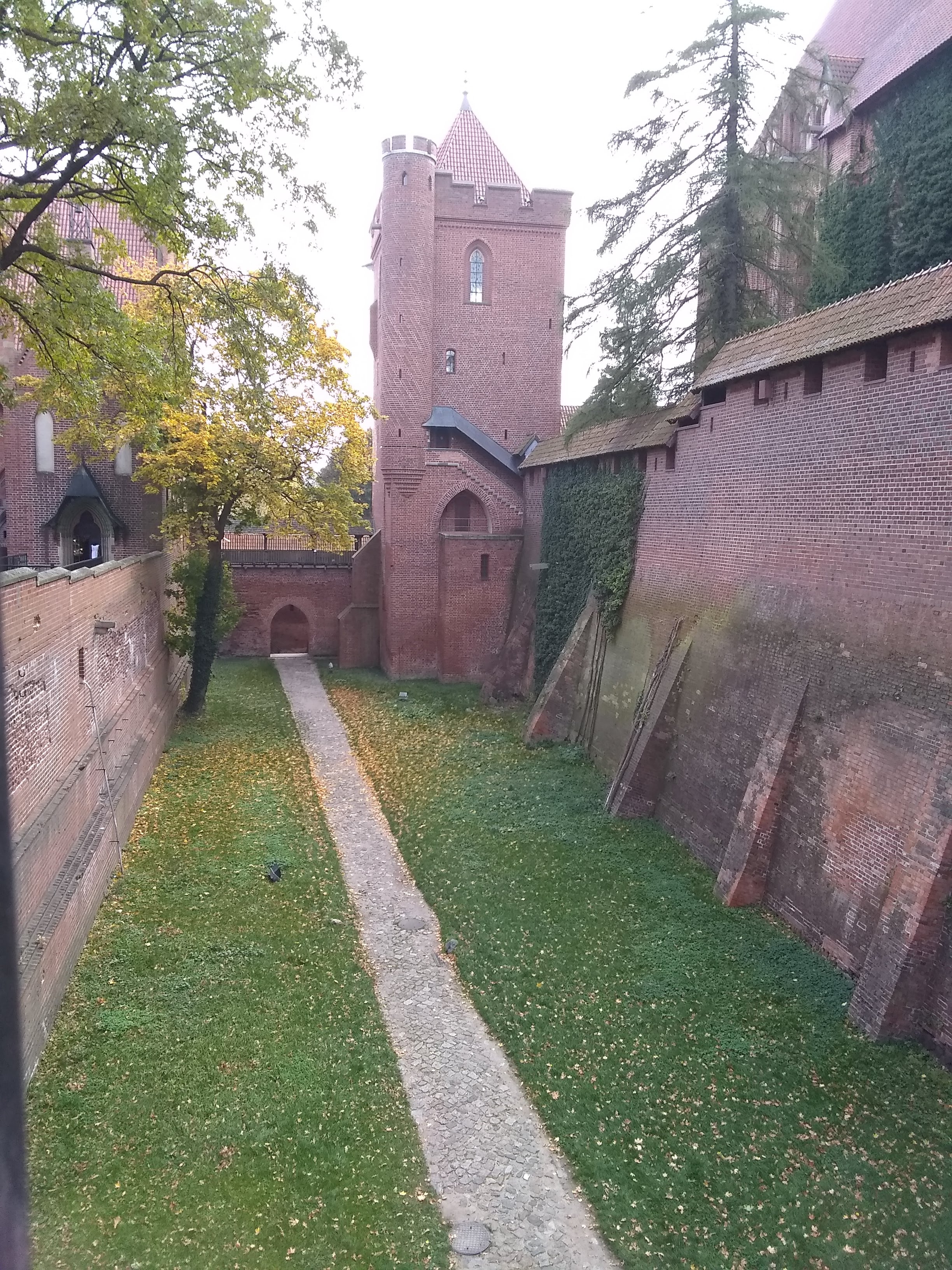
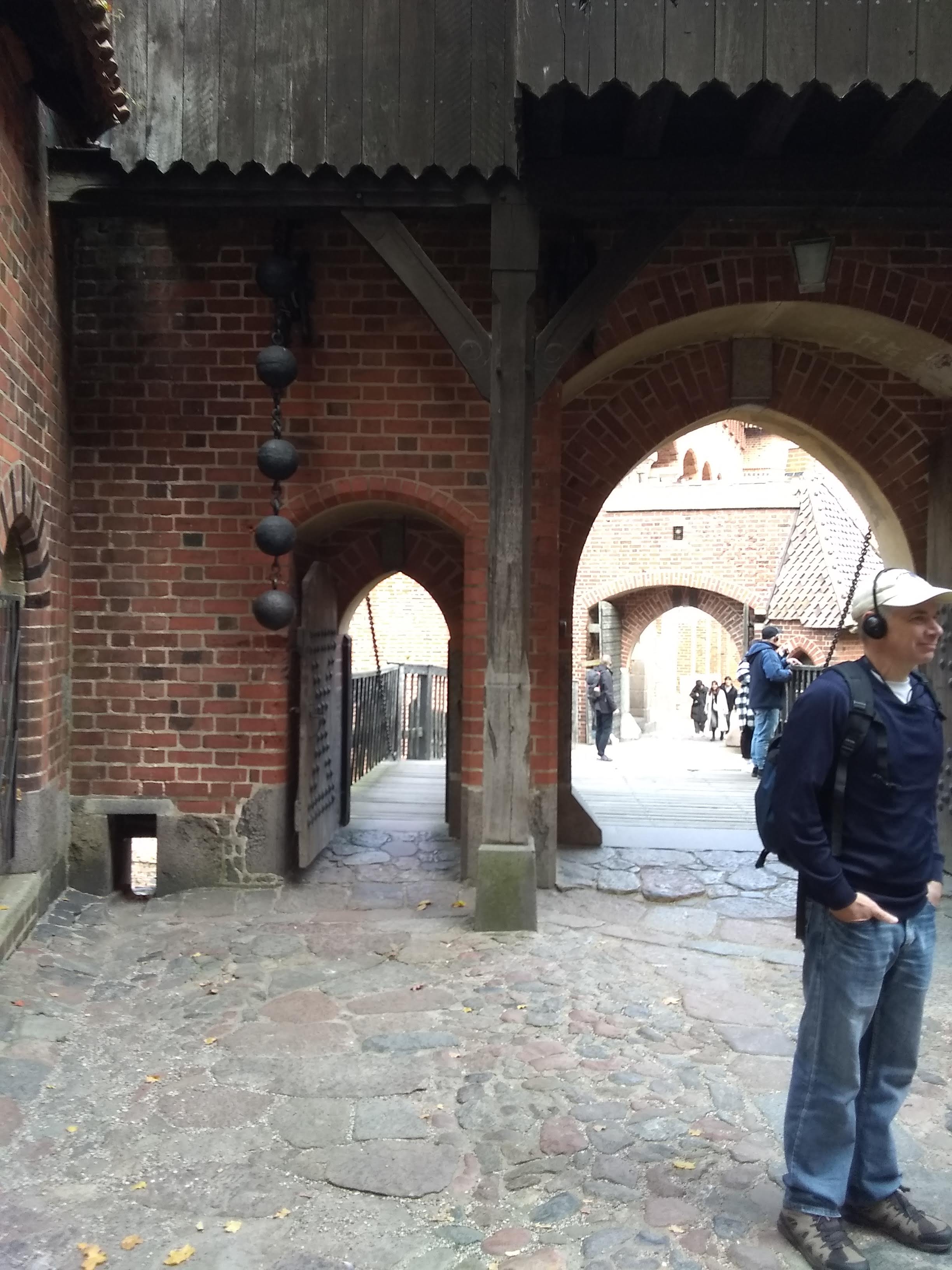
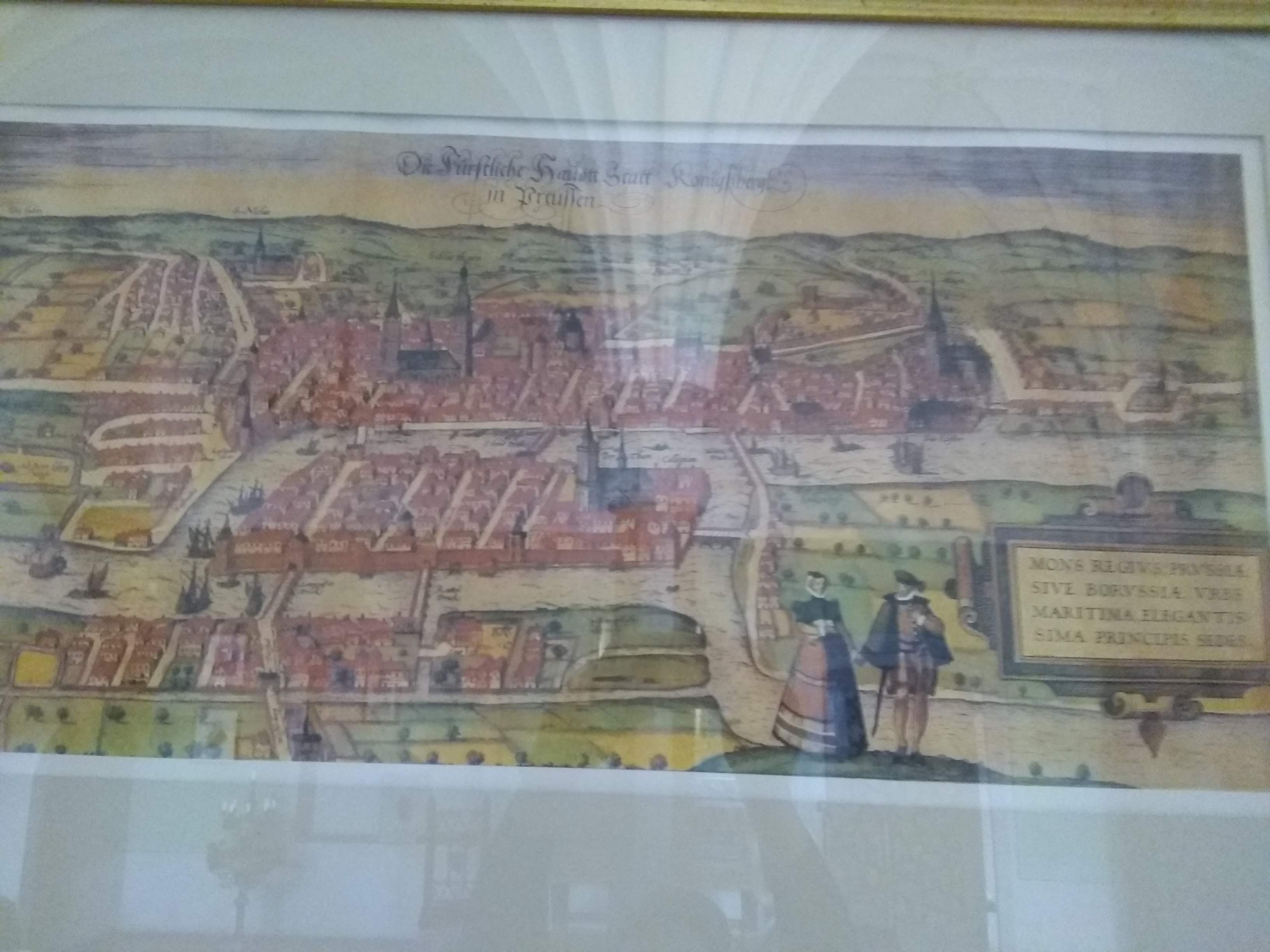
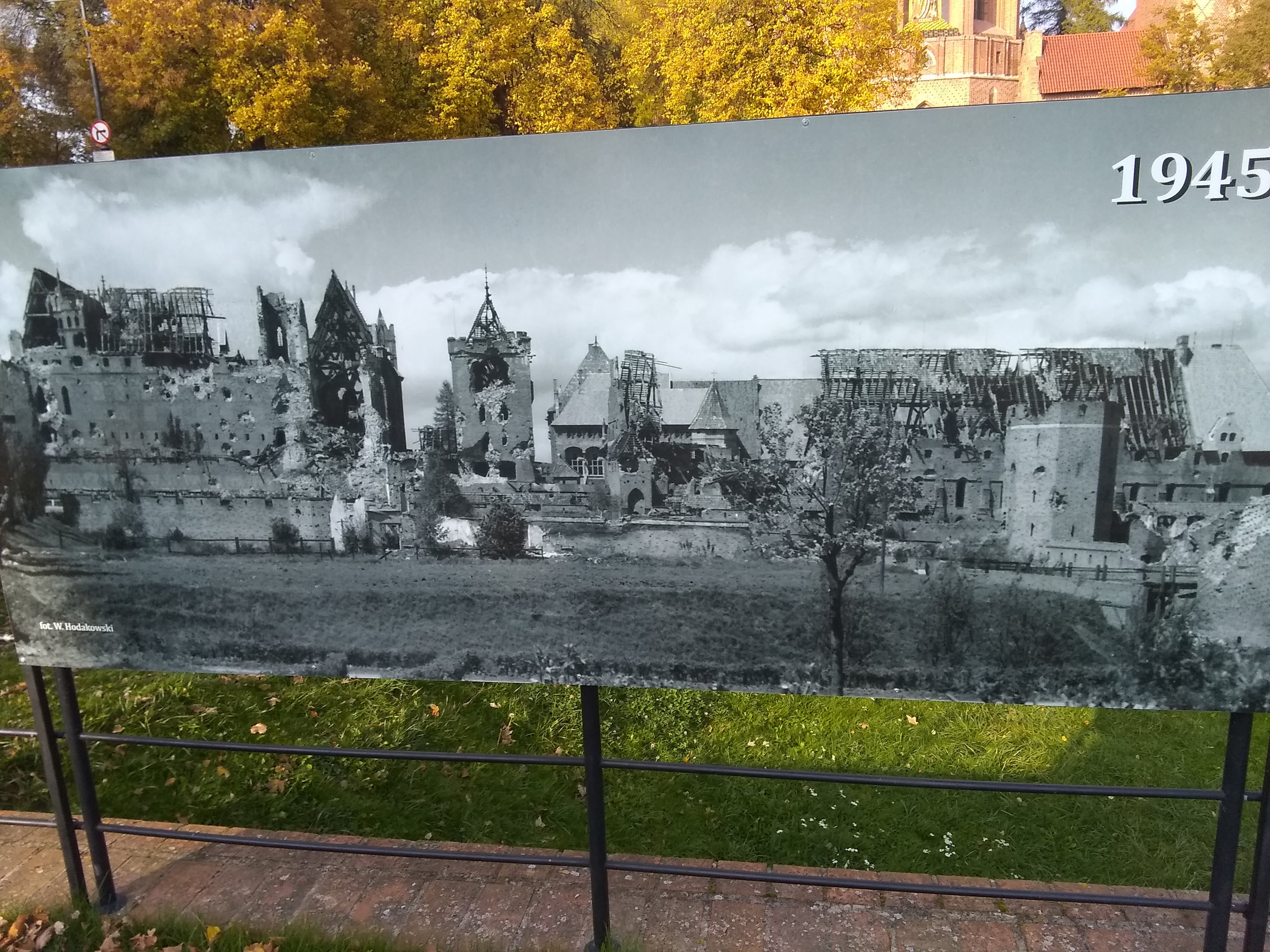
The castle was established by the Grand Master of the Teutonic Order in the early 1300s. There are three parts to the castle. The High Castle, surrounded by moats and high walls is where the Grand Master lived and also housed the church of the Blessed Virgin Mary. The Middle Castle housed monks, knights, guests, a hospital, and the Grand Refectory, for large feasts and ceremonies. The Low Castle housed the granary, an armory, a brewery, stables, a chapel, blacksmiths, and other outbuildings and service-type work places, all surrounded by moats, walls, towers, and defensive constructions. In all its history, the castle was never over-taken in battle. However, several sieges did cause the castle to be surrendered or sold. For more history, visit the Malbork Castle Museum website.

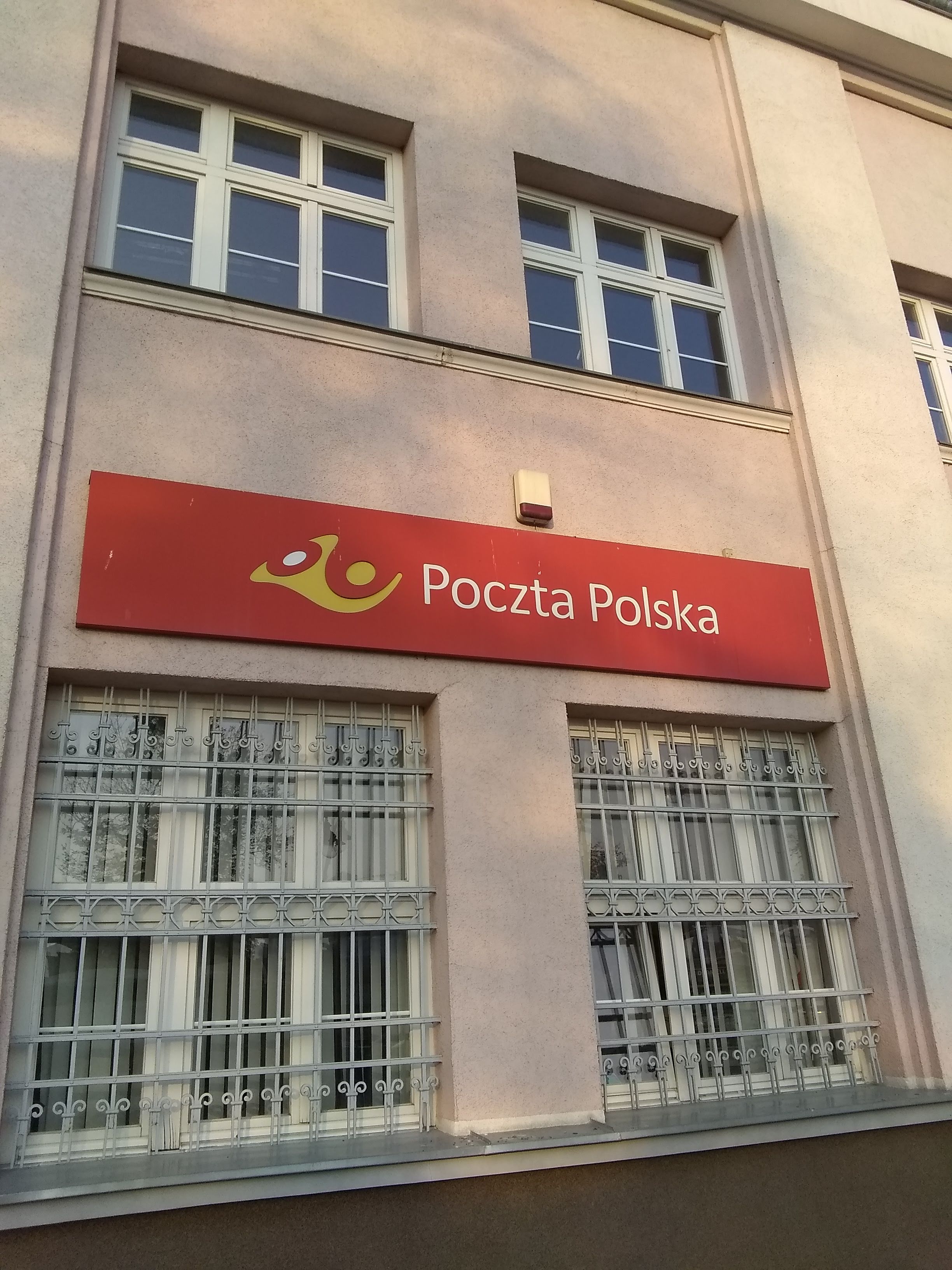
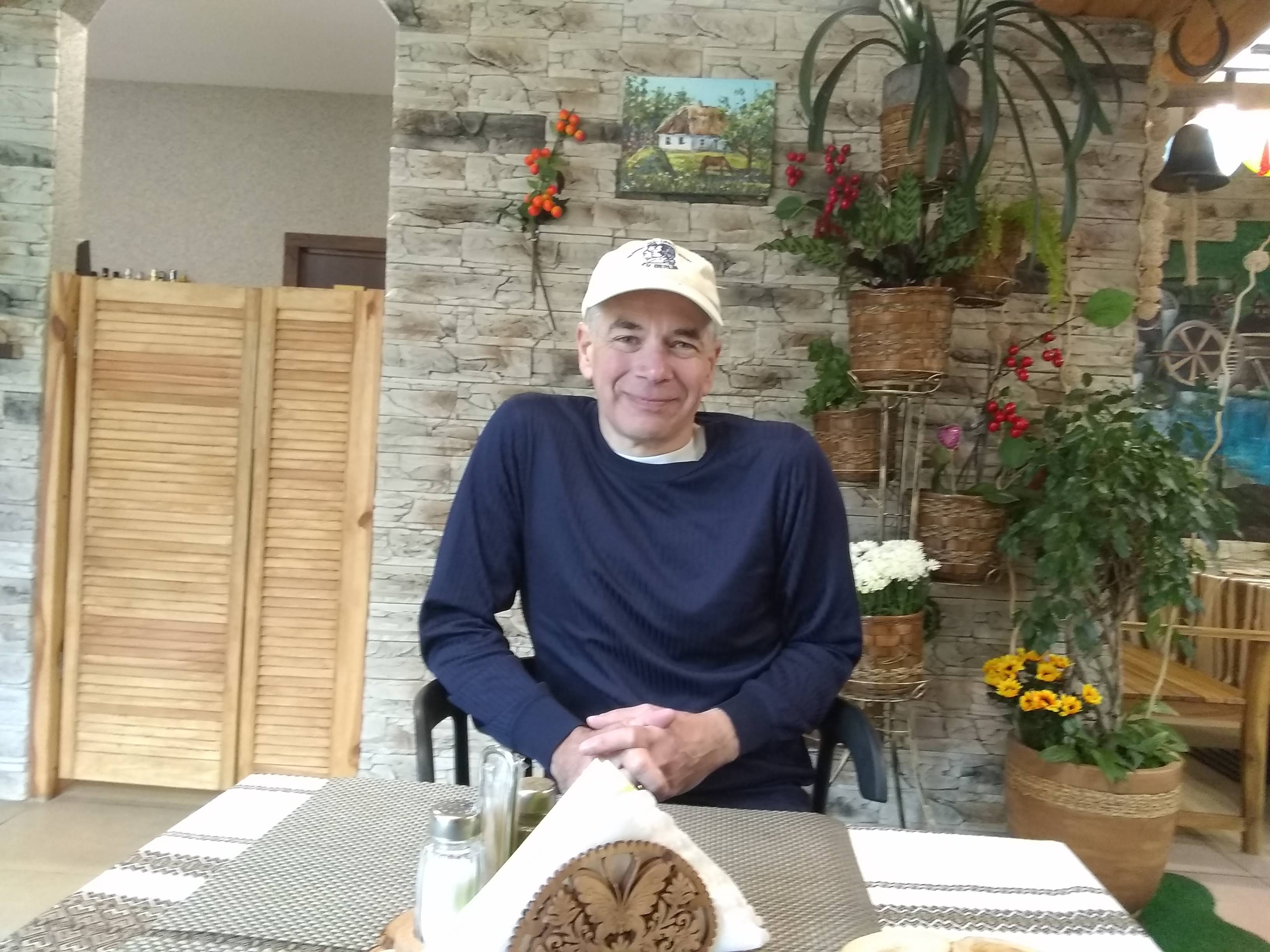
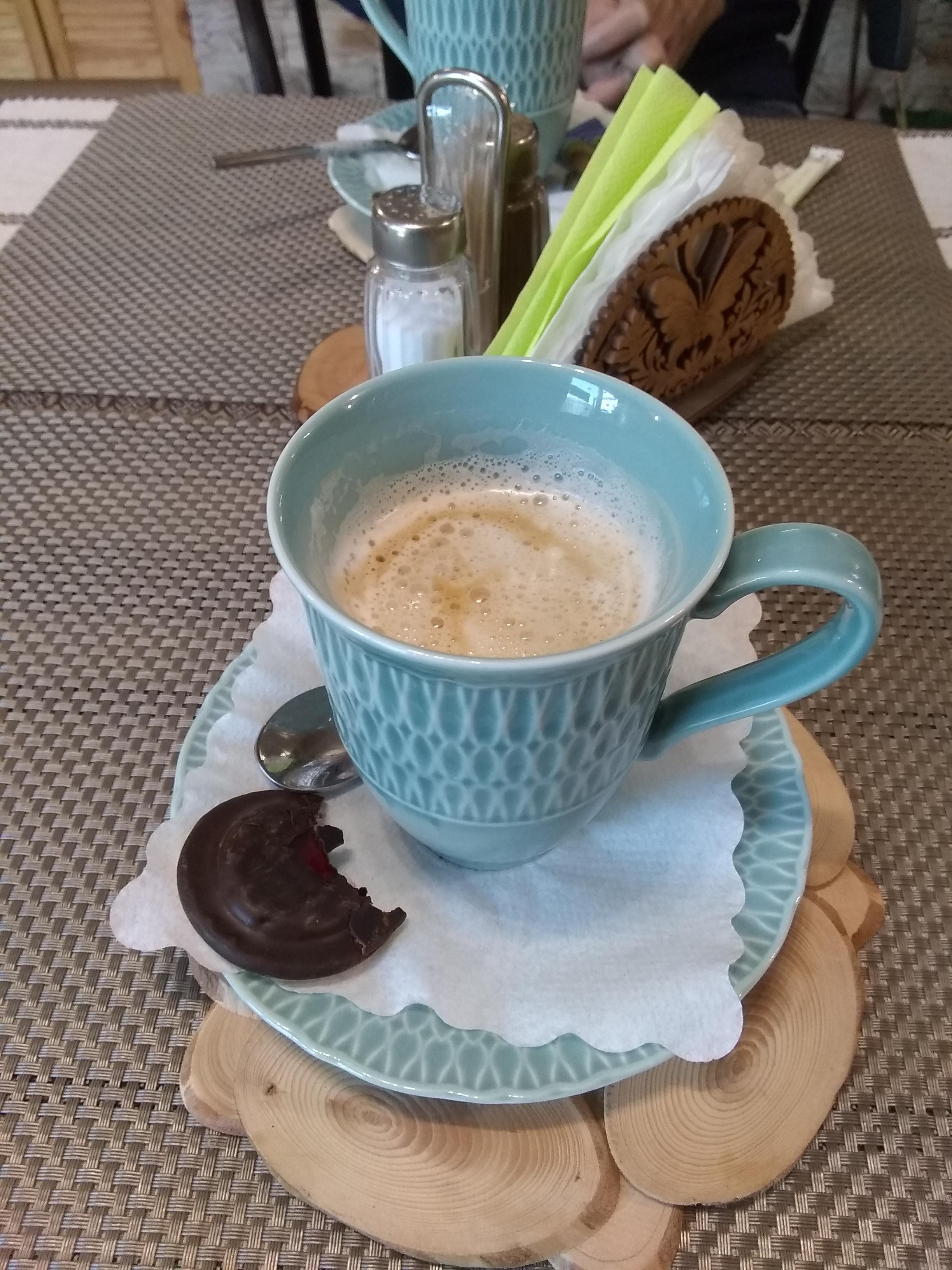
We started our day by stopping by a post office and mailing our absentee ballots for the U.S. November election. (Vote!) We’d heard bad things about the Polish postal system, that we might have to wait in line for a long time, so we set out early. The rumors were wrong. It didn’t take more than five minutes to buy stamps and send our ballots on their way. That gave us extra time before our train left. We spent it in an Ukrainian Cafe. The “smoking train” was the train before our train.

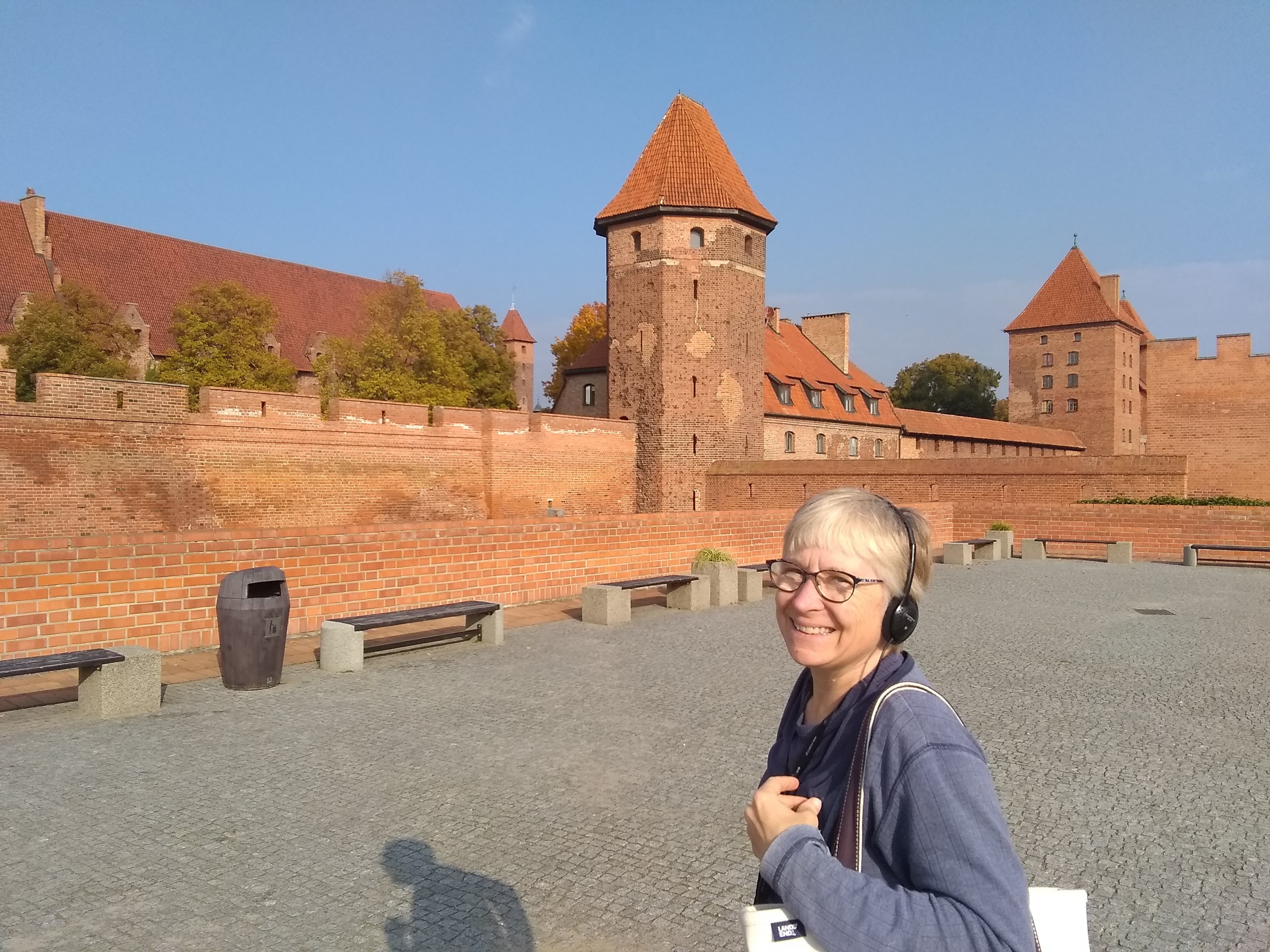
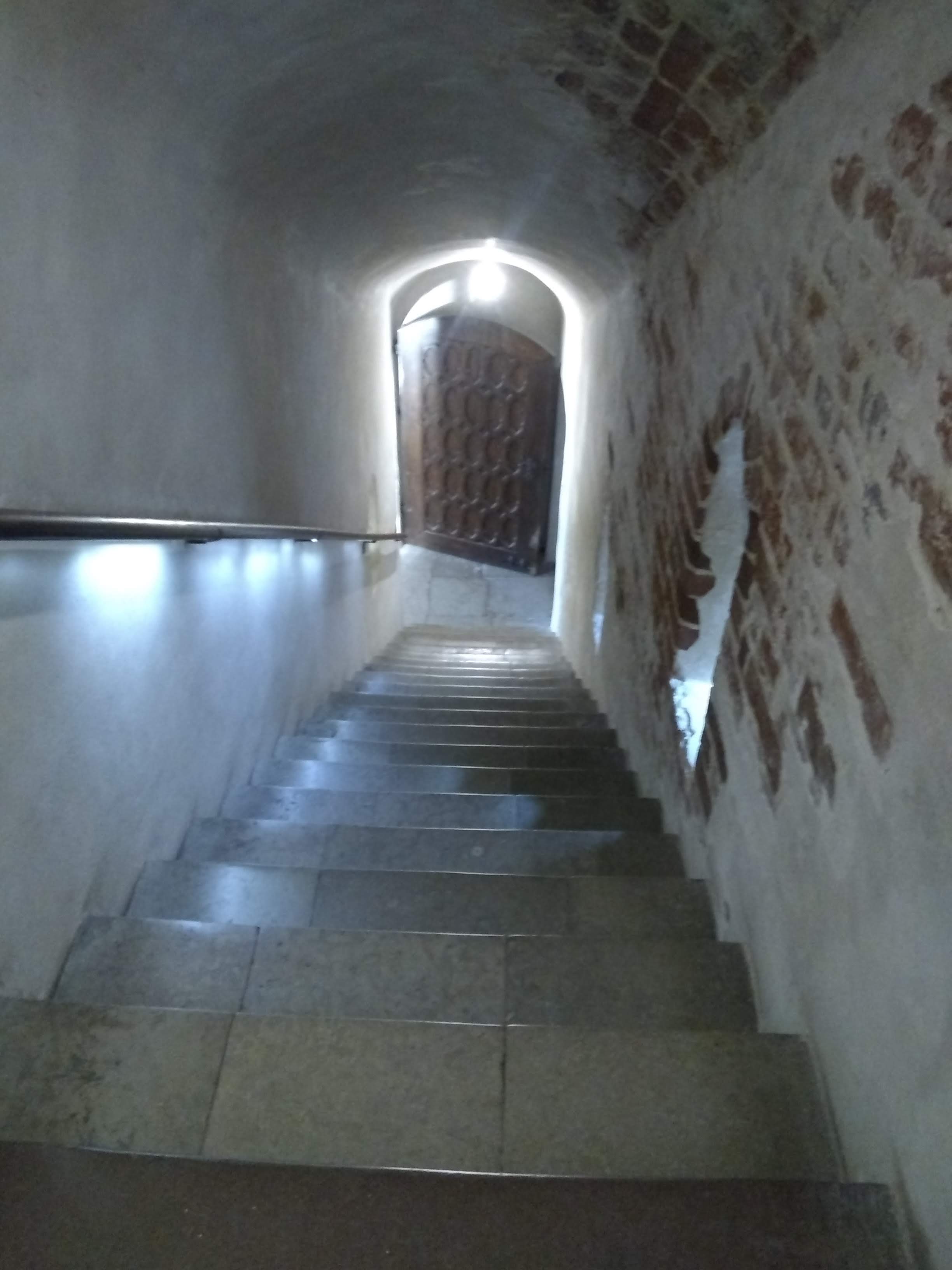
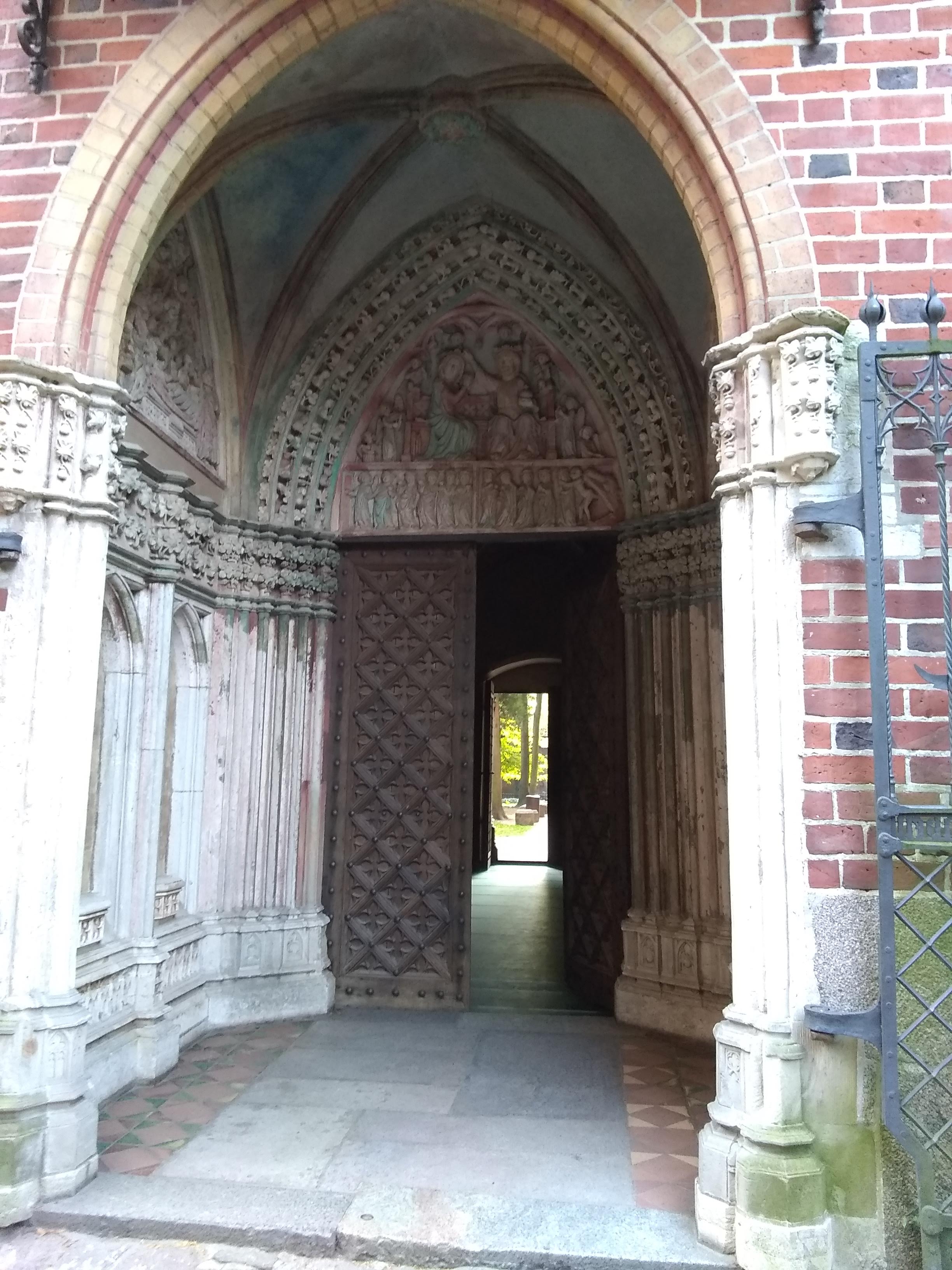
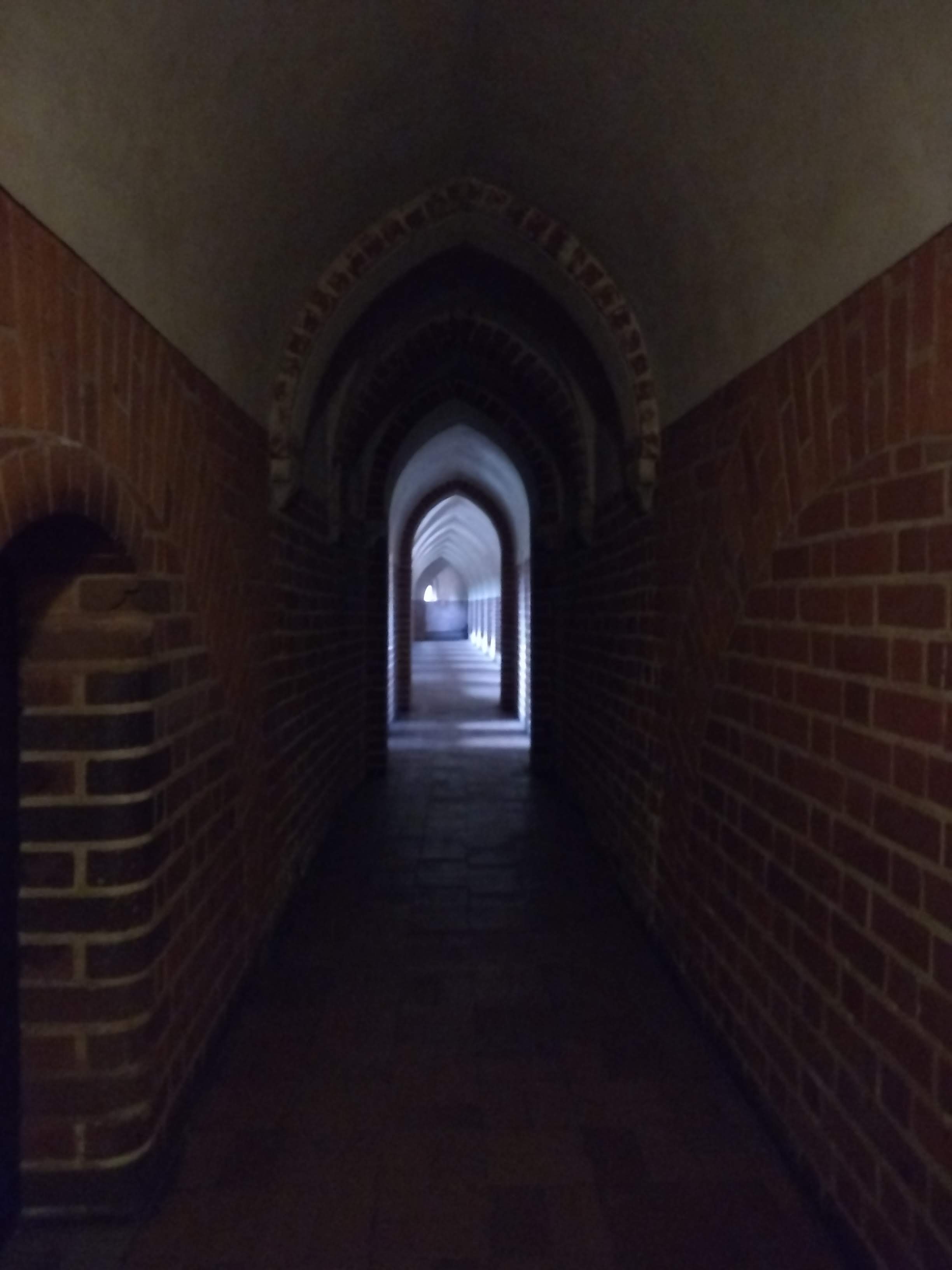
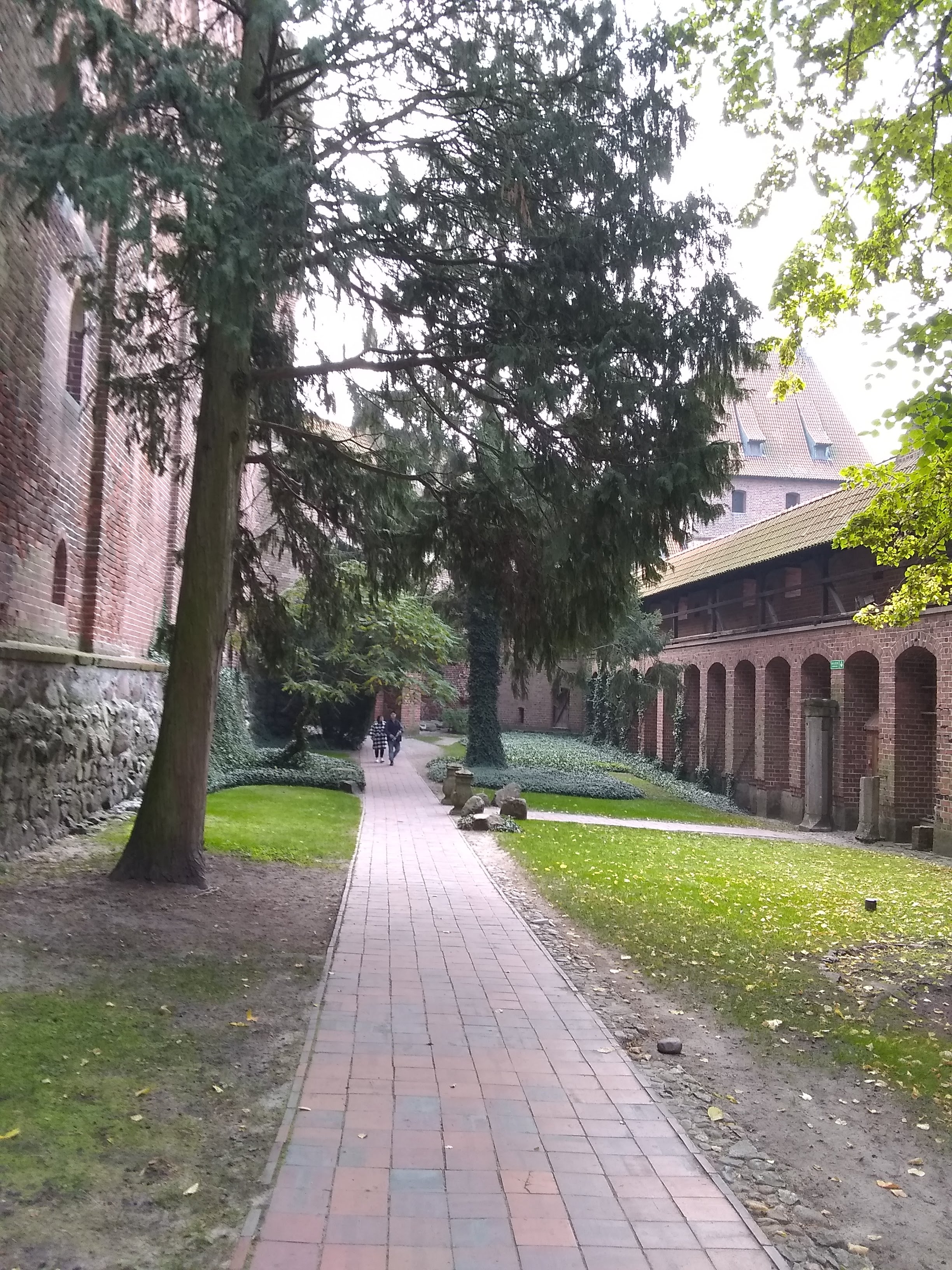
Admission to the castle included an audio tour that lasted about 3 hours. It was informative and enjoyable and offered times to take breaks. We ate apples in one of the courtyards about half-way through. Although I have fatigue issues, I had good energy this day. It was so much fun walking through all the small passageways, over drawbridges, under portcullises, through inner gardens.

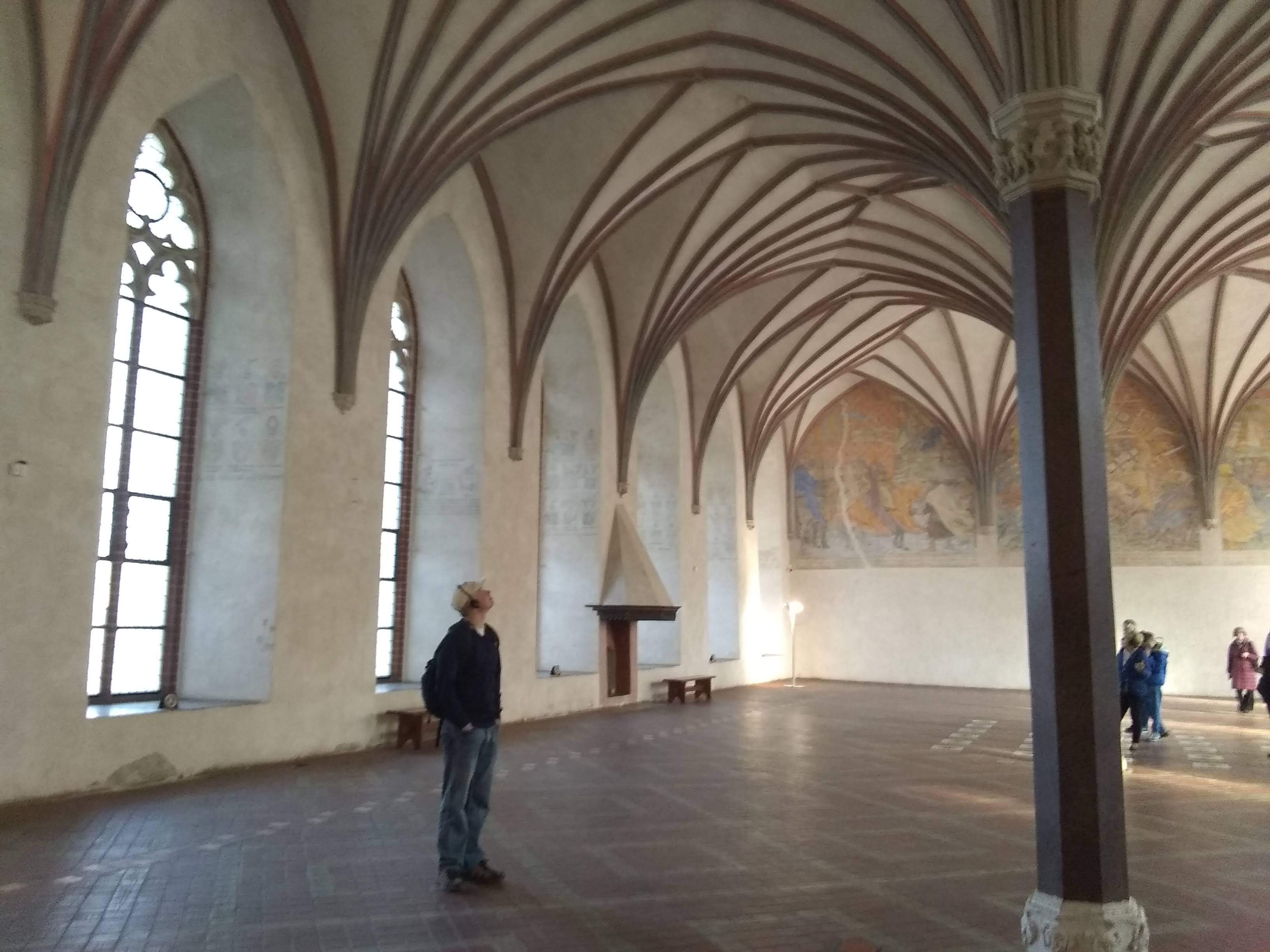
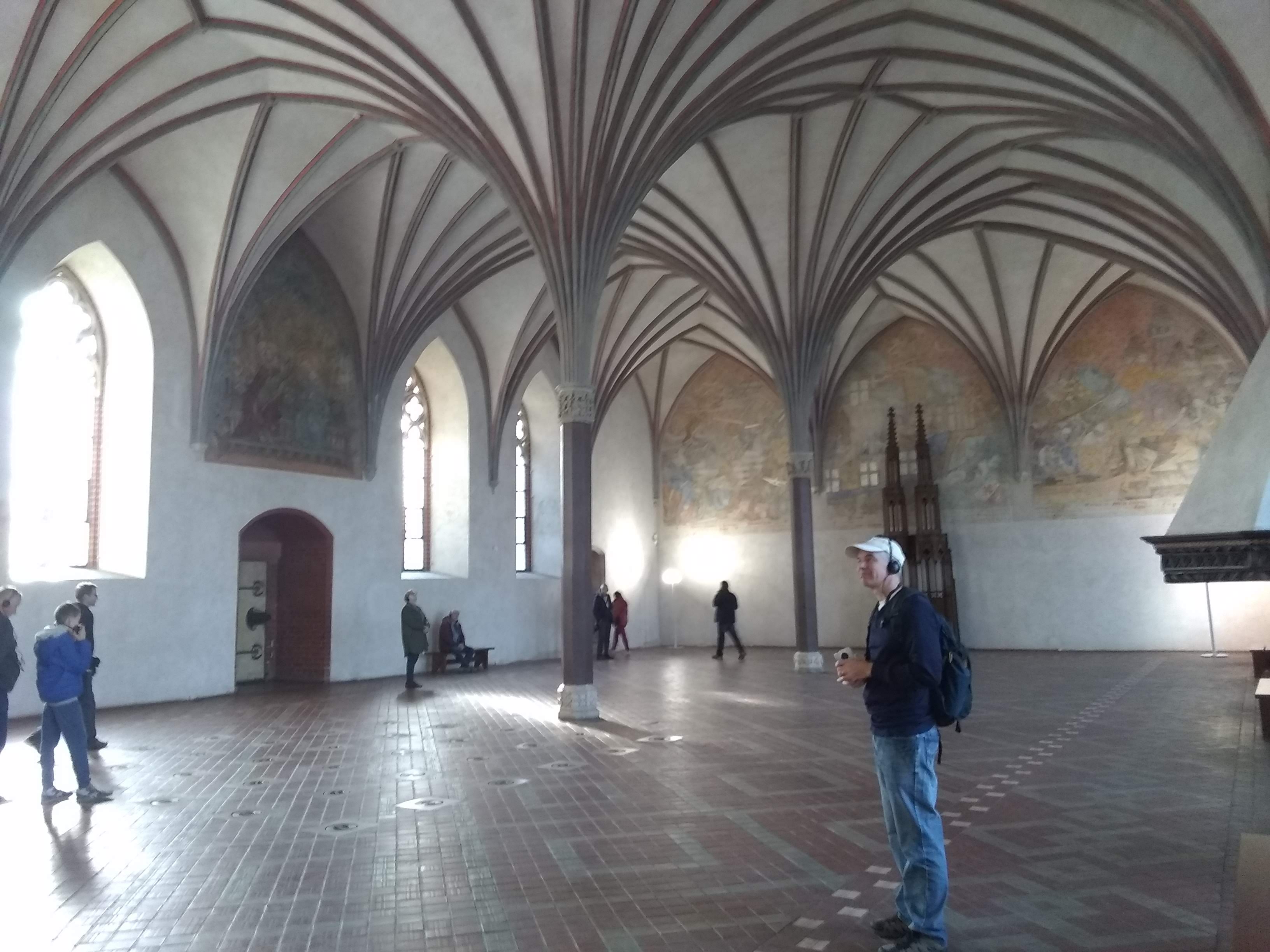
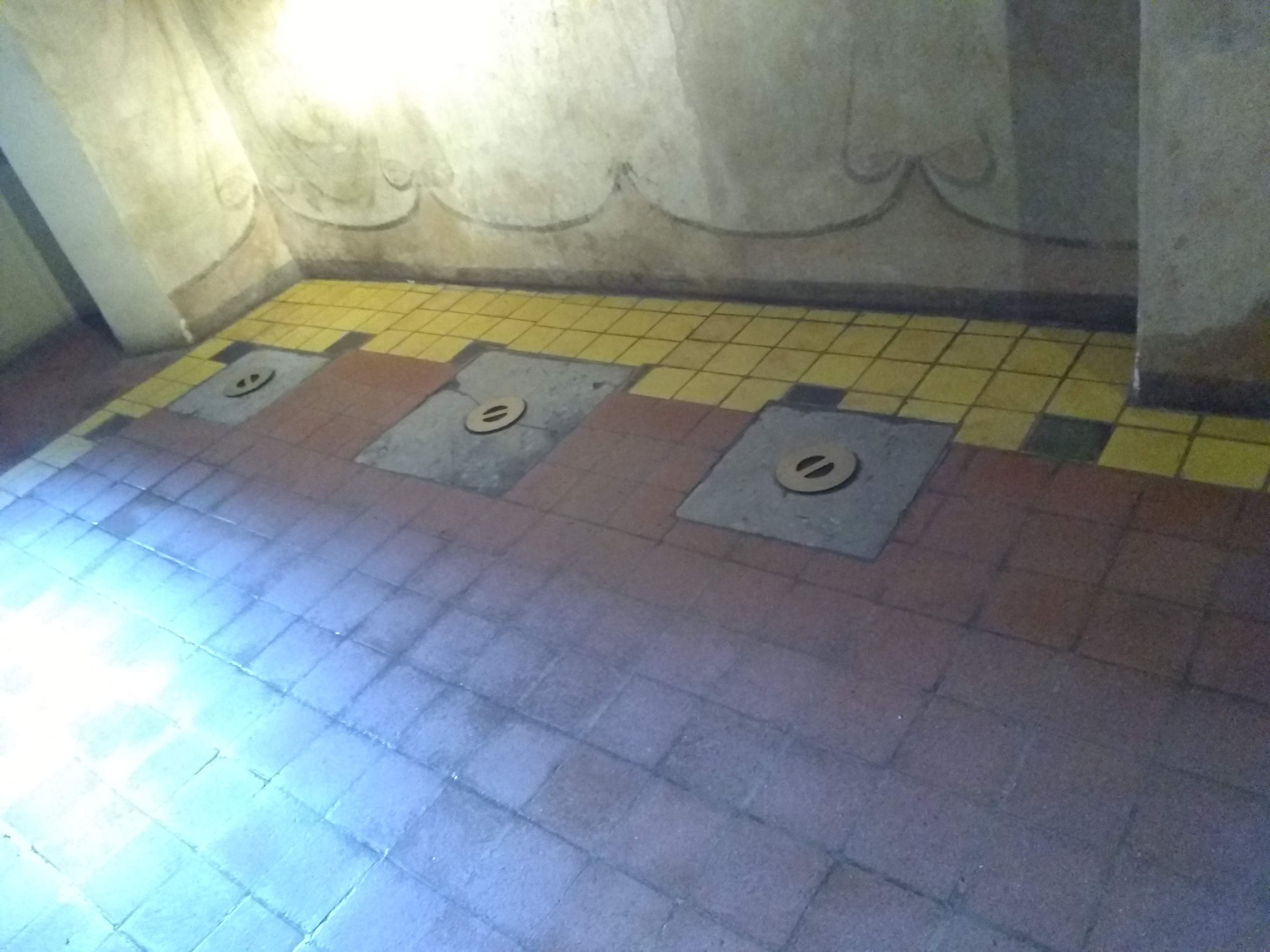
The Great Refectory was impressively large. The holes on the floor allowed hot air from fires below to heat upper rooms.

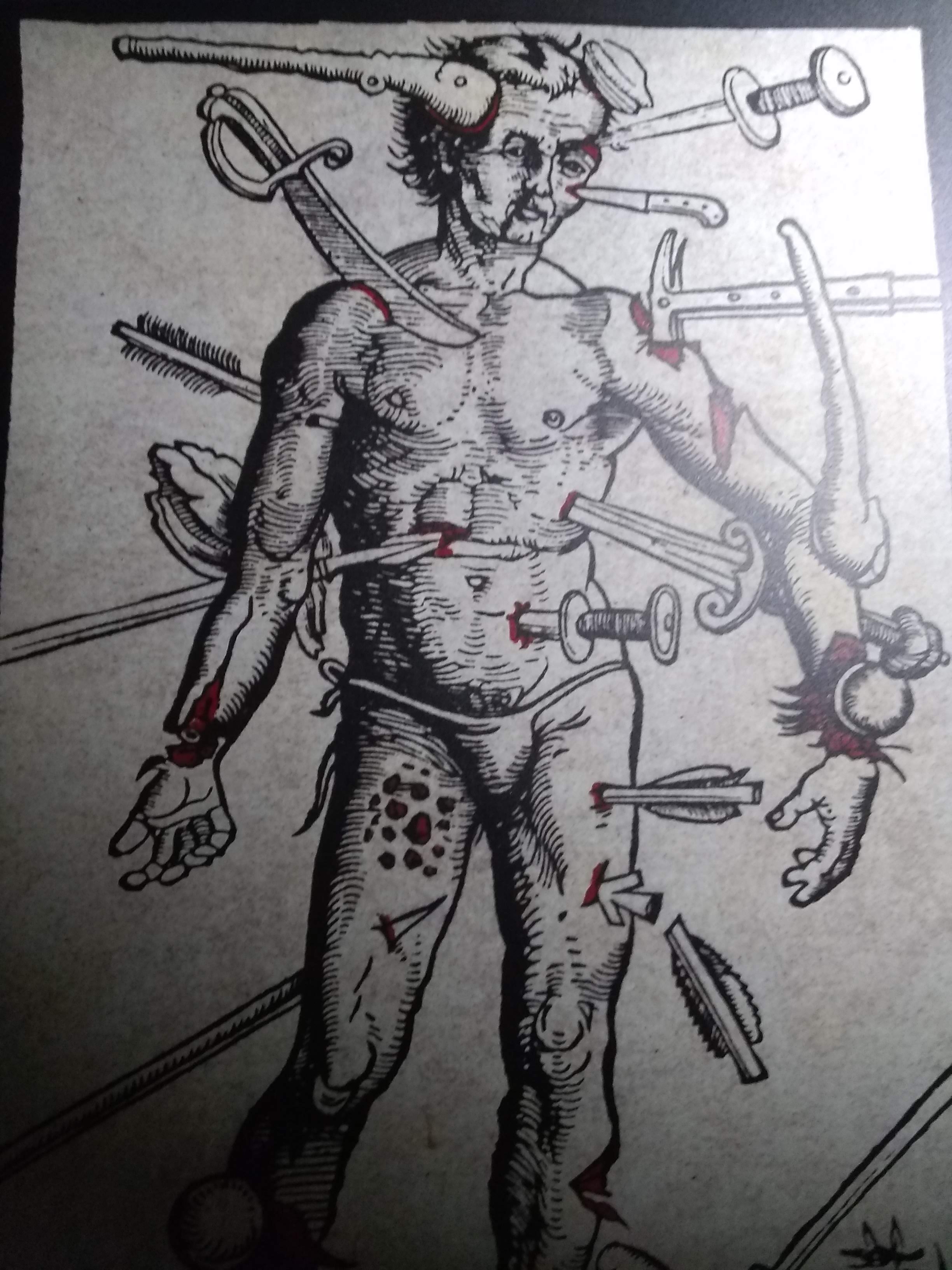
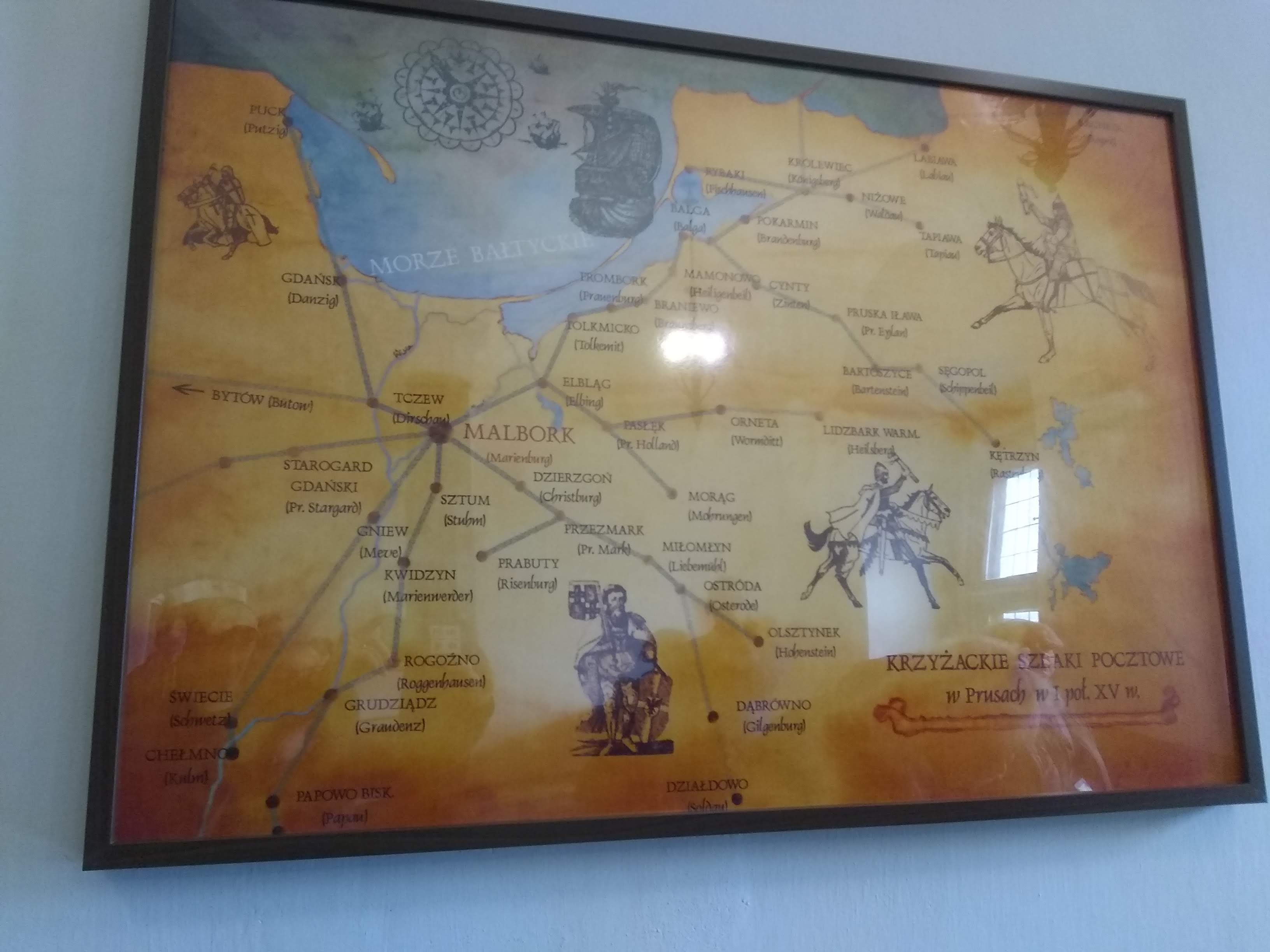
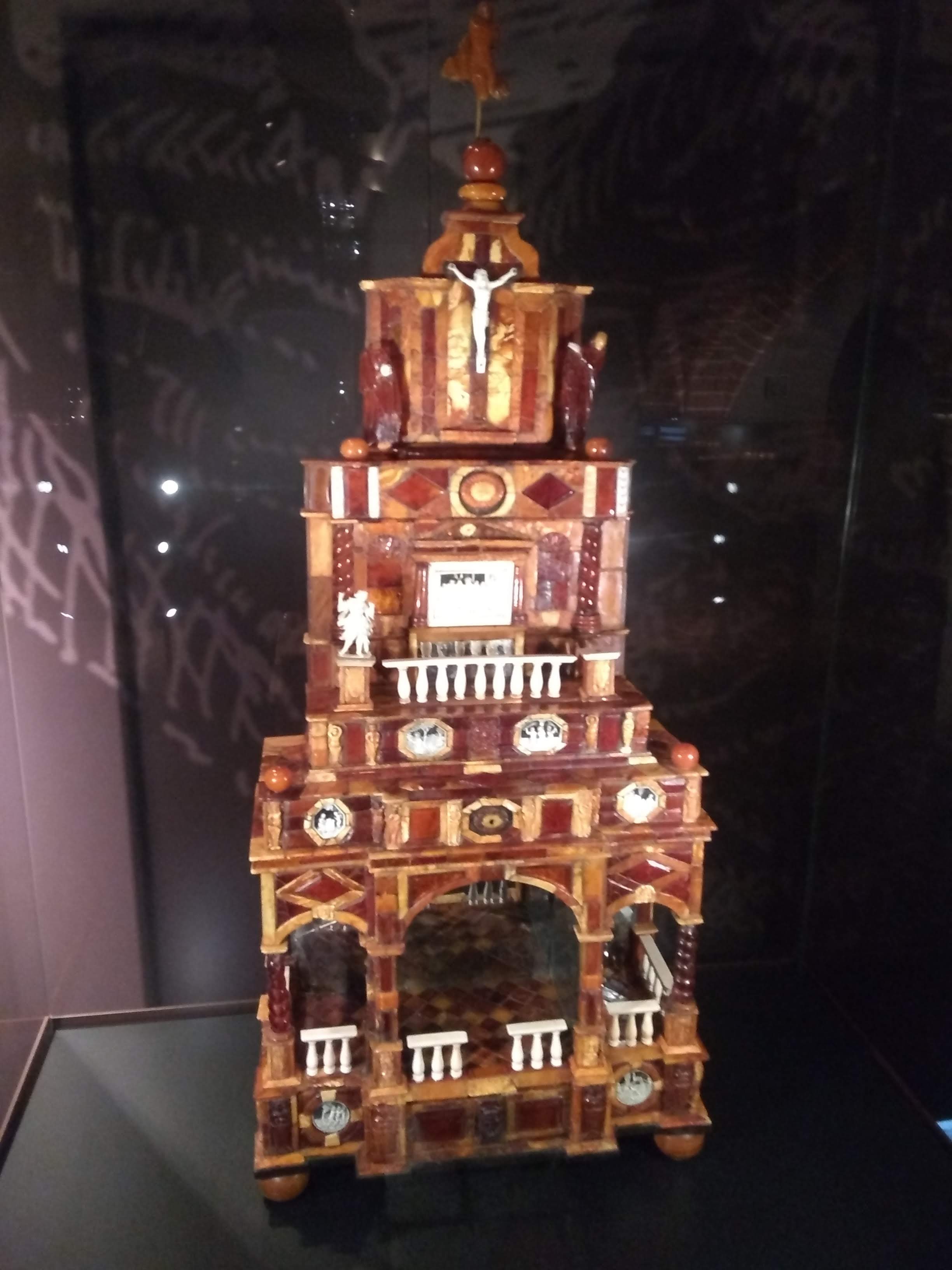
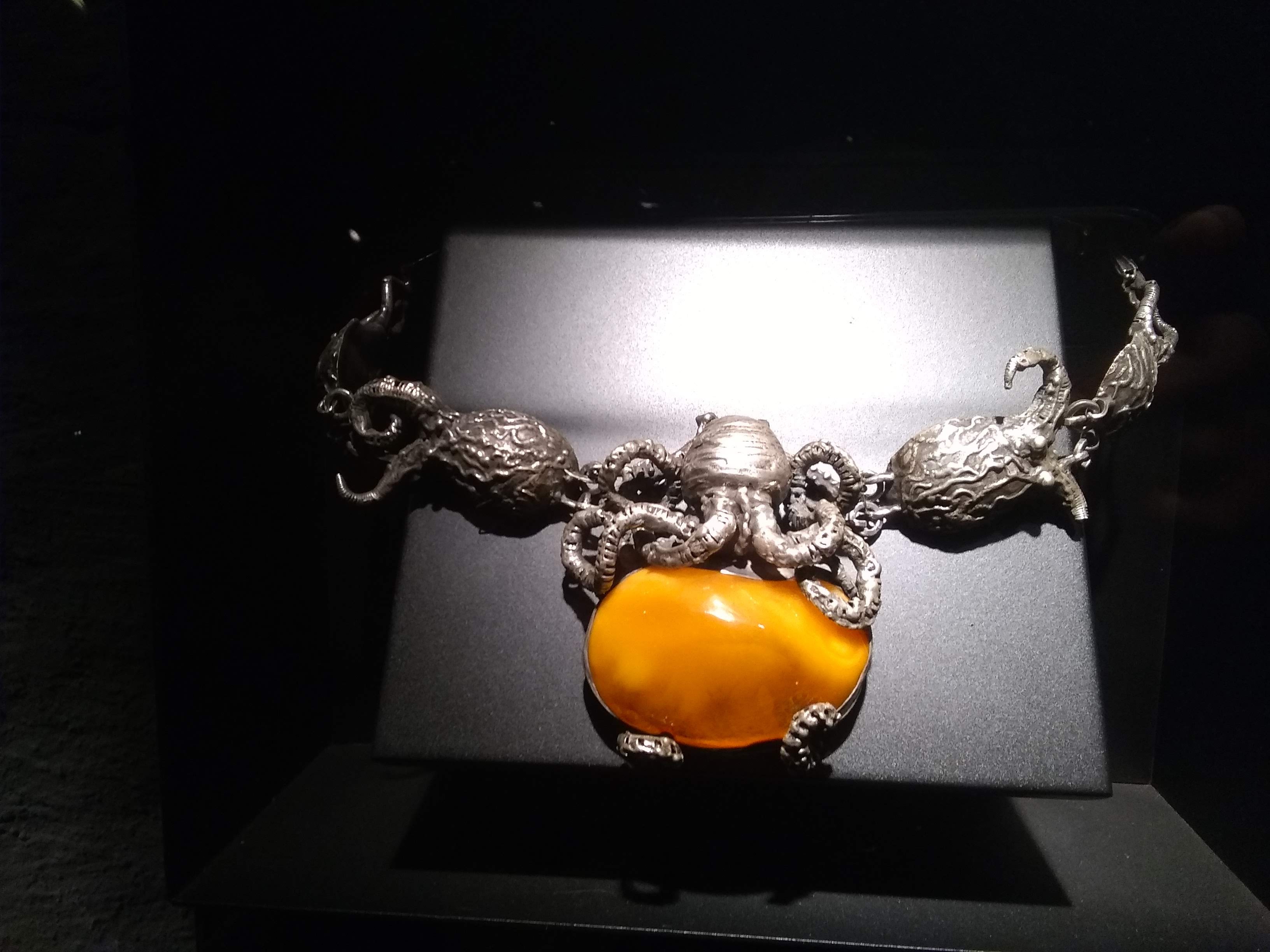
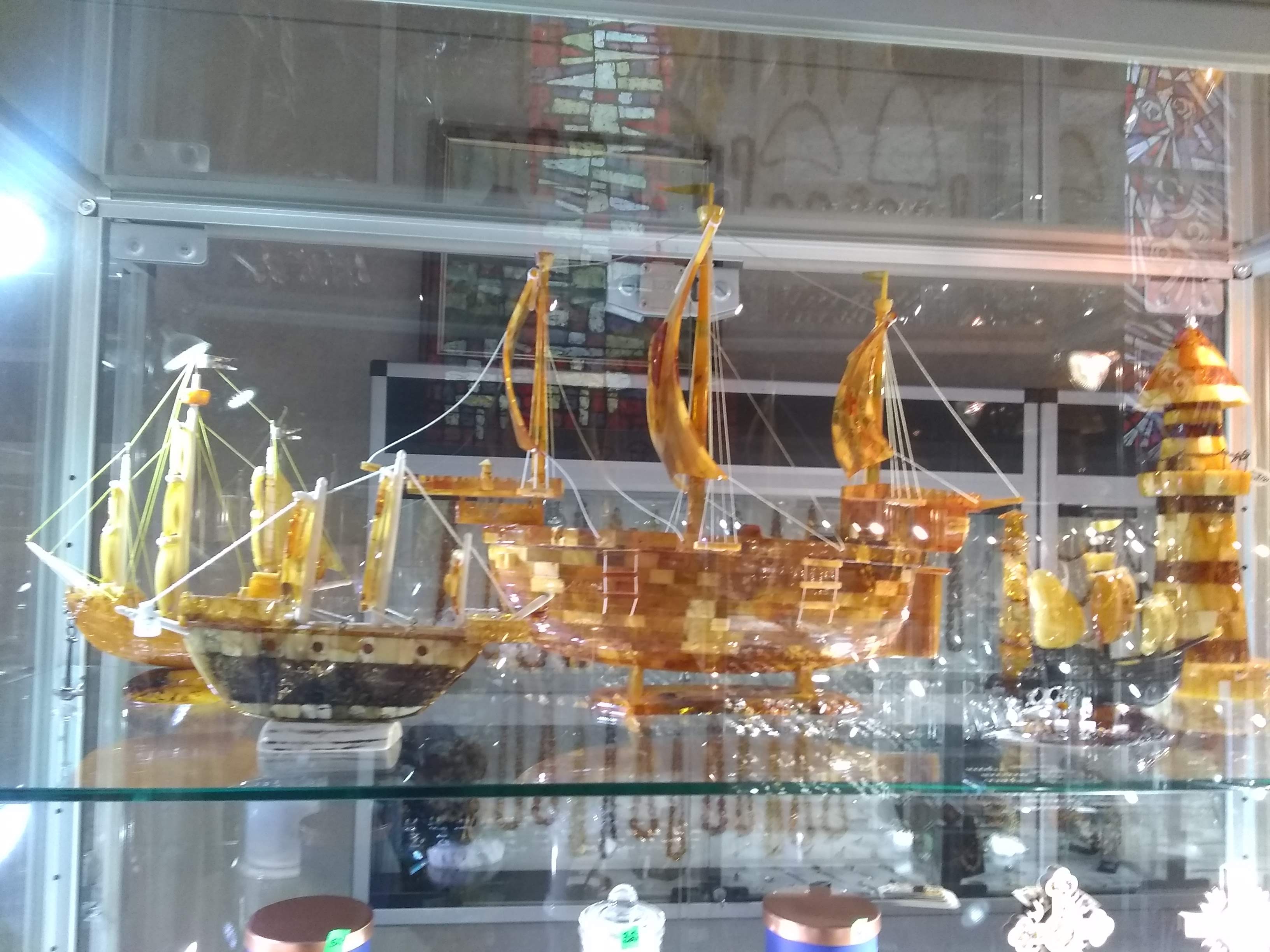
Parts of the castle were destroyed during WWII and then reconstructed with great care. An exhibit explained in great detail with many photographs and plans of how the reconstruction took place. Other areas in the castle included museum-type exhibitions on amber, weapons and armory, tapestry and sashes, famous guests of the castle, and more.

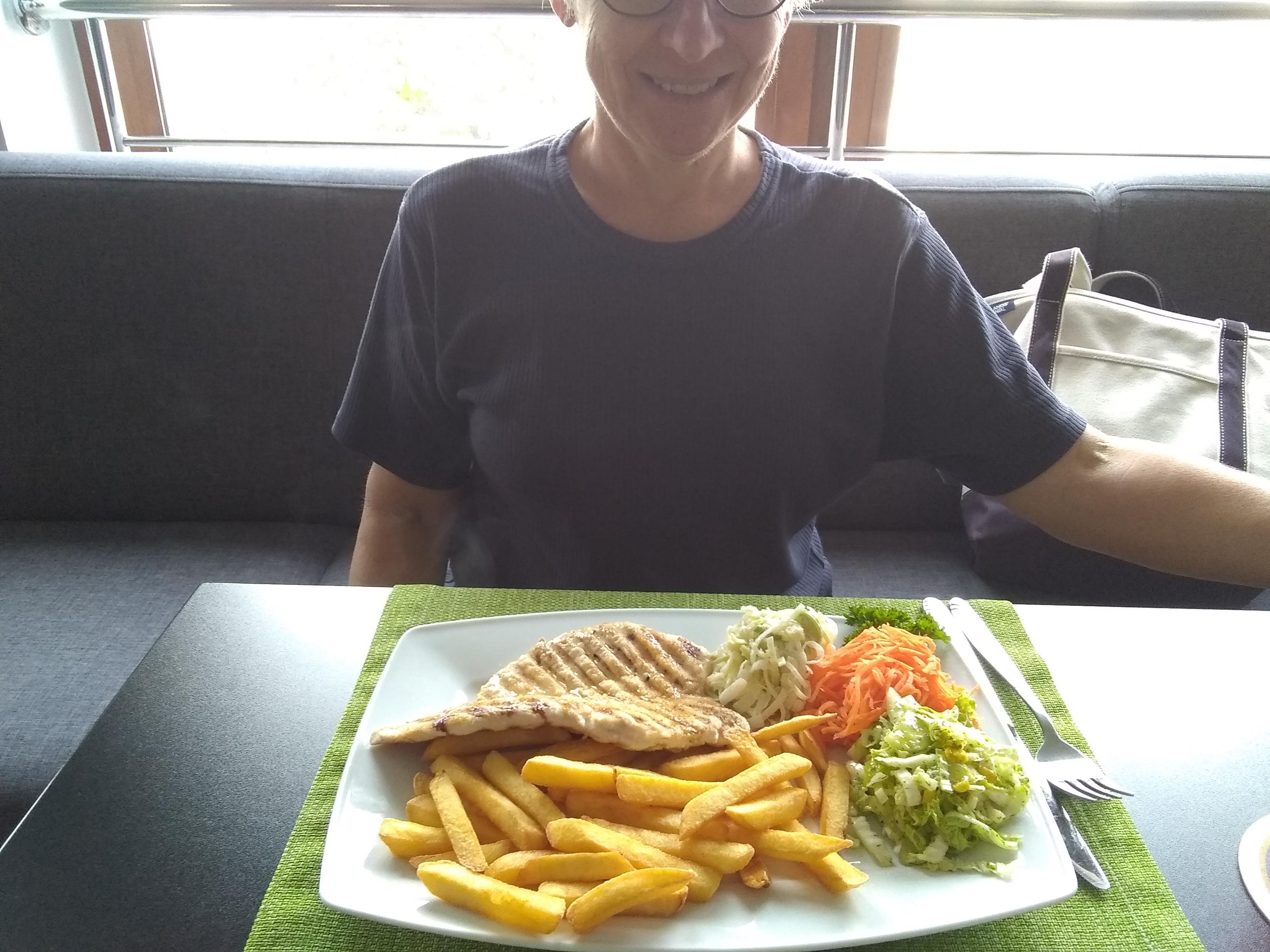
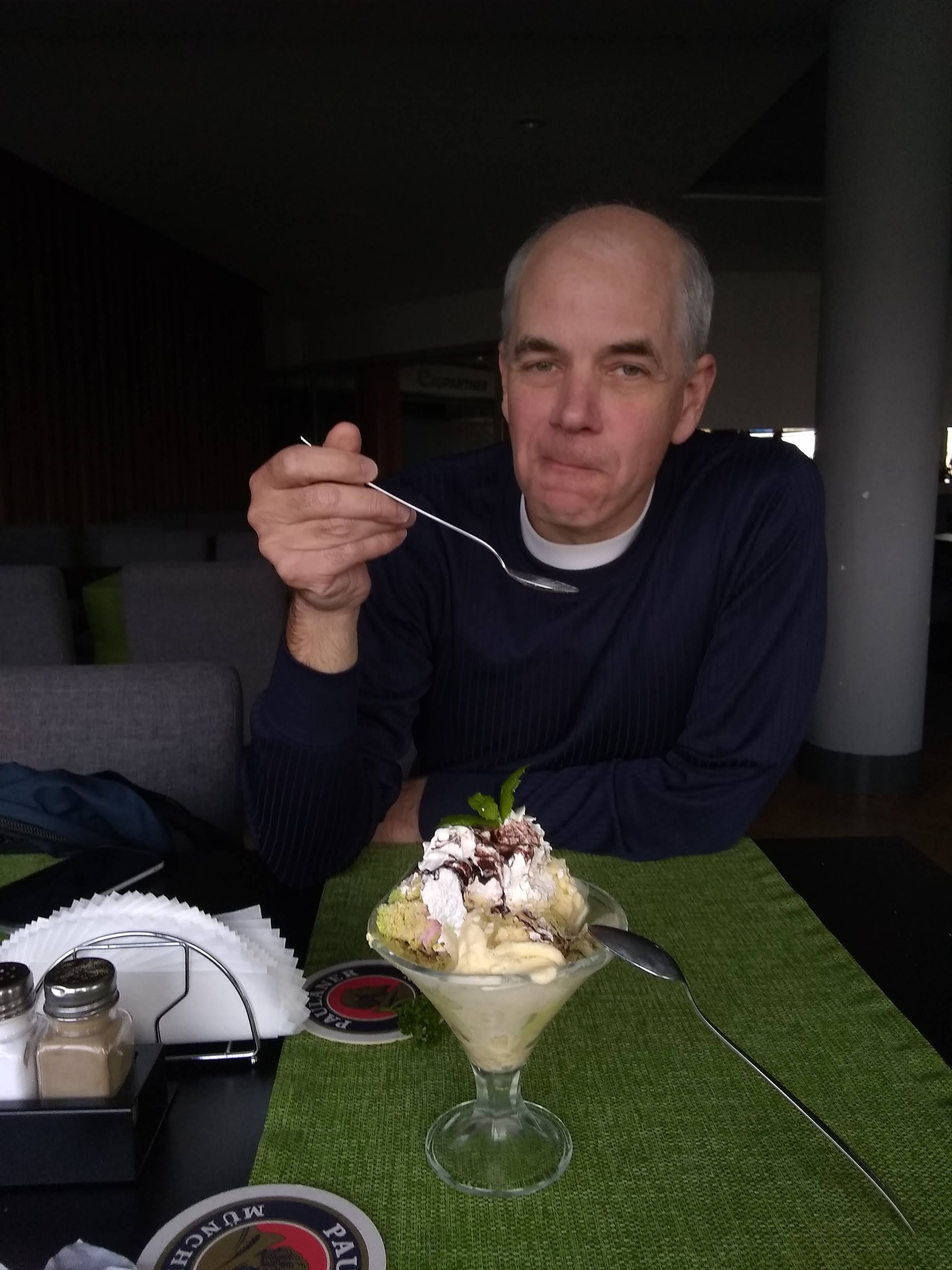
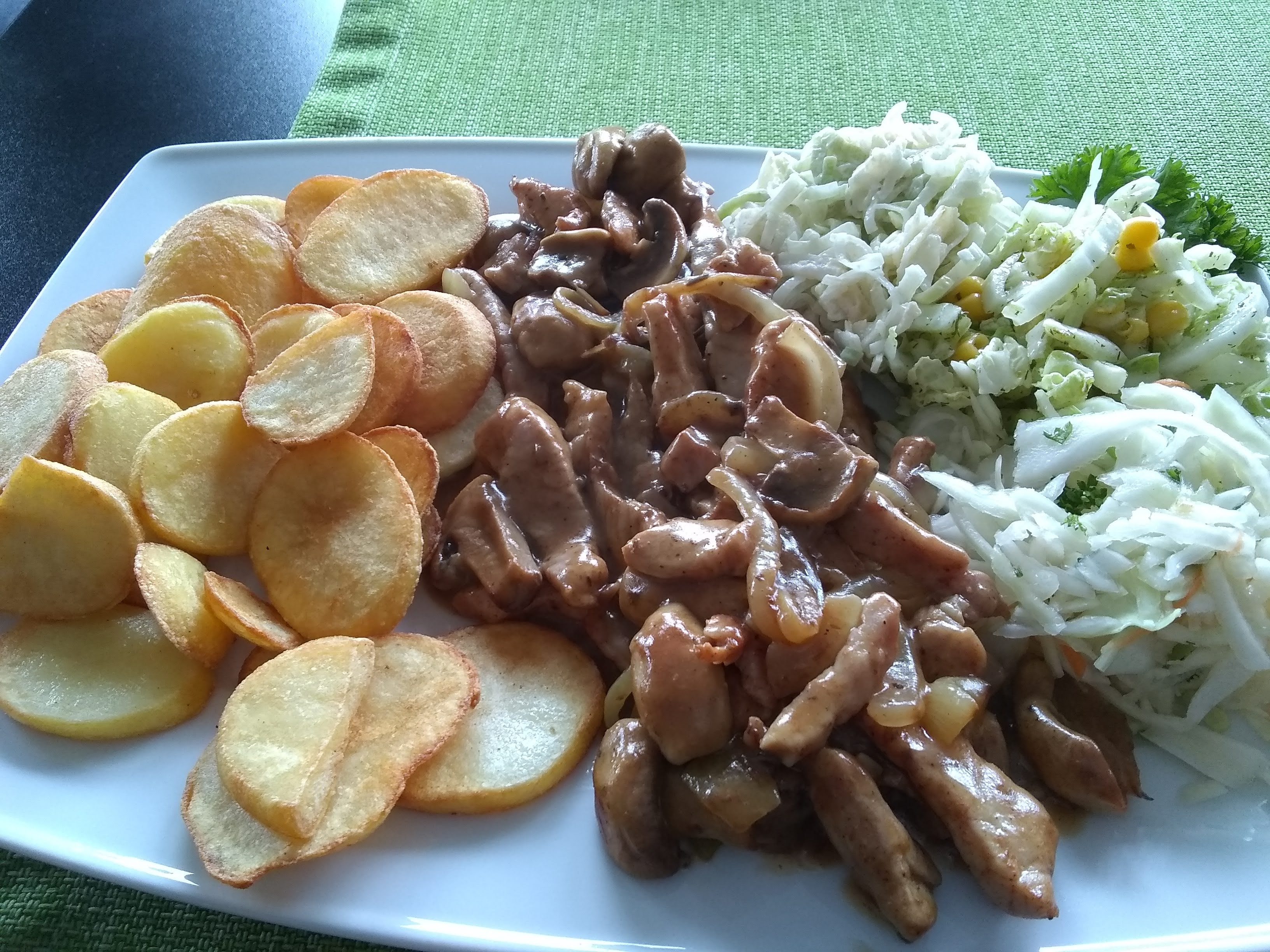
After all that walking, we were exhausted. Malbork has an easy self-guided tour of its Old Town, which we we too tired to explore. As we still had a couple of hours before our return train, we found a nice restaurant in town, Panorama, at the top of a sort of vertical mall. It had a view of the castle and town, and because it was about 2:30, we had the place to ourselves. A great way to end our visit.

Krakow

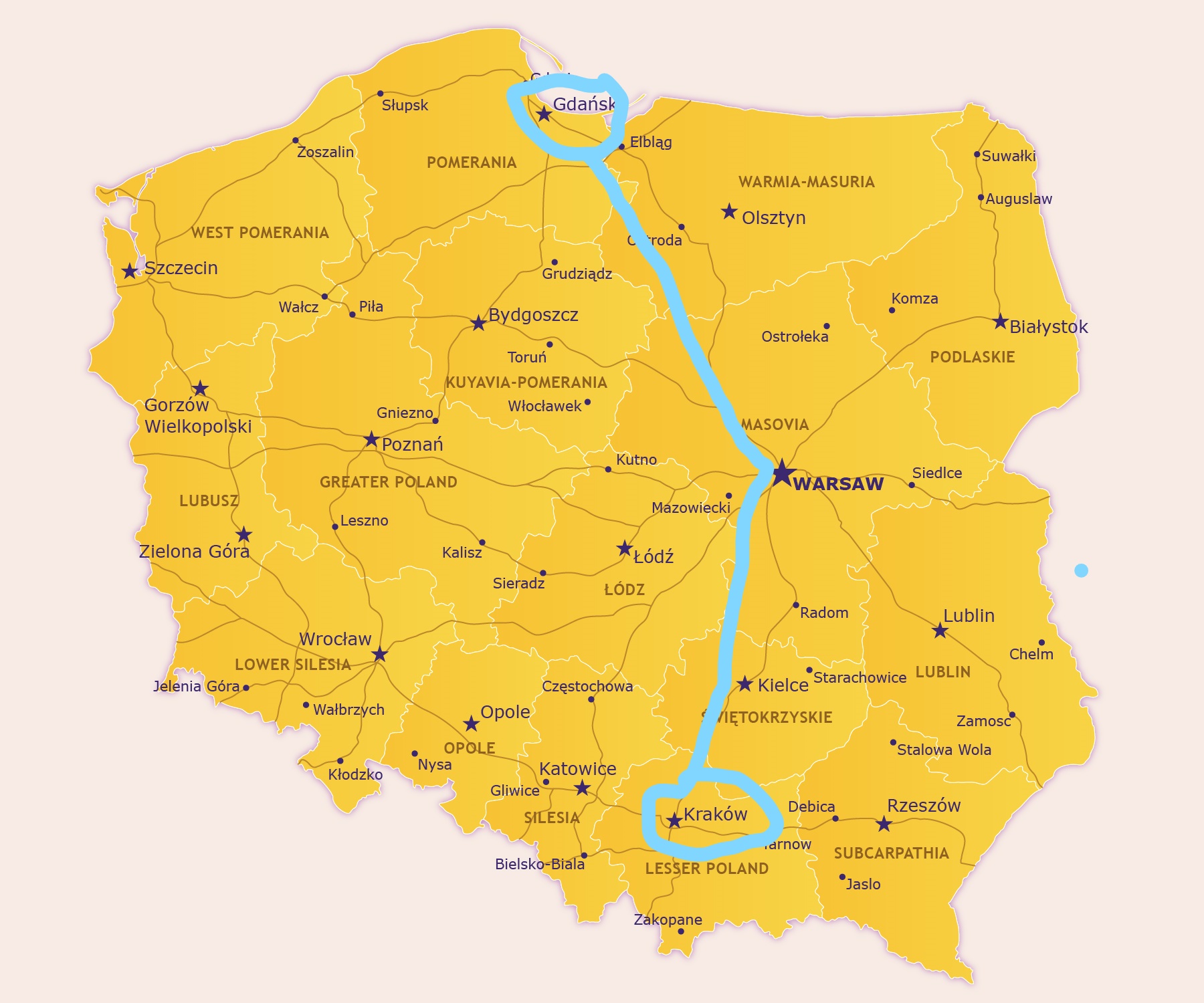
We took a short trip to Krakow. Short because it was only 2 days. We bought inexpensive tickets, so the actual train ride from Gdansk was 8 hours and went through Warsaw. I enjoyed watching the countryside fly by. Poland looks a lot like Wisconsin, so it is easy to see why so many Poles settled in Wisconsin. Here’s a little map of Poland to show our route:

We stayed at the Atlantis Hostel a great location, walking distance from the train station, the old town square, Jagiellonian University, and the Jewish quarter. We rented a private room with bath at the hostel, which was inexpensive and afforded us a beautiful view of a garden and the city. We got that view because we were on the 4th floor (5th to an American), and there wasn’t an elevator. It’s a good thing we didn’t have a lot of luggage!
Having arrived in the evening, we went out the next morning to explore. Andy had downloaded an audio tour to his phone using the Voicemap app. We each put an earbud in an ear and held hands (so as not to wander too far from each other and pull out the earbuds) and started our tour at the Old Town Square. This was a perfect way for me to do a tour. I have fatigue issues, so with a live tour guide, I’d feel pushed to keep going with the group, even when I was worn out. The audio tour can be paused so I can rest. It can also be paused if you want to spend more time in an area. The Voicemap uses the GPS on your phone, so it knows where you are and presents the appropriate tour information at the right time. I recommend it!

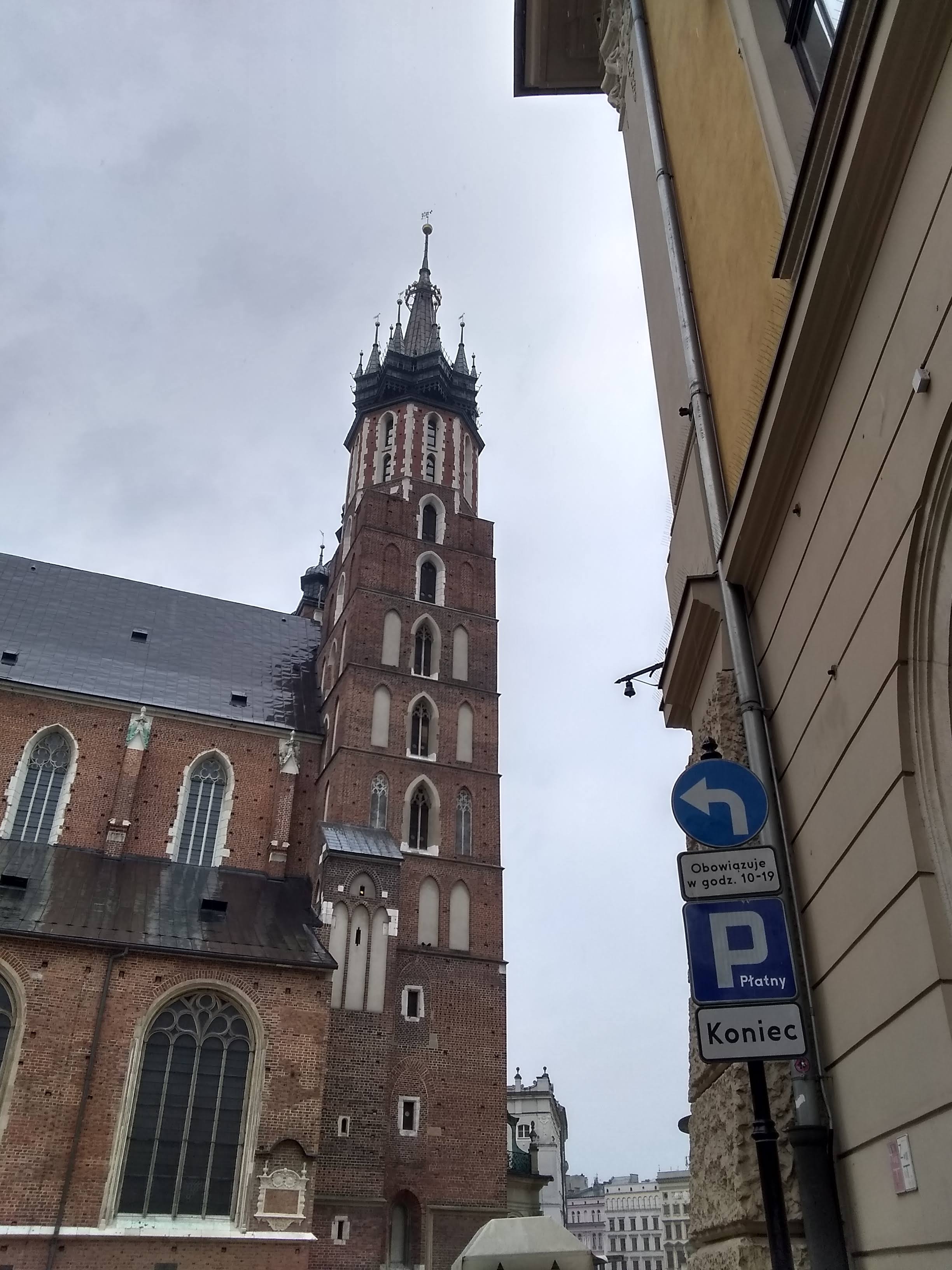
I won’t pretend to remember all the details of the city and tour. At the top of a tower on St. Mary’s Cathedral in the Old Town Square, a trumpeter plays every hour on the a hour. You can read the history and legends about the trumpeter and the song, as well as a reference to Newbery Award-winning children’s novel The Trumpeter of Krakow. I read it as a child and need a re-read. St. Mary’s has two towers and faces the main square. Here is one of the towers from a side street. I snapped the picture quickly when the trumpeter began his song.

One of St. Mary’s Cathedral towers where the trumpeter plays. Krakow, Poland

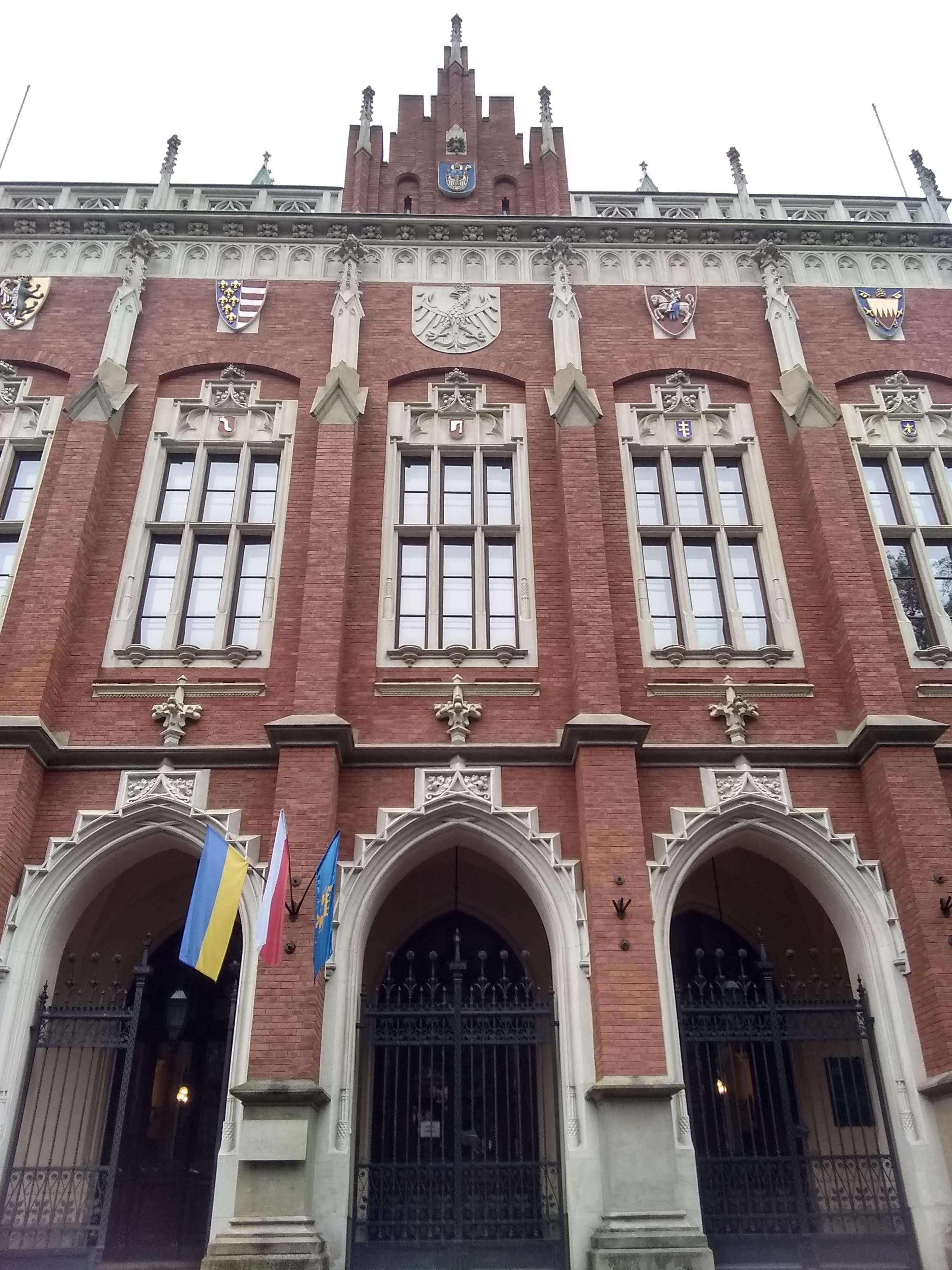
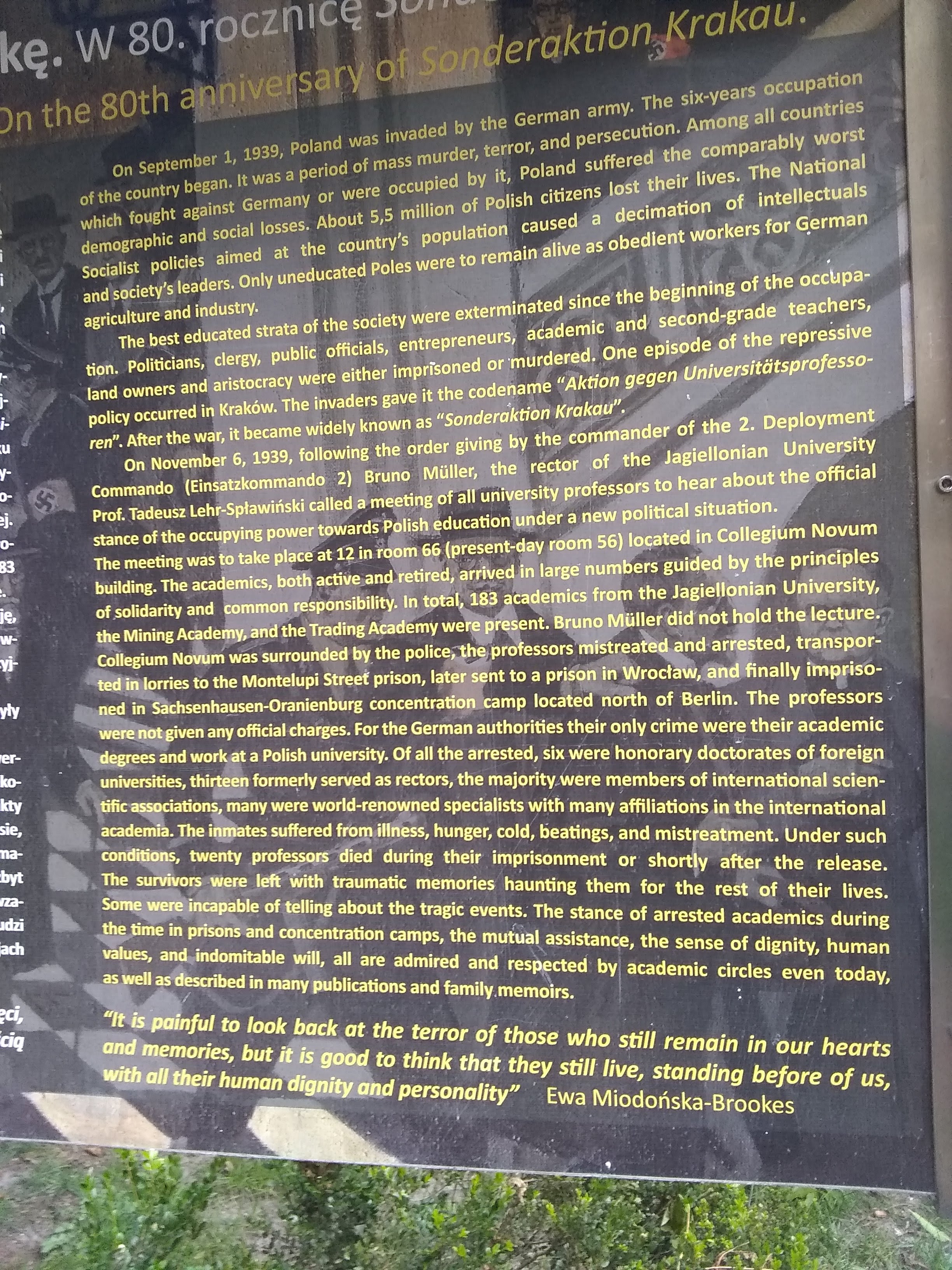
Again, I’m no historian, but I learned that one of the reasons Krakow is so beautiful is that its buildings weren’t destroyed by war. In 1939, when Germany was invading Poland, the leader of Krakow realized the town could not protect itself against the German armies and surrendered before an attack began, in an attempt to save its citizens and buildings. From Jagiellonian University’s website:

During the Second World War, on 6th November 1939, Nazi German authorities deceived nearly 180 scholars and staff members of the Jagiellonian University into gathering in Collegium Novum, then brutally arrested and deported them to concentration camps, where several of them have met their death. Another group of scholars, captured as military officers by the Soviets (who invaded Poland on 17 September 1939), was executed by the order of Joseph Stalin in Katyn (1940). The Nazi Germans closed the University. As a result, clandestine education commenced in 1942 for approximately 800 students. One of them was Karol Wojtyła, who later became pope John Paul II.

https://en.uj.edu.pl/en_GB/about-university/history

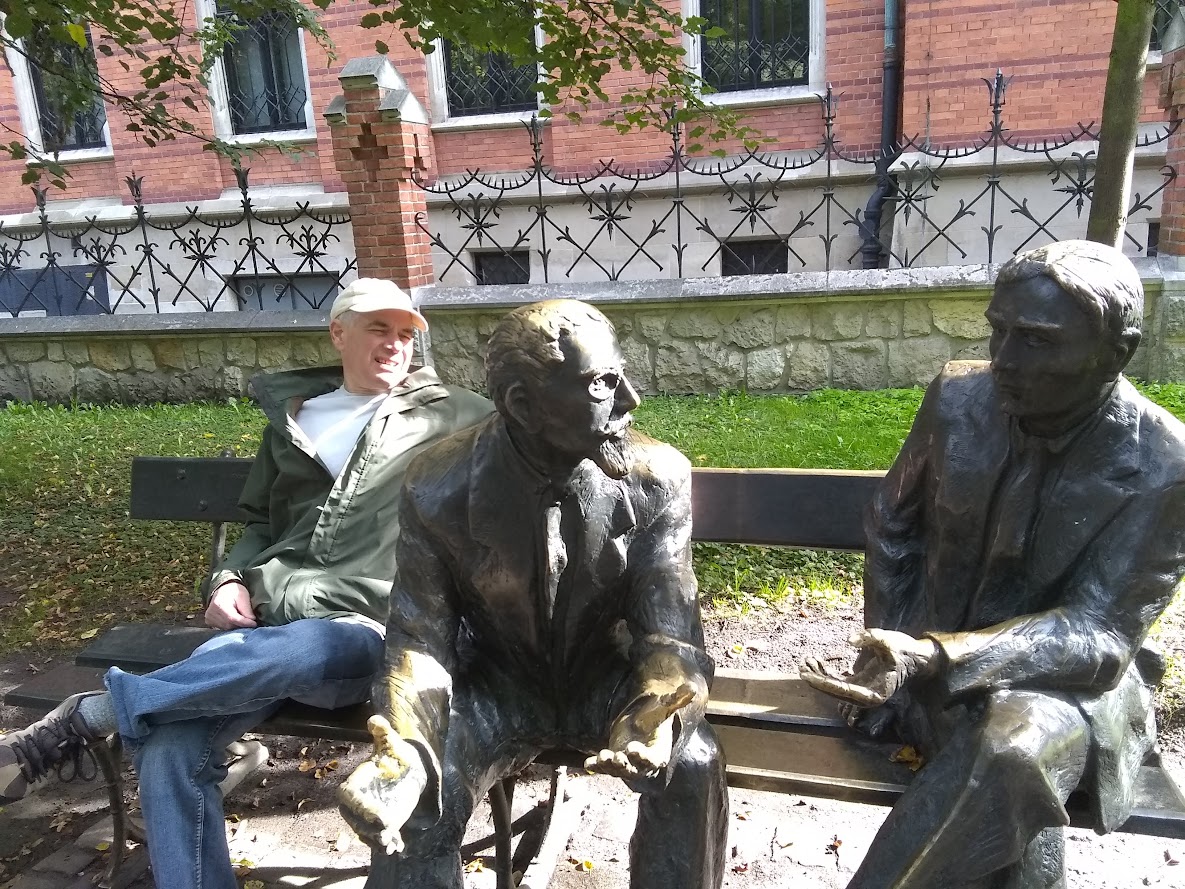
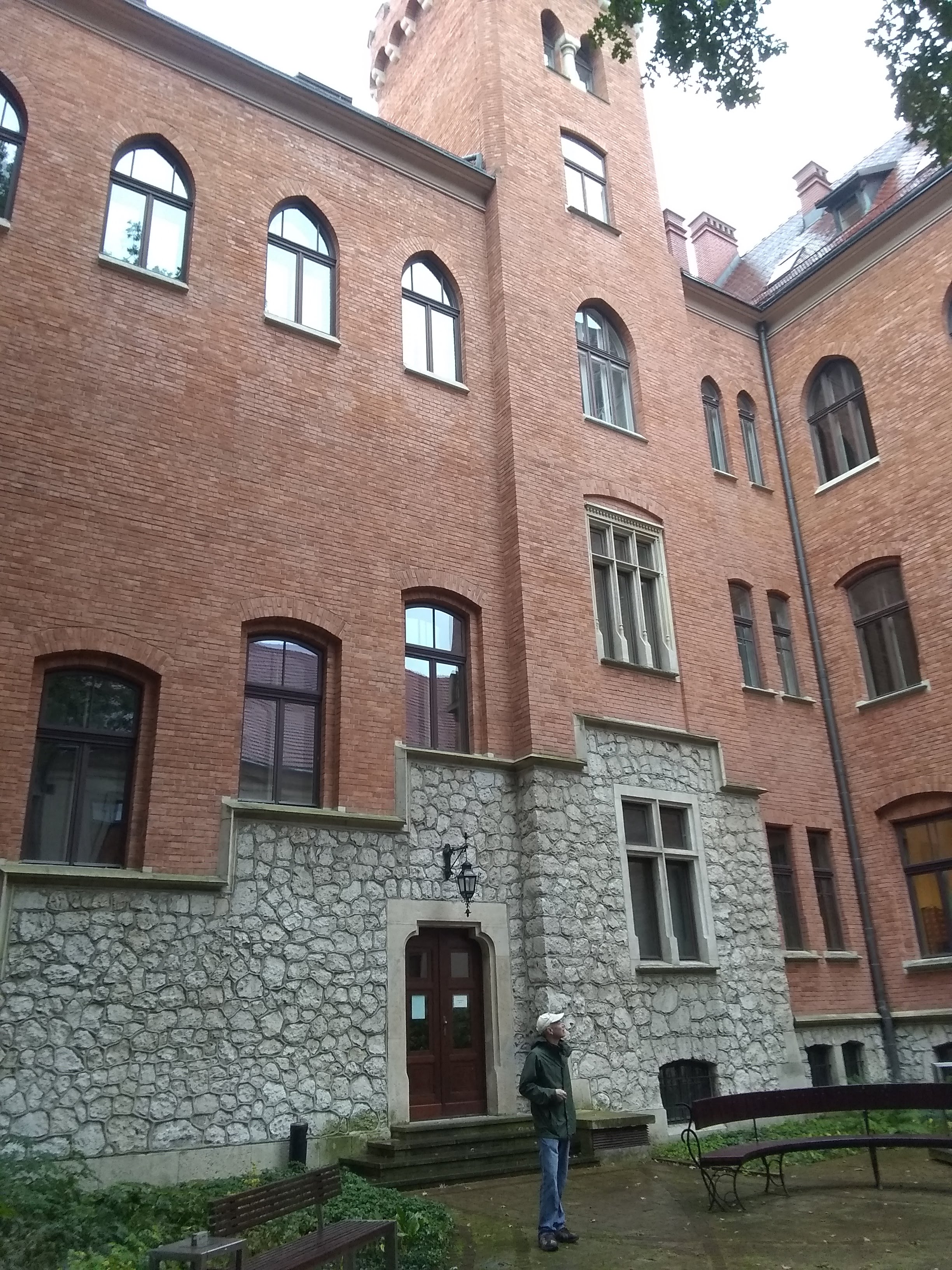
There is a courtyard at the university that has signs about this moment in history as well as other things the university is famous for, such as the vacuum sphere. We also found a park bench where Andy was able to discuss math with Stefan Banach and Otton Nikodym.

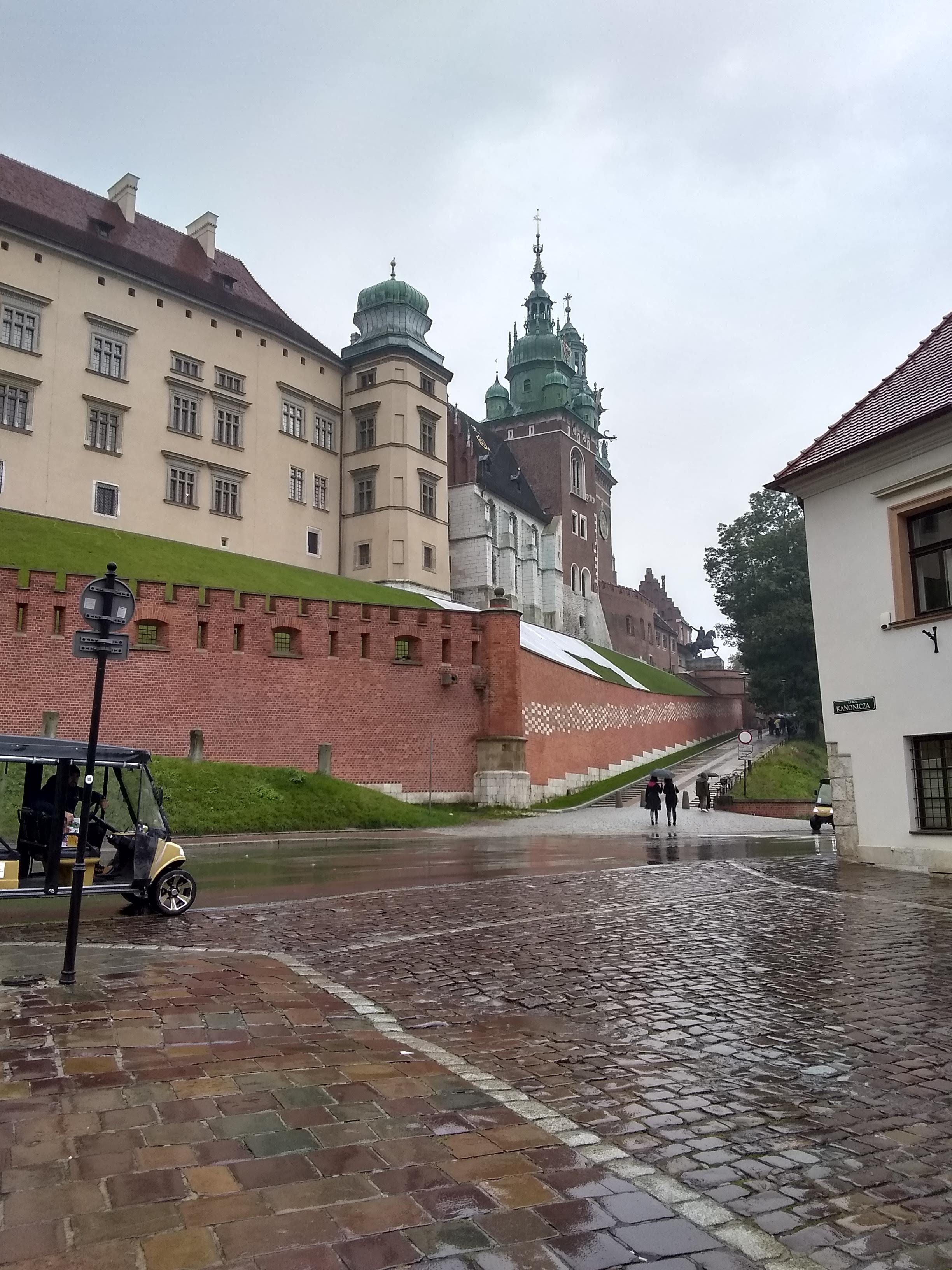
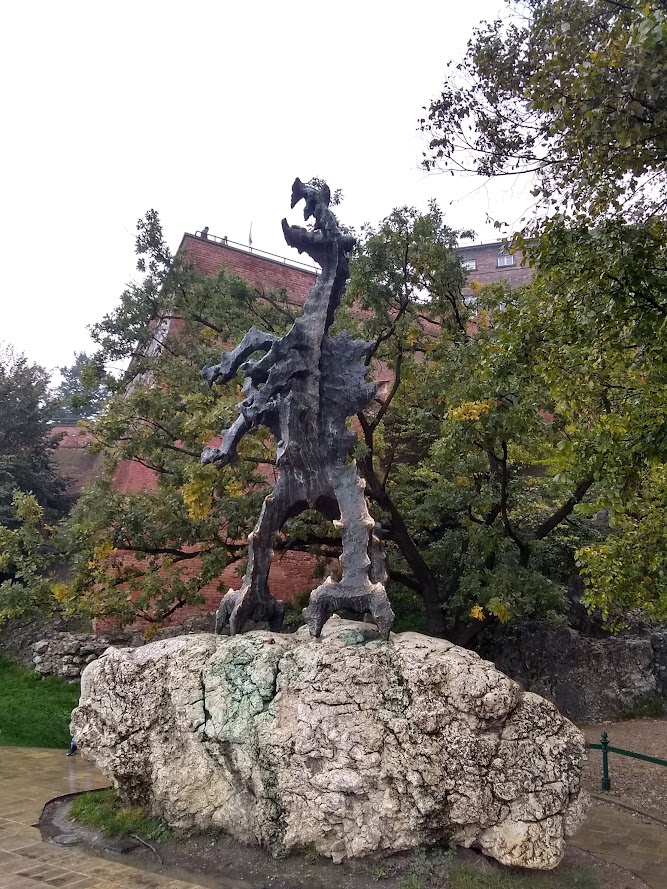
We climbed up to the city’s castle and learned things I no longer remember. There is a legend about a dragon and a cool statue. Here are the pictures I took about that part of the tour:

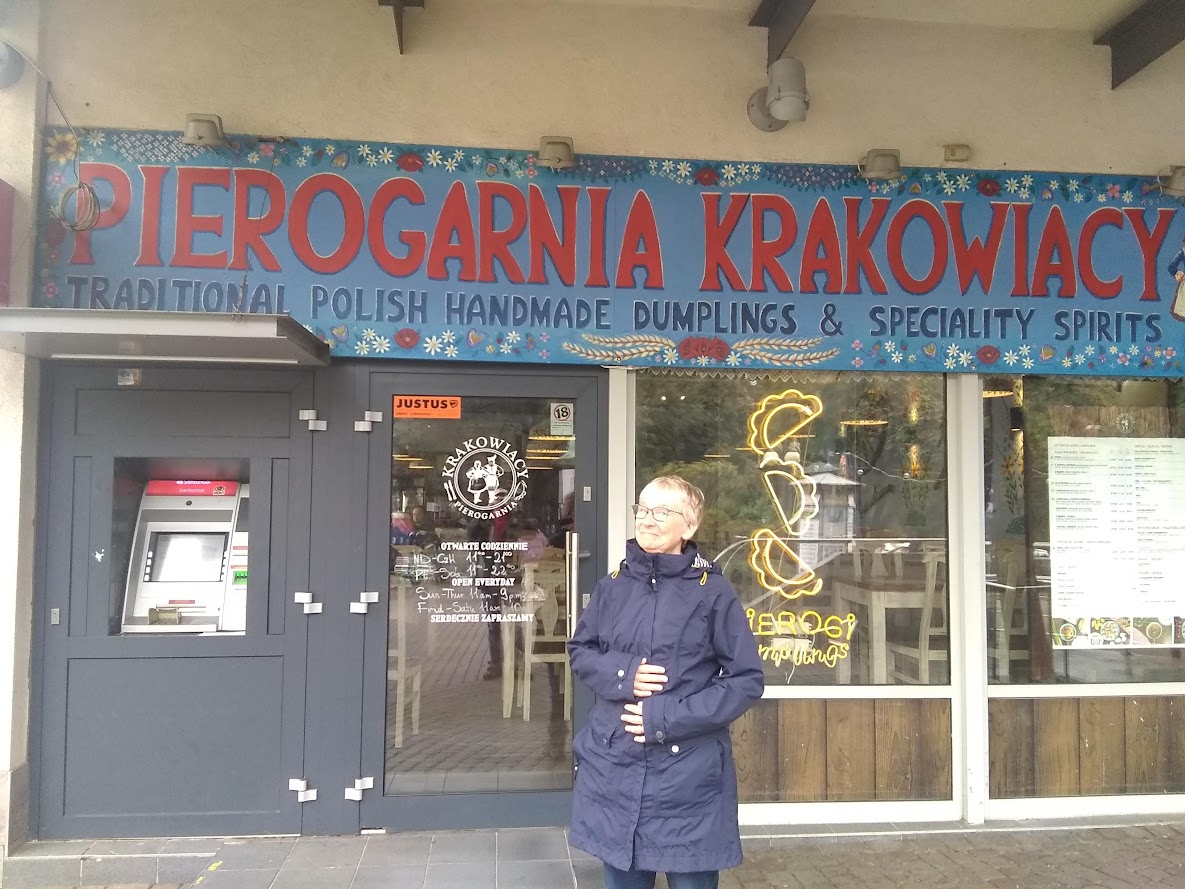
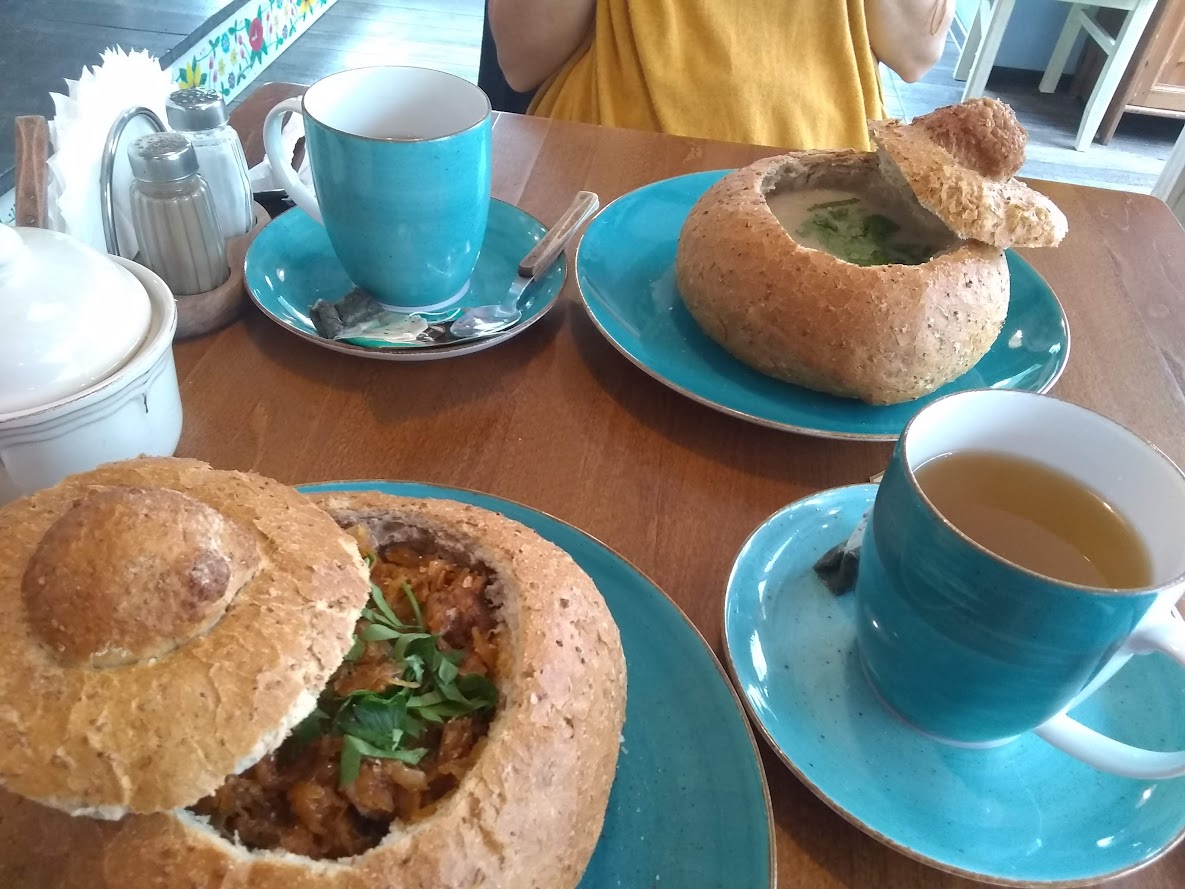
After walking around all morning in a drizzly rain, we stopped for lunch at a kind of touristy pierogie place, but the soup was warm and delicious.

By the time we climbed the many steps to our room, we were exhausted. I didn’t think I’d want to go out again, but the clouds cleared and the day was beautiful, so we decided to sit outside at a cafe or bar and have a drink. We ended up, accidentally, in the Jewish quarter which had good signage for doing a self-tour, so that’s what we did. I don’t have any good pictures because I’m terrible at remembering to take pictures.

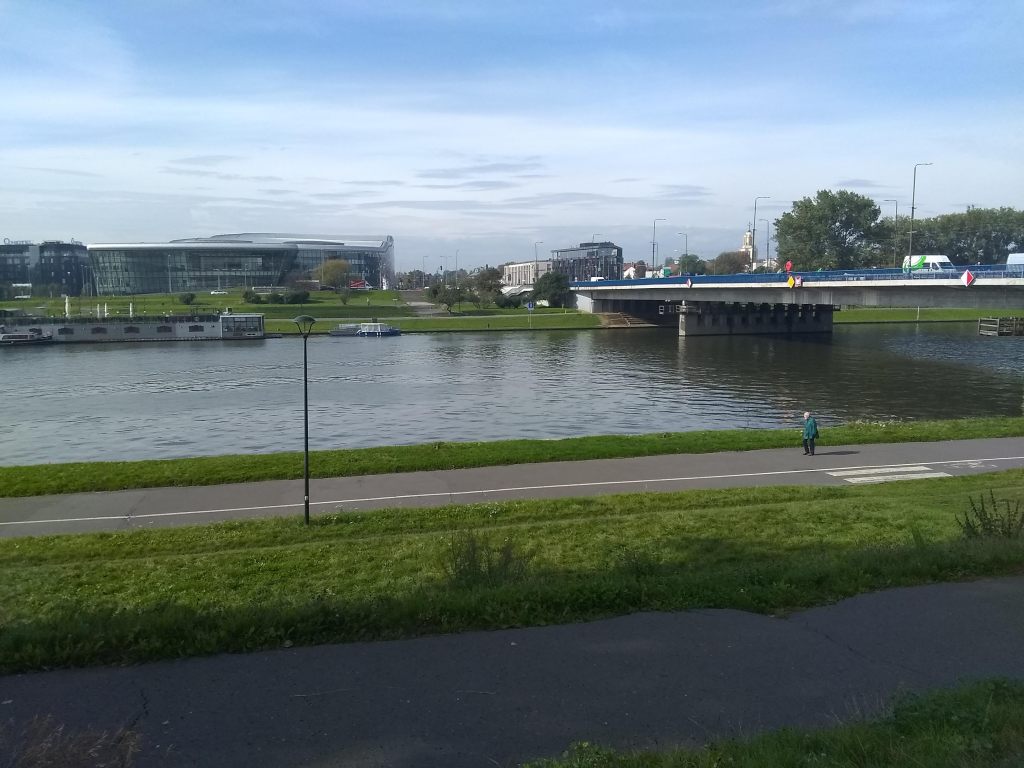
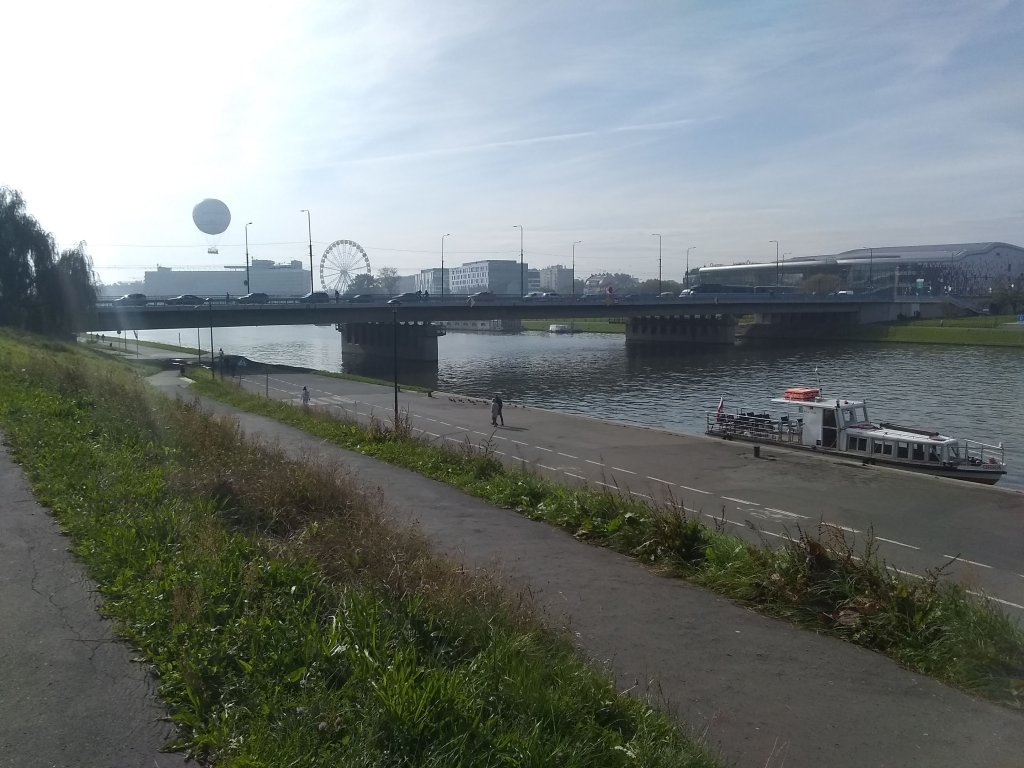
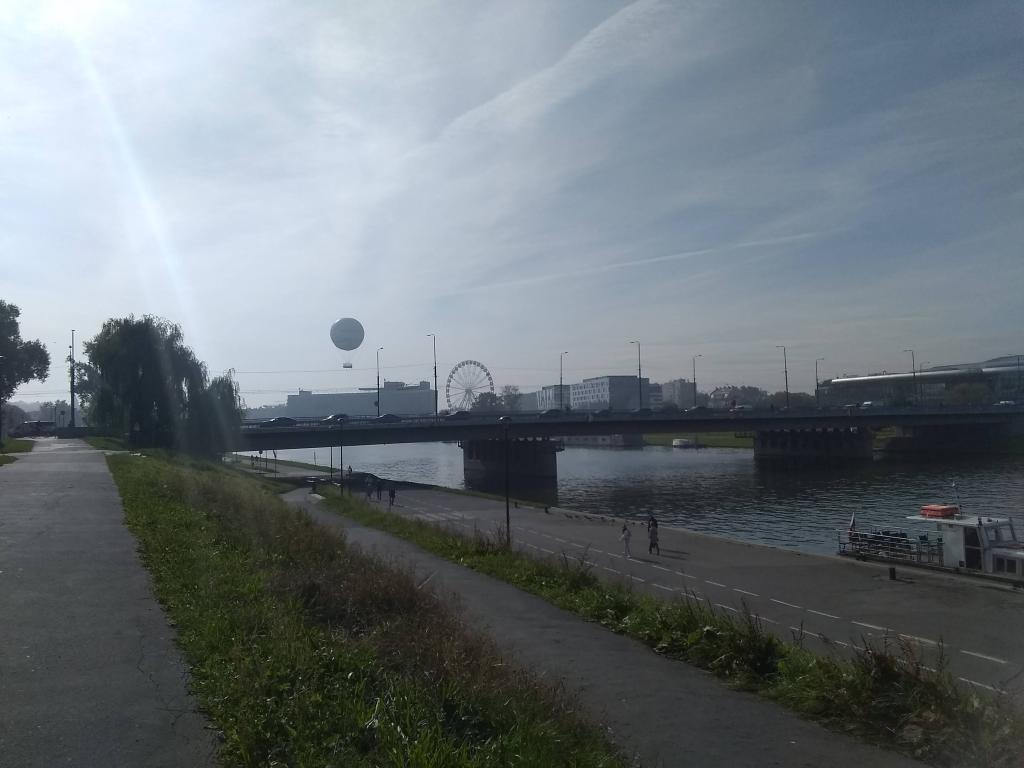
The next day our train for Warsaw left in the afternoon. Because I was so worn out, we decided to just walk along the Vistula River and hunt for geocaches. (See Andy’s post about geocaching for more info.) It was a nice, low-key way to spend our last morning in Krakow. Here are some pictures of that excursion:

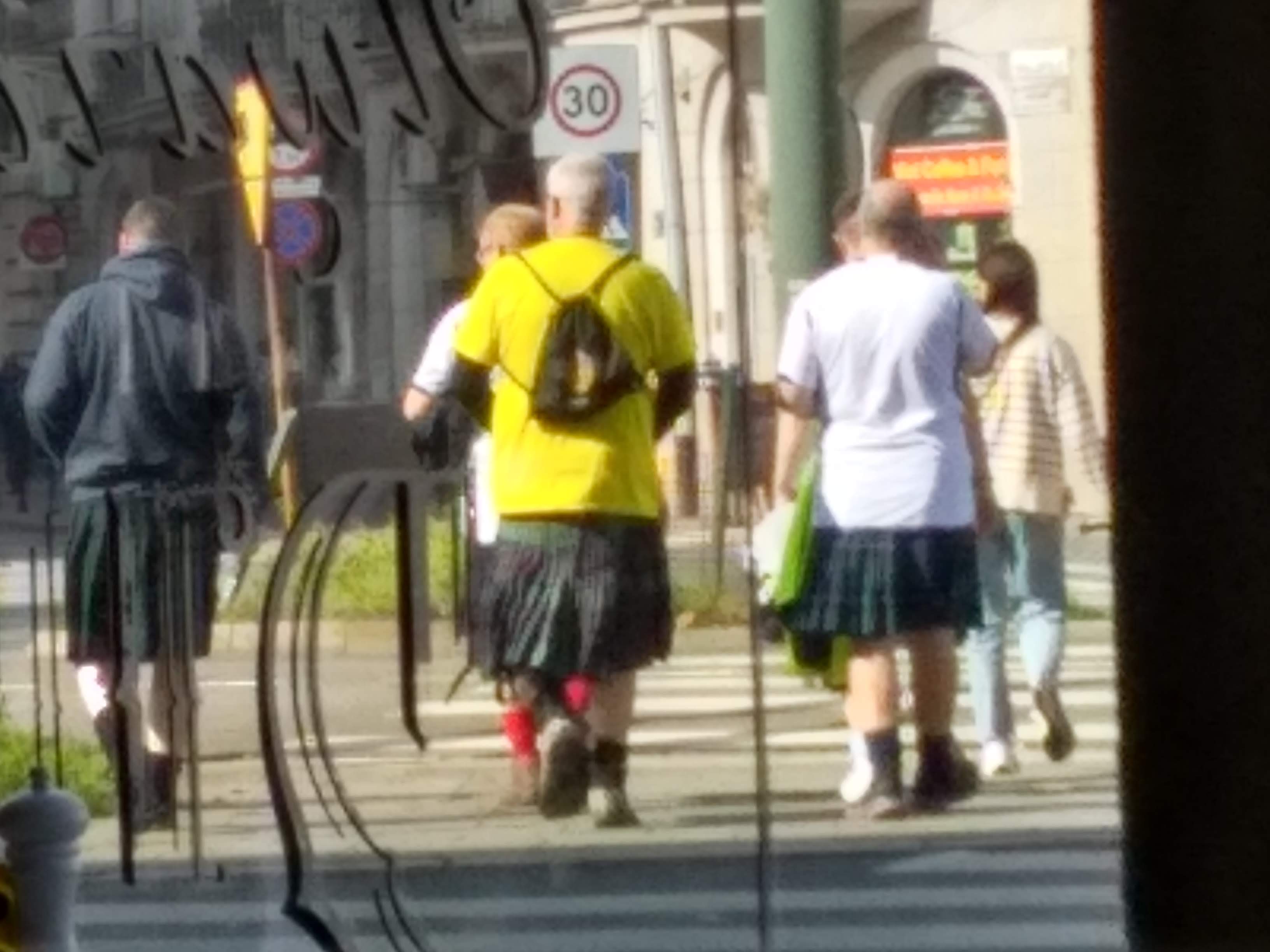
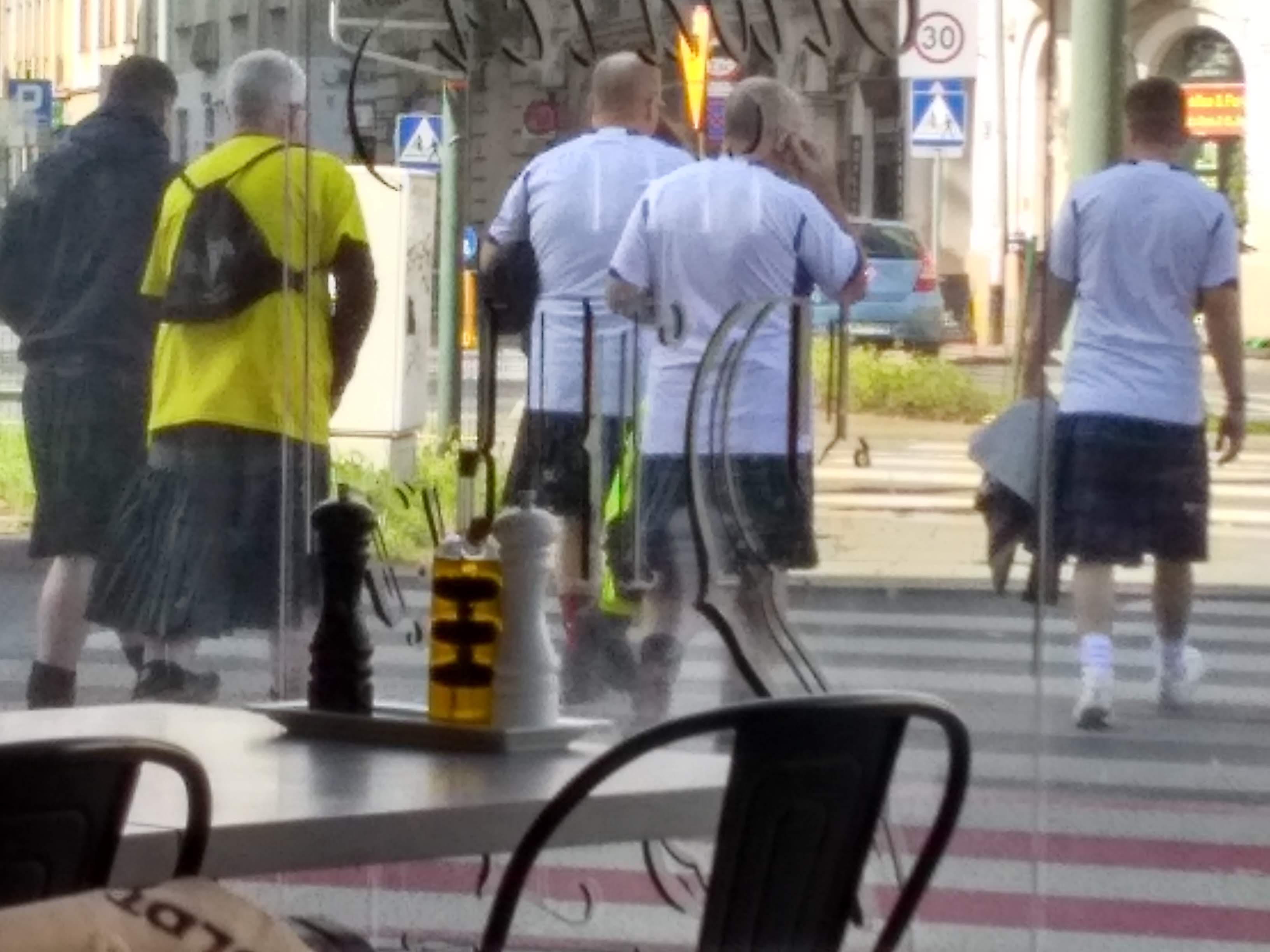
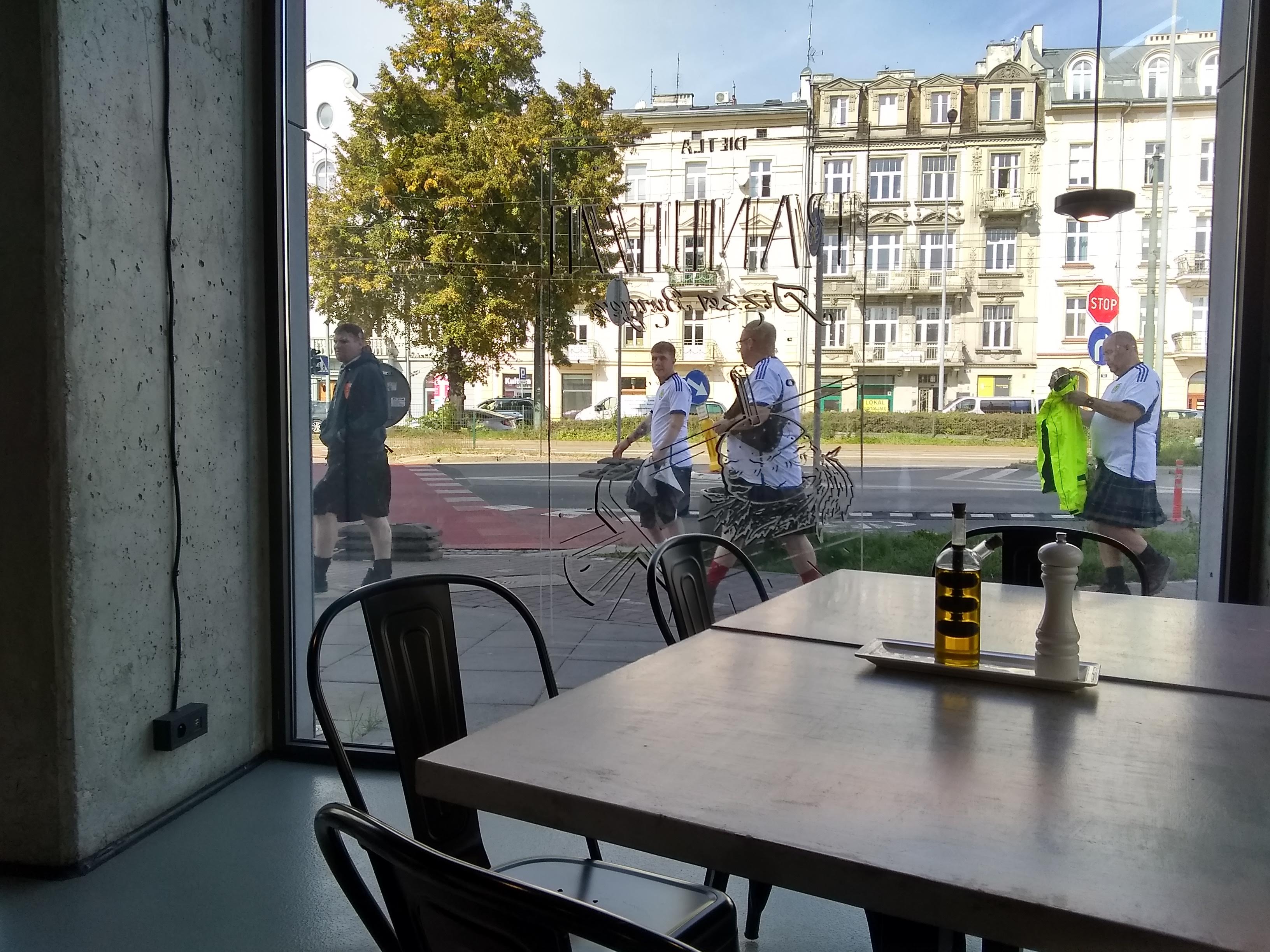
The final, weird and funny, part of our trip to Krakow was all the men in kilts. When you think about Krakow, you don’t think about “men in kilts.” It seems that on the evening we left Krakow, the Scottish national football team was playing Ukraine in Krakow. Andy and I discussed how interesting it is that we, as Americans, try to hide our nationality when we travel. We want to fit in. It’s obviously the opposite for these Scotsmen. Everywhere they walked in Krakow, they were basically shouting, “Scotsman here! Scotsman here!”

Random Rzeczy (things)

Cobblestones have a super-cool look, but if you walk on them too much your feet will hurt.


The Polish language does not have the letters Q or V. (The W sounds like an English V, and really, why does any language need a Q?). Nevertheless, if you attend a football match at Stadion Gdansk, you might be seated in Section Q.


I have three house keys, but one is my favorite. I love my long fancy key.


In Gdansk the bikes are more like pedestrians than cars. In many places, they have their own trail (in red) that borders the pedestrian sidewalk. When crossing streets as a pedestrian, it’s important to look both ways before crossing the red bicycle trail, even before getting to the road. If there isn’t a designated bicycle lane, cyclists use (at least what I’ve noticed) the wide sidewalks and don’t join cars on the streets, as is expected in the US.

Exploring Gdansk

For the first few days in Poland, we didn’t have internet in our apartment and our phones didn’t (still don’t) have service. This makes exploring a little awkward. Our only “map” is the memory of the maps we looked at before we got here. Still, we wanted to explore.

On Wednesday, we decided to head in the direction of the Baltic Sea. We were pretty sure which direction to head, and we didn’t think it was too far. The catch, though, was that we didn’t want to take too many turns so that we couldn’t find our way back to our apartment.

We discovered some cool buildings and parks–I wish I’d taken pictures. After walking for about 2 hours, we were tired, our feet hurt, and the coast didn’t seem very close. So, we turned around and made it home.

Later, when we could check the internet, we saw that we had headed in exactly the right direction (totally Andy), but just didn’t travel far enough. It was farther than we’d thought.

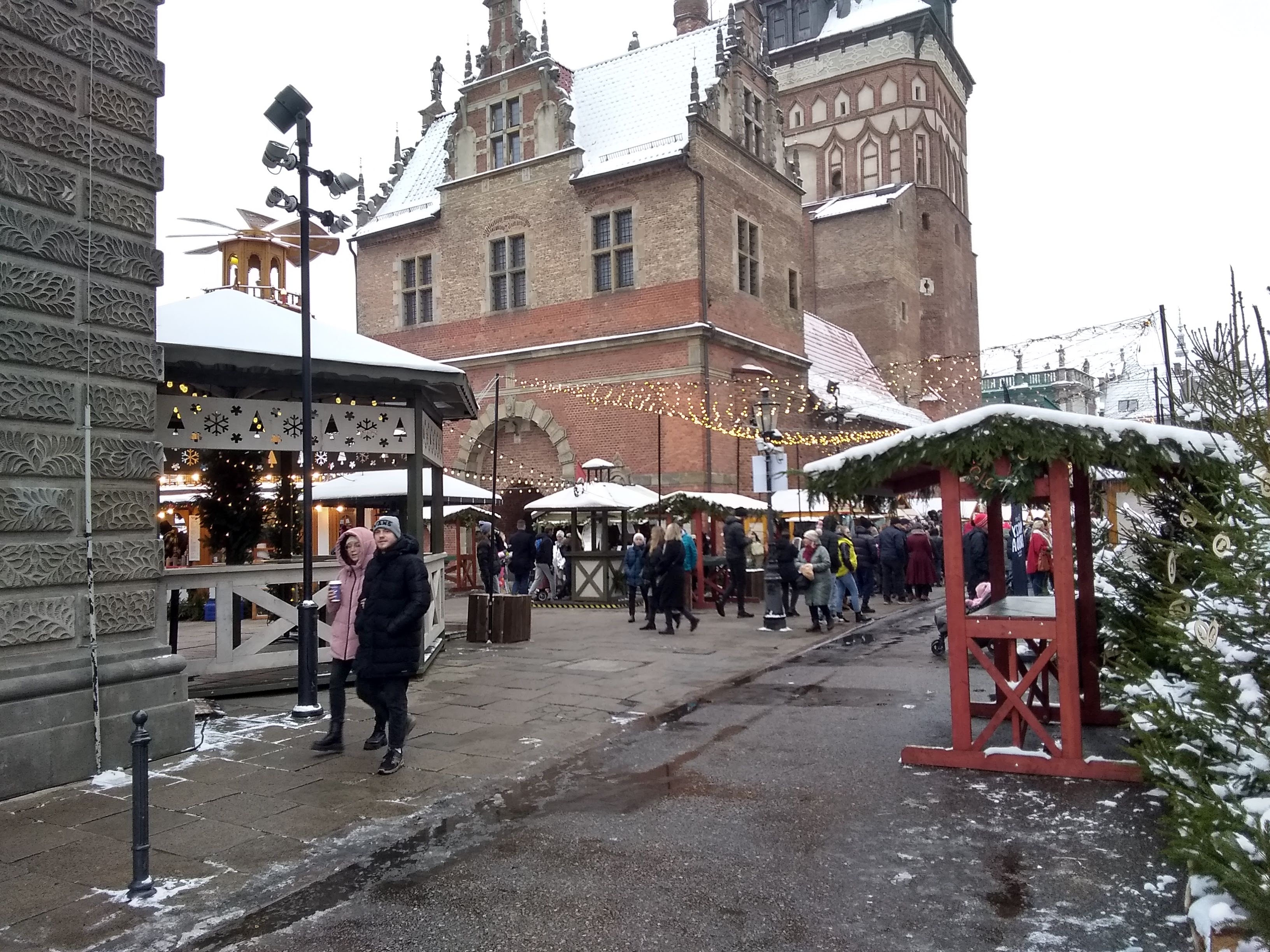
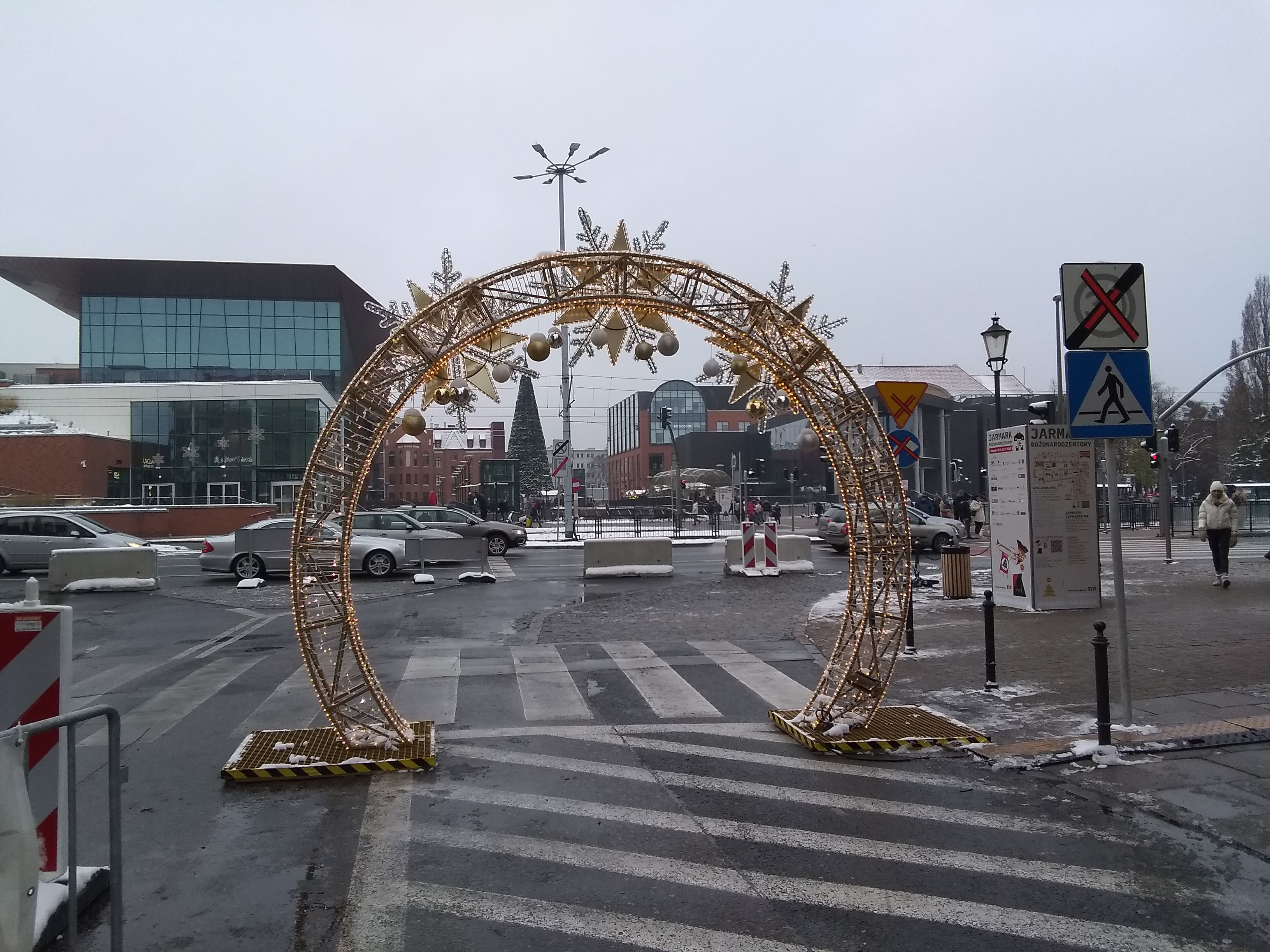
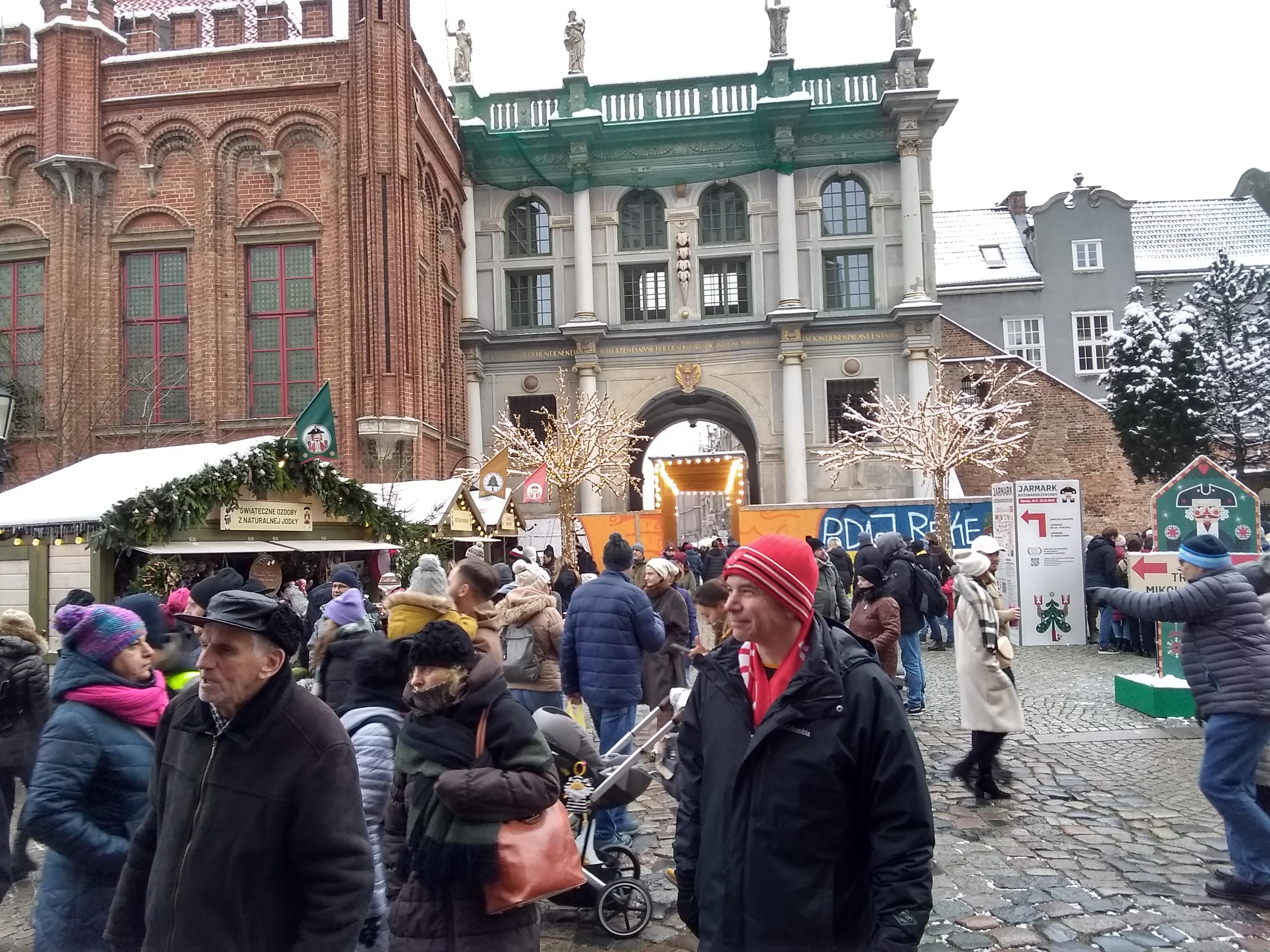
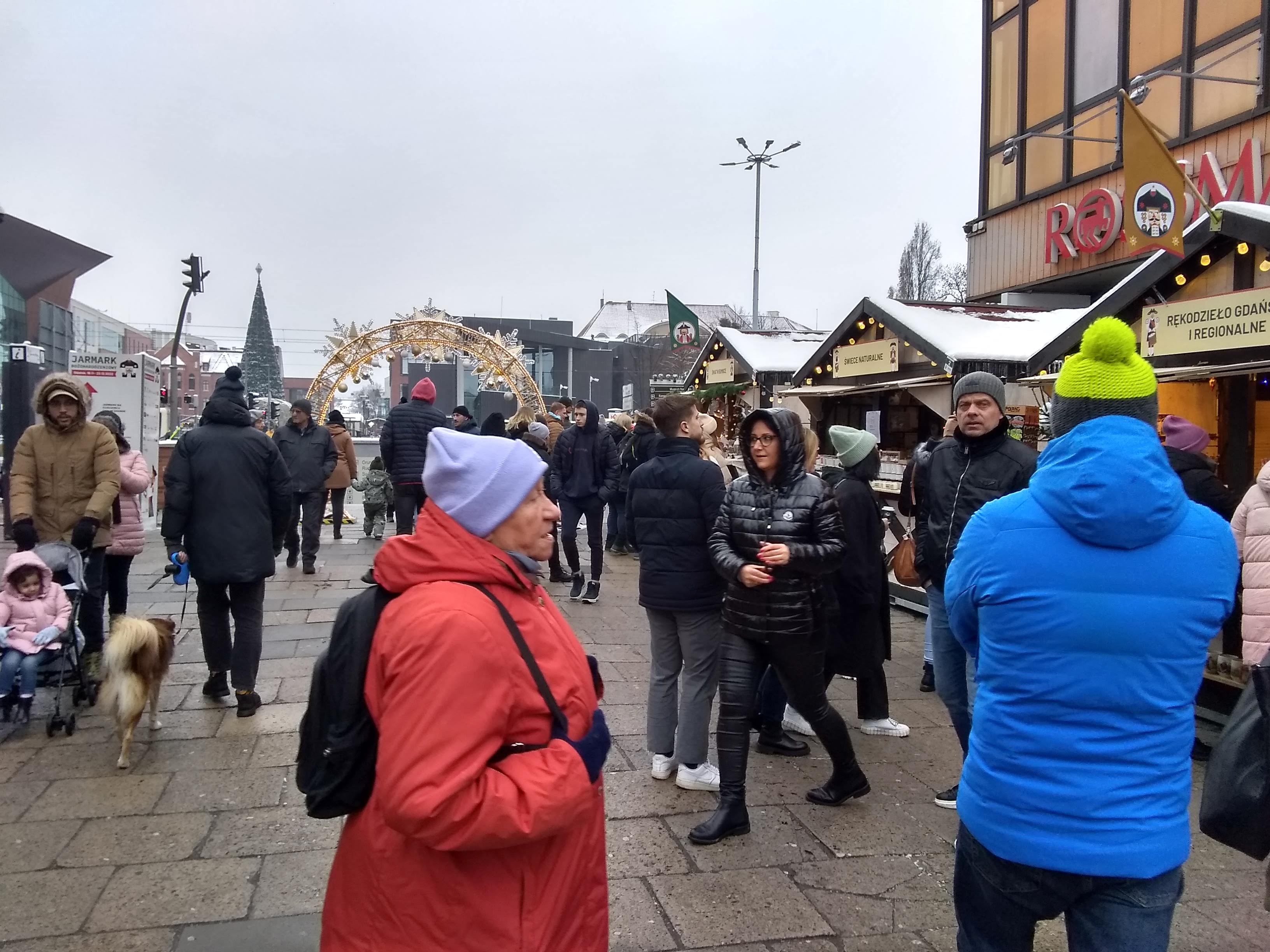
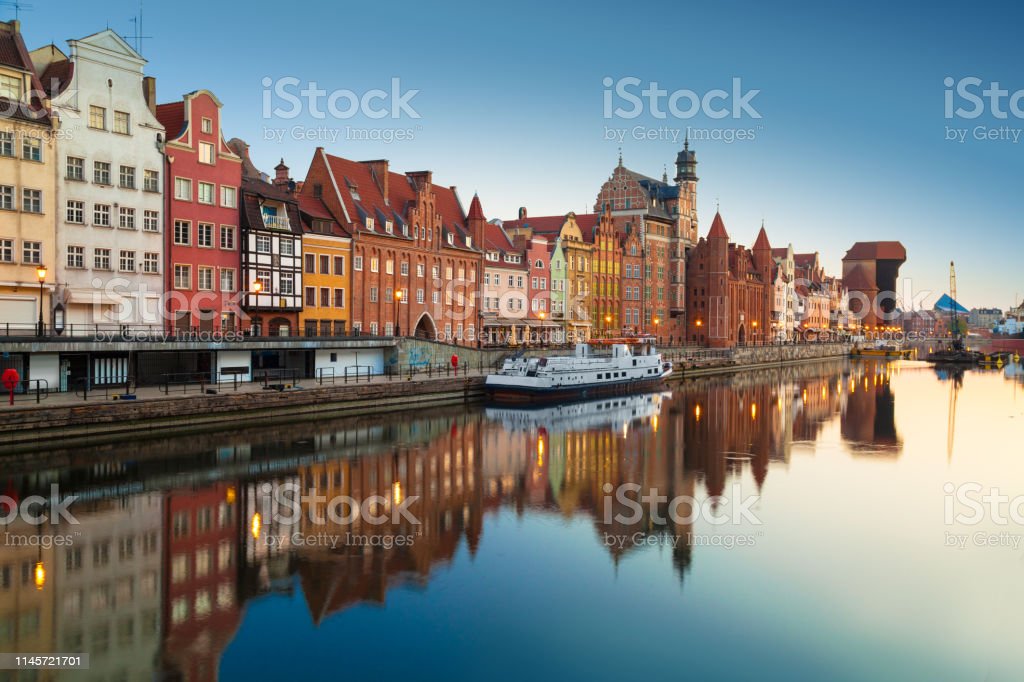
Today, we decided to take a train to the old part of Gdansk. We have internet now (still no phone service), so we could map out our route. We also hoped to find a tourist information area where we could get paper maps. These are not as easy to find as they once were!

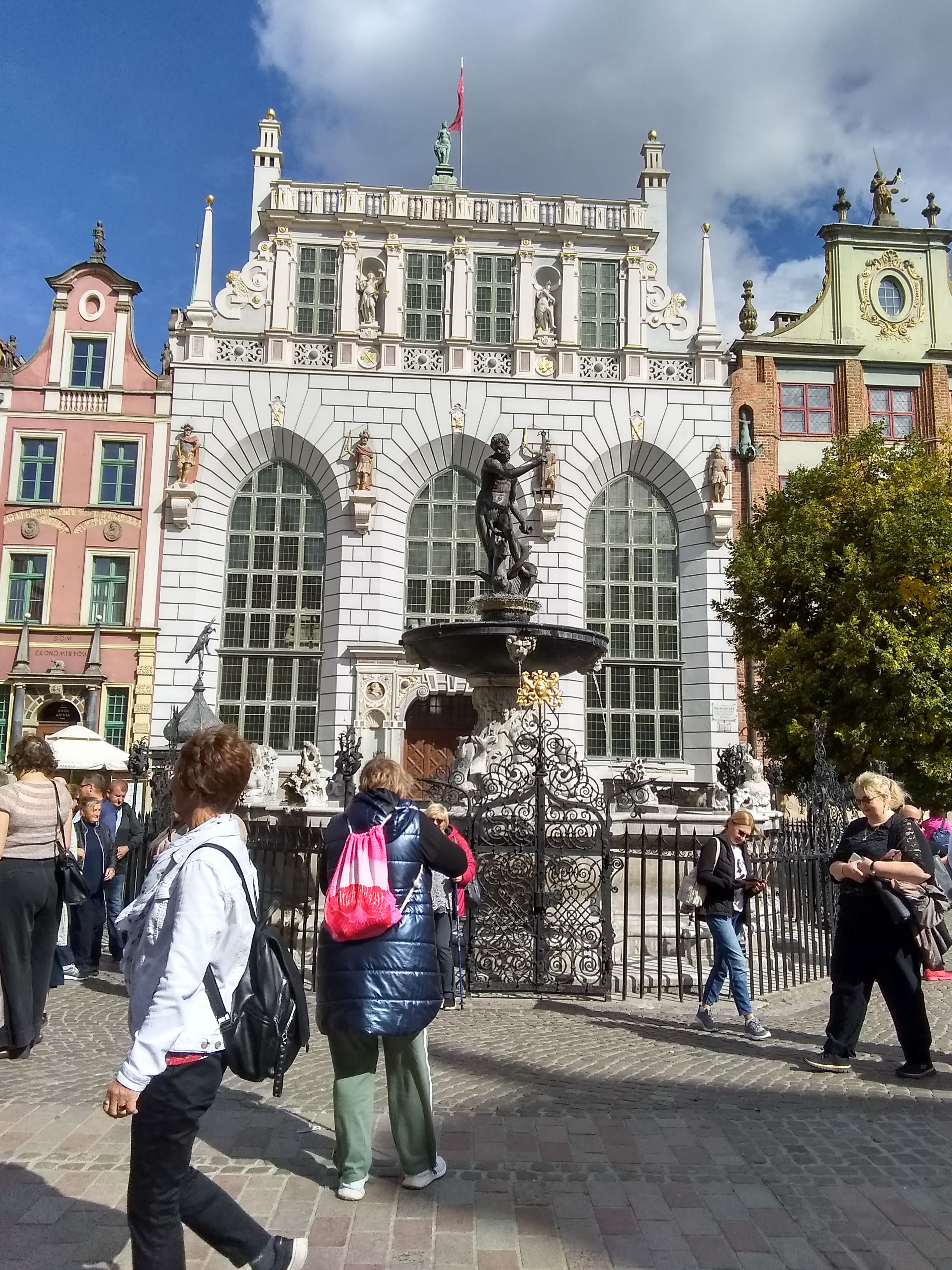
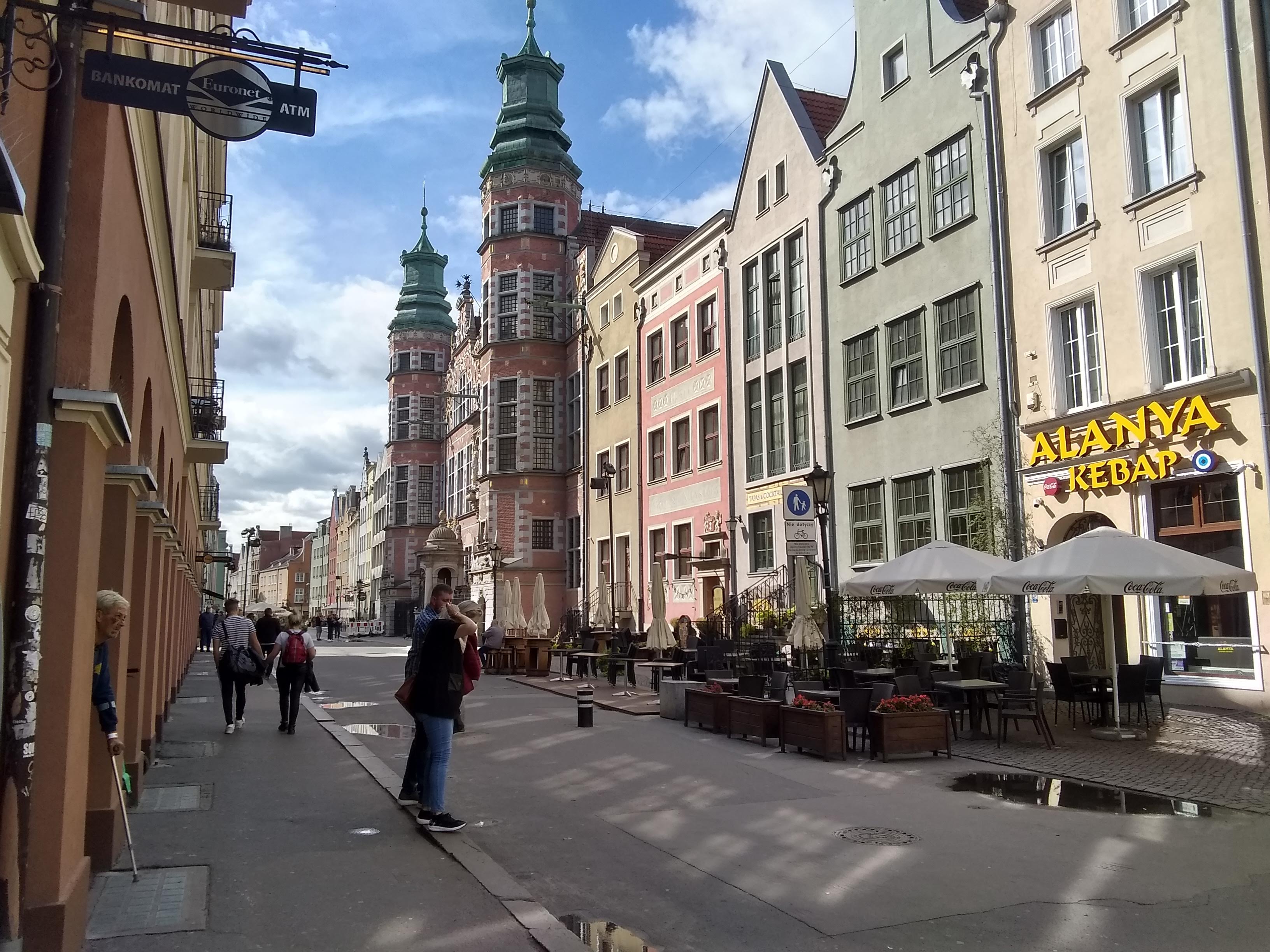
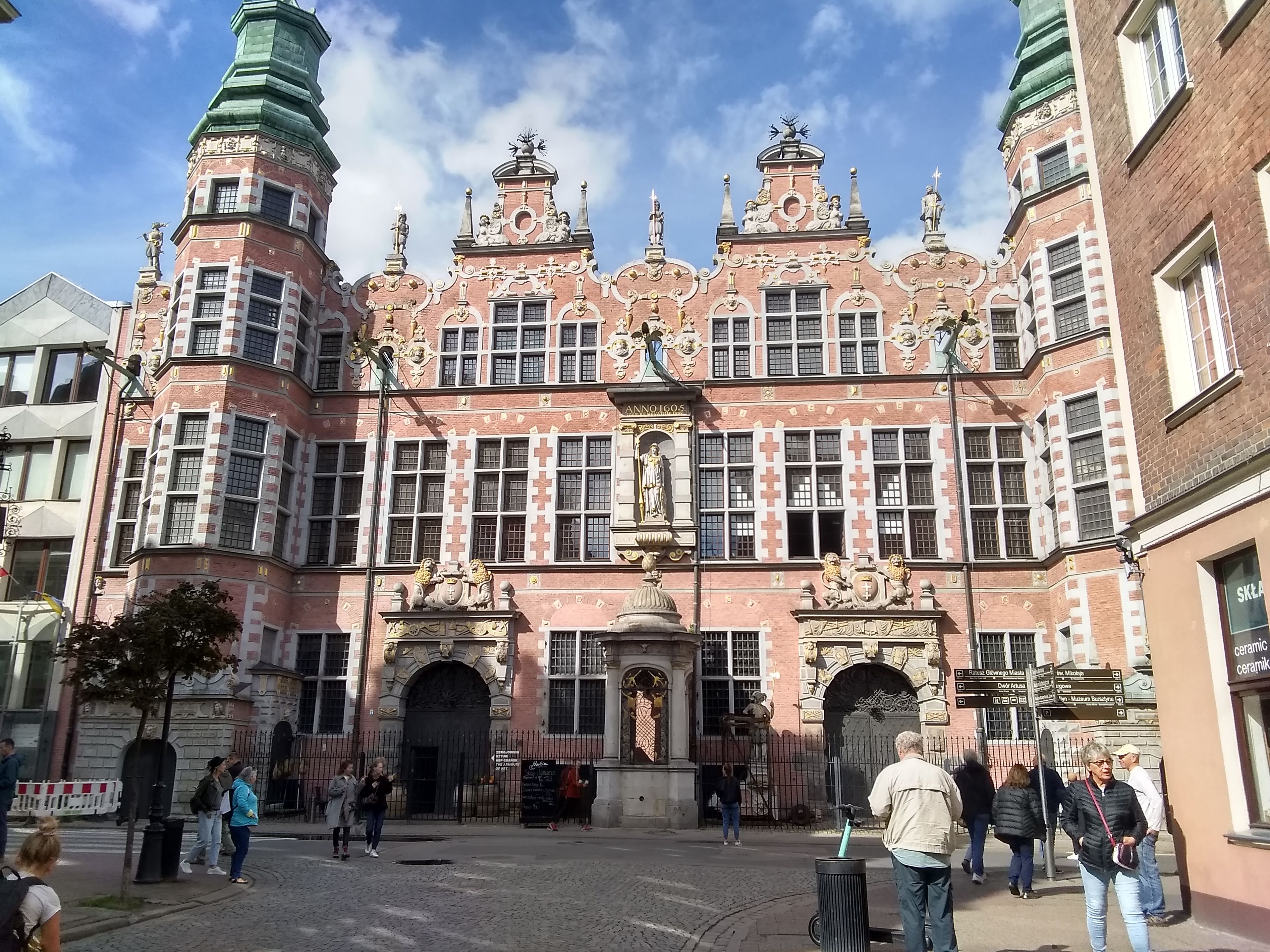
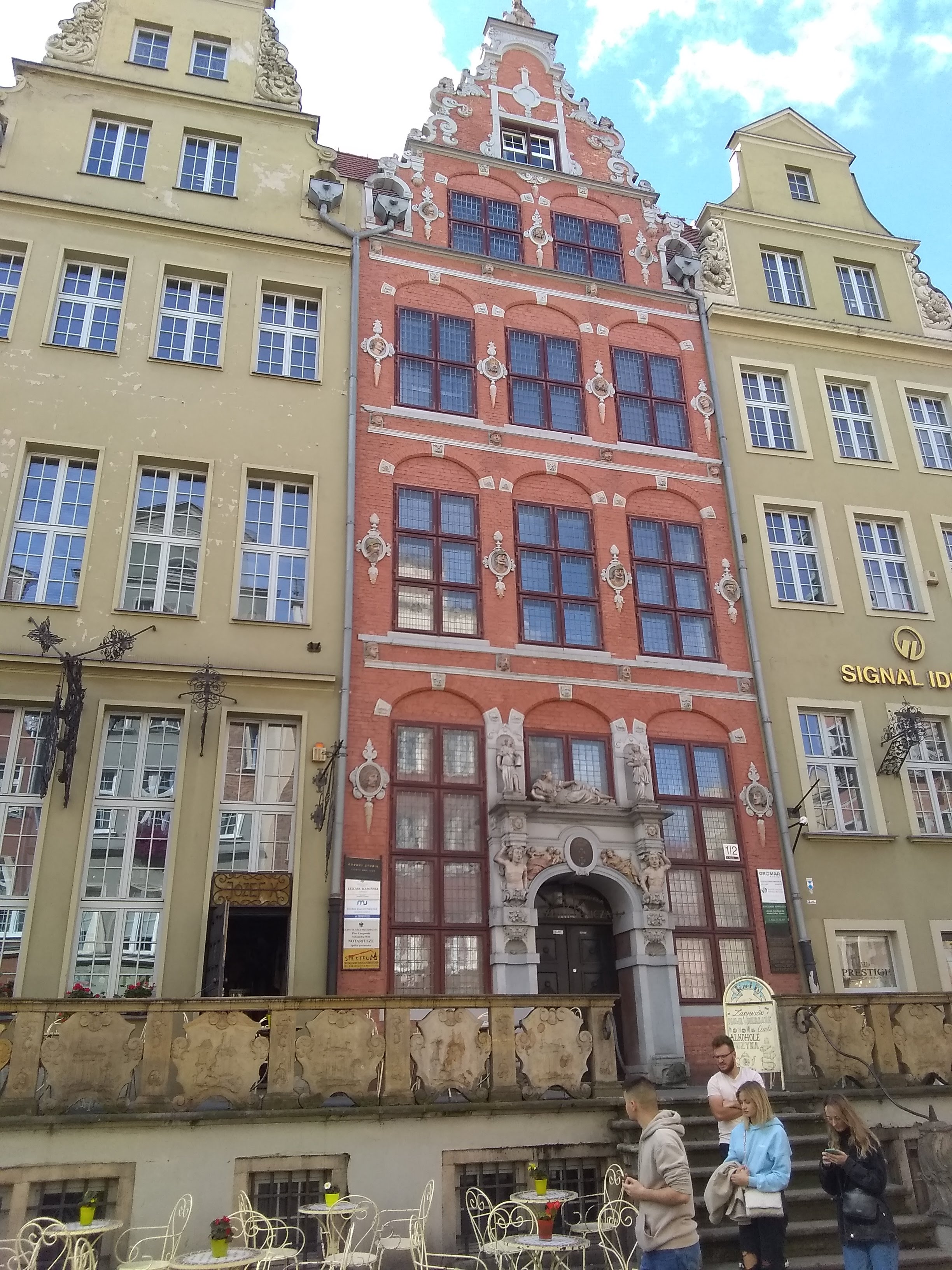
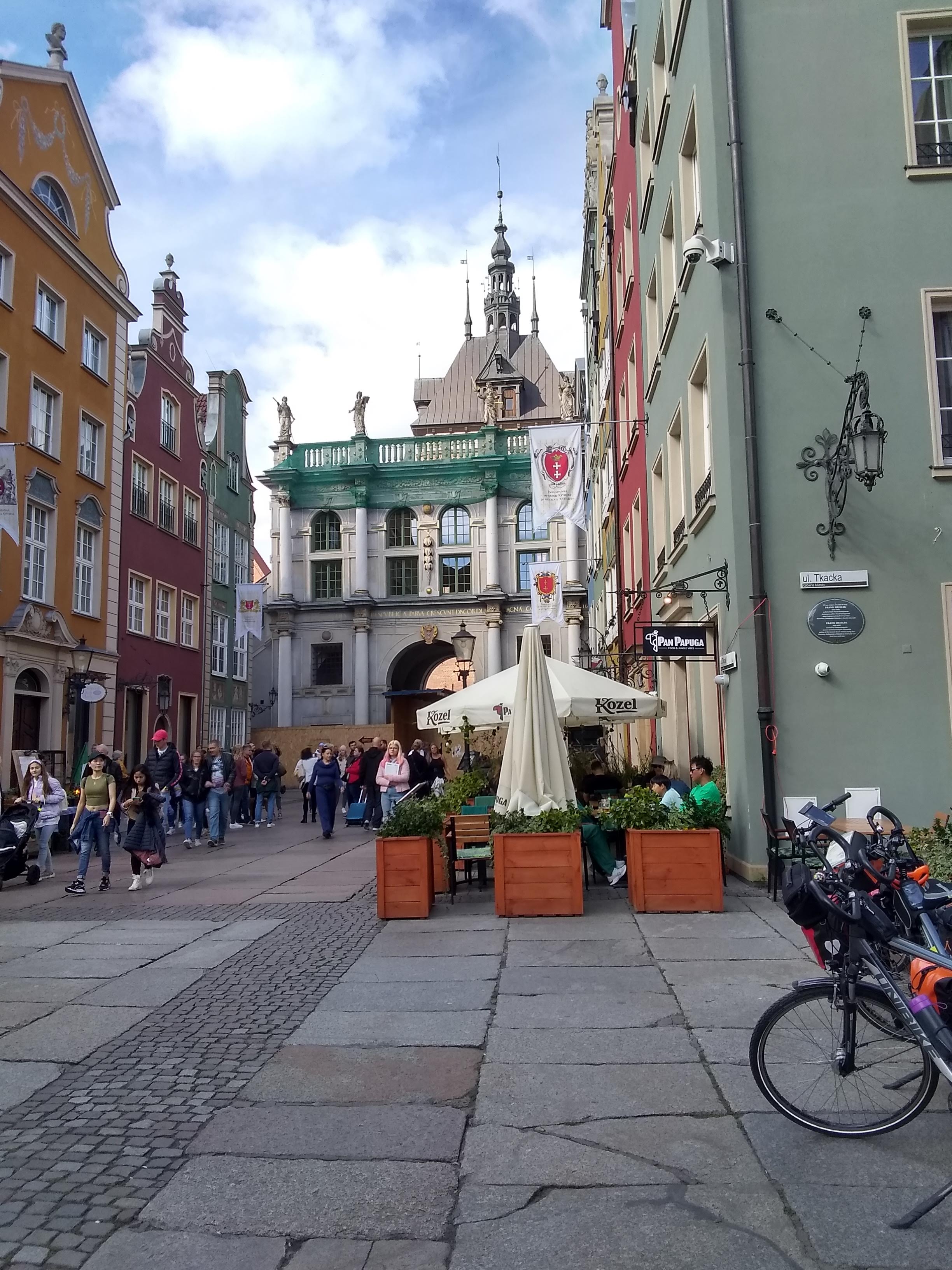
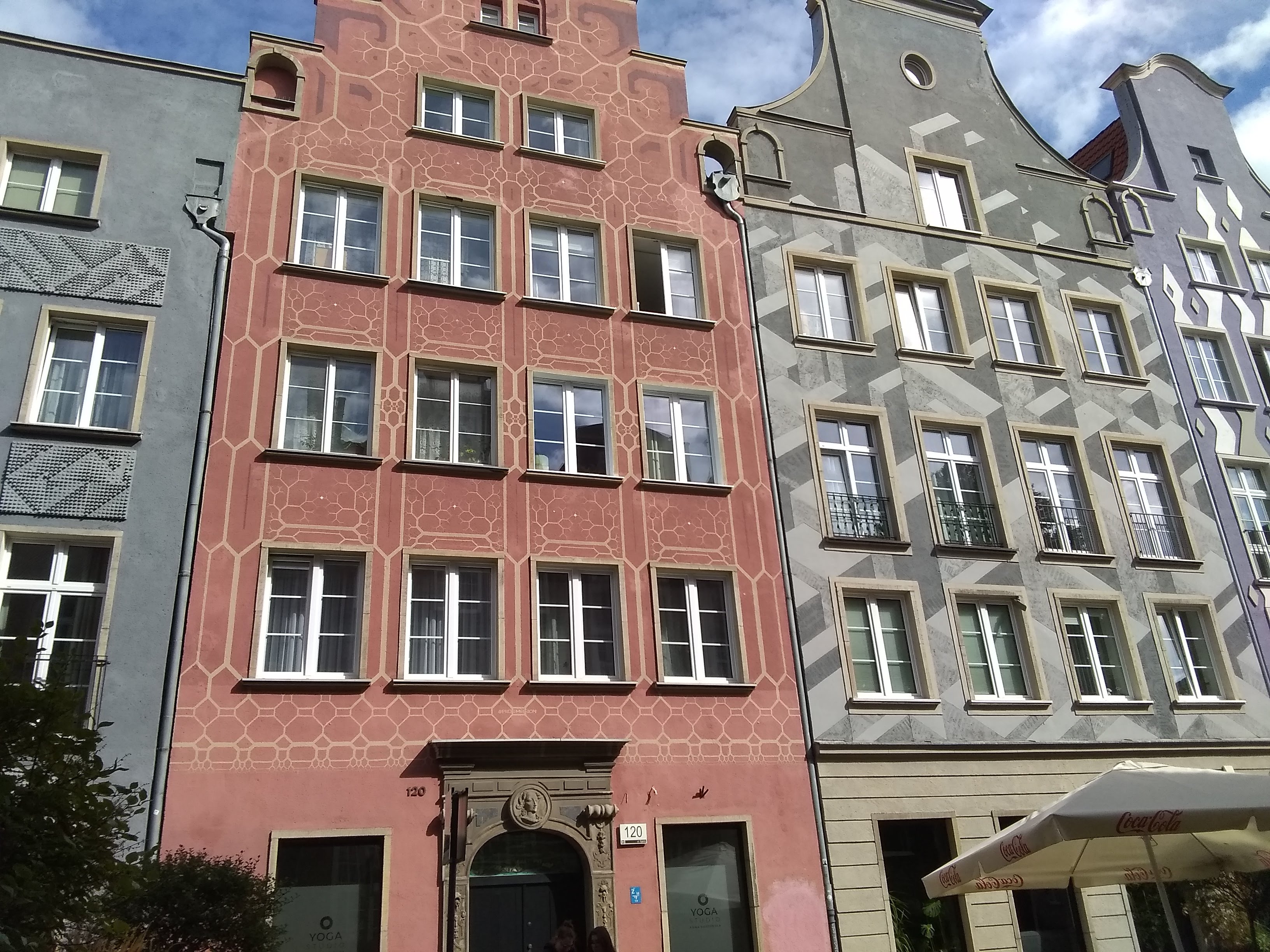
Success! I have several maps now. Also, I remembered to take pictures. Here are some of the beautiful sites in the old town of Gdansk:

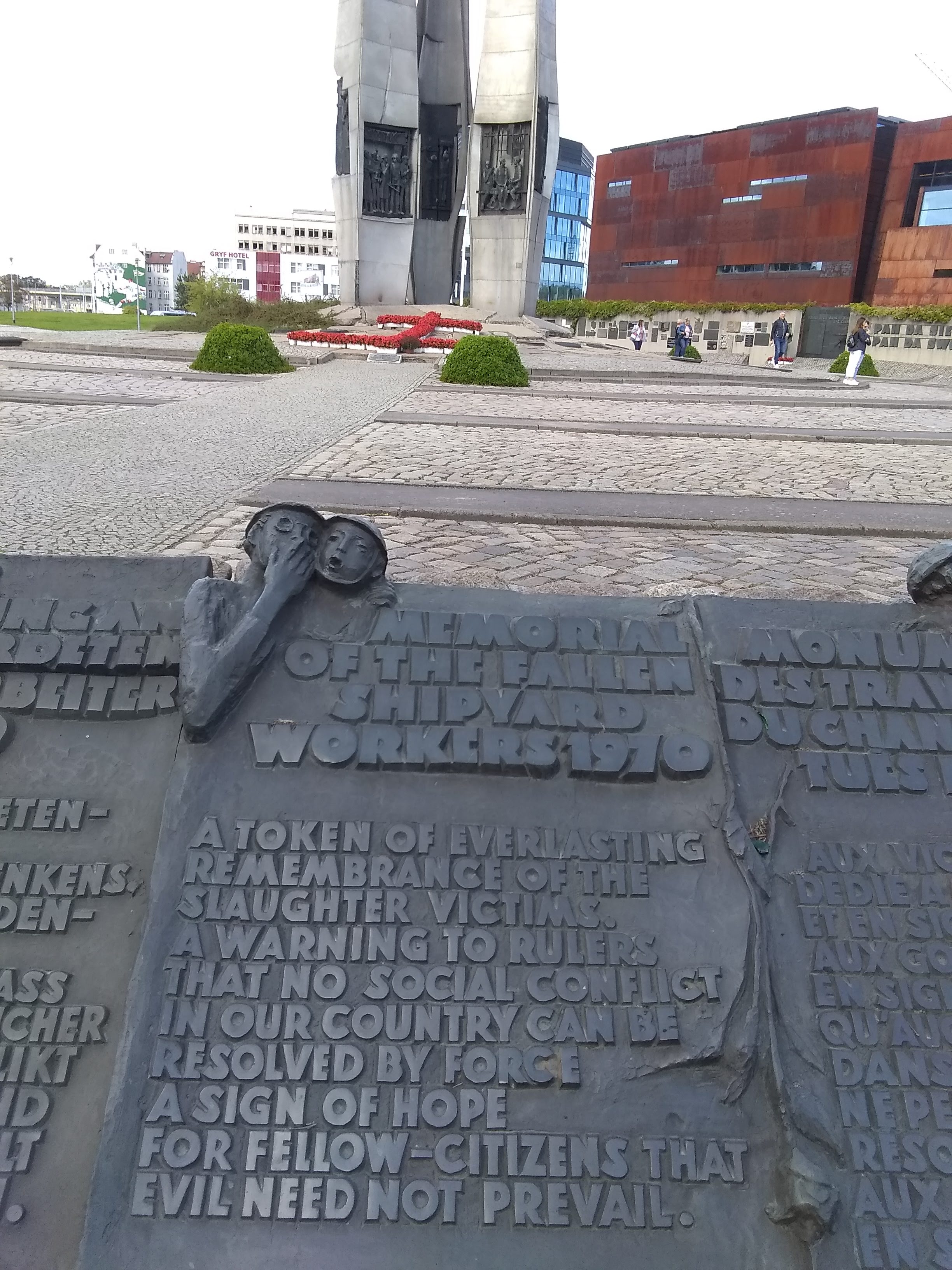
The highlight of our day, though, was our visit to the Solidarity Museum. If you are ever in Gdansk, I highly recommend it.

The red-rust building in the background is the Solidarity Museum. The top of the Memorial for the Fallen Shipyard Workers is cut off in this picture because I wanted to get these words.

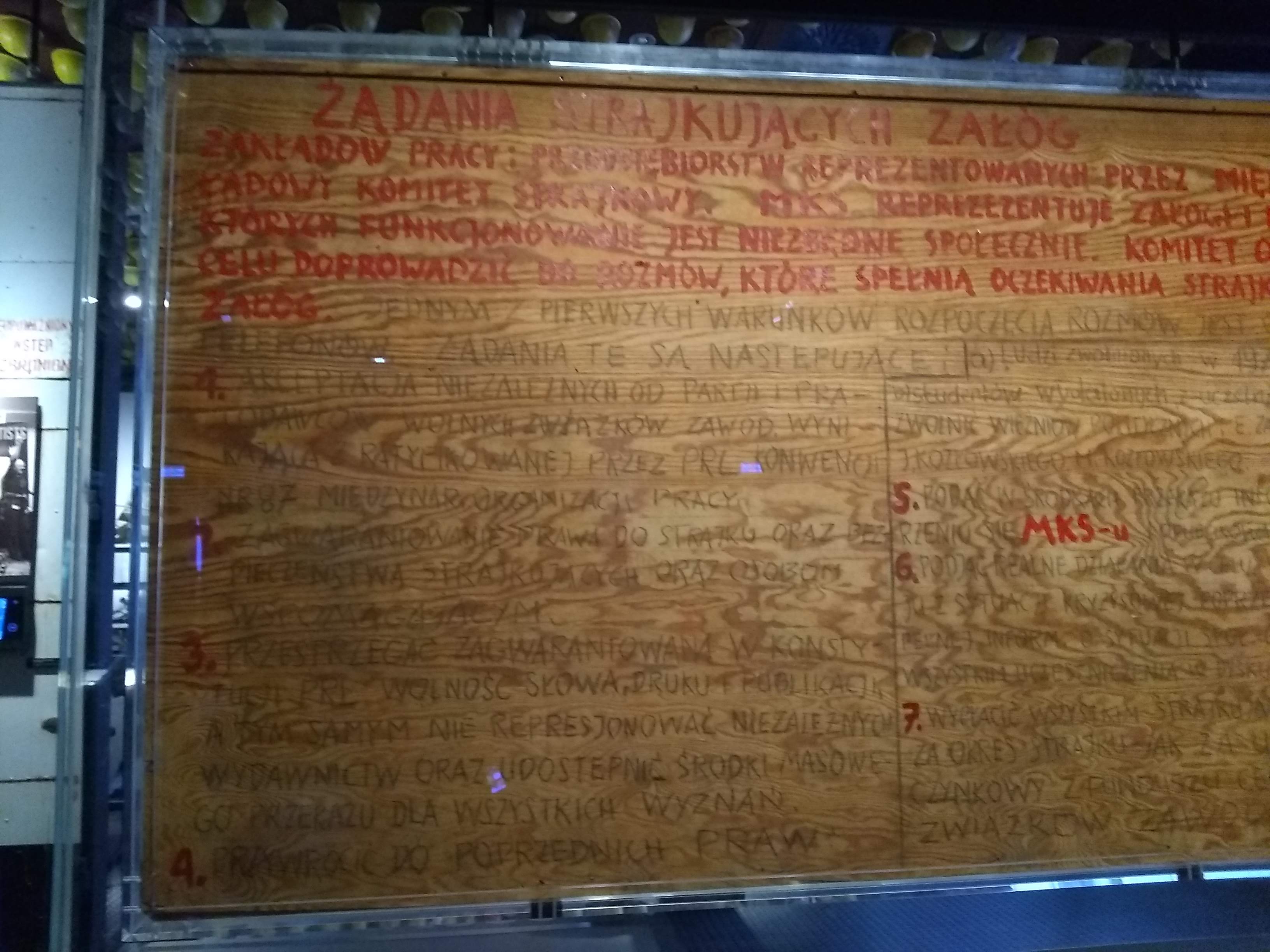
These are the demands of the striking shipyard workers which were written on two large wooden boards and then placed at Gate #2 of the Gdansk Lenin shipyard in 1980. The strike was initiated in defense of a 30-year employee who had recently been fired. This gate was a symbol for the shipyard workers because in 1970, the army shot two and injured several others in trying to stop an earlier a strike.

The Solidarity Museum is amazing and inspirational. My eyes watered more than once. There are placards and signs outside the museum which talk about the current struggles of Belarussians who have been killed, arrested, or forced out of their country by the current oppressive regime in that country.

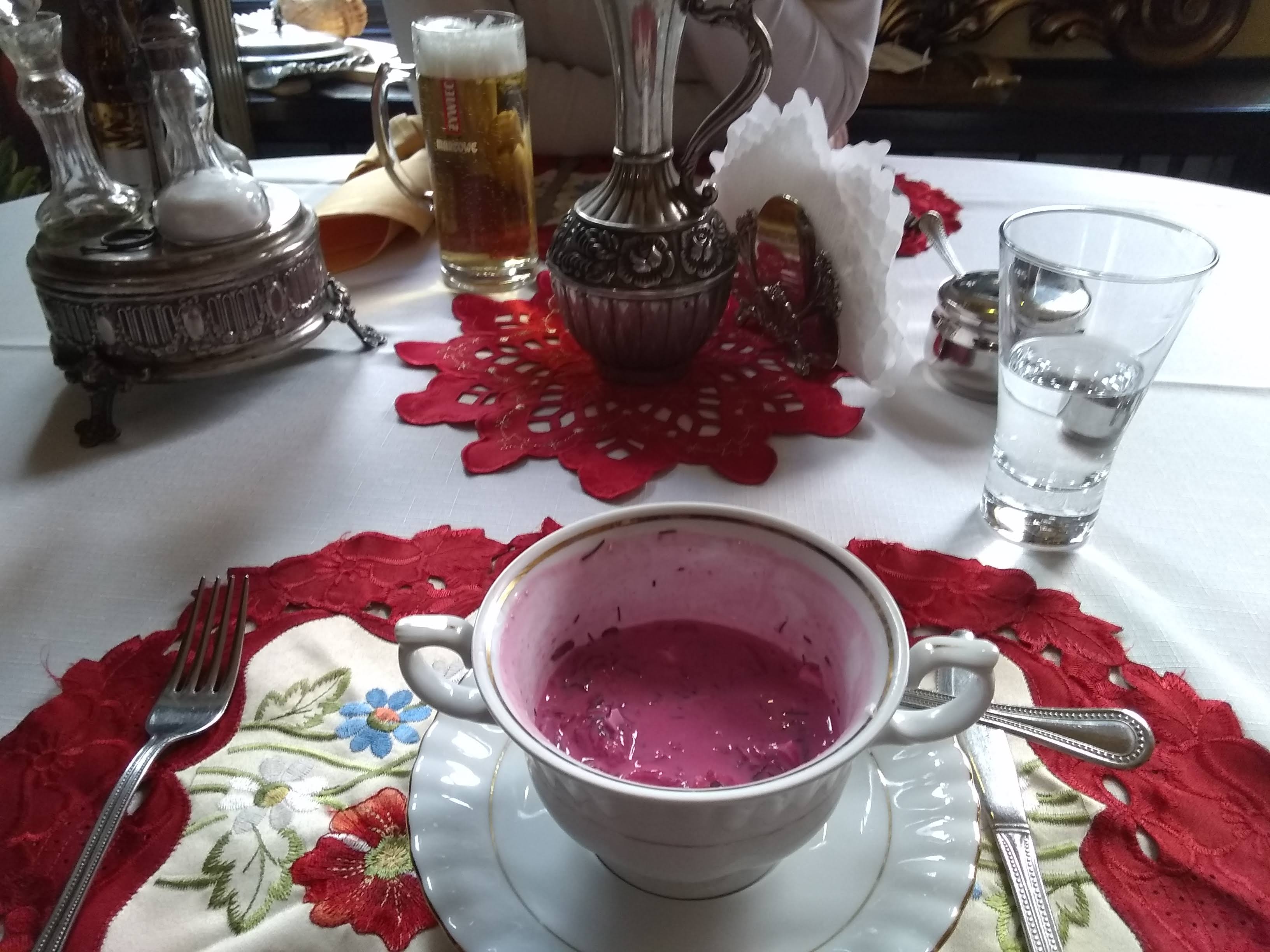
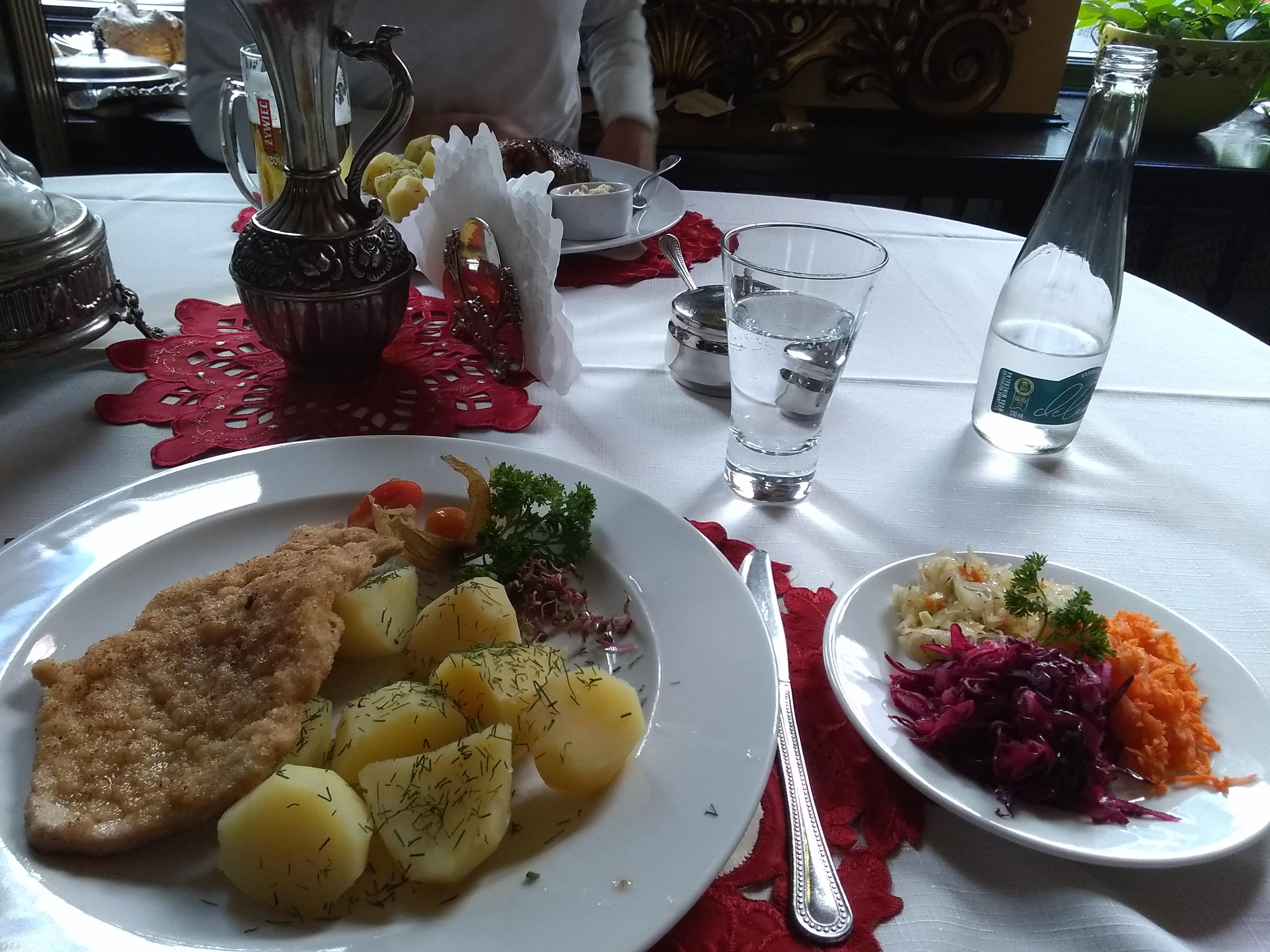
After walking around the museum and most of old town, we were ready to sit and eat a meal. At one intersection we became confused, and a Polish gentleman offered to help us. It turns out that he gives tours in German of the old town. He walked us to his favorite restaurant: Gdanska Restaurancja. It is incredibly beautiful inside. Visit the website to see. I took pictures of our delicious Polish meals. I had beetroot soup with cream and a pork cutlet with vegetables and potatoes. Andy had a local beer and pork roast with potatoes and cabbage. Highly recommended!

Well, that’s all for now. The Polish national men’s volleyball team is in the finals of some international tournament. We’ve been watching them on television the past few nights. Very exciting! Volleyball appears to be a very big deal in Poland. The tournament is happening in Poland, and the crowds have been amazing. Me, I’ll watch and enjoy any sport.

Do widzenia!

Packing for Poland

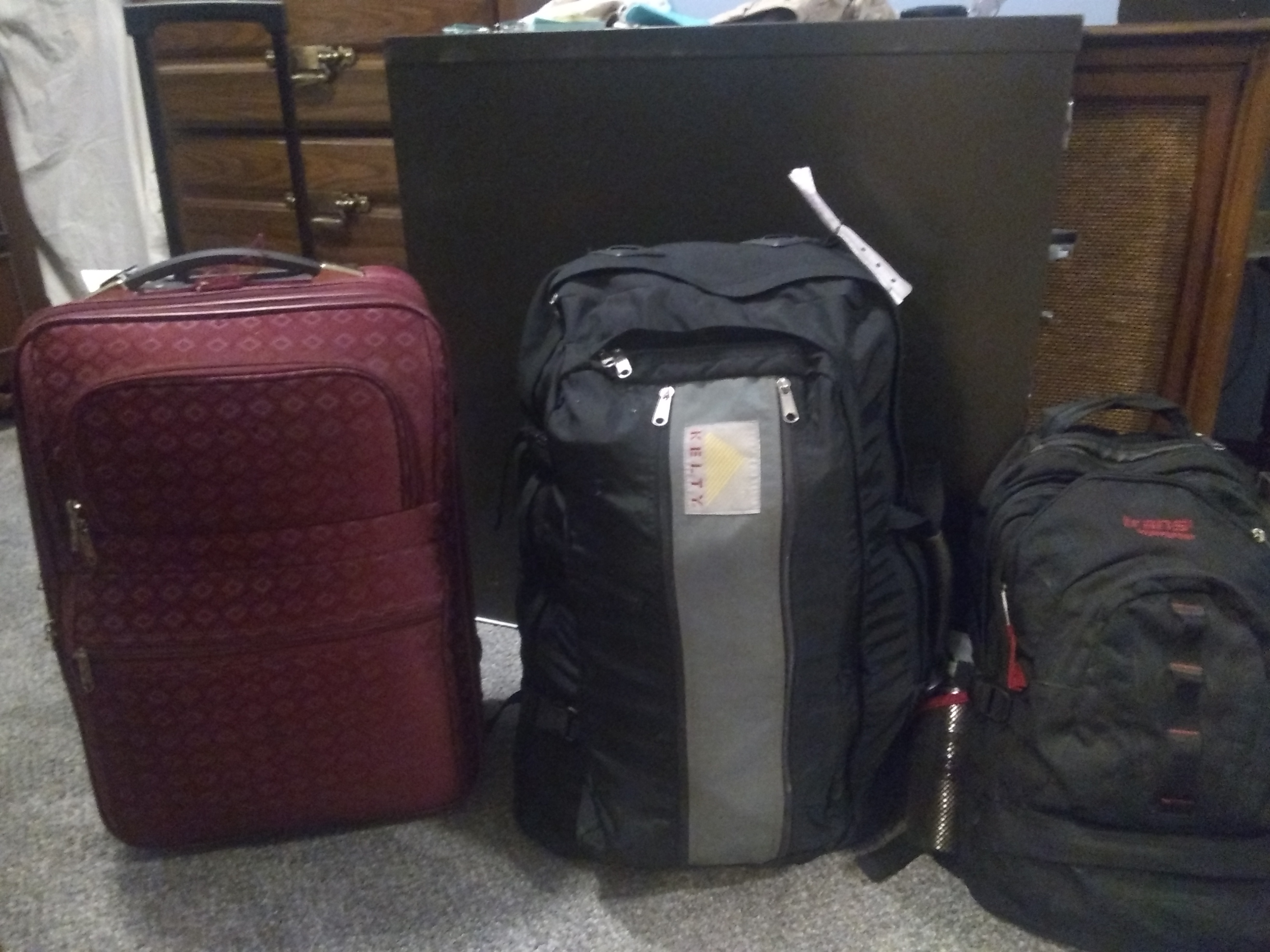
Many people have asked me about how to pack for a 10-month “trip.” Well, I like to travel light. I’m not into clothes and shoes and all that stuff, so it’s pretty easy for me to limit what I bring. We get one free checked bag (Kelty), one carry-on (red wheelie suitcase), and a personal item (backpack), so that is what I’m bringing.

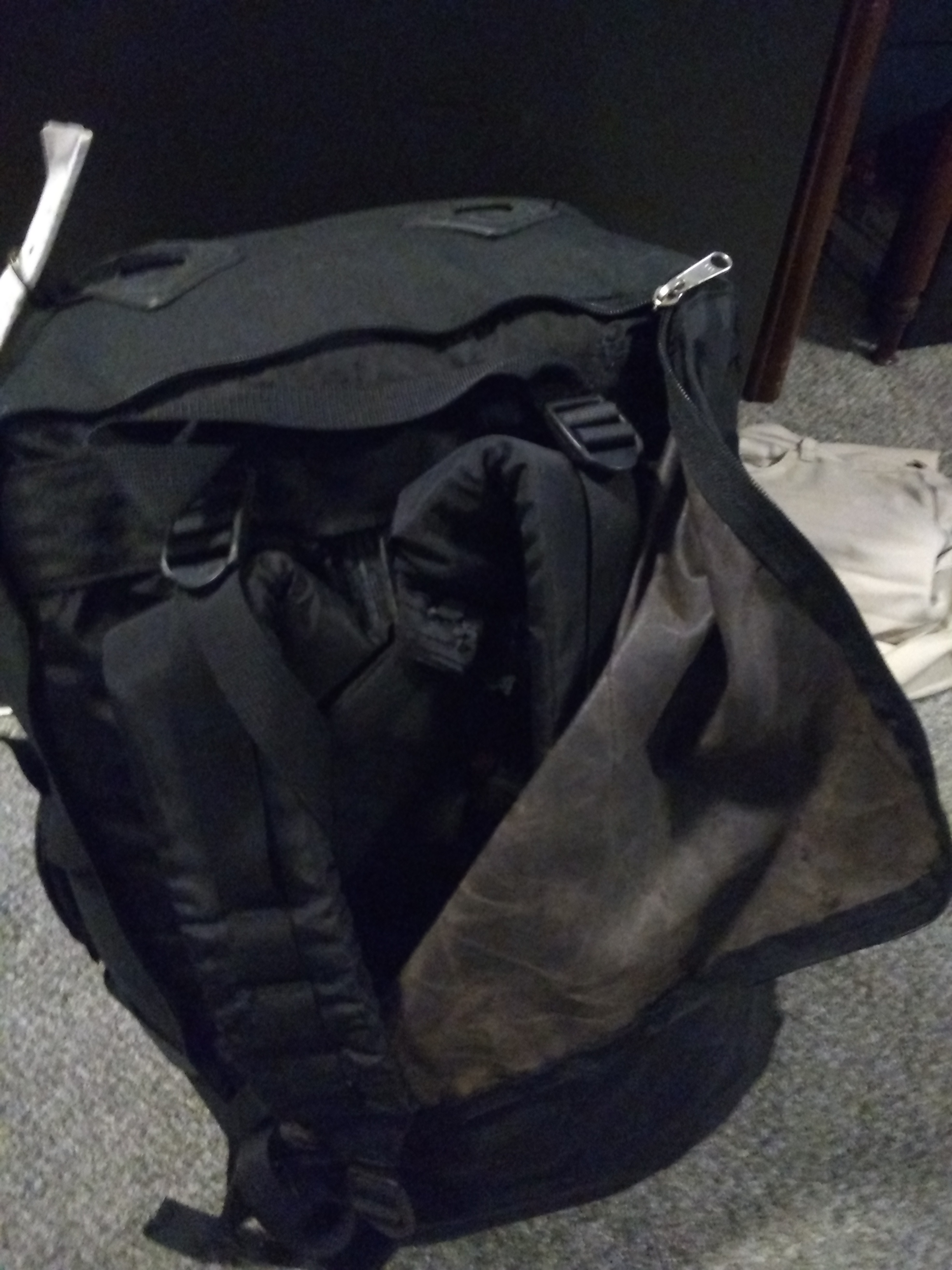
A few people offered to loan me a large, wheelie suitcase to check, and I thought about it. There would be more space, and the wheels could have been helpful. In the end, I decided to stick with Kelty. How could I leave her behind? Kelty is a hiking-traveling backpack-suitcase (in the middle, above). When you want to travel on a plane, the back zips up to hide and protect the straps that you can wear when you are hiking or walking from bus stop to apartment (shown below).

This isn’t the first time Kelty has traveled to Europe with me. In 2007, Andy Felt and I led the UWSP study abroad trip to Munich, Germany. I brought Kelty on that trip, although I neglected to take any good pictures of her while we were there. Below are my best attempts to find her.

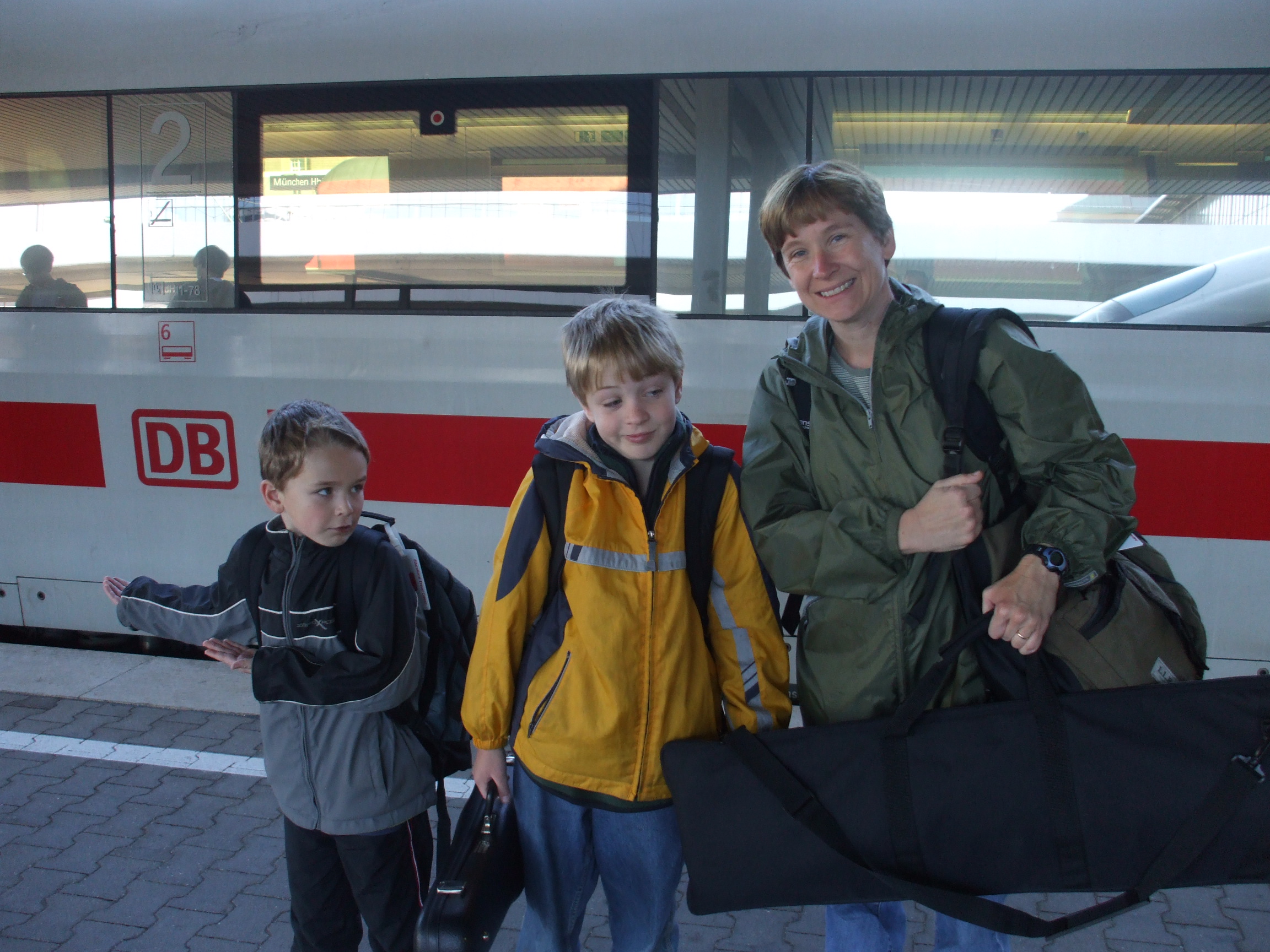
I’m holding several bags: is one Kelty?
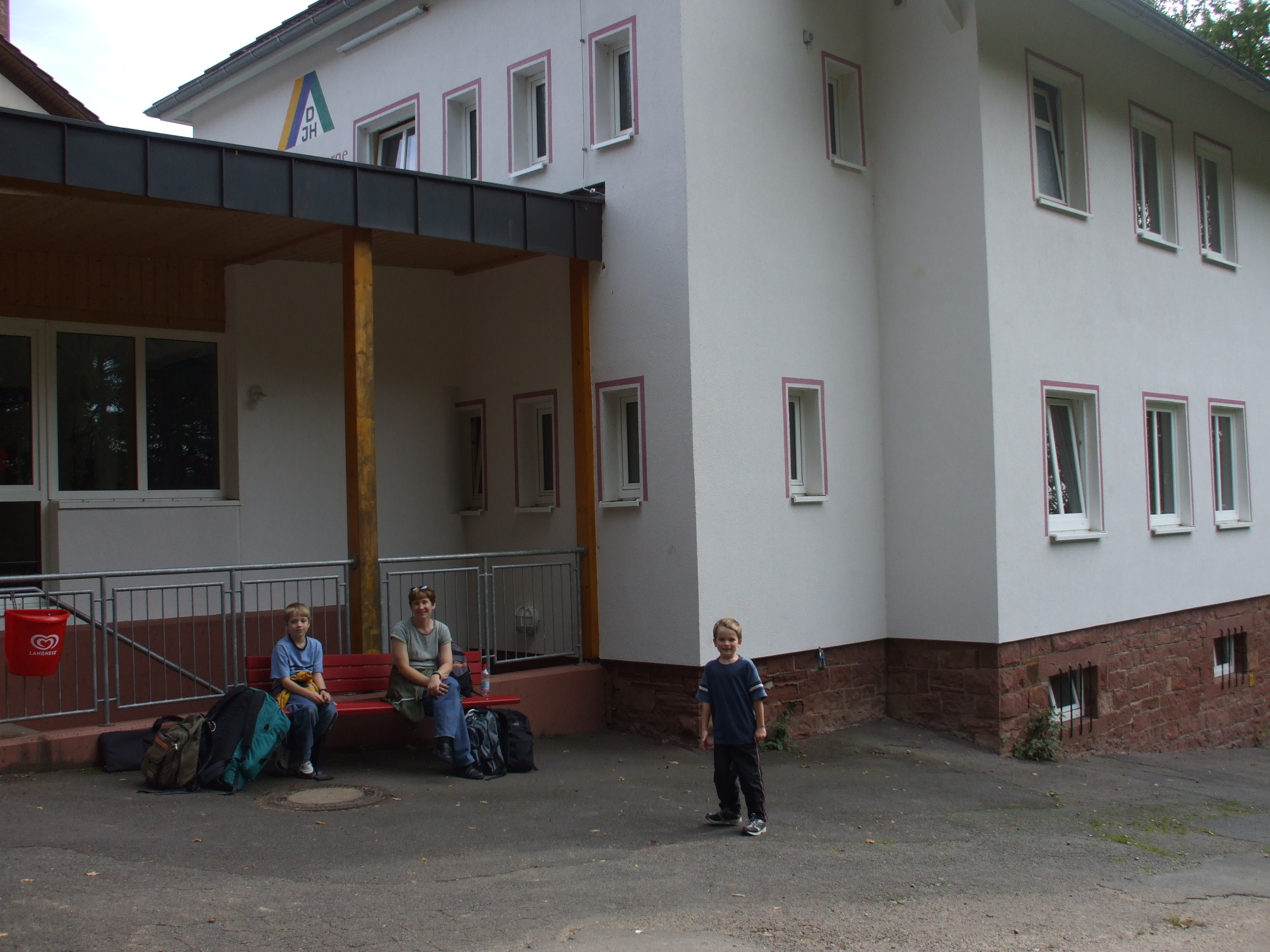
Or maybe here, at our Waldurn youth hostel. Is that Kelty on the ground next to me?

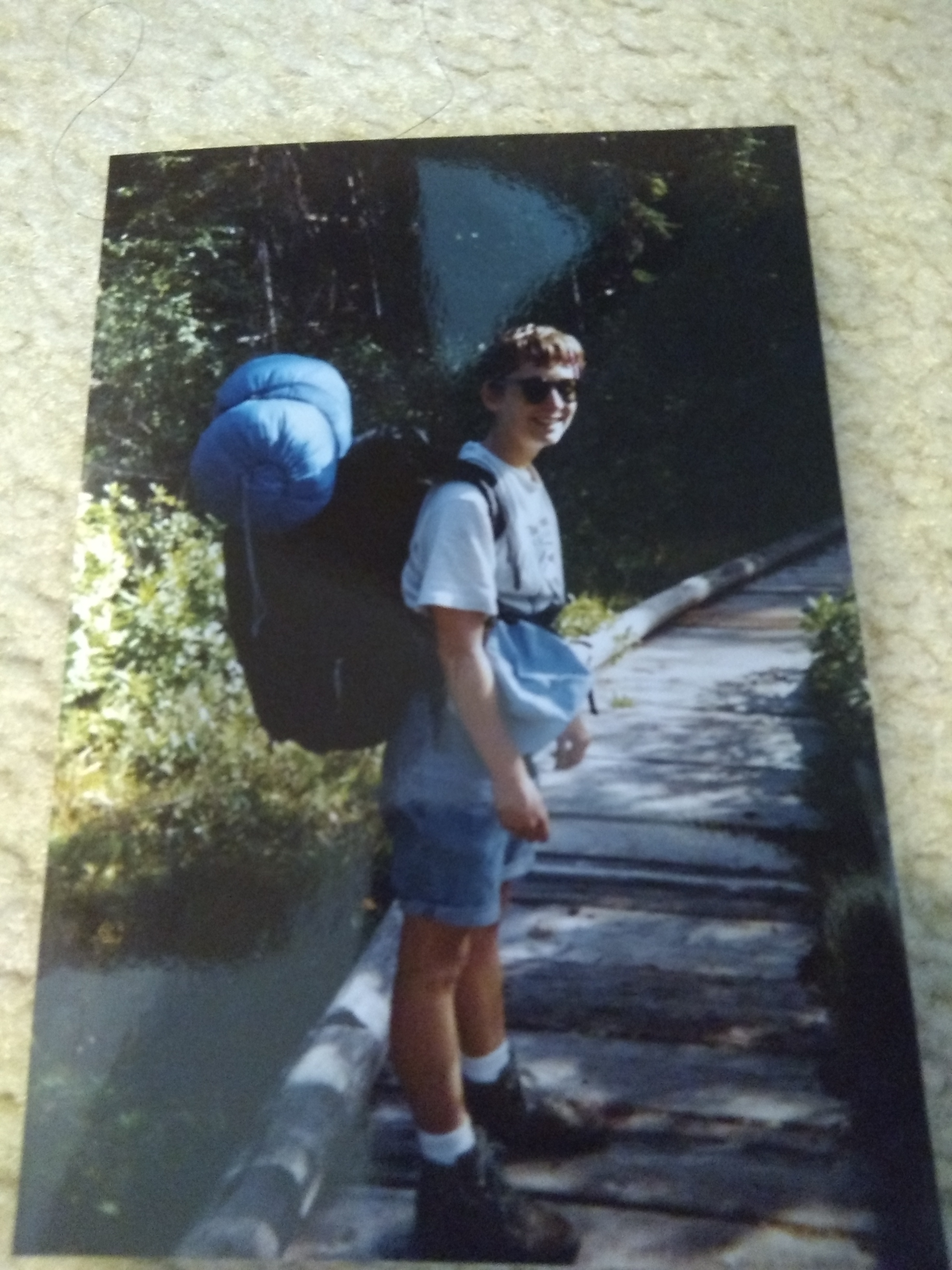
But my relationship with Kelty goes back farther than that fun time in Germany. In 1992, before we had kids, Andy and I went on a 4-day, back-country hiking trip in Glacier National Park. Obviously, Kelty was the perfect choice for hauling my clothes and gear.

Taken before digital cameras or phones that fit in your pocket.

Did I buy Kelty for that backpacking adventure? No, no, no. I bought Kelty in 1986, before I moved to Strasbourg, France and my junior year abroad. Do I have any pictures of Kelty speaking French? I wish! I did find a picture of my dorm room in Louvois 3. I kept Kelty under the bed (not pictured).

Sorry, for the bad picture of a bad picture.

So, Kelty and I go W-A-Y back. How could I leave her at home? She’ll be accompanying me on this adventure, and I’m excited that you, gentle reader, are too.

Pisze ksiazke ?

(Am I writing a book?)

Gdansk. Port city on the Baltic coast of Poland.

Am I writing a book? In Polish? Maybe…

Well, not in Polish but maybe in Poland!

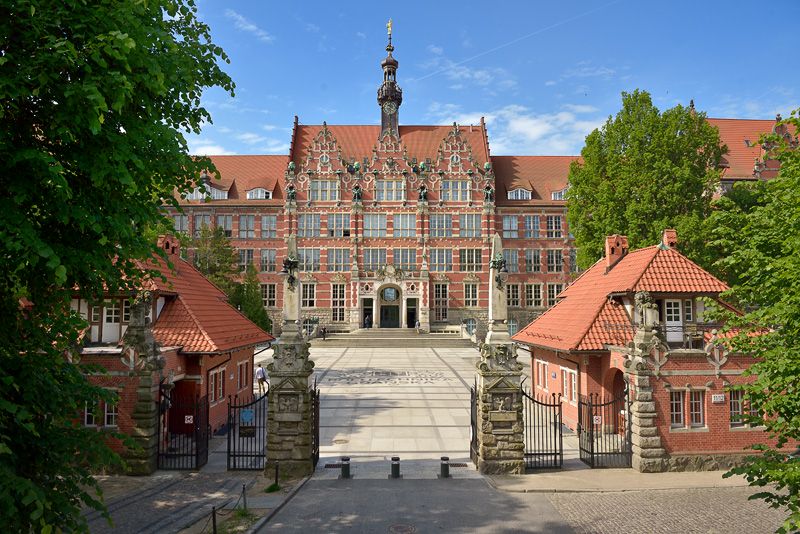
My husband and I are moving to Gdansk, Poland for a year. On a Fulbright grant, he will teach math and computer science at the Gdansk University of Technology. I will teach composition (part time, online) for the University of Wisconsin, Stevens Point on a laptop in our apartment.

I may also work on my writing. Or not. I’m keeping an open mind.

Ja nie mowie po Polsku bardo dobre. (I don’t speak Polish very well.) I am trying! I’ve been using Duolingo for almost a year. My vocabulary is small, and my accent probably atrocious, but I’ve always loved learning languages and being surrounded by people speaking in words I cannot understand. Am I crazy? Maybe. It is hard for me to express how totally excited I am about this adventure. I know it will be practically impossible for me to understand Polish at first, but I’ll give it my best shot. I can only improve, right?

We leave in early September and won’t return until July 2023. To be honest, I could use a break from the U.S. There’s nothing like living in a strange place to make you appreciate things you never even noticed about your home.

I’ll post updates about our adventure here. My husband Andy Felt is in the process of creating his own blog, Finding Myself in Poland, so check that out too.

Gdansk University of Technology

More to come!

Aging Ambition

When I was young I was ambitious. I wanted to write books and modestly support myself with the success of those books. (No fame, please. I am/was incredibly shy.)

After I was married with children and only working part time, my ambition was to write books and have them published. Perhaps earn about what I made in my part-time job. As the years wore on, I decided that just finishing a book and self-publishing it would be enough.

Now that my children are grown and I’m nearing retirement, I’m rethinking even that modest ambition.

My mother was a writer. She wrote seven novels when I was growing up, though none of them got published. She and my sister published Finding the Way together when she was in her fifties, I think. When she retired, I talked to her about how lucky she was to have the time to work on her writing. And you know what? She no longer felt like writing. She did volunteer work. Took care of grandkids. And read more. No writing? I couldn’t understand.

Here I am, heading toward that same place in my life and feeling much the same way. I now understand. Writing is SO HARD with almost no value. Volunteering has great value. Spending time with friends and family has value. Reading more will be a constant goal in my life.

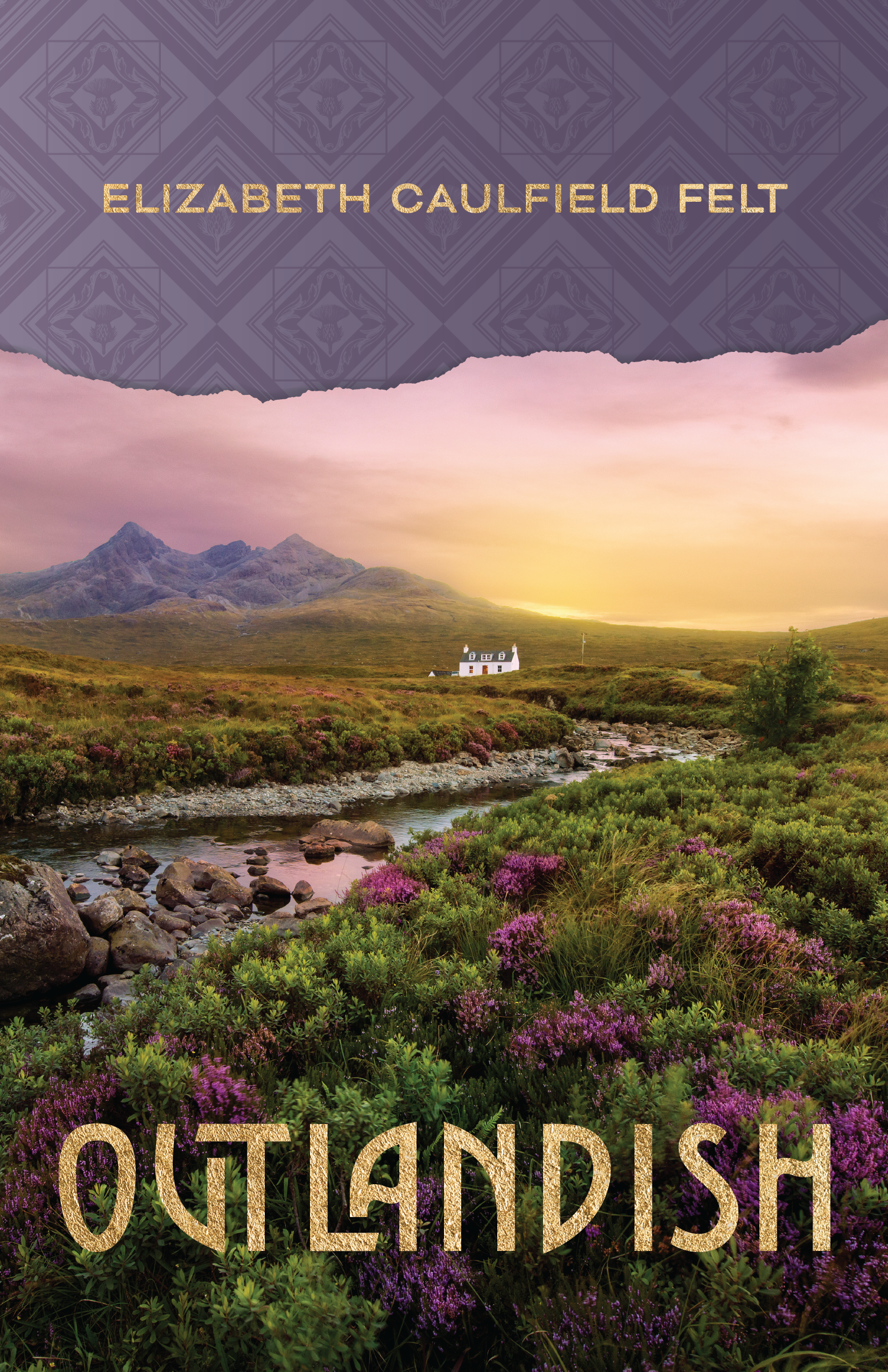
I have two half-finished novels, Outlandish and The Little MERmaid. The characters in these stories are so real to me. I hate the idea that their lives are paused…. I feel like their stories should be finished. But then I sit down to write and wonder why….

I have three revised and ready-to-publish novels that have never been picked up by an agent or publisher, though I tried for years to find one. I could self-publish them. It’s a lot of work. And what for? Money and fame were never my goals. It has become hard to remember why I wanted to be a writer. It now seems so self-indulgent.

What are your own ambitions and how have they changed over the years?

2022 Newbery Winners

I live-streamed today’s award ceremony. I’m that kind of nerd!

Congratulations to author Donna Barba Higuera for winning this year’s Newbery Medal for her novel The Last Cuentista.

And congratulations to the Newbery Honor authors:

Rajani LaRocca for Red, White and Whole

Darcie Little Badger for A Snake Falls to Earth

Kyle Lukoff for Too Bright to See

Andrea Wang for Watercress, which also won illustrator Jason Chin this year’s Caldecott Award.

I’ve spent the last few months reading what I thought were Newbery contenders, but I haven’t read any of these. I’m excited to do so now!

The Best Books of 2021

Here are my favorite reads of the past year, in the order I read them. First are the books for adults and then the list of books for children.

Novels for Grown Ups:

History of the Rain by Niall Williams

A bed-ridden Irish teenage girl recounts her family’s past and her town’s present, while the rain falls and the river Shannon rises. The narrator’s voice is brilliant, and the varying importance of water in her stories will keep your thoughts returning to this book.

The Snow Child by Eowyn Ivey

A childless couple living in the Alaskan wilderness build a snow child, and the next day a real little girl shows up. Where has she come from and is she real? Year after year, she comes in the winter and leaves in the spring, until love tries to bind her to a civilized life. A beautiful, fairy-tale-like story.

The Lions of Al-Rassan by Guy Gavriel Kay

An epic story set in a fantasy world very similar to the middle ages in Iberia. Competing tribes and religions try to maintain and/or conquer the land each believes should be theirs. This is the El Cid story, although that character has a different name and isn’t immediately recognizable. An amazing story. I plan to read much more by Kay.

Drive Your Plow Over the Bones of the Dead by Olga Tokarczuk

A murder mystery / fantasy? in rural Poland. The narrator is a middle aged / elderly woman who believes that the murders are being committed by deer and other animals to avenge the hunting deaths of their kin. This is a bizarre story, and perhaps not for everyone. I, however, was mesmerized by the narrator’s voice and her way of seeing the world.

Love Lettering by Kate Clayborn

Need a light, romantic-comedy-type novel? I discovered Kate Clayborn this year (thanks, Rikki!), and this is my favorite of her books that I’ve read so far. Although light and romantic, this book is also quite clever, using art and signs and numbers and letters. The characters are well developed and (as an English teacher married to a math professor) reminded me of my own romance.

The Island of Sea Women by Lisa See

Two best friends are ripped apart by an event that happened many years ago, and you don’t find out what that event is until near the end. When this happens in novels, I am often upset that the event wasn’t really that kind of event, but it is in this story. Young-sook and Mi-ja grow up on the Korean island of Jeju where they learn to dive great depths for food. The story spans WWII with the Japanese occupation, the Korean War, up to current times. A fascinating story with incredible historical detail.

Parable of the Sower and Parable of the Talents by Octavia Butler

I like The Parable of the Talents better, but I think you should read them both and The Parable of the Sower comes first. Butler’s vision of America in the future is terrifying, yet similar to other places in the world when governments collapse. I found the main character’s “discovery” of the Earthseed religion, God-as-change, intriguing.

The Flatshare by Beth O’Leary

Another romantic comedy. When Tiffy must move out of her boyfriend’s flat, she can’t afford any place in London except this strange, flat-share arrangement. She gets the flat (and bed) in the evenings, nights, and weekends, and Leon, a nurse who works nights and spends the weekend away, gets it the rest of the time. The two don’t meet for a long time, but get to know each other through the notes they leave for each other. Alternate chapters are narrated by Tiffy and Leon and O’Leary does a great job with their very different first-person styles. A fun read which also handles the serious topic of gaslighting/emotional abuse.

Novels for Kids:

Barefoot Dreams of Petra Luna by Alda P. Dobbs

I was lucky to get a copy of this to review for the Historical Novels Society.

A story of the Mexican revolution told through the eyes of a 12-year-old, parent-less girl trying to care for her elderly grandmother and two young siblings. Fleeing the Federales, Petra and her family travel through villages, the desert, meet up with some courageous rebels, then continue on, hoping they will be allowed entry into the United States.

The Lion of Mars by Jennifer L. Holm

11-year-old Bell has grown up in the US colony on Mars, where they live underground and have no contact with the other Mars colonies. He’s a normal kid with friends and school and chores and lots of curiosity. When a virus causes all the adults to get sick, what can the kids to do keep the colony alive? This book takes a turn and handles questions that you don’t see coming. A great read.

Amber and Clay by Laura Amy Schlitz

Rhaskos (clay) is a young slave boy in Thessaly who is fascinated by paintings and art. Melisto is a young aristocratic girl (amber) living in Athens whose nurse just happens to be Rhasko’s mother. The story is told in various formats: illustrations of artifacts with guesses to use and identity; verse from the gods about what will happen; prose of the characters’ stories. As usual, Schlitz has created a masterpiece. Will it win the Newbery? It has some stiff competition.

Maybe Maybe Marisol Rainey by Erin Entrada Kelly

Marisol Rainey’s backyard contains the most perfect climbing tree ever. But Marisol Rainey is afraid to climb it. Marisol is eight years old and suffers from anxiety. This is a book for the time—I wouldn’t be surprised if it wins the Newbery. In an entertaining book for young readers, Kelly handles the problem of anxiety in a patient, supportive way.

Gone to the Woods by Gary Paulsen

Paulsen’s autobiography details the brief (but wonderful) time Paulsen spent with relatives in a cabin in northern Minnesota, to his years living in poverty with alcoholic parents, both in the Philippines and in Chicago. This might be Paulsen’s best book of all. The courage of young Gary, the drive that kept him safe and sane, and the importance of books and the wilderness, make for a powerful story. Another possible Newbery winner.

The Year I Flew Away by Marie Arnold

Gabrielle grew up poor in Haiti but gets the opportunity to move to New York City when she is ten to live with her uncle and his family. Her family is counting on her to be successful in America, so she can eventually send home money and possibly help to bring her family to the US. But, living in the United States, where she doesn’t speak the language and is constantly bullied, is difficult. So, Gabrielle turns to a witch to help her fit in—but is she ready to pay the cost of the witch’s spells? Arnold’s story is magical, exciting, and thought-provoking. Another potential Newbery Award winner?

Let me know what your favorite books of the year were in the comments below. Happy 2022!