Super Simple Scones

I have no writing news, but I’ve been cooking and thinking about cooking a lot this summer.

I like to cook, but I’m a lazy person. I’m also a rule-follower. The first time I cook something from a recipe, I follow it exactly. After that, I might substitute ingredients and alter how it is put together, knowing that the changes I make could negatively affect the recipe. For stupendous recipes, I don’t alter anything.

The problem with this system is that I end up not making stupendous recipes very often either because I don’t have the ingredients at hand, because the recipe is difficult or because it is time consuming. Or all three.

I had a scone recipe that fit that problem. I LOVE scones, and this recipe was excellent—so I nearly never made them. Then one day, I had the time, energy, and desire, but not all the ingredients, so I made it with some substitutions. And guess what? It was even better!

Now I made it a little more often, but it was still difficult and time-consuming. For example, I was supposed to roll out the dough into a thick circle so it could be cut into wedges. I hate rolling out dough. No matter how exactly one follows the recipe, sometimes the dough is too sticky and needs more flour or is too dry and crumbles. And it makes such a mess.

I have a recipe for dropped biscuits and decided to follow that concept instead. You know what? Round scones don’t taste much different than wedge-shaped scones.
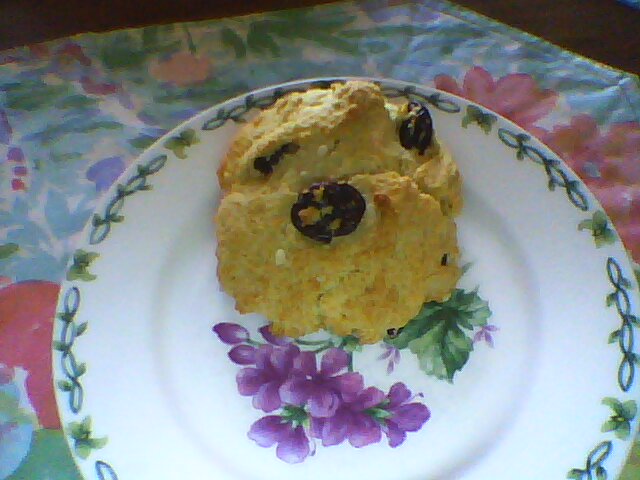
scone

But still, I didn’t make them often enough because it called for cutting the butter into the dry ingredients. Ugh. What a pain! I have a pastry cutter and followed that part of the recipe for about ten years, then about a month ago, I thought, Why don’t I just soften the butter in the microwave, then add it to the dry ingredients? Pastry chefs may have reasons for not doing this, but I will tell you that I saw absolutely no difference in texture or taste.

So, here it is, my simplified recipe for scones:

Cherry Almond Scones

Ingredients:

½ cup butter, softened in microwave

2 cups white flour

4-1/2 teaspoons baking powder

½ teaspoon baking soda

2 Tablespoons sugar

¼ teaspoon ginger

¼ teaspoon salt

½ cup vanilla yogurt

¼ cup milk

1 teaspoon almond extract

1 cup dried cherries

Preparation:

Heat oven to 350 degrees. Butter, spray or grease cookie sheet. Soften butter in the microwave. Add the flour, baking powder and soda, sugar, ginger and salt. Mix well. Add the yogurt, milk and almond extract. Mix well. Add dried cherries and mix until well distributed. Drop batter by very large spoonfuls onto cookie sheet. Should make about 8 scones. Bake for 15 to 20 minutes or until golden brown. Eat warm.
Camping and Conferencing

How does one save money when attending a conference and bring the family along for a vacation?  Tent camping, of course.

Last week, I attended the Historical Novels Society 2013 conference in St. Petersburg, Florida.  My family tagged along so we could turn the trip into a vacation.

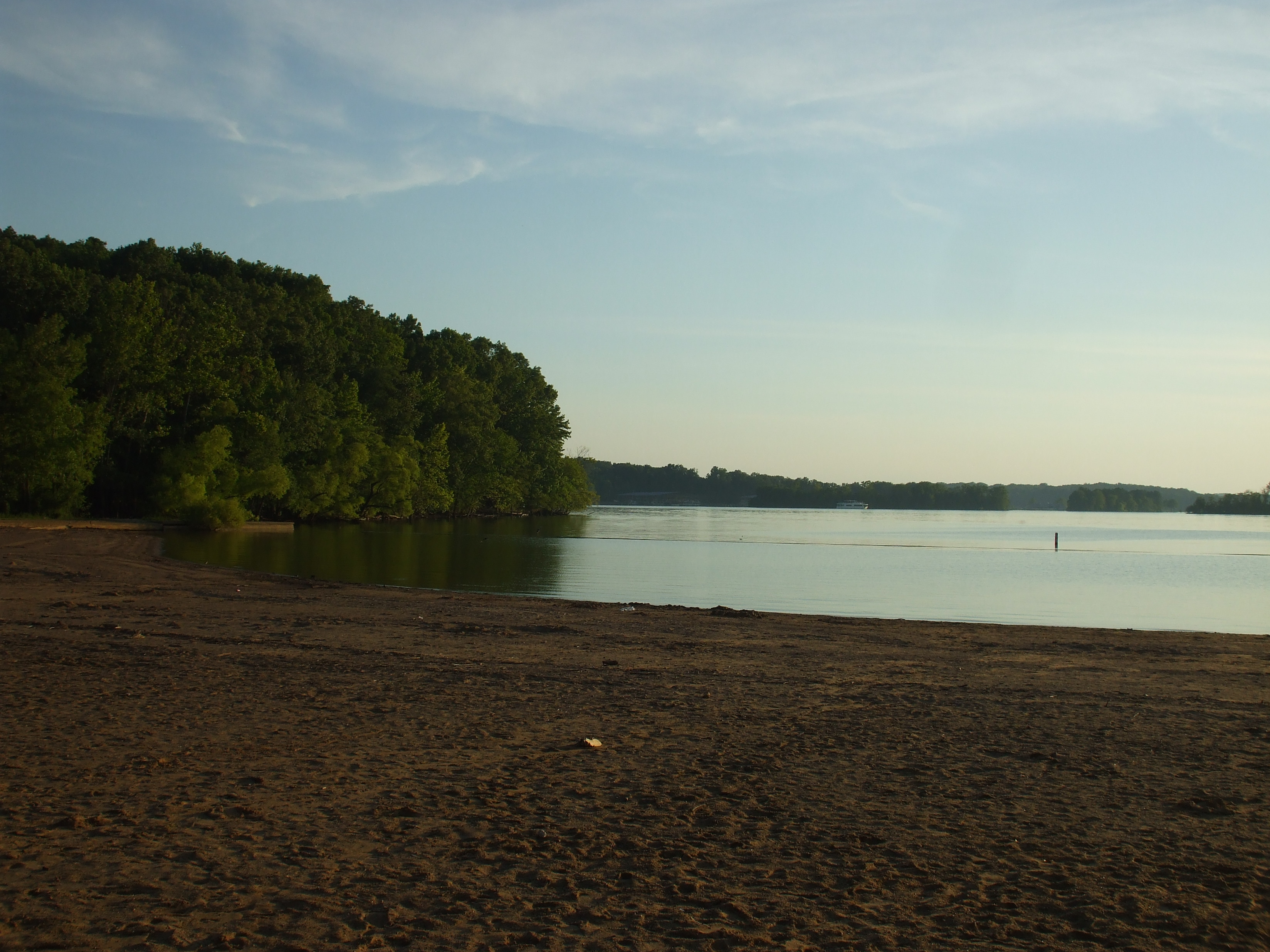
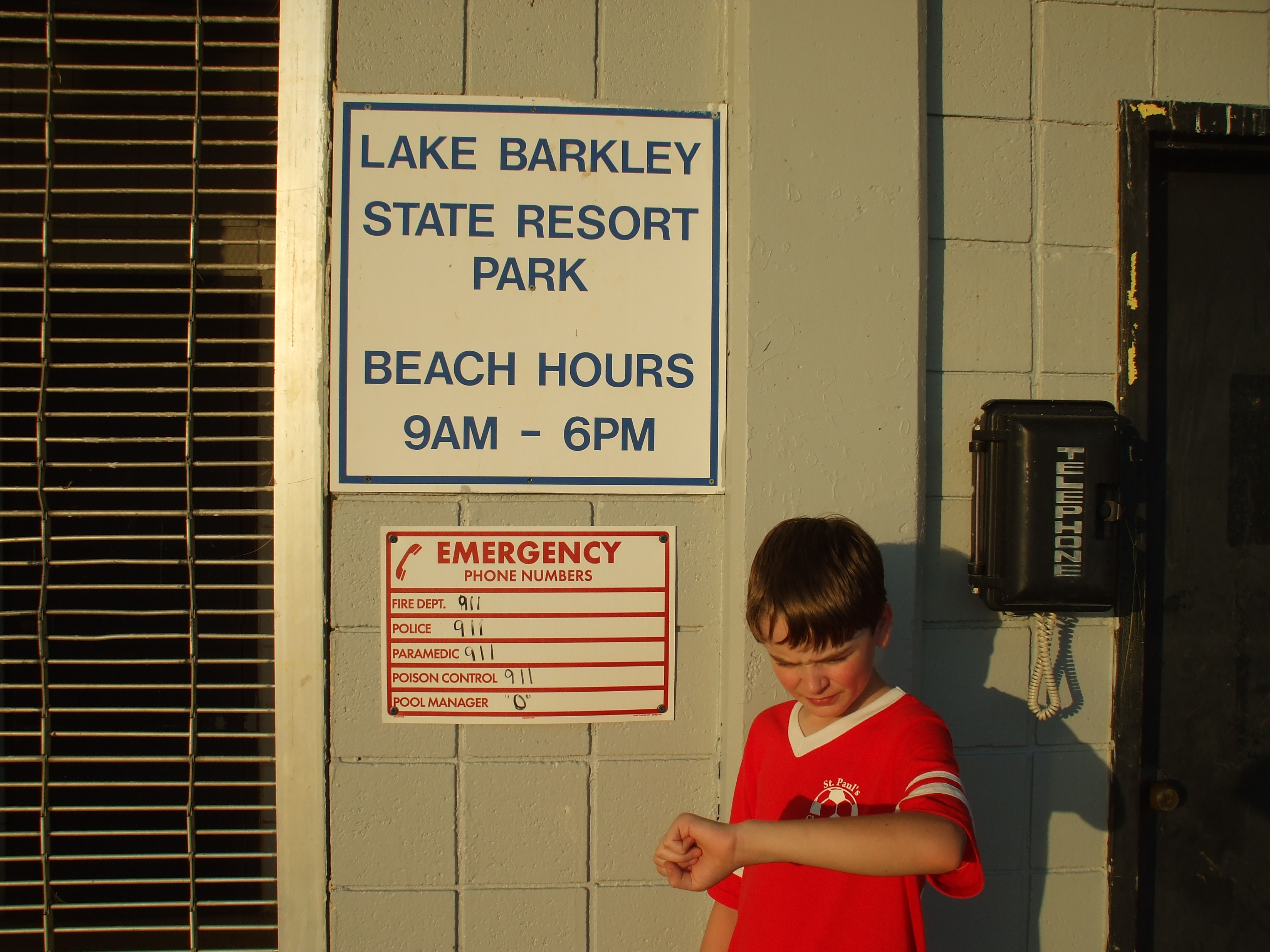
Day 1: We left on a Wednesday, drove about 12 hours, and camped at Lake Barkley State Resort Park in Kentucky.  This is a beautiful park and was practically empty.  We arrived just before sunset and took a short hike to the lake.  The beach was clean and pretty, we couldn’t understand why nobody was there.   Tom figured it out.

kentucky beach   kentucky sign


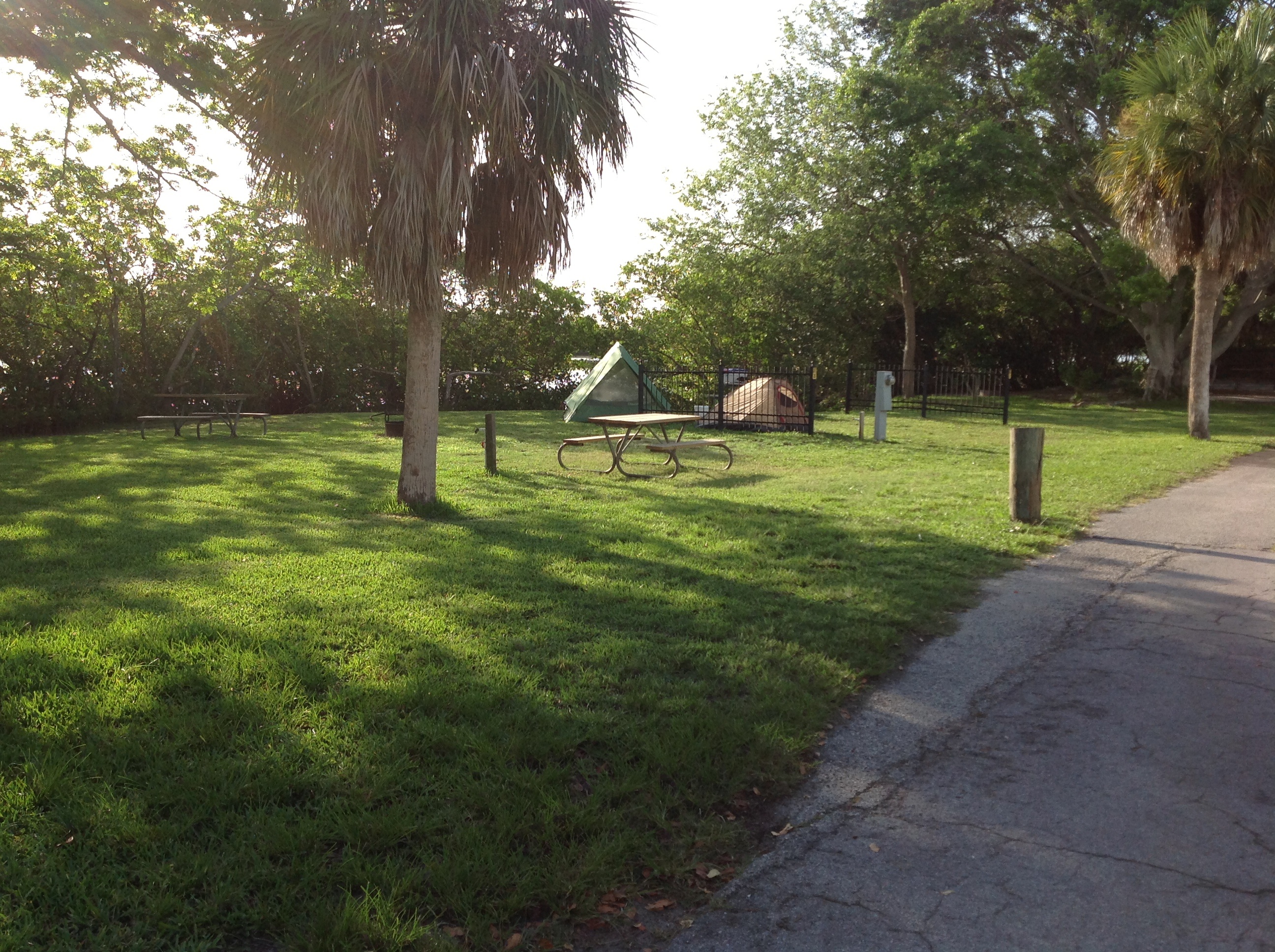
Day 2: Drove for about 15 hours and arrived in St. Petersburg about 10:00pm, so had to set up our tents in the dark.  We stayed at the St. Petersburg/Madeira Beach KOA and had a beautiful tent site–right on the water, in a quiet park of the campground.  This was a well-run, quiet campground–probably much busier in the winter. In the heat of June, there were not many other campers. Here’s our tent site:

tents far

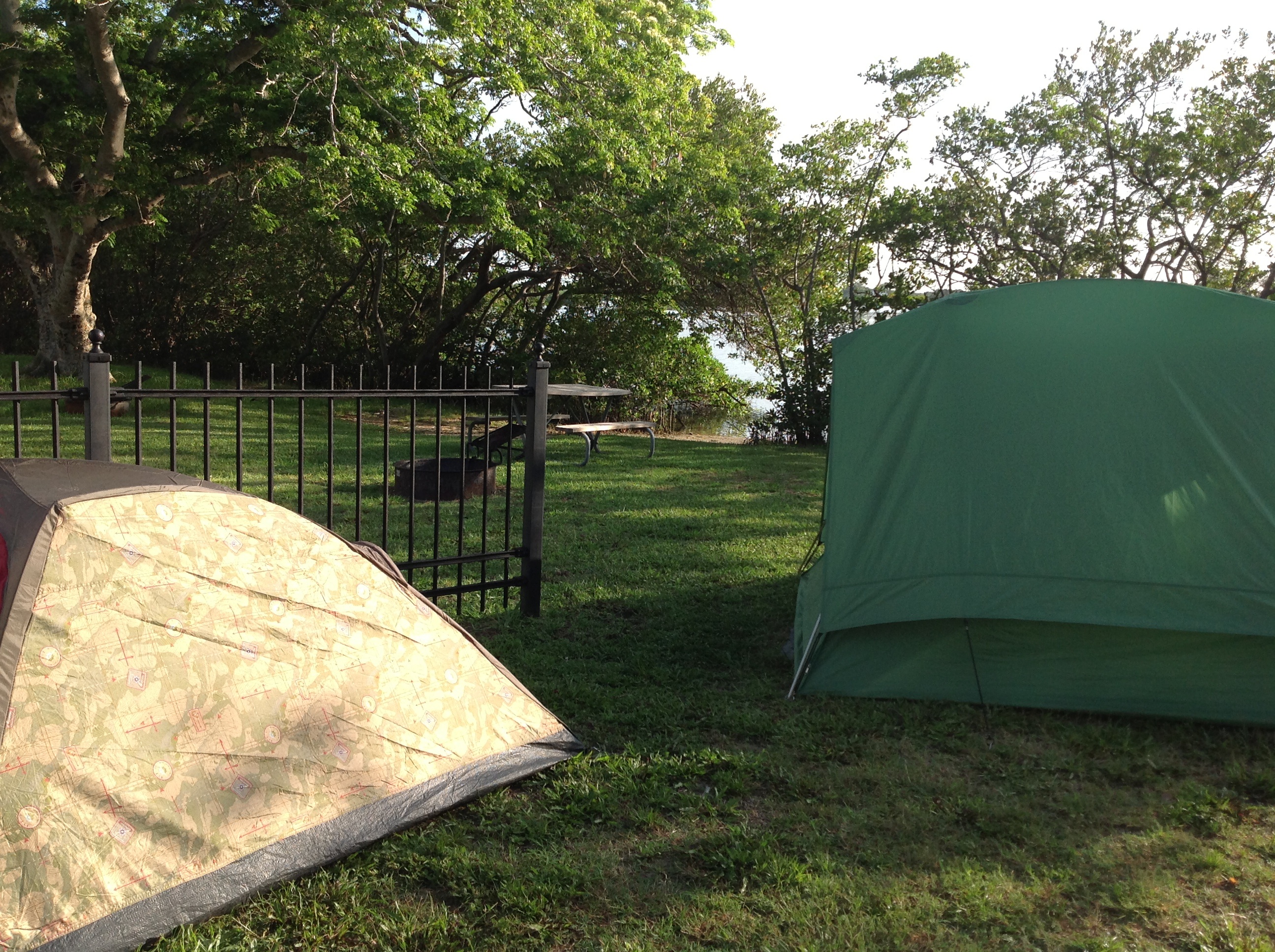
After setting up camp, I couldn’t help but imagine an alligator climbing up out of the water and coming at our tents.  Here’s a close up. The water is just beyond the line of bushes.

tents close

I spent a sleepless night, jumping every time there was a splash in the water, wondering if alligators were noctural or diurnal and comforting myself with the thought that alligators probably lived in fresh water and the lagoon by us was salt water. Right? I’m happy to report that we did not see a single alligator on our trip.

Day 3: After a camp breakfast, we got on our swimsuits and drove the 5 minutes to Madeira Beach. June is a good time to visit the beach in Florida, as the heat makes it necessary to get in the water and tourists are not in attendance.  Here is what the beach looked like at 10am on a Friday morning:

beach1

That night, the conference began.  It was held in the beautiful Vinoy Renaissance Hotel.

vinoy

I got to meet up with the Great Lakes Chapter of the HNS and to listen to Anne Perry speak at the dinner banquet.

My family went to visit Fort DeSoto. They found the fort interesting, but the heat was disabling and distracting.  They finished the day with a meal at Pepe’s Cuban Cafe, which they called the best meal they’d ever had.

Exhausted, I fell asleep immediately, despite sleeping on the ground, possibly within striking distance of an alligator.

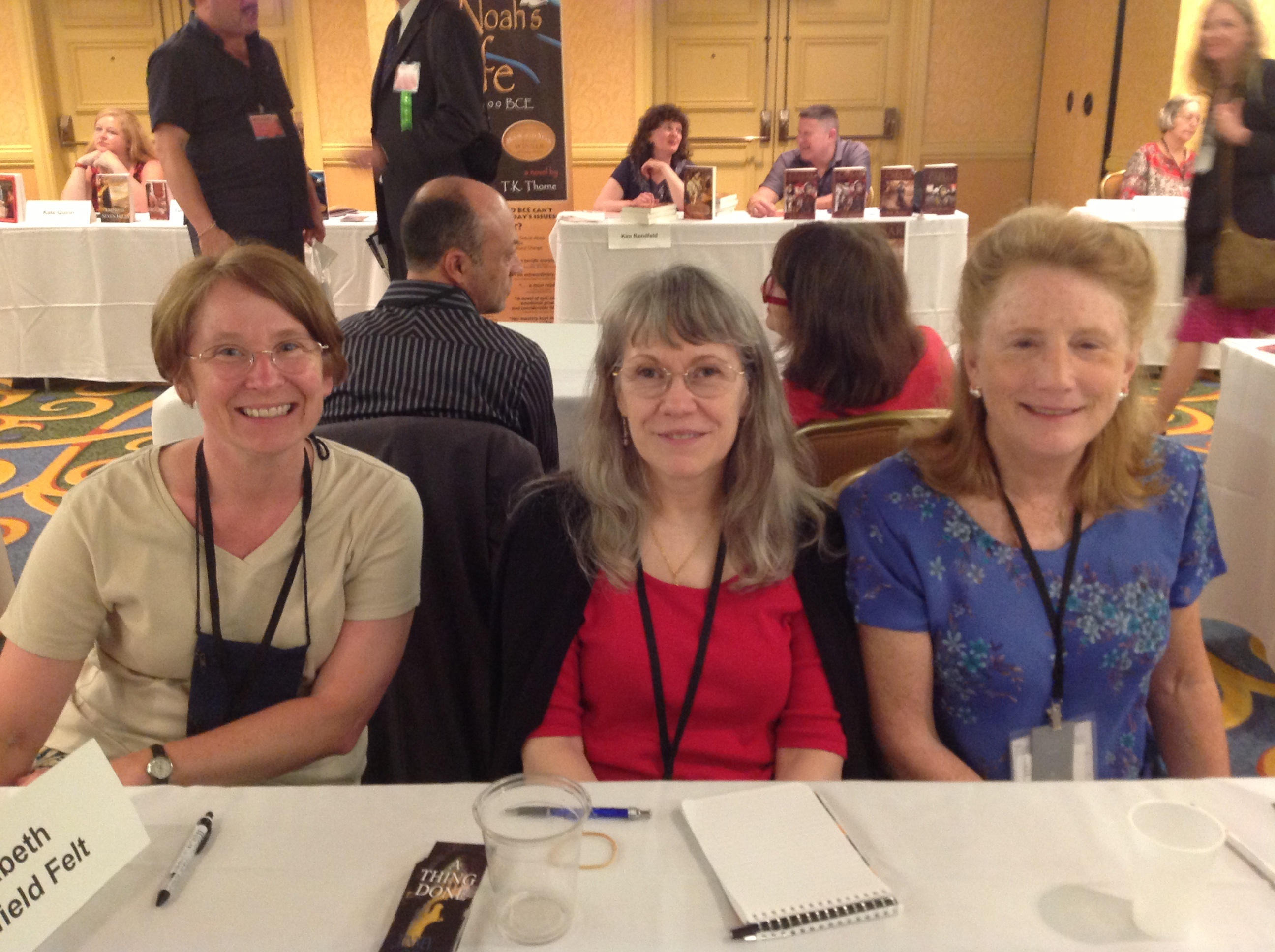
Day 4: All day at the conference for me.  I volunteered at the agent/editor pitches, went to some fun workshops and did a book signing in the afternoon.  Here I am with fellow authors Tinney Heath and Julie Caton at the book signing.

book signing

My family picked up a cousin and headed to Busch Gardens, where they rode roller coasters, got sunburned, and drank 2 gallons of water each.

Day 5: Last day of the conference. I went to Susanna Kearsley’s workshop on Bringing Characters to Life through Genealogy. It was exciting to get to listen to one of my favorite authors.  Kearsley used the family tree of character/real person John Moray (The Winter Sea) to show how an author can better understand the relationships between historical people and make realistic families for fictional characters. Fascinating! I learned a lot.

My boys went to the beach one last time, then we packed up camp and drove to Orlando to see my cousin and her family and to sleep in beds!

Day 6: Disney!

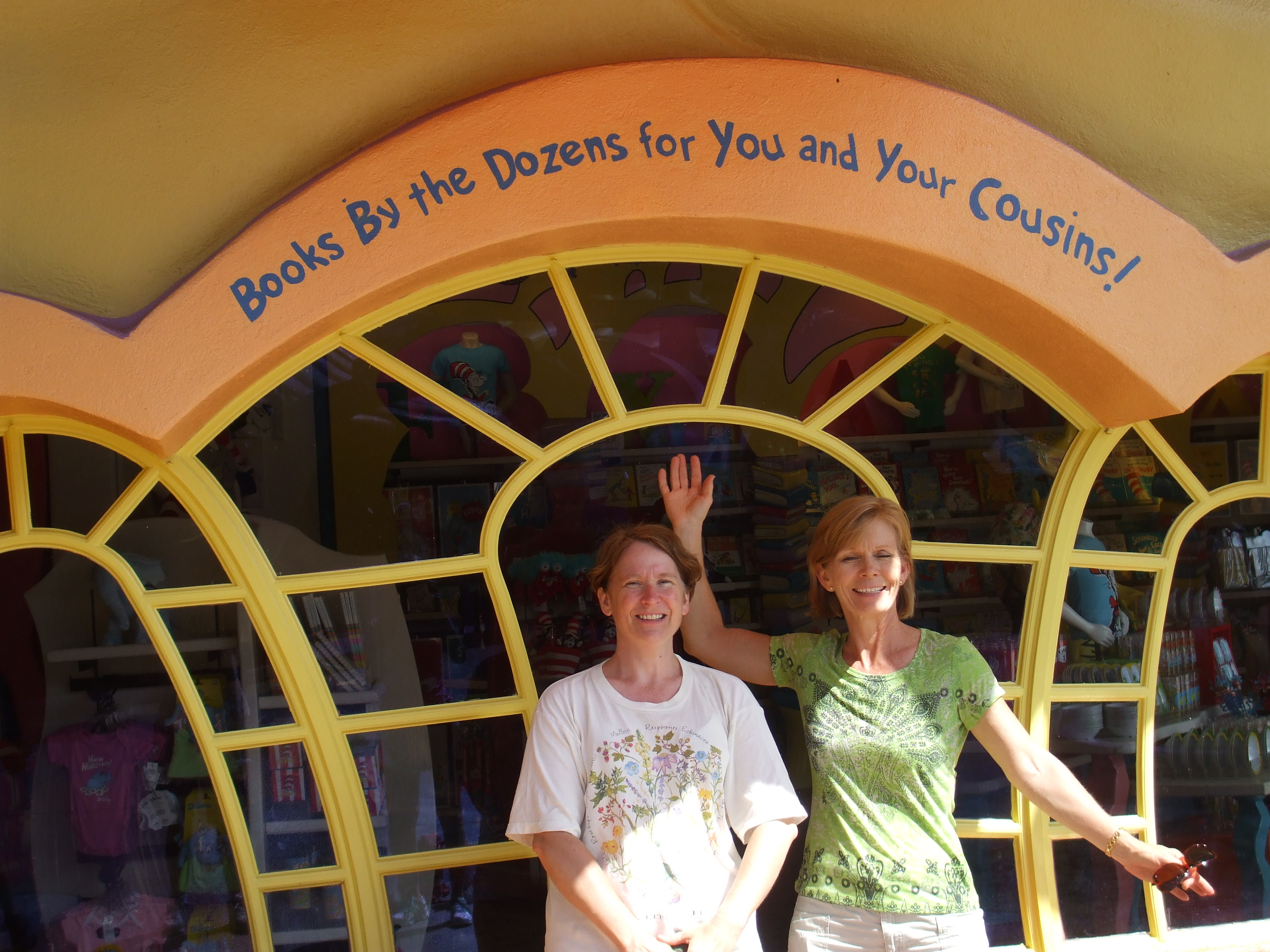
DSCF2620

My boys had never been and I hadn’t been since I was about ten.  Hot day, but endurable as many of the rides at Disney have lines in air conditioning.  My cousin’s daughter helped guide us. I was worried my boys, ages 13 and 17, would be too old for Disney, but we all had a good time. Space Mountain was the most popular ride for us. We finished with a late dinner at Tijuana Flats. Yum.

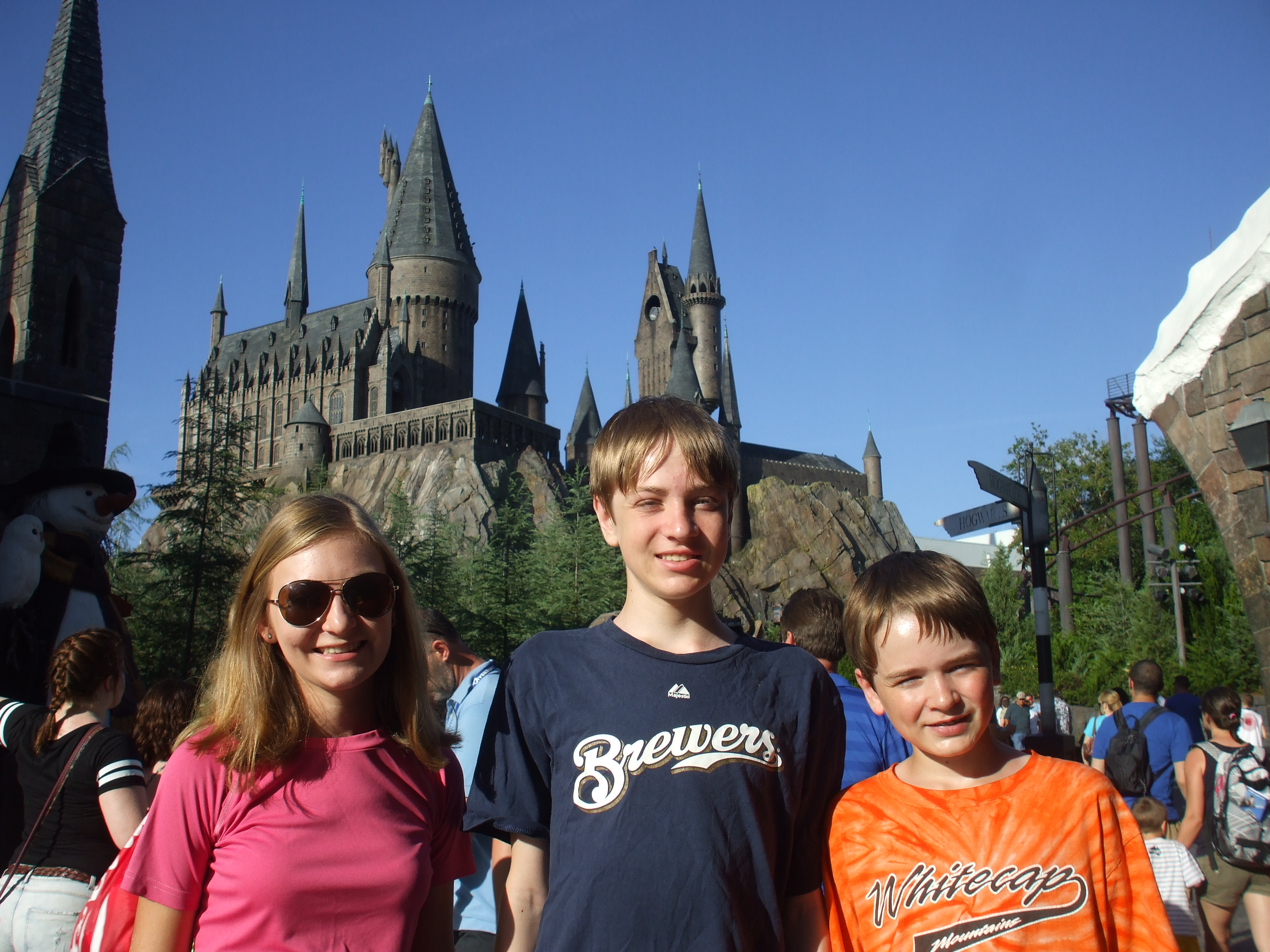
Day 7: Universal Studios, Islands of Adventure.

DSCF2626   DSCF2635


My boys liked this park better than Disney or Busch Gardens.  It gets my vote too, as the Harry Potter ride is quite possibly the coolest thing I’ve ever done.  Highly recommended. Also, the butterbeer is a must drink. My cousin and her daughter both came with us, and they were a lot of help maneuvering through the park.  Single rider lines are the way to go, even if you are in a group.  You get through the rides much more quickly and don’t get separated too much.

At both Disney and Universal Studios, we rode rides with Brazilian teenagers sporting colorful Kontik shirts. We learned eventually that Kontik is a travel company and that their group consisted of 700 Brazilian (rhymes with a million) teenagers.

Day 8: We got up early to drive the 18 hours to Bloomington, Indiana, arriving a little after midnight. Tom read The Fault in Our Stars in its entirety. Craig continued with the Song of Ice and Fire series, and I read most of Gillian Bagwell’s The Darling Strumpet.  Andy was a driving machine.

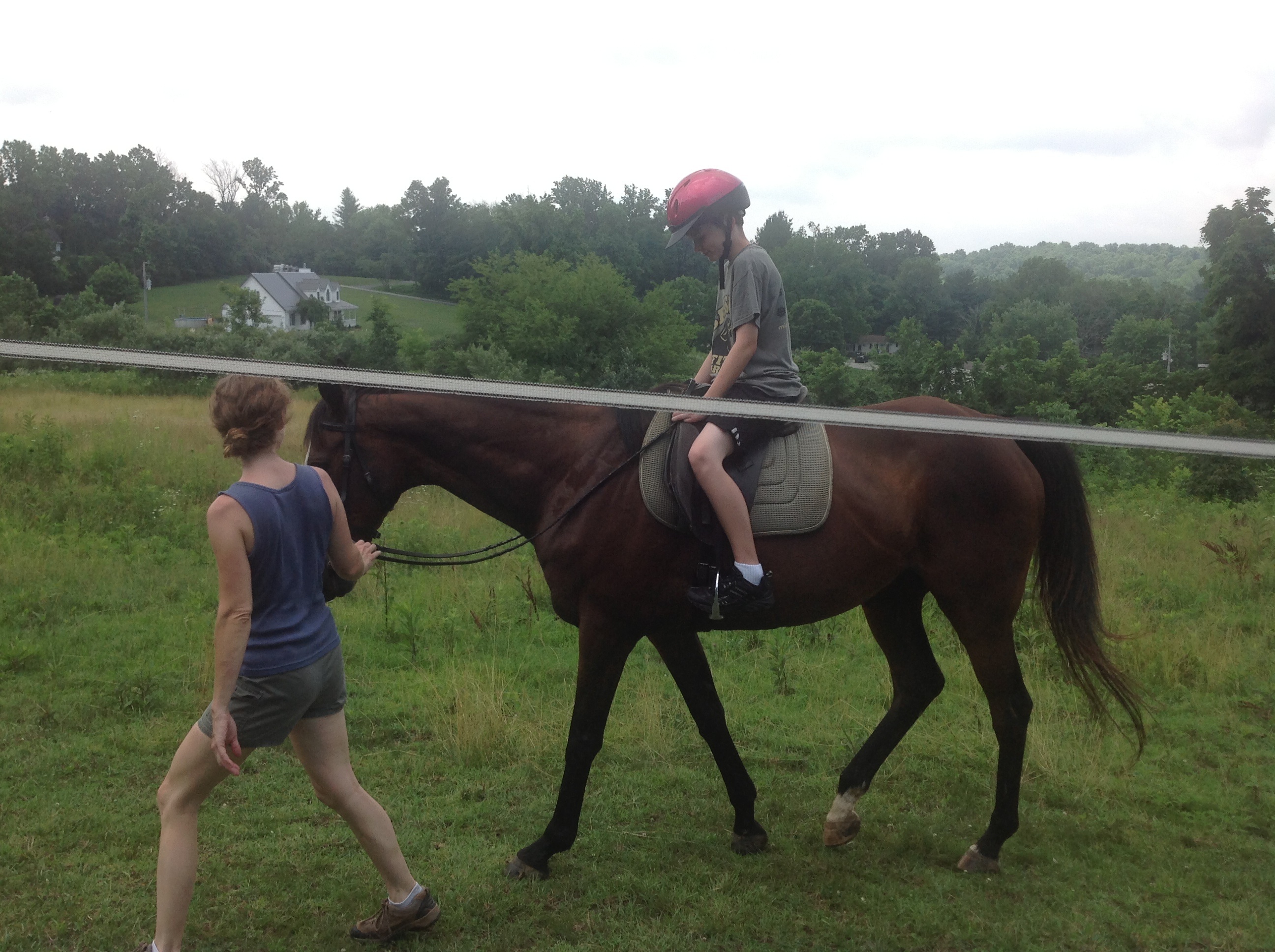
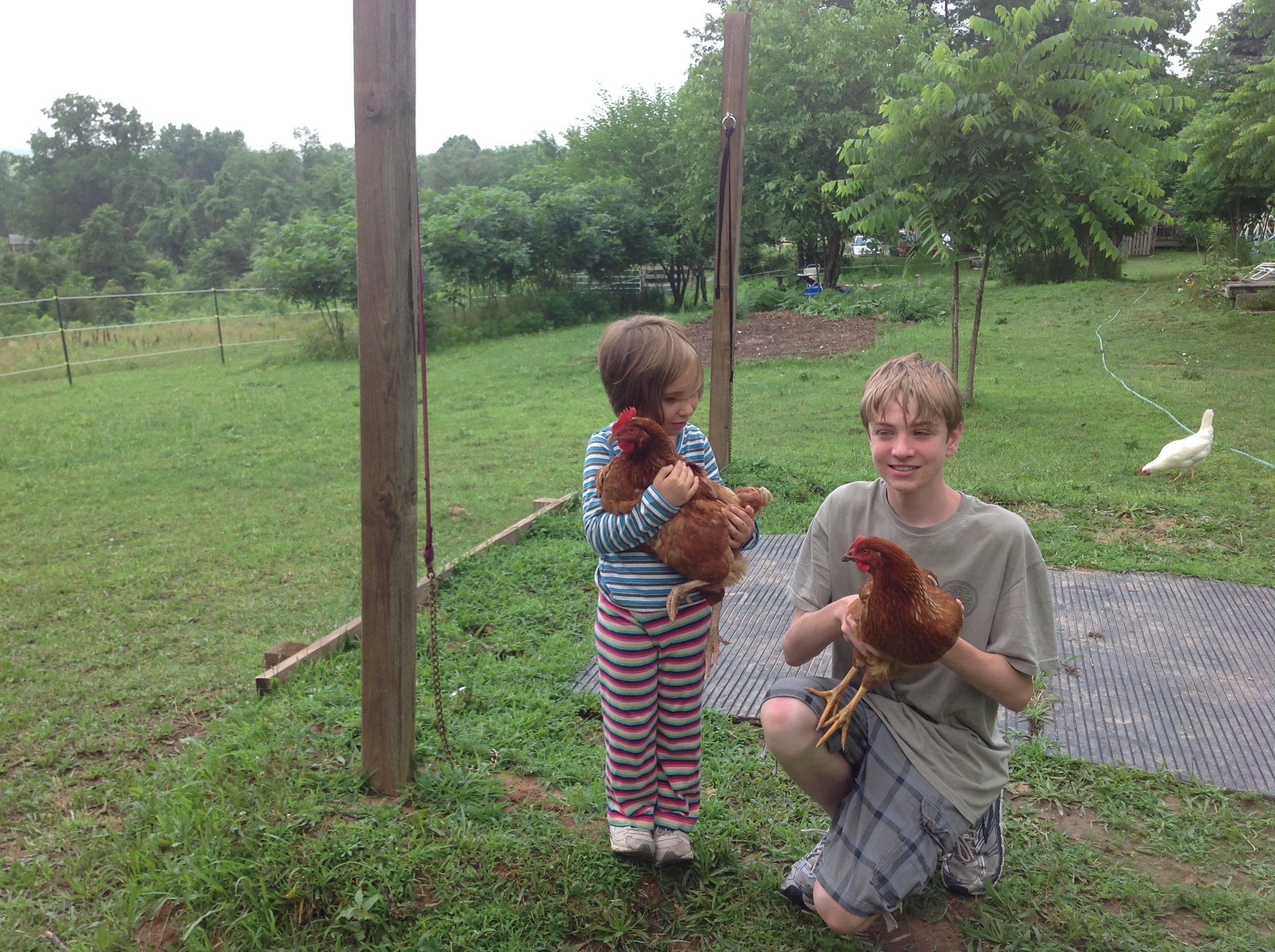
Day 9: Stayed with the my sister and her family. My brothers and their kids came to visit too.  Great to see everyone, talk, eat, ride horses and play with chickens.

horse       chickens


Day 10: An 8.5 hour drive never seemed so short.  We got home in time to  pick up our dog from the kennel.

Great vacation. Great to be home.

Author Interview: Kate Quinn

kate quinnToday I welcome best selling author Kate Quinn to my series of interviews. Kate is the author of Mistress of Rome, Daughters of Rome, Empress of the Seven Hills and the soon-to-be-released The Serpent and the Pearl. Kate will be participating on two panels at the Historical Novels Society Conference: “Sex in Historical Fiction: How to Make It Hot” and “Historical Fiction Set in the Ancient World: the Good, the Bad and the Ugly.”

Welcome, Kate.

Q: What got you first interested in historical fiction?

A: The past has always fascinated me, ever since the days when I was six years old and I couldn’t sit down on the school steps without pretending I was Elizabeth I refusing to enter the Tower of London. My favorite movie was Spartacus, and I was crushed that no boys of my own age were even remotely capable of leading a slave rebellion or wielding a gladius like Kirk Douglas. Under those circumstances, it was probably inevitable that I ended up writing historical fiction!

Q: Is there an era/area that is your favorite to write about?

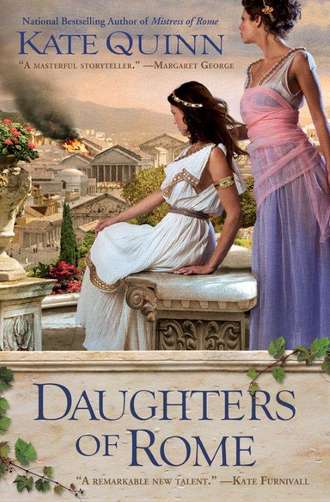
kate daughtersA: I first got interested in ancient Rome because of I, Claudius, which I watched when I was far too young, but adored anyway. Imperial Rome is so far away from us in time, but culturally so close. From sports fans to fast food, from running water and daily baths to birth control and no-fault divorce, the Romans embraced cultural traditions that wouldn’t be seen again on a widespread scale for two thousand years. And now I’m giving ancient Rome a break and have moved on to the Renaissance—another fascinating period; so much art and beauty existing side by side with so much bloodshed.

Q: Do you have a favorite era for reading?

A: I’ll read historical fiction set in any era as long as it’s well-written!

Q; Is there a writer, living or deceased, you would like to meet?

A: I would have loved to meet Judith Merkle Riley, who was my idol for historical fiction. In a genre that can sometimes take itself deadly serious, she wasn’t afraid to make her readers laugh. I understand she was very active with HNS—I will always be sorry that I didn’t join up until after she had died.

Q: Can you tell us about your latest publication?

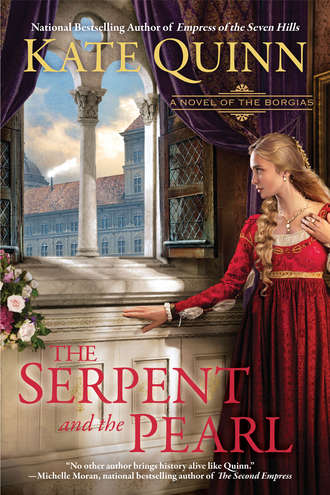
kate serpentA: The Serpent and the Pearl is my latest book, set for release in early August—and it’s my first book set outside Imperial Rome. I’m hopping on the Borgia bandwagon for a rollicking story starring Giulia Farnese, a Renaissance beauty with floor-length hair who was mistress to the Borgia Pope. Stir Giulia’s incredible real-life adventures together with those of her acerbic bodyguard, add in one fiery-tempered cook with a dangerous past, and light on fire for a fun fast-paced read.

We’ve now reached the time in our interview for the let’s-get-to-know-the-author-better, nearly-pointless, sort-of-silly, rapid-fire questions:

Coffee or tea? Coffee. I don’t care if it tastes like motor oil, as long as it’s black, hot, and strong enough to take the roof of my mouth off.

Ocean or mountain? Ocean. I have a periodic fantasy of taking a waterproof laptop and going to live on a houseboat in the middle of the ocean where I can be absolutely, completely alone except for the sound of waves.

Hiking or shopping? Hiking. A long ramble with my dog helps me unsnarl plotting problems – I feel just like Emily Bronte, sans Yorkshire moors.

Violin or piano? Piano – as long as it’s not me playing it!

Mystery or fantasy? Both. I’ll happily hop from George R.R. Martin to Robert B. Parker.

Darcy or Heathcliff? Darcy. Heathcliff killed baby birds, which is just a bit of a turn-off for me.

Love scene or death scene? I’m a sucker for a good love scene. Who isn’t?

For more information about Kate Quinn, visit her blog: http://www.katequinnauthor.com/blog.htm

Buy her books at her Amazon Author Page

Or keep track of her online:
Facebook: https://www.facebook.com/kate.quinn.549
Twitter: #KateQuinnAuthor

Contact Kate: katequinnauthor at hotmail.com

Thanks, Kate!

Summer Reading

Need some book ideas? This is what my family’s reading this summer.

Tom, age 13

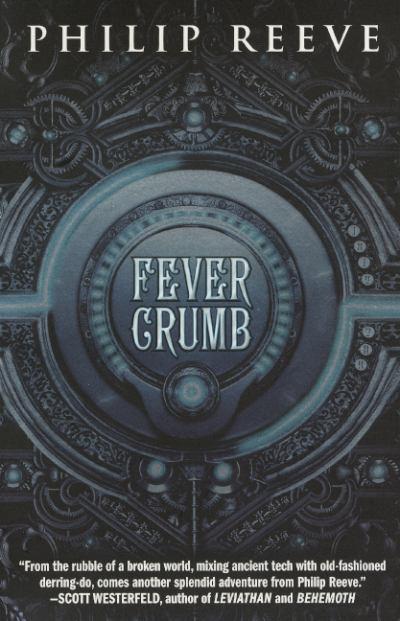
fever-crumbTom is currently in Philip Reeve’s Fever Crumb series. He just finished the series’ title book, Fever Crumb and is now on A Web of Air and has Scrivener’s Moon on deck. At some point in the summer, I will force him to read The Fault in Our Stars by John Green. I also just got Jasper Fforde’s The Last Dragonslayer from the library. Tom is fan of Fforde’s Thursday Next books, so he might like this book, which was in the young adult section, though we don’t know much about it.

Craig, age 17

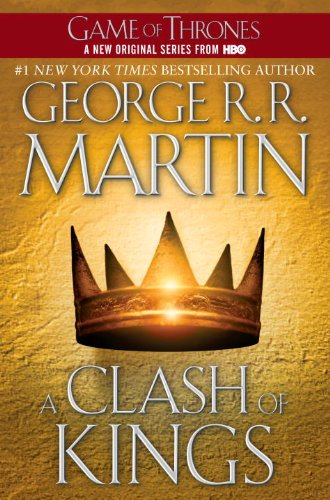
clash of kingsLike people all over the world, Craig is reading George R.R. Martin’s A Song of Ice and Fire series. He tore threw the first book, Game of Thrones, and got stuck in Clash of Kings because of finals and end of the semester projects and the book being due at the library and on hold for someone else. With a long drive last weekend, he was forced to read something else: John Green’s The Fault in Our Stars, which he enjoyed. Now that school’s out and he’s got the book back from the library, Craig is almost done with Clash of Kings. I’ve no doubt he’ll finish the entire series before the summer is over.

Andy, adult

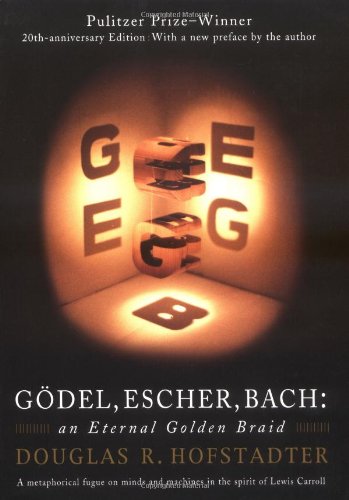
godel escher bachAndy just finished Born on a Blue Day, the memoir by Daniel Tammet, and he is now reading Gödel, Escher, Bach: An Eternal Golden Braid by Douglas Hofstadter. Gödel, Escher, Bach is enormous, so I’m thinking this is his summer read. Nonfiction isn’t normally Andy’s favorite genre, but he really enjoyed Born on a Blue Day and recently told me I’m going to have to read Gödel, Escher Bach, so he must be liking it too. Our couples book club is reading Life of Pi, but Andy read that a few years ago, and we just watched the movie, so I’m guessing he isn’t going to bother re-reading it.

Elizabeth (me), adult

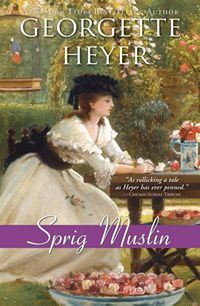
sprig-muslinMy lady’s book club read The Fault in Our Stars for June (excellent book; I’m in the process of forcing everyone in my family to read it.) We’ll be reading Orphan Train by Christina Baker Kline for July, and Silver Sparrow by Tayari Jones for August. I haven’t decided yet whether or not to re-read Life of Pi. So far this summer, I’ve been reading everything my library has by Georgette Heyer, and I’ve just reached the end. <Sigh of discontent.> For the car ride to the HNS conference, I’m planning to bring several Anne Easter Smith books I inherited from my mother and which have been on my TBR pile for far too long. My mom loved Anne Easter Smith, and I look forward to meeting Anne and having her sign my books. My one must-buy at the conference is Firebird by Susanna Kearsley—I’m excited to meet her and get her signature. Of course, I’ll browse the conference bookstore and buy more books, and I’ll get the bag of free books for all conference attendees. Just think of all the new authors I’ll discover! I’ll have no lack of books for my drive home and for the rest of the summer.

It’s a great summer of reading for us! What are you and your family reading? Let me know below.

If you have (or are) a reluctant reader and need some ideas, please post below. Give me an age, an interest or two, and/or a book that was enjoyed by this persnickety reader. I’ll do my best to match he/she/you to a book they/you will love.

Author Interview: Ann Weisgarber

ann-weisgarber

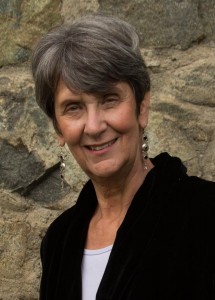
Today I welcome novelist Ann Weisgarber to my series of author interviews. Ann will be at the Historical Novels Society Conference as a panelist on the Historical Fiction: the American Experience session.

Welcome, Ann.

 Q: For you, what is the line between fiction and fact?

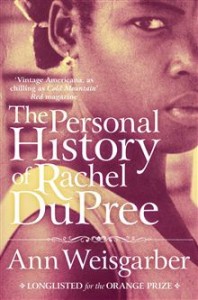
 A: I believe that readers trust us to tell the truth about historical events, locations, and cultural norms. I work very hard to keep those aspects as accurate as possible. If the facts don’t fit with the story I’m writing, I change my characters rather than the facts. In The Personal History of Rachel DuPree, I wanted my main character to have a brief interaction with Ida B. Wells Barnett, a historical journalist in Chicago. To make that work, I had to make my main character older by a few years. In The Promise, I wanted one of the main characters to play in an orchestra. However, in the late 1800’s, this was very rare for a woman. Rather than bend the facts, I changed the character so that she played in a four-woman ensemble, something that was becoming increasingly popular at the time.

These were small sacrifices that allowed me to keep the story historically accurate.

Q: Do you have an anecdote about a reading or fan interaction you’d like to share?

ann-personal-historyA: When The Personal History of Rachel DuPree was published in the United States, many African-American readers told me stories about their ancestors who homesteaded in the West. They thanked me for writing a novel about people who have been overlooked in the history books and a few readers sent photographs of their relatives. I’m deeply touched by these responses.

Q: Where do you feel historical fiction is headed as a genre?

 A: I’m on the selection committee for the Langum Prize in American Fiction and am impressed by the range of topics, locations, and time periods. There are many Civil War-based novels but there are also those that take place during the Industrial Era, World War I and Prohibition. Locations vary from North Carolina to Missouri to California. Some focus on historical people while others highlight ordinary characters. Each novel is a reminder that historical fiction is broad in scope, that the writing isn’t formulaic, and that as each decade passes, new material surfaces. That keeps the genre fresh. It offers something for every reader.

Fifty years from now, I’m confident that the Historical Novels Society will continue to meet and members will continue to discuss the fascinating evolution of historical fiction.

Q: Is there a writer, living or deceased, you would like to meet?

A: How I wish I could have met E.B. White so I could thank him for writing Charlotte’s Web. It’s the first book that I remember my mother reading to me when I was a child. I was spellbound by this story about impending death, friendship, hope, and most of all, the power of the written word. I’m still spellbound.

Q: Can you tell us about your latest publication?

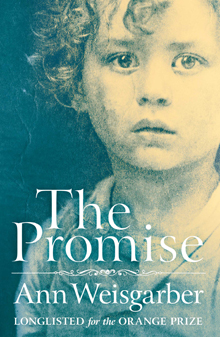
ann-PromiseA: The Promise was published in March 2013 by Mantle (Pan Macmillan) in the UK. It takes place on Galveston Island, off the coast of Texas, and begins a few weeks before the 1900 Storm, the worst natural disaster in the U.S. during the 20th Century. There are two narrators, Catherine and Nan, who both strive to cope with change as they struggle to find their places within a small household. Little do they know that a hurricane in the Gulf of Mexico is about to upend all that they know.

We’ve now reached the time in our interview for the let’s-get-to-know-the-author-better, nearly-pointless, sort-of-silly, rapid-fire questions:

Coffee or tea?  Coffee. I love the aroma.

Ocean or mountain?  Ocean

Hiking or shopping?  Hiking

Violin or piano?  Violin (May I call it a fiddle?)

Mystery or fantasy?  Mystery

Darcy or Heathcliff?  Heathcliff

Love scene or death scene?  Death scene. The possibilities are endless—the deathbed wishes, promises made, and, of course, the reading of the will.

For more about Ann Weisgarber, visit her website www.annweisgarber.com

Thanks, Ann!

An Interview with Stephanie Barko

Stephanie BarkoToday I welcome  Stephanie Barko to my series of interviews. Stephanie will be presenting at the Historical Novels Society Conference as a literary publicist. In the workshop Building an Effective Platform for your Historical, Stephanie will lead attendees through her proprietary exercises that coax a book’s platform to the surface.  Welcome, Stephanie.

Q: What does a typical day look like in your job as a literary publicist?

A: My day begins with black coffee, a lit candle, a gratitude list and soul writing (a la Janet Conner).

After listening to a guided meditation through a headset, I clean up my email before beginning to execute client deliverables. During my day, I may be shipping galleys for pre-pub review, pitching radio producers, subcontracting for a colleague in Manhattan, or arranging a virtual tour. Depending on the season of the year, I will be working in some yoga, aqua aerobics, Tai Chi or walking to keep my brain oxygenated during the work week. I break to cook dinner and then get right back to it during the evening unless there’s something I can’t bear to miss on PBS.

Q: What do you like most about promoting historical novels and nonfiction?

A: My favorite task during a contract is research–researching journalists for a media list, researching the top Technorati book bloggers, or researching the best endorser candidates for a client’s book. The pre-pub phase is when I can add the most value, and that’s the part of a campaign I enjoy the most.

Q: What do you like the LEAST about your job?

A: Redirecting stray prospects who have queried for my services without doing their homework.

Q: What can historical novelists and nonfiction authors do to help you help THEM?

A: A good start would be to approach me with a publisher already on board, a release date, an edited manuscript, and professionally designed cover still in progress, and a list o potential or actual endorsers.

We’ve now reached the time in our interview for the let’s-get-to-know-the-interviewee-better, nearly-pointless, sort-of-silly, rapid-fire questions:

Coffee or tea?  Organic French Roast

Ocean or Mountain: Mountains of the American West

Hiking or shopping? Hiking

Violin or piano? Piano

Mystery or fantasy: Mystery

Darcy or Heathcliff? Darcy

Love scene or death scene? Death scene

For more information about Stephanie Barko and her work, visit her website www.stephaniebarko.com, read about her at Literary Marketplace or visit her in your favorite online milleu:

www.twitter.com/steffercat

www.facebook.com/stephaniebarko

www.pinterest.com/stephaniebarko

www.linkedin.com/in/stephaniebarko

www.goodreads.com/steffercat

www.librarything.com/home/steffercat

Thanks, Stephanie!

Author Interview: Anne Easter Smith

Easter SmithToday I welcome Anne Easter Smith to my series of author interviews. Anne is the author of the highly acclaimed historical novels, A Rose for the Crown, Daughter of York, The King’s Grace, and Queen by Right. Her recently-released Royal Mistress is the story of Jane Shore, the final mistress of King Edward IV of England. Anne will be speaking on the To Trump or Trumpet: the History Police panel at the Historical Novels Society conference.

Q: What got you first interested in historical fiction?

A: A great teacher in boarding school hooked me on history, and so when I went home during the holidays I would go to the local library and read every historical novel I could get my hands on. I was not interested in any books that did not have women in long dresses. Even today, if a book cover, TV show or movie is period, I’m instantly interested.

Q: For you, what is the line between fiction and fact?

A: I’ll be talking about this on my panel at the conference. I fall into the “don’t mess with history” camp. To be honest, the people I have written about couldn’t have had more dramatic lives, even if I’d wanted to embellish them! I was mortified recently that a reader caught an egregious historical error that I cannot imagine not catching during the editing process. I feel a certain responsibility to my readers to not fudge the facts. After all, it was fact-fudging by Shakespeare and Sir Thomas More that got my favorite protagonist, Richard III, such a bad reputation.

Q: Do you have an anecdote about a reading or fan interaction you’d like to share?

A: Imagine my surprise when, at a reading near Albany, New York, a woman turned up dragging an 11-year-old boy with her. When I went to greet her, talking over the boy’s head, and said how brave she was to come when her son was surely not there of his own volition, she said: “Oh, I’m not here to see you, Jason is. He’s your biggest fan and his room is covered in English royalty genealogy charts!” Jason and I have kept up a correspondence ever since.

Q: What book was the most fun for you to write?

easter smith roseA: Definitely A Rose for the Crown. It’s not that I haven’t adored all my other protagonists, but I wrote that in my own time without any intention of letting anyone but my family read it and believed it would be my only attempt at writing a book.


Q: Can you tell us about your latest publication?easter smith royal mistress

A: Royal Mistress is the fifth in my series about the York family during the Wars of the Roses. It tells the story of Jane Shore, King Edward IV’s final and favorite mistress. I love that she was born into the merchant class of London, which allowed me to do a lot of research on the medieval guilds, and as she was called his “merriest” mistress by Edward himself, I knew she must have been quite a character. She had a roller-coaster of a life before and after Edward, but while she was his mistress, Jane was said to have truly been loved by the king. All the York family come into this book, including my Richard (III), although his treatment of Jane was rather harsh and forced me to look at him in a less saintly light than my first book A Rose for the Crown.

Thank you, Anne.

You can learn more about Anne Easter Smith and her books at www.anneeastersmith.com

Book Title Poetry

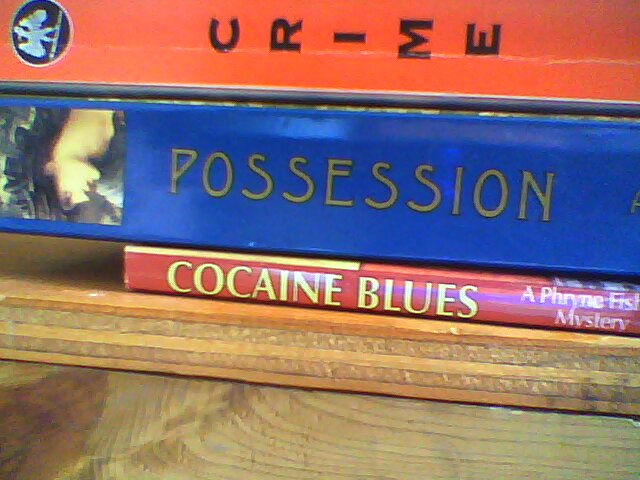
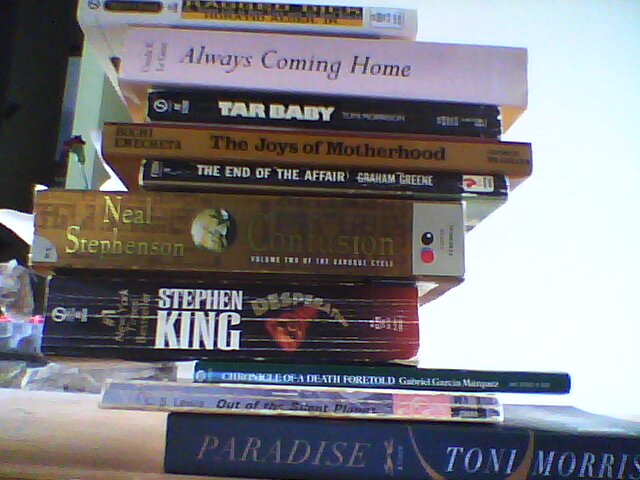
As soon as I looked through book title poetry by Nina Katchadourian, I  ran to my bookshelves to see what I could create.  Working for about 10 minutes (because I’m supposed to be working on my novel today!), with only the books in one room, I came up with these three poems.  I hope you like them.

(Click to make bigger.)

poem crime


(First book is Horatio Alger’s Ragged Dick.)

poem ragged dick

And finally…

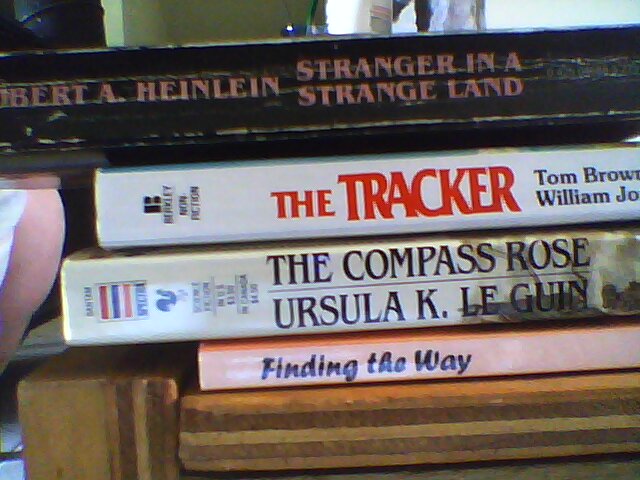
poem stranger


Now run to your bookshelves and put together your own poems!

Author Interview: Kathleen Kent

kathleen kentAs part of my series of interviews with Historical Novels Society Conference Speakers, I today interview Kathleen Kent. Kathleen is the author of the bestselling novels, The Heretic’s Daughter and The Traitor’s Wife. At the conference, Kathleen will be participating in “The Witchcraft Window: Scrying the Past” panel discussion.

Question: What got you first interested in historical fiction?

Kathleen: When I was a child, my mother gave me a book on ancient Greek artifacts. Soon after, I started reading Mary Renault’s books and historical fiction became my time machine to the past.

Question: How do you find the people and topics of your books?

kent heretics daughterKathleen: My first two books, The Heretic’s Daughter and The Traitor’s Wife were based on my 9 times great grandmother, Martha Carrier, who was hanged as a witch in Salem in 1692. I grew up hearing stories of Martha and her family.

Question: Do you have an anecdote about reading or fan interaction you’d like to share?

kent traitors wifeKathleen: For the release of my second book, The Traitor’s Wife, I had a launch event in Salem, Mass. Over 250 fellow descendants of Martha Carrier—from all over the U.S.— attended to share their personal histories and stories that they had heard about Martha and her husband, Thomas Carrier.

Question: Can you tell us about your latest publication?

Kathleen: My third novel, The Outcasts, will be published this October. Set in 1870 Texas, the story follows both a young Texas State Policeman on the hunt for a serial killer, and a woman fleeing a life of prostitution to pose as a school teacher in a small Texas town.

Thanks, Kathleen!  For more about Kathleen Kent, visit her website, http://kathleenkent.com/

HNS Interview: Heather Webb

Over the next few weeks, I will be featuring some of the speakers scheduled to present at the Historical Novels Society Conference  June 21-23 in St. Petersburg, Florida. Today I welcome Heather Webb, who will be on a panel discussing the “Virtual Salon: Historical Fiction Blogs” at the conference. This is my second interview with Heather Webb. You can read the first interview here.

Question: What got you first interested in historical fiction?

Heather: I’ve been fascinated by history all my life–the clothes, the gadgets heather webb(or lack there of), and the evolution of the human story. I credit my parents for much of this interest. My dad loved old epic movies like Ben Hur and Cleopatra, westerns, and war films, and my mom enjoyed museums, so my siblings and me spent loads of time learning about the past.

Question: How do you find the people and topics of your books?

Heather: My book topics are based on people who have always fascinated me. Also, I stumble upon new gems by accident during my research of a current project.

Question: Do you follow a specific writing and/or research process?

Heather: I research for at lease a couple months first and flesh out an outline and character maps. From there, I begin writing scenes and continue to research as I go.

Question: For you, what is the line between fiction and fact?

Heather: Gross errors of important dates that define a person’s life within the novel is the only thing I’d watch for. Otherwise, to me, fiction is fiction. Fact is fact. Writers are artists with their own interpretation of how events unfolded, the emotions and thoughts of the characters. It frustrates me to see people attack each other over differing elements in historicals. So what if the relationship may or may not have happened? It sure is fun to read and dream about. Factual accounts (which is impossible as none of us lived during these times that we write about), are nonfiction, not fiction.

Question: Where do you feel historical fiction is headed as a genre?

Heather: I think crossover elements will become more popular–fantasy elements, women’s fiction themes, mysteries and thrillers, rather than classic historical biographies or war novels.

Question: Is there an era/area that is your favorite to write about? How about to read?

Heather: I love to write about late 18th-19th century France. Revolutions, whether through war or in ideologies are fascinating to me and France’s history is rich in revolts of every kind. I love to read any era, as long as I fall in love with the characters. Right now I’m on an early 20th century kick.

Question: What are your favorite reads? Favorite movies? Dominating influences?

Heather: Favorite reads change over time for me and they aren’t all historical, but right now I’d say: Gone Girl by Gillian Flynn and The Painted Girls by Cathy Marie Buchanan. As for favorite films, my list is long, but I love artsy French films and most versions of those based on Jane Austen’s books. I could throw in Eternal Sunshine of the Spotless Mind, Silverlinings Playbook and the like, or the odd superhero film and I’m happy as a clam.

Question: Is there a writer, living or deceased, you would like to meet?

Heather: Josephine Bonaparte! But so so many more! I couldn’t possibly name them all.

Question: Can you tell us about your latest publication?

Heather: My debut Becoming Josephine be lead title for Plume/Penguin in January 2014 and has already been mentioned in The Wall Street Journal. I can’t tell you how excited I am! After years of hard work, it’s a dream come true! I bet Empress Josephine would be so pleased. 🙂