Interview with T.C. Isbell


Today I’m welcoming T. C. Isbell to my series of author interviews.  T. C. is the author of Southern Cross, the first in the Prelude to War series.

Q: Can you give us a brief description of your novel?
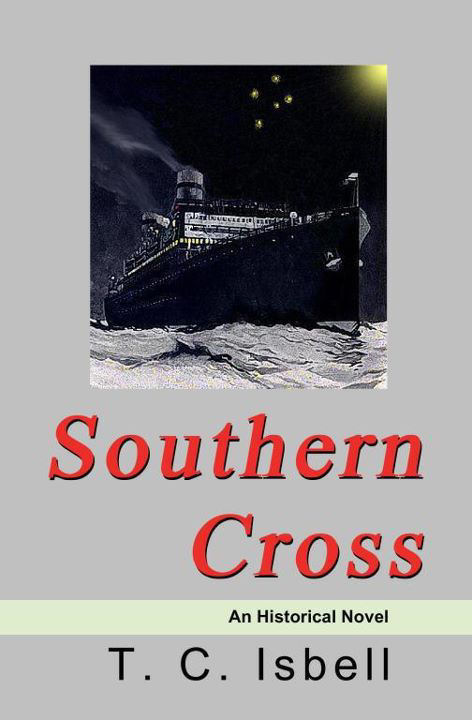
A: Southern Cross is a World War 2 historical thriller. German agents Elsa Gable and Chris Schulte grew up together in a Germany ravaged by the Great War. They became inseparable as they matured into more than friends, more than family. They had a bond no one could destroy, at least that’s what Chris believed until the night of December 2, 1938 when a telegram arrived that changed Chris’ life forever.

Q: When will the second book in the series, Icarus Plot, be released and how does it continue the story started in Southern Cross?

A: Icarus Plot, the second novel in my Prelude to War series, takes place in Panama in 1940. Clive Smith, an MI6 agent, tracks a German spy, Chris Schulte, through the first book in the series. Clive is certain that the threat has not been resolved in Havana at the end of Southern Cross. He follows a trail to Panama where he discovers foreign and American interests are attempting to disable the Panama Canal and effectively divide the world in half. I hope to finish Icarus Plot before Christmas 2012.

Q: What drew you to this time period?

A: I have been an avid fan of World War Two history ever since high school. When I retired I started an in depth research project into the time period preceding Germanyfs invasion of Poland. Before I knew it, I was writing a novel that weaved the story of Chris Schulte and my other characters into my historical research.

Q: I see that you’ve written short stories in the past, can you tell us about them?

A: Yes, I have written a number of short stories. Presently, two of them, “Mattie’s Shoes” and “Surf’s Up” are available for Amazon’s Kindle. In “Mattie’s Shoes” a sixty-nine year old widow confronts a closet full of old shoes and old memories. “Mattie’s Shoes” placed in the 79th Annual Writer’s Digest Writing Competition in the Mainstream/Literary Short Story category. In the other story Billy Bonzer, an old surfer from Southern California, learns a lesson about working for big business and big government by participating in an inner tube race.

Q: Enough of your books tell us about yourself.

A: Ever since childhood, I have been intrigued by the arts–painting, music, and writing. Starting in high school, I wrote short stories and poetry. In the late sixties I joined the Navy. During the Vietnam era I wrote a number of poems that were published in the Berkeley Barb. I may publish them as a collection sometime, but for now they remain locked away. After my discharge, I returned to college and graduated with a BA in mechanical engineering. I worked for the Navy repairing nuclear power plants until I retired in 2005. My first challenge after retirement was to learn how to not write like an engineer. My second challenge was to learn everything I missed while staring out the window during my high school English classes.

Q: What advice would you give to an aspiring author?

A: First: sit down and write – write everyday. Set aside a specific time each day. Maybe in the beginning it’s just thirty minutes or an hour, but do it religiously. Soon writing will become a habit. Don’t get bogged down with creating the perfect sentence. Nothing is ever perfect to a writer. Write what’s in your head and sort it out later. Second: read books in the genre you write in. The authors you read have spent a lot of time learning their craft and have things to teach you. Third: consider, but don’t be deterred by the opinions of others – follow your dreams.

We have now reached the time in our interview for the let’s-get-to-know-the-author-better, nearly-pointless, sort-of-silly, rapid-fire questions:

Coffee or tea?

Coffee, I drink vast mounts of strong, French Roast coffee while I work. I don’t smoke, so I have to do something that’s bad for me. To paraphrase Mark Twain, when you get really sick, you need a vice to throw overboard to stop your ship from sinking. I guess coffee is mine.

Ocean or mountain?

Mountains – I was in the Navy for six years and have seen enough of the world’s oceans.

Hiking or shopping?

I enjoy hiking and climbing. I have climbed most of the volcanoes in the Cascade Mountain Range, including Mt Rainier.

Violin or piano?

Piano, but really harpsichord. In the early seventies when I lived outside of San Francisco I owned a Baldwin electric harpsichord along with an assortment of guitars and other musical instruments.

Mystery or fantasy?

Mystery, but actually both. I like writing mysteries, but I am working on a science fiction novel.

Hester Prynne or Scarlett O’Hara?

Hawthorne’s Hester Prynne for all of the contradictions in her life. Her story becomes even more poignant, considering today’s political climate.

Love scene or death scene?

Death scene – I think a richer palette of emotions from love to hate can be drawn into a death scene.

Thank you, T.C.

To learn more about T.C. And his writing, visit his website, like him on Facebook
and even better, buy his books:

Amazon , Barnes & NobleGoogle Play

Thanks, T.C. !
 

Interview with Tina Boscha

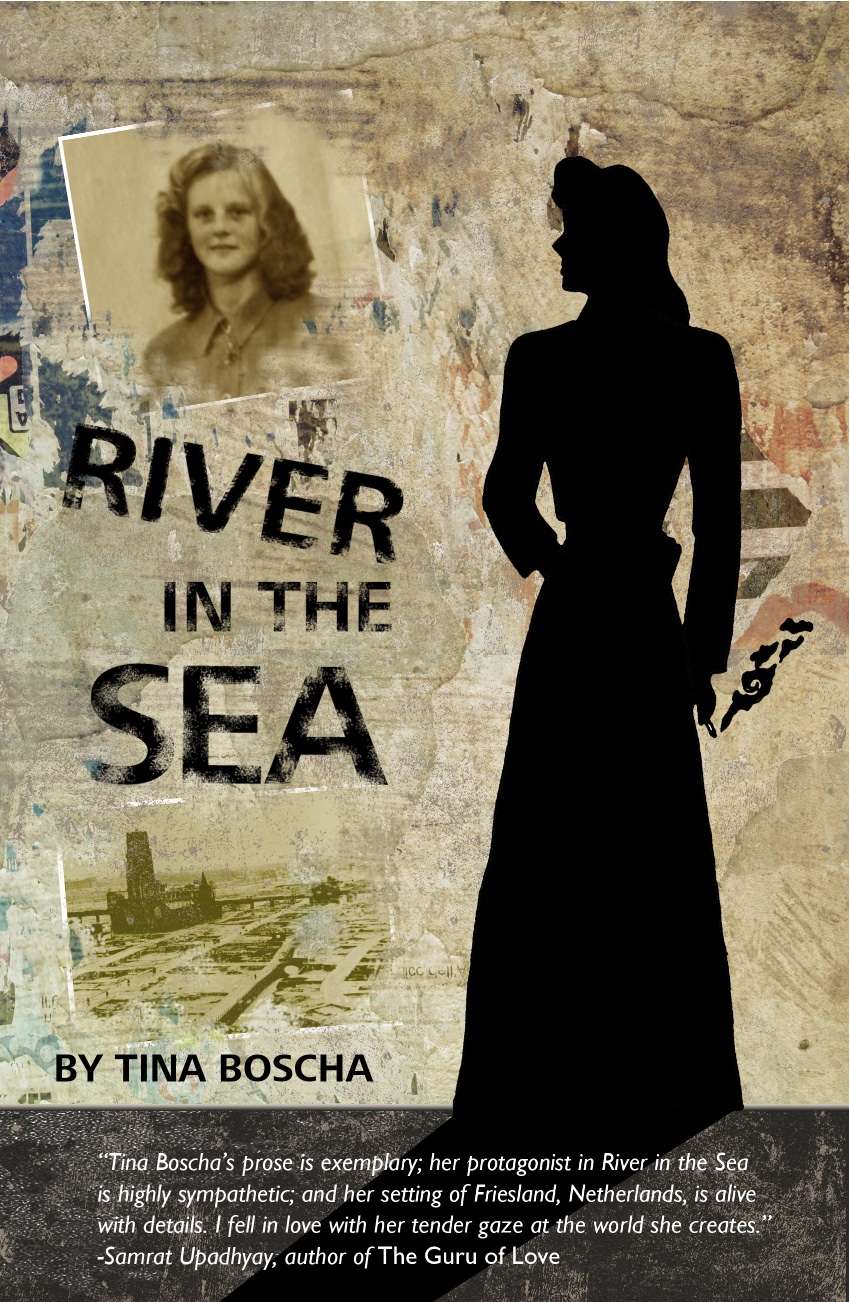
Today I’m welcoming Tina Boscha to my series of author interviews. Tina is the author of River in the Sea.

Q: Can you give us a brief description of your novel?

A: This story takes during the German occupation of the Netherlands during World War II. The main character, Leen, is based on my mother.

When a German soldier’s dog bolts in front of Leen’s truck, in a fraction of a second, she must make a choice: brake hard, or hit the gas.

She floors it.

What happens next sets off a chain of events that pitches Leen, just 15, and her family against the German forces when they are most desperate – and fierce. Leen tries to hold her family together, but despite her efforts, bit by bit everything falls apart. And just when Leen experiences a horrific loss, she must make a decision that could forever brand her a traitor, yet finally allow her to live as her heart desires.

River in the Sea is my account of one girl reaching adulthood when everything she believes about family, friendship, and loyalty is questioned by war.

Q: Was it difficult to write a novel based on your own mother?

A: Initially the challenge of writing a novel based on my own mother felt insurmountable. There were a number of issues I wrestled with; first, it’s based on her as a teenager, but obviously I never knew her then (and really, I have always known her as middle-aged or older, as she had me when she was 41). Second, I was convinced I had to stay as true as possible to the way events unfolded. This ended up being quite paralyzing. I wanted to do right by her and my family, but I wanted this to be my book, which felt selfish. Only when I gave my permission to take more control over the story and the character of Leen as I imagined her to be did the writing really flow, and in the end my mom has told me that she feels I got both her and the feeling of what it was like to be a teen at that time exactly right. Of course, she might be biased!

I think sometimes the real person who should be interviewed is my mother – what is it like to have a book written about YOU?!

Q: How much historical fact is woven into your novel?

A: It feels like quite a bit, yet I honestly don’t know. I’ve never felt that this book is historical first, fiction second, nor do I feel like it’s a “war” book. I feel like it’s a coming of age story set against the backdrop of war. Clearly there is a historical element here, as well as the unique setting of Friesland. But when I cut over 100 pages over the course of many revisions, it feels like I cut much of the exposition that gave a lot of precise historical information.

What is on the page, though, was largely gleaned from conversations with my father. He remembered so many amazing details that never would be found in a text. He was able to tell me that electricity was cut nearly right away after the occupation began, even though in my research I thought it was 1943. He waved that off and said, “Oh shit, they cut that right away.” From that point on I trusted him more than anyone else.

He also told me about a girl he remembered who came back from an outing with a Canadian soldier with her entire back covered in yellow daffodil pollen. I found that so evocative and telling that I included that in the novel.

In the end, the historical fact was really about making it feel authentic and less about “here’s the history because it’s important”, if that makes sense.

Q: Your novel has garnered several awards. Tell us about them.

A: I mostly received awards during the writing – I have yet to win an award after it’s been published! (I’m trying, though!) I feel very fortunate to have received a Literary Fellowship from Oregon Literary Arts. That, combined with a research/living expenses grant from the University of Oregon’s Center for the Study of Women in Society, gave me a summer where all I did was write and revise. It was magical. Until that point I really struggled with time and self-esteem and motivation and those awards gave me the resources and more importantly, the confidence, to work on the book. Without them I’m not sure where the book would be.

Q: Enough of your book—tell us about yourself.

A: I have always felt the best description of me is “not quite”. I’m not quite Dutch, but Frisian, really; I’m a mom but a step mom, not a biological one; I’m a college instructor, not a professor; I’m a published author, but not through a traditional publisher. I’m also not quite 6 feet but darn close! I am crazy busy with work, writing my next novel, marketing, and my favorite things to do in the whole wide world are to read, take baths, and walk my dogs in the sunshine. I live for summer!

Q: So when you say you didn’t go the traditional publishing route, does that mean you self-published? How did you come to that decision?

A: I decided to self-publish after I had my last rejection in the Winter of 2010. I almost sold the book to a small press in Canada, and I was so, so hopeful. They turned me down not on the basis of the manuscript, but because I am American and they didn’t want to be the lead publisher. Strangely, that gave me the confidence to go out on my own. It was like a light switch flipped – it wasn’t the book or me, it was the publishers. And of course, we all know that self-publishing is far more viable and respectable now (at least for me). I also just couldn’t stomach shelving the book – something told me, no, it shouldn’t be shelved. And my mom is now 80, and I wanted her to have the book in her hands. So last fall I released it on my own after revising, polishing, editing, proofing, all the things you have to do as an independent author, and I haven’t looked back.

We’ve now reached the time in our interview for the let’s-get-to-know-the-author-better, nearly-pointless, sort-of-silly, rapid-fire questions:

Coffee or tea? Tea, every morning and every afternoon. Tetley and decaf English breakfast!

Ocean or mountain? Mountain. (But I live in Oregon, so in an hour’s drive I can be at either!)

Hiking or shopping? Hiking.

Violin or piano? Piano.

Mystery or fantasy? Fantasy.

Darcy or Heathcliff? Neither! They’re both stuffy jerks.

Love scene or death scene? Love scene!

To learn more about Tina, visit her blog www.tinaboscha.com

You can order River in the Sea as an e-book or  order River in the Sea in paperback 

Thanks, Tina!

Interview with Melanie McDonald

Today I’m welcoming Melanie McDonald to my series of author interviews. Melanie is the author of the coming-of-age novel Eromenos.  She has an MFA in fiction from the University of Arkansas. Her work has appeared in New York Stories, Fugue, Indigenous Fiction, and online in Fiction Brigade and Squawk Back. She has pursued her writing in New York, Galway, and Paris. She spent several months in Italy at work on Eromenos.

Q: Melanie, can you give us a brief description of your novel?

A: Eromenos is a coming-of-age novel set in the second century AD, in which Antinous of Bithynia, a Greek youth from Asia Minor, recounts his seven-year affair with Hadrian, the fourteenth emperor of Rome. Eromenos was published in March 2011 by Seriously Good Books, a new indie press for historical fiction, and we just celebrated the book’s one-year anniversary on March 11. I received a 2008 Hawthornden Fellowship in Scotland to work on this novel, and am happy to report that Eromenos was a 2011 Next Generation Indie Book Awards finalist and has received excellent reviews.

Q: Was Antinous of Bithynia, a real person or is he completely of your imagination?

A: Antinous was an actual person, and a member of Hadrian’s second-century Imperial court. Very little is known of his personal life (particularly before he became part of Hadrian’s milieu), so Antinous in my novel is a work of imagination based on the few facts we know about him.

Q: How much historical fact is woven into your novel?

A: I did quite a bit of research for the novel to ensure the historical facts would be as accurate as I could make them; that era of Roman history is fascinating, so the research was a pleasure.

Q: How did you come up with the title?

A: The word eromenos in Greek meant the young beloved, the younger man in a pair bond in which the older man, the erastes, was the lover and mentor who taught this partner how to become a Greek citizen, a duty they did not take lightly. The second-century Roman emperor Hadrian was an admirer of Greek culture, and he seems to have modeled his relationship with Antinous in part on that earlier Greek relationship ideal.

Q: Who designed the book’s cover?

A: The cover art for Eromenos is a gorgeous photo by artist Megan Chapman. The publisher and I both thought she did an amazing job of conveying the atmosphere of the story.

Q: Can you describe your writing process?

A: I jot down story ideas, make notes and start drafts in longhand; once I have enough to scratch out a full draft, I move on to the computer. It’s much easier to revise on the computer once you have a draft to work on, but I seem to think better on paper.

Q: How did your interest in writing begin?

A: I can remember being fascinated with the physical act of writing itself when I was very small, about three or four, I imagine. I would scribble all over sheets of paper and go show them to the nearest adult I could corner, usually my mother or grandmother, hoping that person who already could read would then read all this and tell me what I’d written.

I also drew in my books, either to redesign them to my satisfaction or to add my own stories-in-pictures to theirs. I’m so grateful that my parents never objected to these small acts of vandalism on my part – in fact, I think they may have encouraged them a little.

Q: Who are some writers who inspire you?

A: Oh, that is a tough one: Anton Chekhov, Alice Munro, Gina Berriault, Tillie Olsen, Ray Bradbury, Emily Brontë, John McGahern,, A. L. Kennedy, Iris Origo, Lars Gustaffson, Saki (H. H. Munro), the James Joyce of Dubliners – the list changes all the time, though.

Q: Any other thoughts about writing you’d like to share?

A: Actually I’d like to quote the writer Tom Rachman’s theory about fiction, because I think he articulated this so beautifully in an exchange with Malcolm Gladwell. Rachman said:


Writing (and reading) is a sort of exercise in empathy, I think. In life, when you encounter people, you and they have separate trajectories, each person pushing in a different direction. What’s remarkable about fiction is that it places you in the uncommon position of having no trajectory. You stand aside, motives abandoned for the duration. The characters have the trajectory now, which you just observe. And this stirs compassion that, in real life, is so often obscured by our own motives.


We’ve now reached the time in our interview for the let’s-get-to-know-the-author-better, nearly-pointless, sort-of-silly, rapid-fire questions:

Coffee or tea? Tea

Ocean or mountain? Ocean. . .though the mountains are alluring. . .

Hiking or shopping? Hiking (definitely not shopping!)

Violin or piano? Violin

Mystery or fantasy? Sci-fi Fantasy

Darcy or Heathcliff? Heathcliff forever, baby, no contest.

Love scene or death scene? um, deadly love scene?

Thanks to Melanie for joining me today.  For more about Melanie and her debut novel Eromenos, visit the Melanie McDonald website.


This Will Surprise You

How long does it take to grade a paper? If the paper is fairly short, say 2 pages, it will probably take about 5 minutes to read the paper and offer feedback. If the paper is well-written, it could take slightly less than 5 minutes, but if it is poorly written, it could take a great deal longer than 5 minutes.

My son’s high school English teacher has 175 students, a fairly normal load these days (6 classes with about 30 students in a class). When she needs to grade papers, it is going to take a long time. 175 papers x 5 min = 875 grading min or more than 14 hours of grading. And, to be honest, 14 hours is assuming a batch of short, well-written papers. Poorly written papers can take a long time to grade. If each paper takes 10 minutes, she’s up to 28 hours of grading. But she is in the classroom all day, so when can she grade these papers? 28 hours is a lot of evenings and weekends. For one short paper. High school English classes require a lot more than one paper.

I’ve heard people blame high school teachers for not giving enough feedback, not returning papers, not assigning enough work, not doing a good job, etc. The truth is, we are asking a lot of teachers, and nobody realizes how much we are asking. Some people think teachers work the same hours that students go to school, with summers off. The truth is, they work long hours. Teachers get summers off, but many teachers spend some of the summer preparing for the next school year—lesson planning, reading books, going to conferences, etc. And, yes, after a long, stressful school year, teachers should have some time off to have the energy for the next school year. Unfortunately, many teachers take on summer jobs to make ends meet.

Teachers in the US aren’t paid what lawyers and stockbrokers and CEOs are paid, though their hours are just as long, their jobs more difficult, and the importance of their work crucial to the success of our country.

So, the next time you see a school teacher, tell them how much you appreciate what they do.

Thank you teachers of America!!

Author Interview: Francis Hamit

Today I’m welcoming Francis Hamit to my series of author interviews. Francis is the author of The Queen of Washington, a Civil War spy thriller about Confederate spy and Washington hostess Rose Greenhow, and The Shenandoah Spy, another Civil War thriller about Confederate Army spy and scout Belle Boyd. Additionally, Francis has a film forthcoming, based on his 1988 stage play Marlowe: An Elizabethan Tragedy,  about the poet and playwright, Christopher Marlowe, and his career as a spy for the Crown.

Q: Francis, do I detect a theme here?

A: The usual rule is to write about what you know. I do have some background in Intelligence that informs my work.

Q: So you were a spy?

A: I was part of the largest spy agency of the U.S. Government, but my duties were mostly clerical. That is the dirty little secret about intelligence work. Most of it is paper-pushing and not that interesting, day to day. I did learn how such organizations work and that’s important if you write spy thrillers.

Q: Tell us about Belle Boyd and how you came to write about her.

A: In the early 1980s, I was one of about four thousand people hired to help revise the Micropaedia part of the Encylopaedia Britannica. I started researching her story, thought it was deserving of more than a paragraph and decided that I would do more with it, later. Belle’s story is a true one, about a young woman fighting, against the prevailing conventions of her time, for what she thought of as her country, the State of Virginia, against a foreign invader. The documentation is pretty spotty but she did shoot and kill a Union soldier at the beginning of the war who was part of a party of home-invaders, she did spy from the middle of a Union Army headquarters in Front Royal and have an affair with a Union Army Captain named Daniel Keily, and she did use intelligence she gathered to alert Stonewall Jackson and Turner Ashby to Union Army plans in order to trap them. She also ran across the battlefield on May 23rd 1862 at the Battle of Front Royal to give them a report about how lightly defended the town was, which was the start of Jackson’s famous Valley Campaign that pushed the Union lines back. Later historians, all of them male, disputed this, but there are two eye-witness accounts and a historical marker where she delivered that report. This is the reason that they commissioned her as a Captain of Scouts at age 18. She was the first woman in American History to be commissioned an army officer, which has made her something of a feminist icon despite the fact it was the wrong army. It is a terrific story.

Q: Tell us about Rose Greenhow, the protagonist in your most recent book.

A: Rose and her husband, Robert, were power-players in Washington. There are indicators that she was working for the French and the British as an agent of influence, and probably as a spy, while he was the number three guy in the State Department in the 1840s. James Buchanan, who was later her great friend before the Civil War, was suspicious of her when he was the Secretary of State and Robert got promoted out of his job and sent to Mexico on a fruitless mission having to do with California land claims after the Mexican War. He’d written a book on the history of California and Oregon, and that was part of the dialog about the ultimate boundary between the U.S and Canada. Rose had been a great friend, and possible lover of John C. Calhoun, and was very pro-slavery, so spying for the South was simply part of what she’d been doing all along.

Q: Why did you entitle the book The Queen of Washington?

A: Because she was, during the Buchanan Administration. She’d been mentored by Dolley Madison, who also had that title, and created that entire society in Washington where the men were above politics and the women did the deals. Rose couldn’t vote, but she could get you a government job…or a spouse. It was a very corrupt system and the secessionists infiltrated the government before the Civil War and started to steal information and assets. Weapons were shipped South. Documents and maps disappeared. Money disappeared. And Rose was up to her neck in most of it. She was very dangerous. Rose went to great lengths to get intelligence for the South. One of her lovers was Senator Henry Wilson, Chairman of the Senate Military Committee. Another was a Union Provost Martial responsible for the defenses of Washington city. That last relationship led to her arrest by Allan Pinkerton and eventual imprisonment with her eight-year old daughter in the Old Capitol Prison. There is a famous photo by Matthew Brady of the two of them there. You have to ask, why is that child there? They played rough, but that really is indecent, since Rose had relatives nearby who might have taken that child in.

Q: Why didn’t they?

A: Read my book and you can read my theory of the case, but it’s Alternative History without many facts to back it up.

Q: So it’s not all true?

A: It’s mostly true with a lie or two thrown in to make it more entertaining. I don’t pretend to be a a historian, just a novelist trying to provide an entertaining read. When a reviewer calls it that and says they really enjoyed the book, that’s when I know I’ve accomplished that goal. It’s the highest compliment I can receive.

Q: In the 1980s you wrote and directed for stage the play Marlowe: An Elizabethan Tragedy. Tell us a bit about that story and what inspired you.

A: The Marlowe story is another one I found when I was working for the Britannica. Another terrific story about a spy who was also one of the most brilliant writers in history. It’s true. He was a spy for the Crown, and it’s probably what got him killed. He was betrayed by his lover, Thomas Kyd, and then assassinated by his friends for reasons of state. I conceived of it as a lights and levels show with costumes. It went through staged readings in Chicago and Los Angeles, and someone suggested I take it to Thad Taylor at the Shakespeare Society of America in West Hollywood. At the time SSA was a producing organization with its own Globe Theater. Thad wanted to produce it and suggested I direct it since there was so much background knowledge that has to be known to make it work. We had a one-month Equity Waiver run, got good reviews, but it didn’t get picked up because it’s hard to do. Last year, my old friend Mike Donahue, who is now directing films, read it. He saw its potential as a film, optioned it and asked me to write the screenplay. We’ve published that in a first draft reading copy and republished the original script as an e-book.

Q: How is writing a play different than writing a novel?

A: A play or a film, unlike a novel, is a collaborative work. It requires a lot of other talents to realize for an audience. You have to be open to sharing the process. A film is different from a stage play because of all the other things you can do with close-ups, jump cuts and editing to drive the story, and the format is different even if the dialog is pretty much the same.

Q: Why did you decide to write this story as a play and not as a novel?

A: For several reasons. I always saw it that way, and with a play you can stand back from the character and be somewhat objective. A novel is more intimate. You have to get into people’s heads. Kit Marlowe’s is not a head I want to spend much time in. He was a very cruel man, a bully and murderer, a social climber and he was also homosexual, which I am not. That’s an entire emotional context I know nothing about, and am not going to try and fake. To know Kit Marlowe is to not love him. A writer has to recognize his or her limitations. I think it will make a great film, and that Mike Donahue will do a terrific job with it because he does understand that character and emotional context. It’s high drama. We’re in pre-production and Mike has other projects and obligations. He’s done four films in the last year. We also have to find financing and distribution and all that, and are still working on casting.

Q: How are you filling the time until this is ready?

A: Several ways. I was very ill last fall, just as The Queen of Washington was published, and the entire promotional scheme got trashed. So we’re playing catch-up on that, mostly through social media such as Facebook. We’ve turned some of my shorter fiction into audiobooks in collaboration with some terrific and talented narrators we found through ACX.com. Those are available on Audible, iTunes and Amazon.com. I have a book of security essays that will soon be out in e-book form. These are columns I originally did for Security Technology & Design magazine in the 1990s, but still relevant in out post 9/11 world,and some of the best writing I’ve done. And I’m still writing new fiction and raiding the files and knocking the dust off some of the stuff that never got published.

Q: Who is your publisher?

A: Technically, I am one of those horrid people who self-publishes. My roommate, Leigh Strother-Vien, and I own Brass Cannon Books. She’s also my editor and has been for the last 23 years. We hope to eventually publish work by other writers, but for the moment I will have to do. We use a team approach and hire others, such as George Mattingly, who designs some of our book covers, to help out. We’re careful about providing a superior product. We expect to make a film or television rights deal for The Shenandoah Spy soon.

We’ve now reached the time in our interview for the crowd-pleasing, rapid-fire questions:

Coffee or tea? Both.

Ocean or mountain? We live in the mountains.

Hiking or shopping? I’m physically disabled, so neither appeals as entertainment. We buy what we need, but don’t make a big deal of it.

Violin or piano? I don’t play an instrument, but if I did, it would be piano.

Mystery or fantasy? Both. I don’t restrict my reading by genre. It is intellectually stultifying.

Hester Prynne or Scarlett O’Hara? Neither. I dislike drama queens.

Love scene or death scene? Love scene.

Thank you, Francis.

Readers, if you want to learn more about Francis and his writing, visit brasscannonbooks.net or the Facebook pages and Youtube videos for The Queen of Washington, The Shenandoah Spy or Brass Cannon Books. Don’t forget to hit the like button.


Bookfinders Fun

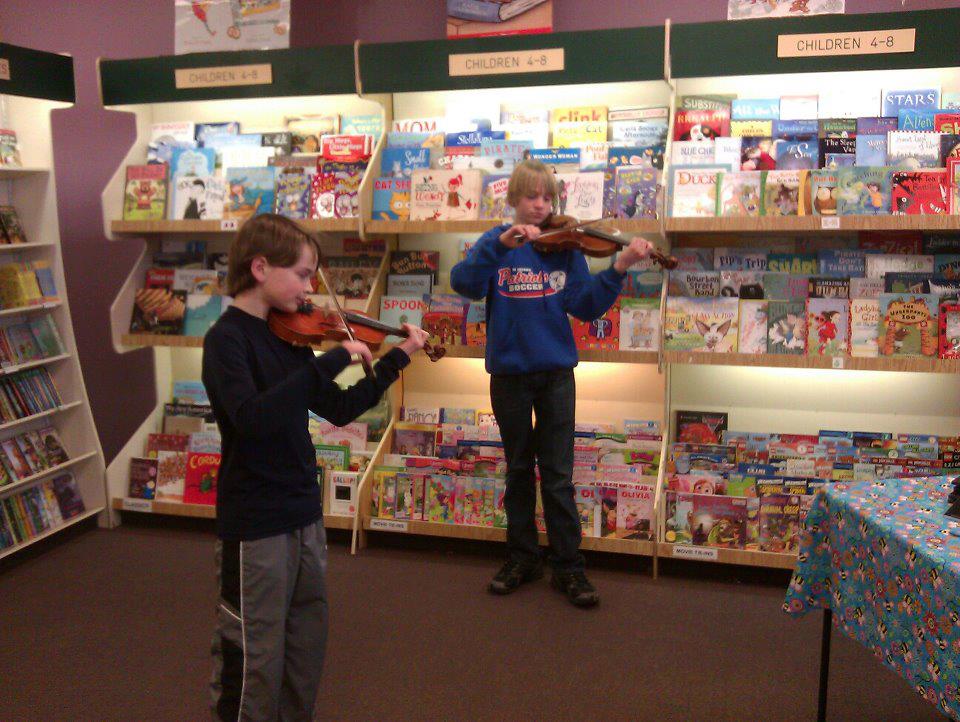
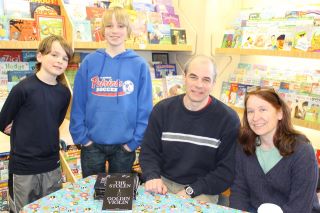
We had a great time at the Bookfinders Grand Opening this past weekend. We met some great people, enjoyed Zest’s coffee and cookies, bought a a cookbook, met some authors, and played some music. Here are some pictures of our signing and the boys playing violin.

Tom, Craig, Andy and me at Bookfinders
Tom and Craig play a duet.

Celebrate at Bookfinders This Weekend

The new owners of Bookfinders in Stevens Point are having a grand opening celebration this weekend that includes coffee, food, face painting, music — something for everyone. I’m excited to see the changes they are making in the bookstore. I believe they will be selling used books, they will be promoting local authors, and they may even have a small coffee shop. I’m not really sure, so come out this weekend and see how much of this I’ve gotten right!

We will be there on Saturday, 3:00 – 5:00pm. Below is the full schedule of events:

Friday, Feb 24

1pm to 8pm Zest Bakery and Coffee House
free samples, coffee & bakery for sale

1:30-3:30pm Darlene Biese Schultz
Decision Or Destiny
~Romantic Fiction

6:30-8pm Pat Rothfuss
The Name of the Wind & The Wise Man’s Fear
~Fantasy

Saturday, Feb 25

9am-8pm Zest Bakery and Coffee House
free samples, coffee & bakery for sale

9:30am-11am Charles Schoenfeld
A Funny Thing Happened on My Way to the Dementia Ward
~Humor/Bio

11am-4pm Face Paintings by Christie

11:30am-1pm Ken Danczyk FamilyGrandpa’s Farm
~Children’s book

3-5pm Felt Family
The Stolen Goldin Violin
Violin Performance by Children
~Children’s mystery

3-5pm Remington Crockett
We Interrupt this Marriage to Bring you Deer Season
~Outdoor Humor

5:30-7:30pm Justin Isherwood
Pulse, Book of Plough, Farm Kid & More
~Array of Regional Nonfiction

Bookfinders is at 1001 Brilowski Road, across from Fleet Farm.

Author Interview: Melissa Westemeier

To begin my series of author interviews, I’ve invited Cornerstone Press author Melissa Westemeier.  I was fortunate enough to attend the release party for her novel Whipped, Not Beaten and get an early copy, which I thoroughly enjoyed.

Whipped Not Beaten tells the story of Sadie Davis. Recently dumped and working for a boss she despises, she is determined to shake up her life as a single woman in the city of Madison, Wisconsin. She takes a side job as a home party consultant selling kitchenware, hoping that it will be the spice that turns her life around. Through failed recipes and cold ovens, Sadie works to create something that’s a bit sweeter, a lot richer, and oh, so very delicious.

Melissa, welcome.

Q: Tell us about Whipped, Not Beaten, and how you came to write it

A: The main plotline is about how Sadie starts selling home party products. When I quit my teaching job and became a stay at home mom, my social life became nonexistent. The only time I had a night out was when I got invited to a home party―and naturally I accepted every invitation. After attending several―Partylite Candles, Tupperware, Tastefully Simple, Mary Kay, Creative Memories, Pampered Chef―it struck me how a novel could appeal to women by poking fun at the entire set-up. I’d already written a couple of YA novels, and the idea of a romantic comedy, “chick lit” with home parties as the backdrop really appealed to me. Like I begin all my books, I just started writing and the plot and characters fleshed out as I kept at it. I chose Madison as the setting because all chick lit seems to take place in New York or Los Angeles. The Midwest gets almost no attention, unless someone’s writing about a rural setting. Also, I’m familiar with Madison, which made the book easier to write than if I had to research a different setting, like New York City.

Q: Many readers think that the main characters in novels are like the authors themselves. Is there a lot of Sadie Davis in you?

A: That’s a funny question! One of my best friends read the book with me as Sadie in her head. Needless to say, when Sadie has her first sex scene, Nicole had to set the book down…

I think there’s a little of any woman my age in Sadie. As far as specific traits that we share, I do fantasize about George Clooney, battle the occasional blemish, and find my medicine cabinet terribly disorganized. When I was younger I had to learn to stand up for myself at work and I enjoyed the mentorship of some great older women. Really, the character most like anyone in real life is Sadie’s mom, who I based almost entirely on my Grandmother, Gloria Volkman. If I were to BE like any of my characters, I confess that I wish I were just like Sadie’s older sister, Jane. She lives my fantasy.

Q: Whipped, Not Beaten was your first published novel. Have you written other things?

A: I co-wrote a chapter in Teaching Writing in High School and College (NCTE, 2002) and co-wrote Writing in a Changing World (Bridle Path Press, 2010). I’ve had some poetry and essays published, and like most writers, I have a drawer full of rejected or partially-developed manuscripts.

Q: You’ve worked as both a teacher and as an editor. How have those jobs influenced your writing?

A: After teaching high school English for almost 10 years, I really developed an eye for recognizing what makes a piece of writing strong or weak. I also developed the knowledge base to help writers tend to those issues. My writing group works well together because we all have teaching backgrounds, so instead of just getting together and pointing out what “doesn’t work” in each other’s manuscripts, we advise each other on how to make revisions, play to our individual strengths, and address the problems with suggestions. I think the best thing a writer can do for their own craft is to find other writers to work with―I really enjoy editing manuscripts for other authors and it’s a personal thrill when they get published, too.

The only drawback is when I’m with my book club―I need to learn to turn off my “editor eyes” and approach some books with only my “reader eyes.” Writers read books differently than other people.

Q: What can you tell me about working with the student-run publishing house Cornerstone Press?

A: They were lovely and so professional. From the content editing to the marketing, every step of the way demonstrated the investment they made into my book. I loved getting 100% of their attention, which I know wouldn’t happen in a larger press, and they were so creative, too.

Q: What are you working on now?

A: Currently I’m working on 2 projects―final revisions on a nonfiction book I wrote with Jen Brecht, my co-founder over at Ecowomen.net. It’s a guidebook to making one’s lifestyle environmentally friendly by making one behavioral change a week over a whole year.

Also, I’m bringing a revised version of my latest novel, Across the River to a writing workshop this summer. It’s the story of a small town on a river, loosely based on my bartending days during college when I lived in Fremont, Wisconsin. The main characters are the daughter of a dairy farmer who sees a different future for her family’s farm and a bait shop owner who has dreams of big development moving into the area. It’s funny, but with a more earthy humor than Whipped, Not Beaten, in part because most of the characters are men, and it takes place during the white bass run.

We’ve now reached the time in our interview for the let’s-get-to-know-the-author-better, nearly-pointless, sort-of-silly, rapid-fire questions:

Coffee or tea? Coffee.

Ocean or mountain? Ocean.

Hiking or shopping? Hiking.

Violin or piano? To listen to, right? Violin.

Mystery or fantasy? Mystery.

Darcy or Heathcliff? Always, always Mr. Darcy.

Love scene or death scene? Love scene.

A great big thanks to Melissa for being the laboratory rat in my first interview experiment.

I encourage you to  order her book, Whipped, Not Beaten, and to visit Melissa at Green Girl in Wisconsin